Tharp & Young on Ice Cream
Is ice cream a healthy food?
Tharp & Young column investigates this question.
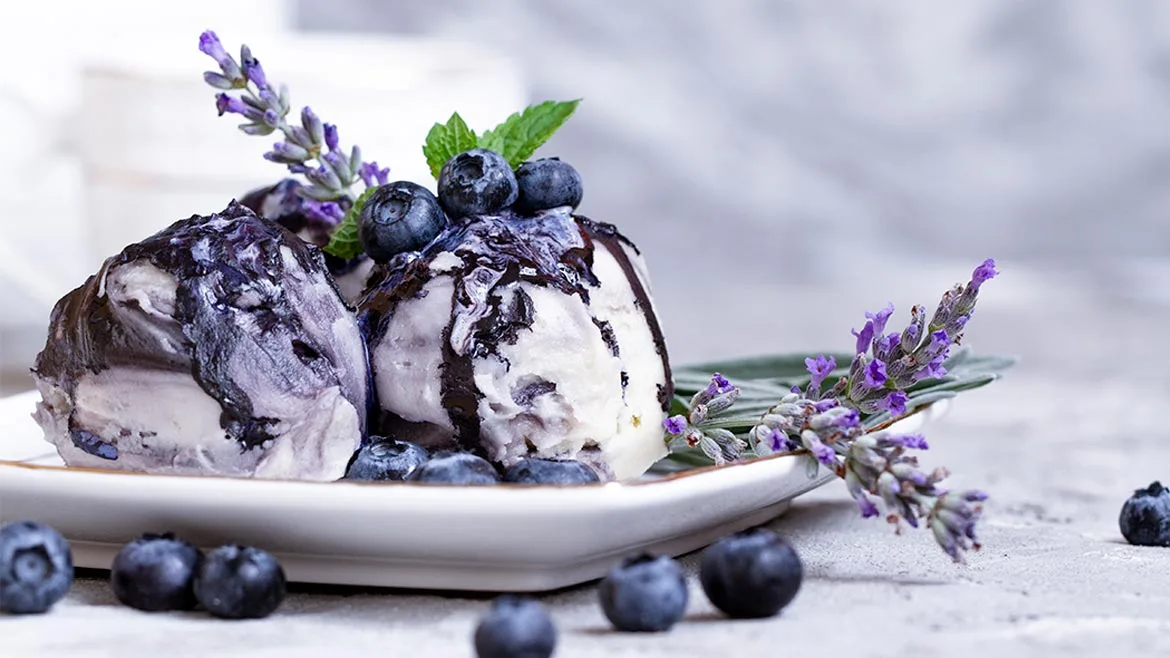


In one of our recent columns, we covered how ice cream and related products are “ultra processed,” “hyperpalatable,” and, have been, and can be, made “healthy.” Certainly, we have partially or totally removed fat (and associated cholesterol, saturated fat) and partially or totally removed added sugars, and, in some cases removed naturally occurring lactose.
Caloric reduction is implied. Yet, there remains more to making ice cream “healthy” given current market trends and nutrition science. What we did not consider in context was development of GLP-1 “compatible” ice creams and frozen desserts.
Old news…
During the past 50 years or so, the industry has removed/reduced fat and sugars, partially reduced calories, but has not really addressed newer trends or approaches related to proteins, options related to sweeteners, changing caloric contributions of specific ingredients, prebiotic/probiotic/post-biotic sides nor management of hormonal responses to each. High protein is currently of great interest, but we are not sure for the right reasons.

In 2026, Tharp & Young marks 25 years of its column in Dairy Foods, alongside 30 years of industry courses and 15 years of its reference text. This milestone reflects a long-standing commitment to education and expertise within the dairy industry.
That being said, ice cream’s influence on ingestion and digestion gets a bit complicated…. all for good reasons!
Structure: Frozen desserts are the only foods designed, formulated, manufactured, marketed, distributed and sold with the express intent of being consumed frozen. This makes ice cream different. Complex structural elements related to air bubbles, partially agglomerated fat, and ice come into play. Structure itself may yield healthy variants, even for full fat, full sugared, full calorie products.
Composition: Structural complexity aside, we now can leverage a number of novel new ingredients and novel approaches to formulating to positively influence food intake, caloric intake, specific major and minor nutrient considerations and still fit the rigors of classical mix processing, whipping/freezing, packaging, storage and distribution.
Temperature: Ice cream is cold. Relative to ice cream, body temperature is hot. Thus, time it takes to bring the ice cream to body temperature is a small but significant delay in ingestion.
Mastication: Yes, we chew ice cream. We spend hours formulating and manufacturing for desirable body and texture/creaminess. These, too, cause delay in ice cream passing from mouth (mastication) into the stomach.
Stomach (gastric) emptying: The more complex the food, the more delayed is gastric emptying into the small intestine. Ice cream fits the definition. Another delay in ingestion.
Wall of the small intestine: Ingestion of small molecular weight nutrients such as soluble minerals, salts, vitamins, amino acids from hydrolysis of proteins and simple sugars can be done actively (via enzymatic processes at the surface of the small intestine) and/or passively (via osmotic pressure influences.) In each case, nutrients need to migrate to the wall of the small intestine before absorption into the blood stream can occur. This, in turn, slows absorption, which can be good as it relates to ultimate hormonal responses.
Blood stream and the liver: Nutrients that cross the wall of the small intestine enter the blood stream and go directly to the liver, which immediately manages the demands on blood sugar, and, thus, available energy.
Colonic microbiome: What does not get ingested in the small intestine goes to the colon and is exposed to the microbiome. This depends upon the amount and type of prebiotics (soluble fiber and such) reaching the colon. From there, the degree, rate and creation of desirable postbiotic compounds becomes critical to multiple secondary and tertiary nutritional efficacies (e.g. calcium solubility enhancement, absorption, then, deposition into bone.)
Managing hormonal responses: Influences on hormonal control mechanisms can be beneficial. Think CCK (hormone controlling fat/protein digestion, stomach emptying and physical feeling of fullness), GLP-1 (hormone controlling blood sugar, energy demands and overall satiety), insulin response, etc. All this takes additional time to determine the amount of glucose to create and enter the blood stream, which in turn influences insulin and other hormonal responses. Such responses can further influence feelings of fullness and satiety.
Composition (negatives; positives)
Given all the above, there exists potential to modify the composition of ice creams to leverage structural influences on ingestion and digestion rates and ultimately, hormonal responses.
Formulating can increase protein in excess of 20% of the daily value per serving (“high” protein), increase prebiotic dietary fiber in excess of 20% of the daily value per serving, reduce caloric loads to < 100 calories per serving with the thought of interfering with ingestion rates and digestion in the small intestine by the microbiome, plus positively influencing hormonal responses such as serum glucose (insulin), GLP-1 (satiety), and CCK (stomach fullness).
Of course, not all objectives may be compatible with each other nor compatible with industrial mix processing. Think high protein, high solids, high viscosity and implied limitations on mix making, pasteurization, homogenization, whipping/freezing and packaging. This puts focus on the ever-evolving ingredient toolbox.
Good news
We can now leverage both the form and formulation of ice creams to positively influence hormonal responses and make ice cream as healthy as we wish and still be able to make such products in the plant. All to allow manufacturing of GLP-1 compatible products while retaining the form, and function, of what we know as “ice cream” and other frozen desserts whether standardized or not. This allows formulation of supportable finished product declarables to help create strong, defensible points-of-difference (more features versus reasons to buy) brand-to-brand and render the finished ice cream category a little bit healthier than yesterday.
Mother Nature may not have intended all this to be so, but her own laws of chemistry and physics and our ingredient toolbox allow us to do so. Perhaps we may someday design products that can mitigate disease (e.g., diabetes, obesity, other?).
Care is necessary as mitigation of any disease via food means serious and well-designed feeding studies. Not every organization nor product line is up to the task. Yet, this can remain an objective for the future.
Looking for a reprint of this article?
From high-res PDFs to custom plaques, order your copy today!