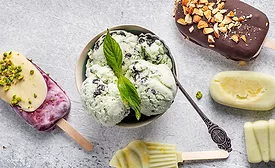
Can ice cream be healthy? This column, written by William Sipple and Steve Young, is devoted to the topic in honor of this month’s health and wellness theme.
Ice cream attracts bold entrepreneurs—but it’s unlike any other food business. From formulation to distribution, success hinges on mastering its frozen nature, costs, and supply chain. Here’s what every newcomer needs to know before diving in.
The healthfulness of ultra-processed foods often sparks debate, particularly regarding the definitions of "hyper-palatable." Many associate these foods with being unnatural and inherently unhealthy, overlooking scientific considerations to the contrary.
Dr. Bruce Tharp taught that much depends on factors not yet in evidence, i.e., “it depends.” Then, turn around with directive to “stay tuned.” Given the pace of development and utility of artificial intelligence (AI), when does “it depends” become “it’s certain?”
Ice cream and related products are both special as they're the only products for sale that are consumed frozen. Ice cream is one of Mother Nature’s most complex food products, so formulating to ensure consistency is important.
“Ice cream is such fun!;” “It’s got to be easy!;” or “I’d love to take grandma’s secret recipe to market!” “Just tell us how to do it!” It seems simple to be an ice cream entrepreneur.
Consumer interest in “clean labels,” i.e., use of ingredients perceived to occur naturally in foods, has created a challenge to frozen dessert formulators.
No matter the “style,” ice cream is the only food designed, formulated, manufactured, marketed and sold with the express intent of being consumed frozen.
We are most often asked how many “types” or “styles” of ice cream exist? In the simplest of terms, no matter the style, ice cream (and frozen dessert variants, thereof,) is the only food designed, formulated, manufactured, marketed, and sold with the express intent of being consumed frozen.
The U.S. Code of Federal Regulations outlines requirements and considerations related to the labeling of foods, including ice cream and frozen desserts.