Health & Wellness
Protein: The Powerhouse of Health and Wellness
Mainstream ingredient helps with energy, satiety, aging and wellness.
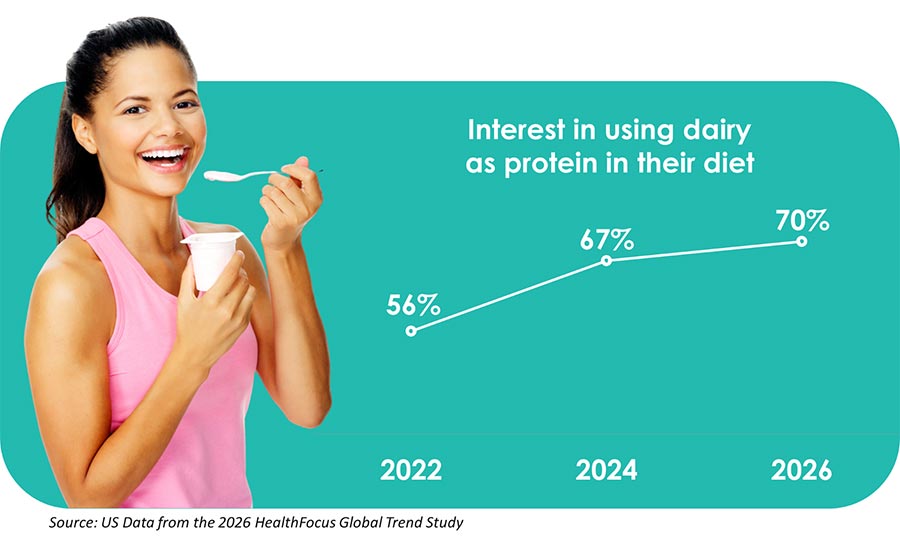
Study a label of yogurt, cottage cheese and even milk and you’ll find more grams of protein per ounce than ever before. In 2022, 56% of U.S. consumers stated they were interested in using dairy as protein and in 2026, that number climbed to 70%, according to HealthFocus International.
Julie Johnson, president of the Des Plaines, Ill.-based global market research and consumer insights company, notes that she’s seeing "a consistent rise" in using dairy as a source of protein in U.S. diets. (See chart).
Johnson explains: "Protein is having a moment because people are thinking more about muscle, fullness and overall health — especially with the rise of the GLP-1 trend — but its popularity goes far beyond that, with growing awareness of its benefits for energy, recovery, healthy aging and everyday wellness. At the same time, food companies have made it easier than ever to get more protein in ways that actually taste good."
Suggesting that protein as an ingredient is no longer a trend, but an integral part of modern food positioning, Pierre Battu, managing director for Asia at OSF Flavors, notes, "The shift is structural, not cyclical."
Courtesy of HealthFocus International.
Several forces are driving the protein phenomenon simultaneously. These include an aging population focused on maintaining muscle mass and mobility; a fitness culture that has gone fully mainstream across demographics; and a growing consumer understanding of protein's role in satiety and metabolic balance.
"This is understanding that now extends well beyond the gym," Battu says, adding "increasingly, there’s one more factor that the industry is only beginning to fully process: the rapid adoption of GLP-1 receptor agonists such as semaglutide and tirzepatide." (For more on GLP-1s, see the article in this issue).
Battu explains that patients on GLP-1s experience significant appetite suppression and eat considerably less overall. He also points out that a major clinical risk is lean muscle mass, which "makes adequate protein intake not a lifestyle preference but a medical priority."
Sophie Zillinger Molenaar, global marketing execution lead at FrieslandCampina Ingredients, and Stephen Cobbe, senior technical director of dairy at Kerry, concur that protein continues to dominate the nutrition world — with dairy at the heart of that momentum.
"Globally, around 60% of consumers say they are actively trying to increase their protein intake, while high-protein claims continue to rise across dairy launches," says Zillinger Molenaar. "What’s particularly striking today is not just the level of demand, but how far protein has evolved beyond its sports nutrition roots.
"One key driver of this growth is the mainstreaming of protein as a daily essential, relevant to consumers of all ages and activity levels," she continues. "Closely linked to this is growing interest in healthy aging and long-term wellness, which is expanding protein’s relevance across older demographics as well as younger health-conscious consumers.
Noting that dairy and protein is a "daily expectation," Cobbe affirms that the mainstreaming of protein goes beyond athletes into everyday wellness, weight management, satiety and aging well.
"Second is the rise of GLP-1 medication usage, where Kerry proprietary research shows 65% of GLP-1 users say they now prefer high-protein foods, with dairy playing a central role due to its nutrient density and digestibility." Cobbe states. "Third, is the shift toward food as medicine, where consumers want fewer calories per bite but more nutrition per serving."
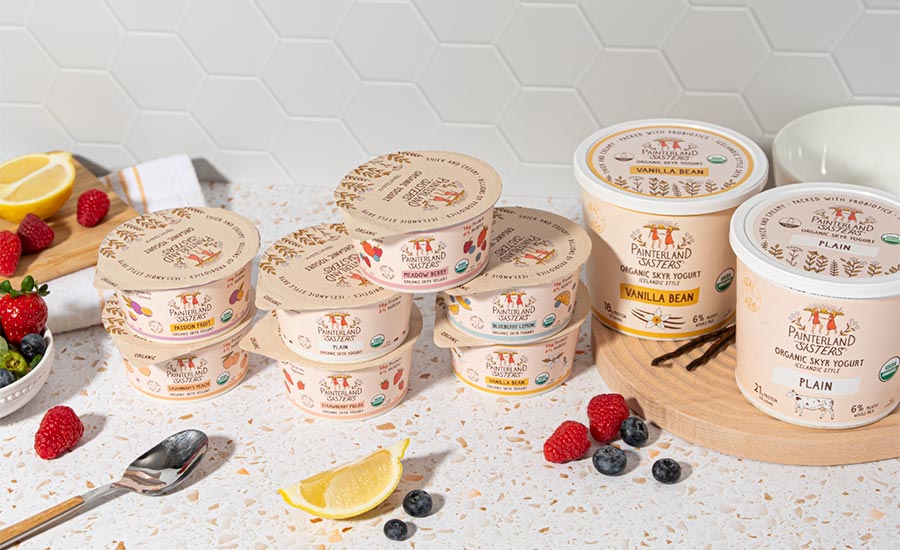
This organic skyr yogurt from Painterland Sisters contains between 18 and 21 grams of protein per serving. Courtesy of Painterland Sisters
Dairy products and taste lead the way
When Americans think about "high-quality protein," taste leads the way, according to April research from Washington, D.C.-based IFIC. In fact, four in 10 (40%) say a high-quality protein is one that tastes good, while one-third associate it with protein amount per serving. Many also link quality to broader food attributes, such as being free from additives (29%), natural (28%), or minimally processed (26%).
"Diet and performance nutrition ready-to-drink shakes, and ready-to-mix powders are an area of particularly strong growth in the last year, up 11.9% and 31.7%, respectively (Nielsen IQ). While not every product includes protein, it remains a core attribute and key driver for category growth," says Emily Berg, marketing manager at Cargill.
The Wayzata, Minn.-based company also is seeing brands aiming for double-digit protein levels in drinkable and spoonable yogurts, as well as cottage cheese. These are convenient, familiar formats that make it easy for consumers to incorporate protein throughout the day.
At the Natural Products Expo West tradeshow, Cargill sampled a Protein Power Parfait prototype that combined ultra-filtered milk and whey protein concentrate with pea protein, soluble corn fiber and stevia to deliver 18 grams of protein and 9 grams of fiber per serving, with just 6 grams of sugar and no artificial sweeteners.
"It demonstrates how nutrition, taste and texture can come together in a satisfying, dessert-inspired format," Berg says.
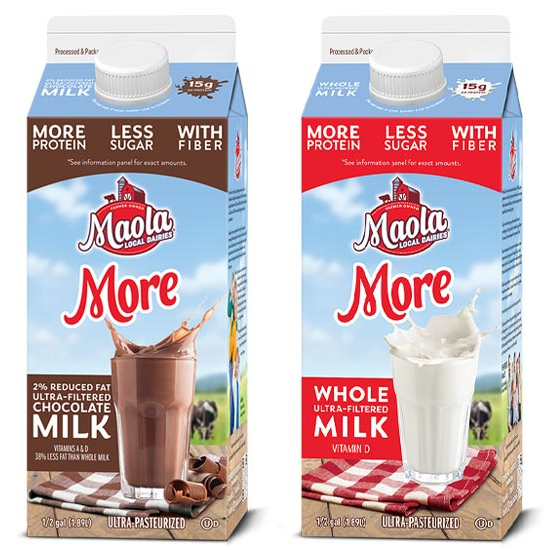
Maola More features 15 grams of protein in its whole ultra-filtered white milk and its 2% reduced fat chocolate milk. Courtesy of Maola Local Dairies
Ready-to-drink (RTD) protein beverages are leading that shift, including both traditional shakes and clear whey drinks, which represent arguably the most technically demanding format in the category, OSF Flavors’ Battu says.
"High-protein yogurts in Greek and Skyr style are firmly established. Cottage cheese has returned in a meaningful way, repositioned as a high-protein snack staple rather than a diet food. We also see protein moving into frozen desserts and enriched fluid milk," he adds.
Recently released protein-enriched products in dairy cases include MULU cottage cheese, a brand of Dairy Farmers of America (DFA), which contains 18 grams of protein per serving; Herndon, Va.-based Maola Local Dairies’ Maola More features 15 grams of protein in its whole ultra-filtered white milk and its 2% reduced fat chocolate milk; and Lactalis USA’s Kraft Natural Cheese Big Cheese Snack Protein with 17 grams of protein, 50% less fat and available in two flavors: Mild Cheddar and Pepper Jack.
For post-exercise recovery, Lactalis’ Pronativ Native Whey Protein delivers 20 grams of high-quality protein per serving and features rapid absorption that initiates muscle recovery in 30 minutes post-exercise, according to Lactalis USA’s Director of U.S. Communications Christopher Bona.
"Our main ingredient is cow’s milk," Bona says. "We see consumer interest to get protein in simple and convenient ways from cheese and yogurt to whey powder. Dairy is a natural protein source, and we look for ways to balance flavor and texture while helping consumers get natural protein from dairy."
Kristen Coady, chief innovation and brand officer at Kansas City, Kan.-based DFA, suggests that IFIC’s finding that "taste leads quality perception" is important and often overlooked by formulators who default to "more is better."
"No matter how impressive the protein content, consumers aren’t willing to compromise on the eating experience if the texture is gritty or the flavor falls short," Coady explains. "That's why 18g of protein in MULU cottage cheese is compelling — not just because of the number, but because it delivers on taste and texture. We spent a lot of time focusing on the taste of MULU and the overall eating experience, ensuring its smooth, creamy, and enjoyable without compromise.
"At roughly $4.26 per container, the value equation is strong compared to protein bars or ready-to-drink shakes that often cost two to three times more per serving," she continues. "For consumers doing the math on protein per dollar, especially those prioritizing both taste and nutrition, dairy is hard to beat."
Lauded for its portability, the global protein bars market is expanding steadily, valued at around $12.6 billion in 2026 and projected to reach $19 billion by 2033 at a compound annual growth rate (CAGR) of 6.1%, according to Persistence Market Research.
Photo courtesy of OSF Flavors
The peas have it
London-based Persistence Market Research also notes that the global pea protein market, valued at around $2.5 billion in 2026, is anticipated to grow at a CAGR of 7.1% to $4 billion by 2033. The expansion is being driven by the increasing adoption of plant-based diets, rising health consciousness, and growing demand for sustainable and clean-label protein sources.
"Pea protein is widely used in plant-based meat, dairy alternatives, and sports nutrition, supporting evolving consumer preferences for healthier and environmentally friendly food options," the report stated. "Market dynamics indicate strong innovation in product formulations and supply chain expansion, ensuring improved accessibility and functionality across industries."
Beyond health benefits, sustainability is a key factor driving adoption since pea cultivation requires significantly less water and emits lower greenhouse gases compared to animal-based protein production, Persistence Market Research noted.
"As consumers become more environmentally conscious, demand for sustainable protein sources continues to rise. This positions pea protein as a long-term solution in the global protein transition, supporting both nutritional and environmental goals," it reported.
"Plant-based food sales in major markets have grown significantly, reflecting a structural dietary shift. This trend directly supports the increased use of pea protein in meat substitutes, dairy alternatives, and functional foods, … making it a preferred ingredient for manufacturers developing innovative food products," the report stated.
OSF’s Battu agrees. "On the plant side, pea protein has become the default option, with faba bean, rice, and emerging yeast-derived proteins entering the conversation. Each source has a unique off-note signature: sulfurous and brothy from whey hydrolysates, earthy and beany from legume proteins, and astringent and dry from many plant fractions at higher inclusion levels."
Yet, pea proteins aren’t the only plant-based ingredients gaining ground. Growing at nearly 11% CAGR over the next 10 years, the chickpea protein market is expanding significantly, driven by the acceleration of clean-label, allergen-free product development and plant-based protein innovation, according to Newark, Del.-based Future Market Insights (FMI).
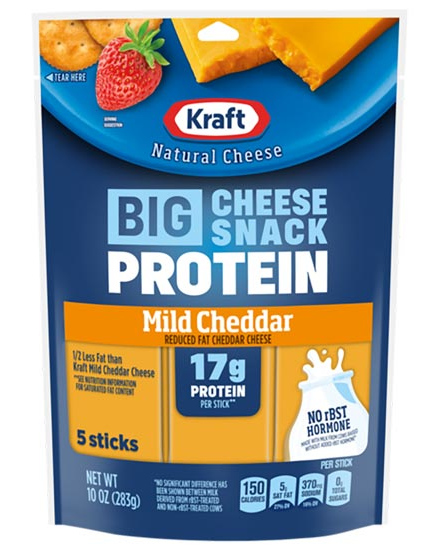
Available in two flavors, Mild Cheddar and Pepper Jack, Kraft Natural Cheese Big Cheese Snack Protein contains 17 grams of protein and 50% less fat in a portable snack. Courtesy of Lactalis USA
Valued at nearly $205 million and nearly $227 million in 2025 and 2026, respectively, the chickpea market is projected to exceed double-digit growth to $571 million by 2036, FMI states.
The Newark, Del.-based market research firm specifically names ADM, Cargill and Kerry for leading innovations in chickpea protein formulations, which feature a neutral flavor profile, an allergen-free formulation requirement, unlike soy and wheat, functional versatility across applications, and non-GMO and clean-label compliance.
As dairy manufacturers prioritize ingredient transparency and formulation flexibility, chickpeas are now a strategic alternative rather than a niche substitute, Kerry’s Cobbe states.
Through joint-venture partner PURIS, Cargill offers a variety of pea protein solutions designed to meet evolving formulation needs. This includes PURIS 2.0 pea protein, which offers improved solubility and a cleaner taste compared to many traditional plant proteins.
"It enables higher protein concentrations without compromising product quality. In fact, some customers are targeting up to 30 grams of protein per serving in plant-based, sports nutrition beverages — levels that are difficult to achieve with conventional plant proteins," says Cargill Senior Food Scientist Vaishu Sankarlal. "…Some ultra-filtered ready-to-drink shakes already deliver 40-plus grams of protein per serving, demonstrating just how far formulation capabilities have advanced."
Particularly with acidic beverages, protein stability becomes a big factor, she notes. "Plant proteins are typically unstable near their isoelectric point, making them challenging to use in low-pH applications like juices or fruit-flavored beverages," Sankarlal explains. "However, options like PURIS HiLo were developed for these low pH situations (pH < 5), enabling brands to use pea protein in acidic beverages while still delivering a smooth, enjoyable mouthfeel."
Additionally, these ingredients can also work well in hybrid products, where plant and dairy proteins are combined to boost nutrition while balancing cost, taste and functionality, she adds.
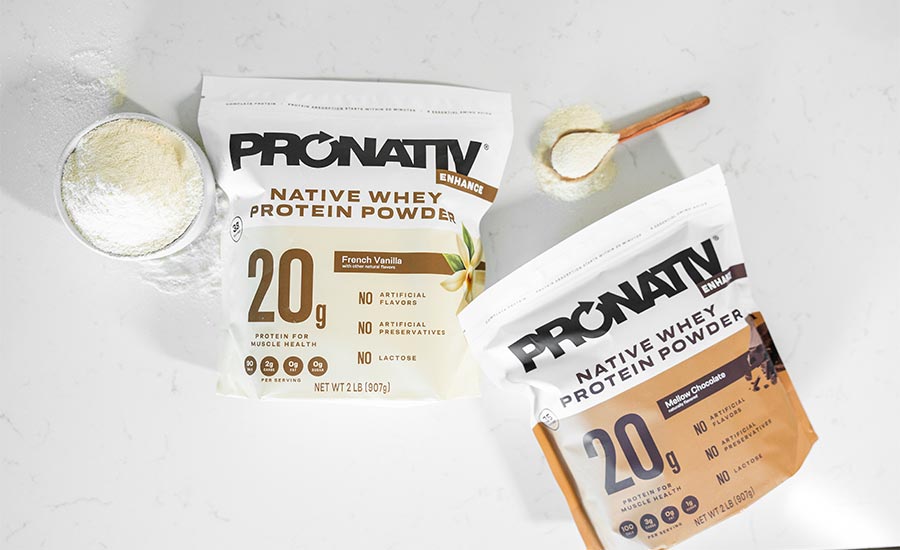
On the powder side, Lactalis’ Pronativ Native Whey Protein delivers 20 grams of high-quality protein per serving. Courtesy of Lactalis USA.
A broader protein toolbox
While some consumers are still chasing higher protein numbers, HealthFocus International’s Johnson indicates the quest is to find protein that fits into everyday life and delivers real benefits. "It’s less about the number on the label and more about how it tastes, feels, and supports your goals," she says.
Kerry’s Cobbe concurs. "While whey and casein remain foundational, today’s dairy formulations use a broader protein toolbox to balance nutrition, texture, taste and processing needs," he says.
Beyond the protein itself, Kerry brings integrated solutions that make high-protein dairy successful at scale.
"This includes taste modulation, masking technologies, texture systems, enzymes such as lactase, and digestive health solutions like BC30 probiotics, all designed to work together in real dairy applications," Cobbe explains. "Within dairy, we see increasing use of ultrafiltered milk systems, concentrates, isolates and blended dairy proteins that allow manufacturers to reach higher protein targets while managing texture, viscosity and mouthfeel. These ingredients offer complete amino acid profiles while enabling cleaner labels and more flexible formats."
FrieslandCampina Ingredients’ range of high-quality dairy proteins — primarily caseinates and whey — bring distinct functional and nutritional benefits. "Our caseinates, for example, deliver creaminess and stability, while also providing high-quality protein and essential amino acids across formats like yogurt, drinks and bars," Zillinger Molenaar highlights. "They also support sustained amino acid release, making them particularly suited to applications targeting muscle support over time, like overnight or between meals.
"Our whey proteins, derived from high-quality Dutch-type cheese, offer a strong nutritional profile," she continues. "They are also rich in essential amino acids, but are rapidly digested and absorbed, making them particularly well-suited to post-workout nutrition and recovery-focused products where fast protein delivery is important."
Deciding on which type of protein is best for a dairy or non-dairy product is only half the formulation process. Other factors need to be weighed.
Photo courtesy of Dairy Farmers of America
For example, in the ready-to-drink beverage space, processing requirements are another consideration. Cargill’s Sankarlal points out that beverages with 20 or more grams of protein per serving may clog ultra-high temperature (UHT) machines. Additionally, some proteins may cause high-protein beverages to become more viscous over time, yielding a final product that’s more akin to pudding than a drink.
Noting that both animal and plant proteins tend to thicken and gel over shelf life, adding hydrocolloids like carrageenan or gellan gum can help stabilize proteins and maintain consistent viscosity in high-protein dairy products, Sankarlal adds.
Kerry’s Cobbe suggests dairy processors be not only mindful of the amount of protein, but the quality of the protein being used. "High-protein systems introduce challenges like chalkiness, bitterness, viscosity issues, or heat instability. Nutritional needs demand specialty fractioned proteins, hydrolysates and peptides with increasing levels of purity," Cobbe explains. "Dairy innovation today focuses on ingredient selection, processing choices, and supporting systems that preserve optimal texture and consistency.
"At Kerry, we help customers choose the right protein system for the job," he continues. "It is never about protein in isolation. It is about how that protein performs in a real dairy matrix, interaction with other ingredients and through processing, shelf life and consumption."
Ingredient suppliers are enthusiastic about dairy’s inherent role in protein delivery. "Dairy is uniquely positioned for this protein moment," DFA’s Coady emphasizes. "Milk proteins are known for their high quality, and more consumers are paying attention to protein quality, not just the number on the label.
"… What I find most exciting is that protein’s rise is reinforcing many of dairy’s inherent strengths at a moment when consumers are thinking more deliberately about what they eat," she concludes. "Dairy delivers high-quality protein in familiar foods people trust, with strong taste performance, everyday versatility, and a direct connection to farmers. Brands that can bring those strengths together — and communicate them clearly — have a real competitive advantage."
Looking for a reprint of this article?
From high-res PDFs to custom plaques, order your copy today!