Dairy’s unique matrix improves nutrient delivery
The many forms of dairy provides superior nutrient bioavailability.
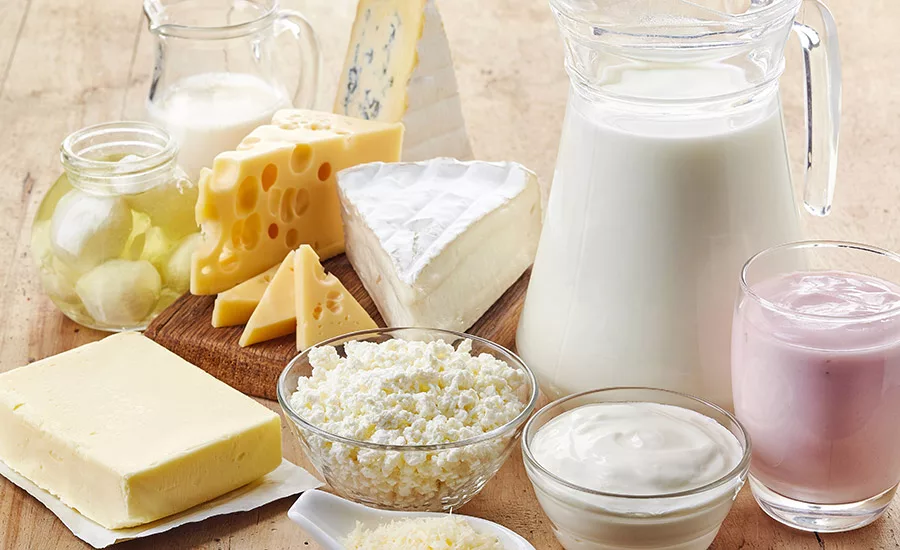
Photo courtesy of baibaz / iStock / Getty Images Plus

The goodness of dairy’s nine essential nutrients can be delivered in myriad ways: as milk, cheese, yogurt, protein powders, fermented milk drinks, ice cream, and more. The technologies that dairy processors and food manufacturers use to deliver dairy will affect both nutritional parameters and nutrient bioavailability of the finished dairy food. Understanding how the dairy matrix affects nutrient bioavailability will help consumers and health professionals select the optimal dairy products for everyday consumers and those with special dietary needs.
Nutritional parameters
Cow’s milk is composed of roughly 87.7% water, 3.4% fat, 3.3% protein, 4.9% lactose, and 0.7% minerals. Since ancient times, people have been converting fresh milk into yogurts and cheeses to improve shelf life and taste. Cheesemaking separates the two basic milk proteins, with the casein going primarily into cheese, and whey proteins being siphoned off and typically being converted into some type of whey protein powder. Converting milk into yogurt or cheese modifies the dairy matrix and affects digestion kinetics and physiological effects.
A significant segment of the world’s population is sensitive to lactose. There are currently a wide range of dairy products that are free of lactose, thanks to filtration technologies and lactase enzymes. This means that almost anyone can find milks, cheeses, yogurts and protein powders that fuel their nutrition without disturbing their tummy.
Dairy proteins have a wide range of physiological benefits, including improving satiety, building muscle, aiding weight management, and improving glucose control. Higher protein yogurts, whey protein powders, and higher protein milks all deliver increased protein. The natural water/protein ratio has been modified in creating these higher protein dairy products, and consumers are advised to drink increased amounts of water when following a higher protein diet.
Digestion kinetics
Ultrafiltration provides whey and casein proteins that are more bioavailable than those that have gone through the cheesemaking process. Native whey has had less heat treatment, and therefore has a higher bioavailability than cheese whey. Higher protein milks are also available, which are produced using ultrafiltered milk rather than casein ingredients, making them more digestible. This may be a benefit for elderly and cancer patients with decreased digestive capability.
A 2020 paper, “Symposium Review: The Dairy Matrix — Bioaccessibility and Bioavailability of Nutrients and Physiological Effects” by Sylvie Turgeon and Guillaume Brisson, explains how different dairy matrices affect nutrient availability.
Some of the most fragile consumers are pre-term babies. Partial hydrolysis of milk proteins makes them more easily digested and less allergenic when used in infant formula. Milkfat is one of the most biologically diverse fats, containing roughly 400 different fatty acids. The milkfat globule membrane facilitates digestion and assimilation by the newborn, and also promotes gut immunity and cerebral development. The colloidal structure of the casein micelles allows transport and delivery of proteins and minerals.
The rate of protein digestion can affect satiety. The Turgeon paper explores how the whey-to-casein ratio of yogurts impacts satiety. Their research found that yogurts formulated with increased whey protein significantly reduced subsequent energy intake. Yogurts with a higher whey/casein ratio had slower in vitro disintegration and soluble protein release.
Athletes have learned that whey protein is considered a “fast protein” and casein is considered a “slow protein.” Many athletes consume whey protein shortly after exercise for its increased bioavailability, leading to greater muscle protein synthesis. More recent research reveals that consuming whey protein at multiple times during the day, or in combination with casein protein leads to reduced muscle catabolism or breakdown.
There are approximately 2,000 different types of cheeses, spanning a wide range from soft cheeses to hard cheeses. Turgeon explored how the protein structure of cheeses affects their texture, which ultimately determines the disintegration and proteolysis of the dairy protein. This affects postprandial lipemia (how the cheese fat is digested after a meal). Calcium content, fat content, fat structure, cheese texture, and the microbial ecosystem of cheese all contribute to the dairy matrix and the digestibility and physiological effects of cheese consumption.
A 2023 paper, “Impact of Milk Storage and Heat Treatments on In Vitro Protein Digestibility of Soft Cheese,” found that a significantly higher content of amino acids were discovered in digested cheese produced from milk subjected to a higher temperature of pasteurization. There also was a significant increase in total amino acid content in the cheese after 21 days of storage, confirming the positive effect of ripening on protein digestibility.
Many plant-based dairy alternatives lack the robust nutritional profile of real dairy, and often fall short in protein content. Even when plant-based dairy alternatives have a similar nutrient profile, the bioavailability of their nutrients might not come close to the bioavailability of real dairy delivered in its unique matrix.
Looking for a reprint of this article?
From high-res PDFs to custom plaques, order your copy today!