2018 State of the Industry report: Milk is struggling in the bunker
But processors adept at 'reading the green' are finding pockets of opportunity to grow sales.



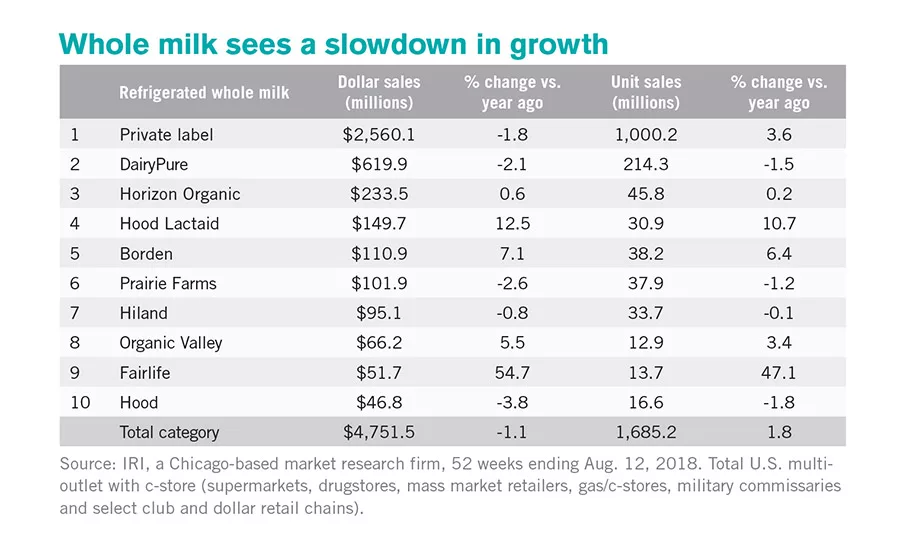
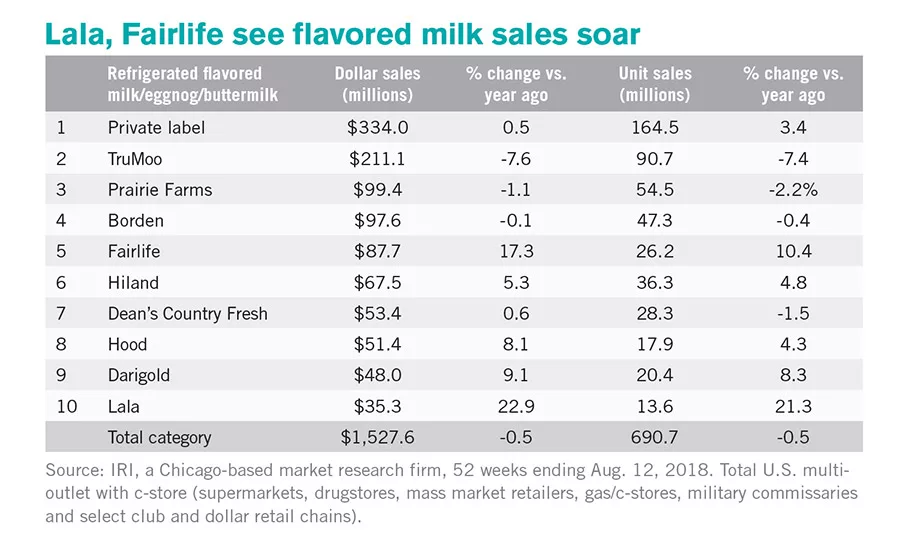
It’s been another year filled with bogeys for the milk segment. Dollar sales in the overall category fell 3.9% to $15.3 billion during the 52 weeks ending Aug. 12, 2018, data from Chicago-based market research firm IRI show. Unit sales dropped 1.4%.
And in line with a multi-year trend, the refrigerated skim/low-fat milk subcategory — still the largest subcategory — found itself stuck with a number of bad lies. Dollar sales tumbled 8.4%, while unit sales took a 5.0% dive.
Milk | Cheese | Cultured | Ice Cream | Butter | Non-dairy Beverages | Ingredients | Exports
Even some subcategories that have been in growth mode in recent years weren’t been able to avoid the hazards. For example, dollar and unit sales in the refrigerated flavored milk/eggnog and buttermilk segment both declined by 0.5%. And although refrigerated whole milk saw a modest (1.8%) increase in unit sales, dollar sales were down 1.1%.
Find the sweet spot
Processors could help turn things around by focusing on the evolving wants and needs of today’s consumers.
“Consumers no longer look to milk to just fill the cereal bowl,” said Erin Massey, product development manager for Prairie Farms Dairy Inc., Edwardsville, Ill. “Consumers want the foods they consume to be functional, and dairy certainly has that appeal naturally.”
And augmenting milk’s natural functionality to address current consumer needs could help grow the category. One area of increased consumer awareness and interest is digestive health.
“This has put the spotlight not only on probiotics, but also on lactose-free dairy products,” Massey said. Both categories have seen tremendous growth.”
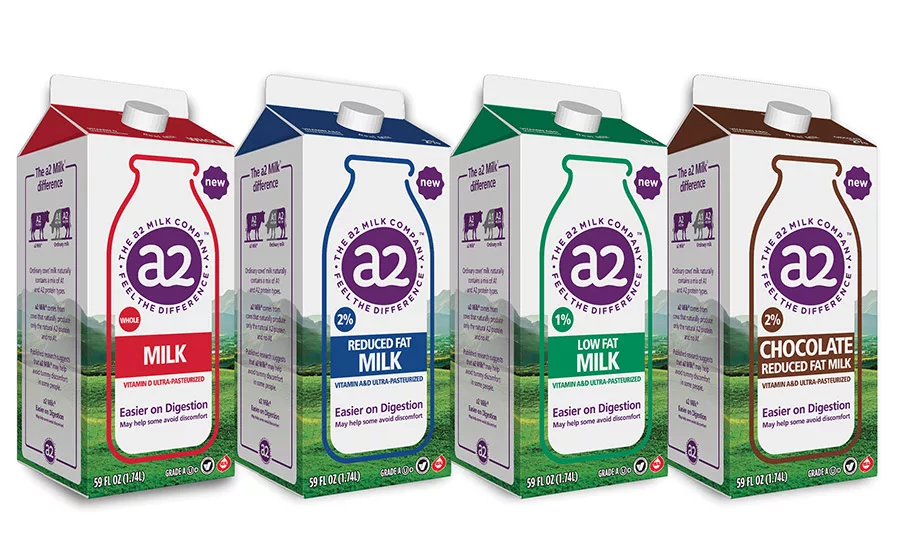
Some consumers also are gravitating toward A1 protein-free milk in the name of digestive health. As Blake Waltrip, CEO of The a2 Milk Co.’s Boulder, Colo.-based U.S. region, explained, “ordinary” cow’s milk has both A1 and A2 beta-casein proteins. But the company’s a2 milk is sourced from cows that produce only A2 protein.
“a2 milk is 100% real cow’s milk and may help some people avoid discomfort from milk,” he said.
In 2018, the company doubled its U.S. distribution, expanding into more than 6,000 retailers, including Walmart and Costco, he added.
And although its growth has slowed, whole milk still fits in with consumers’ gravitation toward healthful fats. While fat-free milk lost a lot of ground between 2013 and 2017, whole-milk sales went from 29% to 37%, noted Cary Frye, senior vice president of regulatory affairs for the International Dairy Foods Association, Washington, D.C.
“More than anything, consumers are demanding higher fat — both because we like it and because of recent studies indicating that full-fat dairy isn’t something we need to avoid,” added Nick Suffredin, vice president of research and development for Dallas-based Borden Dairy Co.
Julia Kadison, CEO of the Milk Processor Education Program (MilkPEP), Washington, D.C., also pointed to high consumer interest in full-fat milk.
“Having been around the milk industry for two decades now, it’s exciting for me to see classic whole milk experience growth due to its relevance in today’s food culture, along with the emerging research supporting whole milk in [the] diet,” she said.
Still, fat-free aficionados are not necessarily moving directly to whole milk.
“But everyone’s moving up in fat,” Frye said.
Another area of consumer interest is flavored milk. Chris Keyes, vice president of sales strategy for Kansas City, Kan.-based Dairy Farmers of America (DFA), said the trend is being spurred by athletes and their understanding “of the replenishment value of 3 grams of carbs to 1 gram of protein after exercise.”
Marissa Jarratt, senior vice president, marketing, innovation and R&D for Dallas-based Dean Foods Co., agreed, adding that chocolate milk now enjoys a broader fan base that isn’t limited to children. And today’s options go well beyond chocolate.
“TruMoo has enjoyed great success harnessing the power of chocolate milk’s delicious history,” she said. “But it has also leveraged a new story, with a variety of flavor options and protein levels that can be enjoyed by everyone from families to elite athletes.”
Speaking of flavor options, dairy processors still have a lot of opportunity here, said Paul Ziemnisky, executive vice president of global innovation partnerships for Dairy Management Inc. (DMI), Rosemont, Ill. He noted that the flavored milk segment is still 98% chocolate.
“How come we’re not doing more vanilla work? … And the industry is going to need the capacity to do flavor blends,” he said. “If you look at the global front, you’re seeing a lot of milk plus fruit, milk plus grains, matcha milk.”
The expansion of flavored milk into single-serve containers also presents opportunity, Massey added, as it fits in with consumers’ desire for convenience and variety.
Coffee is hot in the milk category, too. Milk and coffee combos ranging from coffee milk to cold brew coffees with added milk are resonating with today’s consumers, Frye noted.
“It’s perfect, coffee and milk together in a chilled product,” she said. “So I think that’s a trend that we’ll be seeing more.”
Seeking a hole-in-one
The past year saw a number of new milk offerings in line with the aforementioned trends. On the digestive health side, DFA’s Kemps team introduced a probiotic milk to the Minnesota and Wisconsin markets, Keyes noted.
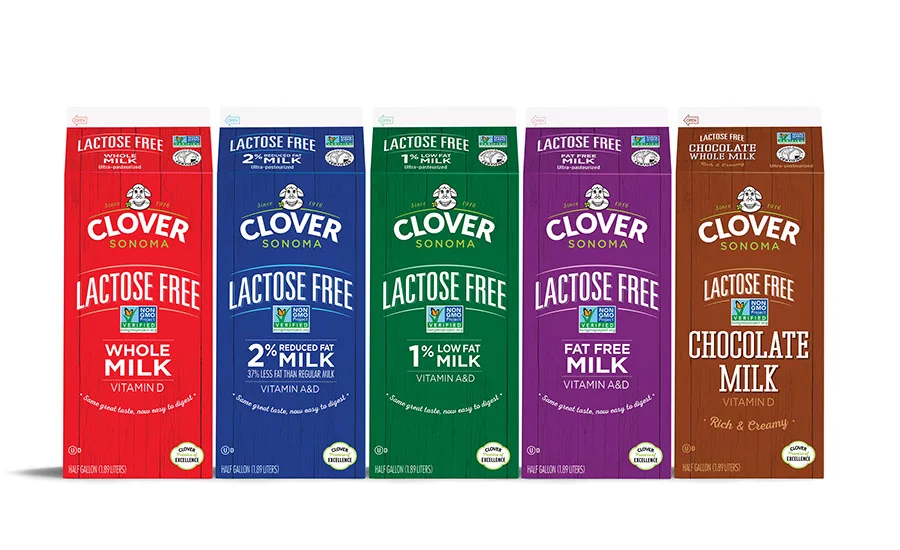
And Clover Sonoma, Petaluma, Calif., launched a Non-GMO Project Verified lactose-free milk line. The line is available in whole-milk, 2% reduced-fat, 1% low-fat, fat-free and chocolate whole-milk varieties.
As for full-fat offerings, Five Acre Farms, New York, debuted Five Acre Farms Local chocolate milk this past summer.
“Our fresh, nutritious and delicious local whole milk is the basis for our chocolate milk,” said Dan Horan, the company’s CEO.
And Straus Family Creamery, Petaluma, Calif., took whole milk to a new level with the introduction of its Straus Family Creamery Organic Extra-Rich Barista milk for specialty coffee and tea industry professionals. The company said the milk is made with organic milk from pasture-fed dairy cows that produce a higher milk fat content and higher milk solids than what’s traditionally associated with whole milk (4.2% compared to 3.5%).
On the flavors front, Prairie Farms Dairy recently launched new fall flavors under its Prairie Farms brand that include sugar cookie, chocolate mint and maple pecan, Massey said.
“Brown, cookie and cake flavors continue to be a great complement to sweet, creamy milk,” she noted.
And DFA’s Oakhurst Dairy, Portland, Maine, recently reformulated its strawberry and coffee milks, Keyes said. Originally a fat-free milk, the strawberry variety now has a low-fat formula. And the coffee milk moved from a fat-free formula to a whole-milk one.
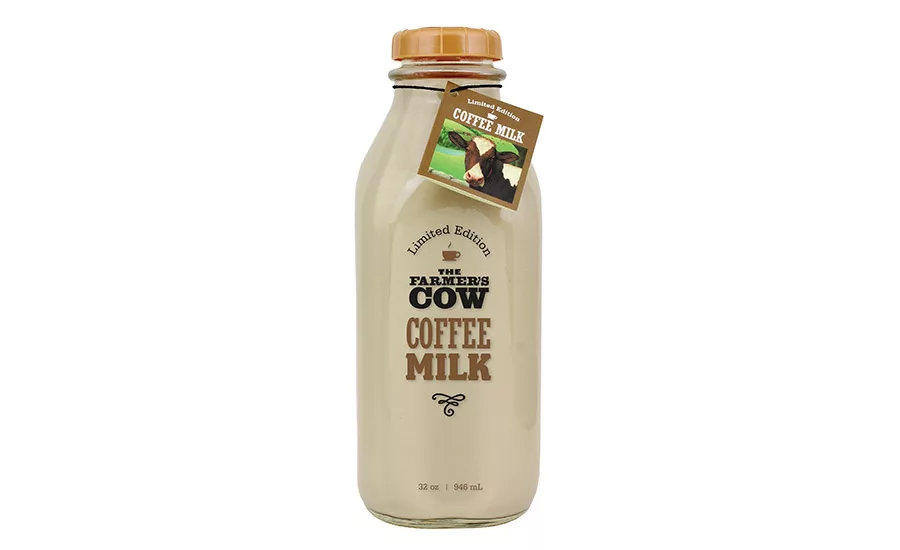
In early 2018, The Farmer’s Cow, Lebanon, Conn., also introduced a whole-milk coffee milk. The limited-edition product retailed in a 32-ounce glass bottle.
Avoid the sand traps
The milk category is awash with challenges that could mean dubs and flubs for the unprepared. One such challenge is the continuing drop in the consumption of white milk.
“MilkPEP has done an amazing job of getting the message out on the health benefits of chocolate milk, and in 2019 has an exciting program planned to bring the same nutritional message to consumers about white milk,” Keyes noted. “DFA strongly supports the work being done by MilkPEP and DMI in turning around the milk consumption trends.”
Another challenge that currently looms large over the category is consumer confusion as to how milk’s nutrition compares with that of plant-based alternatives.
“We encounter so much information and advertising every day that it can be hard for people to know what is factual and what is not,” Suffredin said.
Cow’s milk not only contains more protein than most plant-based dairy alternatives, but also naturally boasts nine essential nutrients.
“At Borden, we’re responding to this overload of information by finding new and better ways to ‘cut through the clutter’ and connect with consumers to give them the facts,” Suffredin added.
Yet another pain point is the disconnection on the part of some processors from their supply — and the requirement to be nimbler, Horan said.
“Shared values and the willingness to move quickly are critical to success,” he noted, “and we try to embrace that ethos at Five Acre Farms. The industry also continues to struggle with transparency, a concept that’s essential to today’s consumers — and to those of the future.”
The at-retail story, too, remains a challenge, Jarratt said. Dairy, including milk, “should own ‘fresh and local’ within a store,” but it has not been able to tell its story as well as some other categories and departments have.
“If we are able to illustrate to retailers the cross-category purchase power fresh dairy affords, we see a win-win opportunity for retailers and their customers,” she said. “And the converse is also true: that although consumers aren’t choosing retailers based on milk, if retailers don’t meet their dairy needs, they will find other shopping options.”
And milk’s consistency is both an asset and a challenge, Kadison pointed out. Although milk is a constant that’s not only trusted and timeless, but also “just as delicious and nutritious as it’s always been,” consumers have more choices today. Moreover, they can choose from a number of paths to purchase.
“The opportunity lies in how the milk industry embraces these changes,” she said.
For its part, MilkPEP is shifting its approach, she explained. It aims to connect with people via “real-life moments that matter” and inspire them to see milk in a new way.
“We’re using data to better reach people in new, more precise ways, with messages tailor-made for them, focused on inspiring them to buy, serve, drink and use more milk.”
Looking ahead to 2019, milk’s “greatest opportunity,” Kadison added, is to successfully connect with Americans by showing how milk connects everyone to many important things in life, including health, fun family moments and more.
“This opportunity will only be realized if the entire dairy supply chain sees the potential and aligns in making it happen,” she stressed. “From the farmers getting the great message of sustainable passion for their cows and the land, to milk brands offering on-trend products and relevant messages to customers and consumers, to retailers and e-tailers providing compelling experiences around the milk case — we each have an important role to play in transforming the milk category back to growth.”
Milk | Cheese | Cultured | Ice Cream | Butter | Non-dairy Beverages | Ingredients | Exports
Looking for a reprint of this article?
From high-res PDFs to custom plaques, order your copy today!