Dairy Foods logo
search
cart
facebook twitter linkedin youtube
  • Sign In
  • Create Account
  • Sign Out
  • My Account
Dairy Foods logo
  • NEWS
    • DAIRY REGULATIONS
  • PRODUCTS
    • New Products
    • Butter
    • Cheese
    • Cultured Dairy
    • Frozen Desserts
    • Ice Cream/Novelties
    • Milk
    • Non-Dairy Beverages
    • Sales Data
    • Whey, Milk Powder
    • Dairy Alternatives
  • INGREDIENTS
    • Cocoa
    • Colors/Flavors
    • Cultures/Enzymes
    • Fiber
    • Gums, Stabilizers, and Texturants
    • Inclusions
    • Omegas/Lipids
    • Prebiotics
    • Probiotics
    • Sweeteners
    • Other
  • OPERATIONS
    • SUSTAINABILITY
    • Equipment
    • Processing
    • Packaging
    • Food Safety & Sanitation
    • Membrane Technology
  • MEDIA
    • Dairy Foods TV
    • Podcasts
    • Webinars
  • DIRECTORIES
    • Buyers Guide
    • Dairy Plants USA
  • MEMBRANE FORUM
  • MORE
    • Associations
    • Dairy Foods' News & Views Newsletter
    • Blogs
    • Case Studies
    • Classifieds
    • Custom Content & Marketing Services
    • Dairy Foods Store
    • Market Research
    • Supplier Spotlights
    • Tradeshows and Events
    • Strategy Guides
  • AWARDS
    • Dairy Plant of the Year Award
    • Breakthrough Award
    • Dairy Processor of the Year
  • EMAGAZINE
    • eMagazines
    • Archive Issues
    • Contact
    • Advertise
    • SIGN UP!
    • Columnists
    • Dairy 100
    • State of the Industry Report
    OperationsMembrane TechnologySustainability

    Membrane Technologies

    The many ways to recover protein and minerals from whey

    Dairy processors target high-margin proteins, minerals and water reuse as filtration technologies evolve.
    By Sammy Bredar
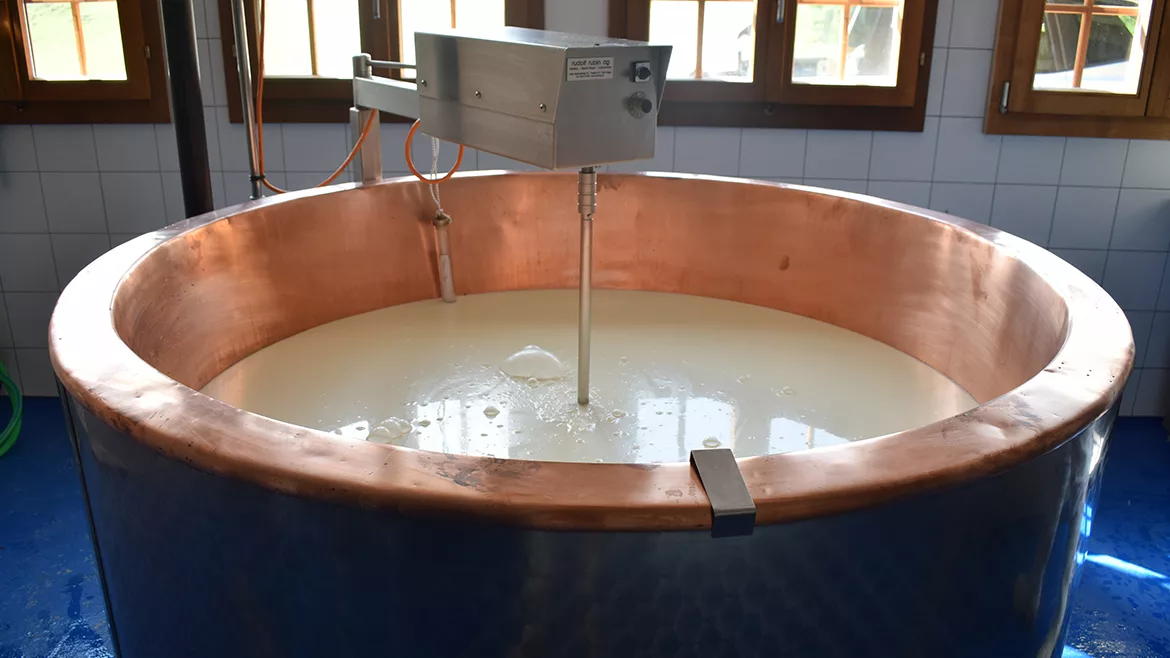
    Large copper cheese-making vat filled with milk, equipped with an automated stirring device inside a tiled dairy processing room with wooden windows.
    Photo courtesy of dyhuettner / Pixabay
    May 8, 2026

    Previously thought of as just a byproduct, whey is increasingly becoming a value stream for dairy processors, driven by strong demand for high protein, sustainability goals and pressure to reduce waste. By extracting more value from whey streams, producers can not only minimize wastewater management challenges but also drive value through byproduct valorization.

    According to Fortune Business Insights, the global whey protein market was $13.58 billion in 2025, projected to grow to $26.24 billion by 2034 at a compound annual growth rate of 7.62%. Consumer awareness and concern over nutrition and health are helping North America to dominate the global whey protein market; the North American market alone is projected to reach $5.11 billion by 2034.

    Whey protein concentrates and isolates are key ingredients in sports nutrition, clinical nutrition and infant formula applications, further propelling interest in recovering more value from whey streams. As consumer concern over protein intake continues to rise, these applications are becoming more relevant for dairy processors.

    Advancements in membrane filtration and separation technologies are central to recovering more value from whey streams. These systems enable processors to selectively recover proteins, minerals and lactose while supporting water reuse within plant operations.

    “Once dismissed as a low-value byproduct, whey has transitioned into a strategic revenue engine fueled by global demand for high-purity ingredients,” says Shanti Bhushan, principal process development engineer for GEA Group. Environmental pressures play a large role in this shift, particularly as processors look to reduce waste volume.

    A 2024 study published in Membranes highlights the use of integrated processing approaches to produce whey protein concentrates and lactose while recovering water from diafiltration streams, demonstrating how multiple value streams can be generated from a single process.

    According to Bhushan, these systems function by fractionating whey based on differences in size, charge and solubility. Microfiltration (MF) is typically used as a pretreatment step to reduce bacterial load, residual fat and other impurities, helping improve product quality and stability. Ultrafiltration (UF) then concentrates proteins by retaining them in the retentate while allowing lactose, minerals and water to pass through. “UF membranes retain all whey proteins in the retentate, yielding whey protein concentrates,” Bhushan says.

    UF and diafiltration remain central to whey separation, with performance tied closely to membrane behavior and process conditions. A 2026 study in Sustainable Chemistry indicates that separation efficiency in UF and diafiltration depends on factors such as membrane selectivity, hydrodynamic conditions and solute interactions at the membrane interface.

    Additional processing steps like diafiltration can further increase protein purity by removing remaining lactose and minerals. For higher-purity ingredients such as whey protein isolate, multiple filtration stages may be required to separate residual fat and reach target protein levels.

    Recovery strategies are increasingly extending beyond protein to include lactose concentration, mineral recovery and water reuse. The 2024 Membranes study demonstrates that integrated systems can remove lactose while enabling water reuse from diafiltration processes. The same research highlights how mineral fractions, including calcium, can be separated and recovered from whey streams and repurposed for use in fortified food and beverage applications, supporting additional value creation beyond protein ingredients.

    Bhushan notes that nanofiltration (NF) enables selective mineral removal, supporting the production of demineralized whey powders, while reverse osmosis (RO) is used to concentrate streams and recover water for reuse at the plant. “RO membranes deliver maximum concentration … and generate water for clean-in-place cycles and diafiltration,” Bhushan says.

    Membrane filtration systems are also enabling recovery of more specialized components from whey streams. A 2025 Foods review highlights growing interest in whey as a source of functional and value-added ingredients across food, nutrition and pharmaceutical applications.

    Bhushan points to rising interest in isolating bioactive compounds such as lactoferrin and alpha-lactalbumin, as well as ingredients like galactooligosaccharides (GOS) and dairy-derived calcium. “Membrane filtration plays a vital role in extracting, purifying and concentrating lactoferrin,” he says.

    Implementing and optimizing membrane filtration systems requires careful control of operating conditions. According to Bhushan, processors must balance factors such as crossflow velocity, transmembrane pressure and temperature to maintain performance while preserving product quality. He also notes the importance of pretreatment, automation and tailored clean-in-place strategies to support consistent operation.

    The Sustainable Chemistry study emphasizes that membrane fouling and feed variability can significantly impact system efficiency, reinforcing the need for process control and monitoring.

    Water recovery is becoming an increasingly important part of whey valorization strategies. The 2024 Membranes study highlights the role of integrated systems in recovering water from processing streams.

    Bhushan adds that advances in system integration and process design are enabling processors to recover and reuse water within plant operations, supporting both sustainability goals and cost reduction initiatives.

    As dairy processors seek to reduce the environmental and financial strain associated with whey disposal, membrane filtration enables them to transform a disposal challenge into a value stream, balancing both economic return and resource efficiency.

    KEYWORDS: clean in place diafiltration lactose membrane filtration solutions microfiltration nanofiltration protein reverse osmosis wastewater whey protein

    Share This Story

    Looking for a reprint of this article?
    From high-res PDFs to custom plaques, order your copy today!

    Sbredar headshot

    Associate Group Editor, The National Provisioner & Dairy Foods

    Sammy Bredar has previously worked as a freelance writer and assistant editor. She graduated from Ball State University in 2022 with a BA in English.

    Recommended Content

    JOIN TODAY
    to unlock your recommendations.

    Already have an account? Sign In

    • Lifeway Organic Kefir in different flavors inside a refrigerated grocery shelf.

      Dairy Foods names Lifeway Foods 2025 Processor of the Year

      Lifeway Foods donates $10,000 to wildfire victims,...
      Dairy Foods & Beverages
      By: Brian Berk
    • Two female farmers are standing in a field, holding a large milk canister, looking at several cows at dairy farm.

      Honoring Women Leaders Shaping the Dairy Industry

      For the fourth consecutive year, Dairy Foods is proud to...
      Dairy Foods & Beverages
      By: Barbara Harfmann
    • Main feature for State of the Industry with dairy products album cover with a gradient circular--patterned backgorund.

      2025 State of the Dairy Industry

      Welcome to the 2025 State of the Industry report. For...
      Ingredients for Dairy Processors
    Manage My Account
    • eMagazine Subscription
    • Dairy Foods News & Views Newsletter
    • Online Registration
    • Manage My Preferences
    • Subscription Customer Service
    • Connect with Dairy Foods

    More Videos

    Popular Stories

    An overhead and close-up view of a bowl of cottage cheese topped with fresh blueberries.

    Cottage cheese sales top $2 Billion

    Kemps debuts new milk products

    Kemps debuts Protein+ Milk

    A young Asian mother holding her son and a sippy cup, an older woman is in the blurred background.

    Finding the right infant formula is crucial to a baby’s growth and development

    Outlook Report: Women in Dairy

    Products

    Probiotic Ice Cream: Science and Technology

    Probiotic Ice Cream: Science and Technology

    See More Products
    Let's Talk Dairy podcast promo

    Related Articles

    • Lab Talk: From Whey to Witches

      See More
    • Kenyan Industry Struggles to Recover

      See More
    • Dairy plants use pigging systems to recover product, reduce waste

      See More

    Related Products

    See More Products
    • From Milk By-Products to Milk Ingredients: Upgrading the Cycle

    • GlobalData_Consumer.jpg

      Impulse Ice Cream – Single Serve (Ice Cream) Market in the United States of America – Outlook to 2024...

    See More Products

    Events

    View AllSubmit An Event
    • July 28, 2016

      Optimize Whey Protein Isolate Production: Discover New Opportunities from Whey Protein Phospholipid Concentrate Research

      On Demand Production of Whey Protein Isolates (WPI) have always been hampered by the creation of pro-cream. This occurs as a byproduct during the microfiltration step to remove the remaining cream in Whey Protein Concentrate to achieve 90% WPI. However, new advancements in WPI processing equipment alongside research conducted at the Wisconsin Center for Dairy Research, has helped increase value, awareness and applications for the use of Whey Protein Phospholipid Concentrate (WPPC).
    View AllSubmit An Event

    Related Directories

    • Whey To Go

    • Hilmar Whey Protein

    ×

    Stay ahead of the curve. Unlock a dose of cutting-edge insights.

    Receive our premium content directly to your inbox.

    SIGN-UP TODAY
    • RESOURCES
      • Advertise
      • Contact Us
      • Directories
      • Store
      • Want More
    • SIGN UP TODAY
      • Create Account
      • eMagazine
      • Newsletter
      • Customer Service
      • Manage Preferences
    • SERVICES
      • Marketing Services
      • Reprints
      • Market Research
      • List Rental
      • Survey/Respondent Access
    • STAY CONNECTED
      • LinkedIn
      • Facebook
      • YouTube
      • X (Twitter)
    • PRIVACY
      • PRIVACY POLICY
      • TERMS & CONDITIONS
      • DO NOT SELL MY INFORMATION
      • PRIVACY REQUEST
      • ACCESSIBILITY

    Copyright ©2026. All Rights Reserved BNP Media, Inc. and BNP Media II, LLC.

    Design, CMS, Hosting & Web Development :: ePublishing