Outlook Report
Clean labels, clear opportunity: Dairy responds to evolving consumer demands
Transparency drives dairy innovation in the clean-label era.
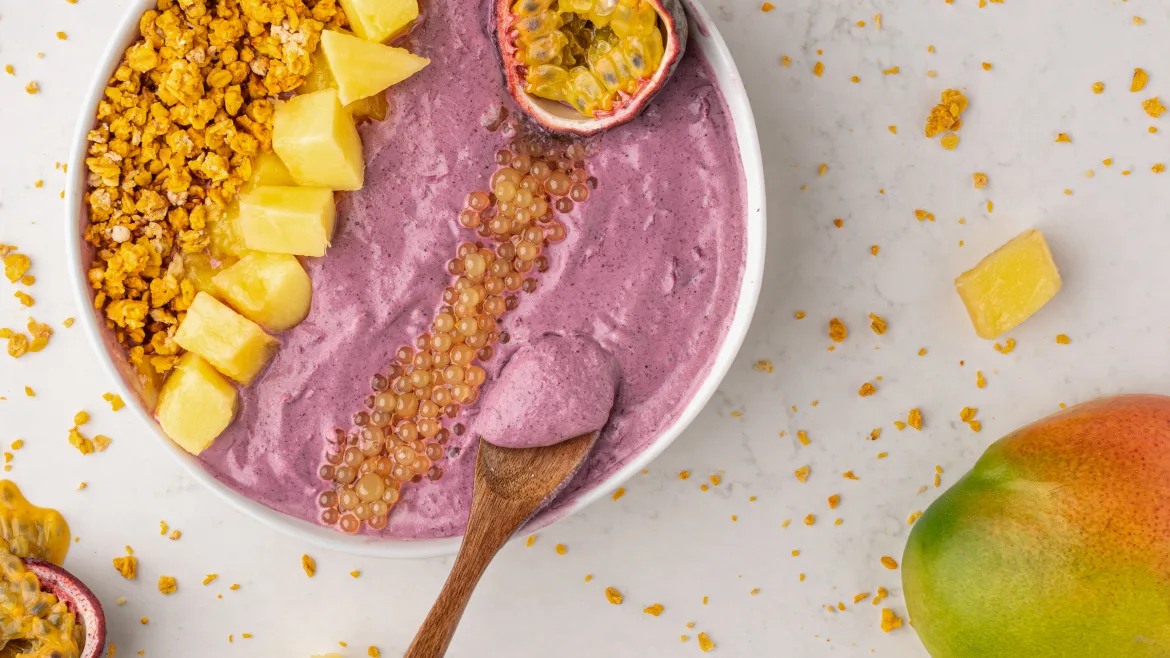
'There’s constant media coverage around ultra-processed foods, and on social media, influencers are helping to popularize the idea of clean eating. It makes sense for dairy brands to try to shorten ingredient lists, but using ingredients that consumers know and trust is always going to be vital,' says Alice Lee, marketing manager, GNT USA.
"We are what we eat." The origin of the phrase dates back more than 100 years, but consumers have perhaps never taken the phrase more seriously than today, specifically seeking clean-label and natural ingredients.
According to Global Market Insights, clean label refers to ingredients that are "natural and less processed and pure food ingredients manufactured without artificial additives, preservatives, or synthetics are known as clean-label ingredients. The market has been significantly influenced by the rising demand among consumers for transparency and preference in ingredients, as buyers tend to go toward products perceived to be healthier and safer."
The global clean-label market reached $28.2 billion in 2024, rising to an expected $31.8 billion in 2025, and predicted to total $89.7 billion in 2034, based on a compound annual growth rate (CAGR) of 12.2%. Asia is the largest clean-label market, but North America is the fastest growing, led by the recent health and wellness trends, according to the Selbyville, Del.-based market research firm.
Research conducted by Innova Market Insights reveals that nearly one in two consumers purchased more fresh, unprocessed foods over the past year. Around 30% are reducing processed foods, while 27% are trying to limit products or ingredients perceived as bad for them. They are also limiting artificial preservatives, sweeteners and additives.
"Top global clean-label demands range from no artificial ingredients and no additives to only using natural ingredients and organic sourcing. Transparent, honest labeling remains essential, as consumers seek clarity from manufacturers. This preference is particularly strong in the snacking category, where naturalness is top among the health-related attributes," the Amsterdam-based firm notes.
Emily Berg, marketing manager for Minneapolis-based Cargill, suggests consumers define clean label in different ways, and those expectations continue to evolve.
"While ingredient avoidance remains the leading reason consumers review labels, interest in seeking out specific ingredients is gaining momentum," Berg says. "Today, 61% of consumers say they check ingredient lists to avoid certain ingredients, while nearly half (45%) report actively looking for specific ingredients, up six points since 2022."
Berg notes the trend is particularly strong among younger consumers, "where interest in ingredient seeking has increased 18 percentage points among Gen Z since 2022. Increasingly, nutritional considerations such as protein content and gut health are becoming a part of the conversation. At the same time, many consumers still prioritize shorter ingredient lists and recognizable ingredients."
Alice Lee, technical marketing manager, Dallas, N.C.-based GNT USA, stresses consumers are certainly becoming much more discerning about ingredients. "There’s constant media coverage around ultra-processed foods, and on social media, influencers are helping to popularize the idea of clean eating. It makes sense for dairy brands to try to shorten ingredient lists, but using ingredients that consumers know and trust is always going to be vital," she says.
According to Amy Chen, president and chief commercial officer, Oobli, Davis, Calif., "Consumers are seeking ‘naturalness:’ clean labels with ingredients they recognize, understand and can trace back to a source. Familiarity is key. If a shopper can’t understand where an ingredient comes from, it immediately raises a red flag. Beyond transparency, we’re also seeing a strong demand for functional benefits, particularly protein, fiber and added nutrients, along with the clean-label story."

While consumers are more likely to report checking ingredient lists for plant-based milks (71%) and yogurt (63%), only 48% of consumers report checking ingredient lists when shopping for ice cream, according to Cargill’s IngredienTracker Wave. Photo by kirin_photo/iStock / Getty Images Plus via Getty Images
How dairy fits in
Consumers are clearly taking ingredient labels more seriously, but that doesn’t mean they have the same mindset regarding every dairy product. In fact, shopping mindsets vary by category, influencing how closely consumers evaluate products, Berg reveals.
"For example, consumers are more likely to report checking ingredient lists for plant-based milks (71%) and yogurt (63%), while only 48% of consumers report checking ingredient lists when shopping for ice cream (Cargill IngredienTracker Wave 12, 2026). This likely reflects a perceived ‘health halo’ around certain categories versus a more indulgent lens for others, shaping what consumers accept and expect out of those categories," Berg states. "However, even in historically indulgent categories such as dessert and ice cream, younger generations — particularly Gen Z — report a growing appetite for products that deliver not only great taste and premium quality, but also attributes like real ingredients, sustainability credentials, organic and local sourcing or production."
Chen adds that consumers eating ice cream are in "indulgence mode," and the "bar for clean or natural ingredients tends to be lower because the experience is the point. Compare that to milk or yogurt, where consumers are much more discerning."
However, a growing subset of consumers is blurring that line. "They want the indulgence experience (the ice cream, the flavored yogurt) but with a cleaner, more health-conscious profile. High-protein, reduced-sugar options are resonating strongly with this group, and it’s a segment that’s only going to expand," Chen asserts.
When developing products, processors must keep dairy regulations in mind, which could completely change the game. For example, Lee notes the clean-label trend was already helping to accelerate the switch to natural, plant-based colors across dairy products, and this "demand has increased hugely since the FDA (U.S. Food and Drug Administration) announced the Red 3 ban and its goal to phase out synthetic dyes.
"Beyond compliance, consumers are increasingly scrutinizing ingredient lists and favoring products made with recognizable, plant-derived ingredients," she continues. "For dairy processors, this has led to growing interest in ingredients like fruit and vegetable concentrates used for coloring, flavoring or functional benefits, especially in yogurts, ice cream and fruit preparations."
Lee adds that government regulations are pushing dairy processors to rethink ingredient lists holistically. "Instead of swapping one additive for another, many are simplifying formulations and choosing ingredients consumers recognize, like fruit and vegetable concentrates used for coloring," she maintains. "Natural ingredients behave differently than synthetic ones, especially in dairy systems. Factors including pH, heat treatment, fat content, and shelf life will influence color performance, so regulatory changes are driving earlier collaboration between processors and ingredient suppliers. Our EXBERRY colors are made from non-GMO fruit, vegetables and plants. They allow for label declarations such as ‘fruit and vegetable juice for color,’ so consumers can instantly see that they’re clean and natural."
Chen is seeing a strong industrywide push to eliminate synthetic colors, driven in large part by FDA actions. "At the same time, sugar reduction is becoming a hard target. The emerging guidance around limiting meals to no more than 10 grams of sugar is shaping how formulations are being evaluated across the board," the Oobli executive maintains. "The impact is especially visible in schools, where updated USDA nutrition standards now limit flavored milk to 10 grams of added sugar per eight-ounce serving and yogurt to 12 grams of added sugar per six-ounce serving."
Chen calls these current times "the moment to get ahead of reformulation. The question isn’t just how to reduce sugar, but how to do it without sacrificing the taste experience consumers expect. This means exploring sweetness alternatives that genuinely deliver on flavor while meeting the consumer’s desire for lower-sugar options. Those who start now will be far better positioned to serve consumers' wants and needs than those who wait."
Berg continues that Cargill is seeing growing adoption of non-artificial, non-nutritive sweeteners in a variety of dairy categories. "In yogurt, for example, dollar sales of products containing stevia and monk fruit grew 35% and 50%, respectively, year over year. Meanwhile, dollar sales of yogurt products containing sucralose and acesulfame potassium (ace-K) declined 8% and 9% respectively (Nielsen, Total xAOC, 52 weeks w/e 5/2/26). It’s a clear reflection of rising consumer demand for formulations made without artificial sweeteners," she says.
A "sweet" future?
So where might we go from here? Berg predicts one key area of innovation is multifunctional ingredients that support both label appeal and product performance. "Soluble corn fiber, for example, contributes bulk, supports sugar reduction and adds fiber content while helping brands maintain shorter, simpler ingredient lists. We’re also seeing greater use of ingredients like lecithin as alternatives to less label-friendly emulsifiers, and pectin as a label-friendly way to protect dairy proteins during processing," the Cargill executive suggests.
Innovation in native starches continues to advance, as well, Berg asserts. "Advanced functional native starches like our SimPure line are designed to replace modified starches while still delivering the performance dairy applications require. In products like yogurt, our SimPure functional native starches help provide viscosity, water binding and shelf-life stability while supporting simpler labels. That level of functionality represents a significant evolution from what the industry could achieve just a decade ago."
Looking ahead, Cargill expects we will continue to see ingredients and technologies that "help simplify labels without compromising taste, texture or performance. As consumer expectations evolve, there will likely be even greater focus on multifunctional ingredients and products that combine clean-label appeal with nutritional benefits," Berg says.
Oobli’s Chen calls sweet proteins — which the company manufactures — an "exciting development" for the industry and represent a "new platform," adding they "aren’t another sweetener, they’re a new sweetening system."
"[Sweet proteins] deliver the sweetness consumers love while allowing manufacturers to dramatically reduce sugar without compromising on taste. For consumers reaching for yogurts, ice creams, flavored milks or plant-based dairy alternatives, that distinction matters enormously," Chen states. "They get the sweetness they’re looking for without the blood sugar spikes, excess calories, or gut discomfort that come with higher sugar products. And unlike artificial sweeteners, there’s no lingering aftertaste to contend with."
Looking ahead, Oobli sees sweet proteins becoming a "cornerstone ingredient" for dairy brands serious about clean-label reformulation without compromising taste. "The technology is here, and consumer demand is perfectly aligned with what it delivers," Chen concludes.
Looking for a reprint of this article?
From high-res PDFs to custom plaques, order your copy today!