Processing Technologies
Why pumps and valves are the “backbone” of dairy processing
They move milk, cream, cheese curds, yogurt and other cultured dairy products consistently throughout each production stage.
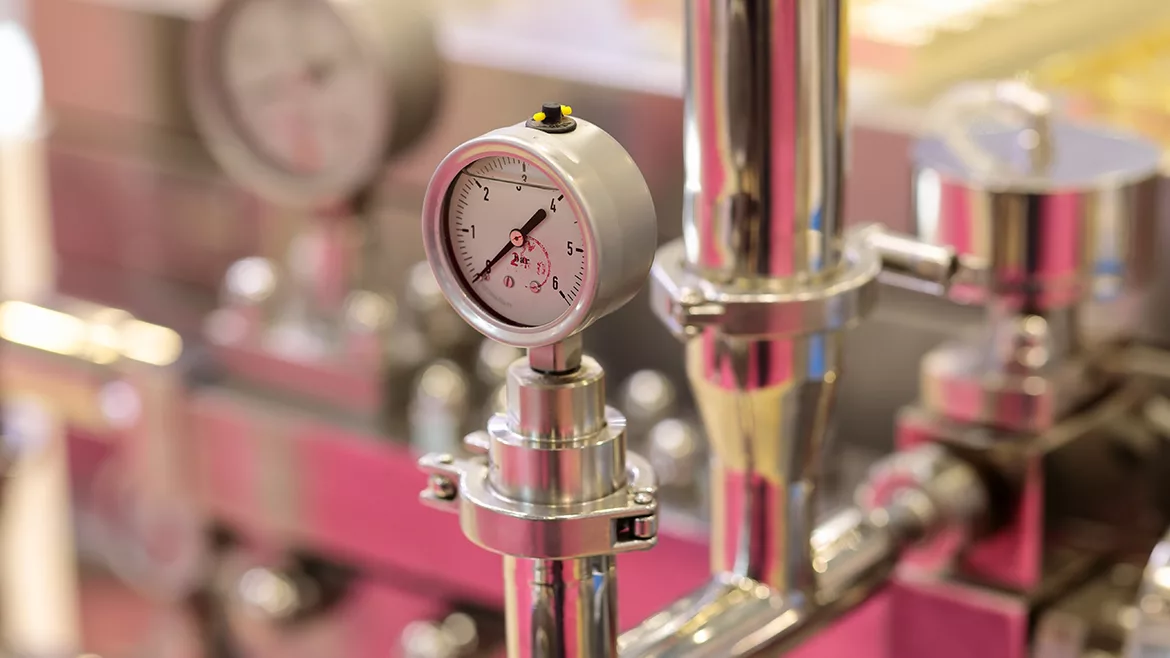
As sales in most dairy categories climb higher, we cannot forget about the backbone of dairy processing: pumps and valves, which move milk, cream, cheese curds, yogurt and other cultured dairy products consistently throughout each production stage. Pumps provide controlled, gentle product transfer while maintaining flow accuracy, protecting product integrity, and supporting consistent quality. Valves direct flow, isolate process zones, and enable clean-in-place (CIP) and clean-out-of-place (COP) procedures.
"Together, well-designed hygienic pumps and valves help dairy processors minimize downtime, reduce product loss, and meet demanding food safety requirements, especially in high-changeover environments where sanitation speed and reliability directly impact throughput and profitability," says Calle Danielsson, principal application engineer, Unibloc Hygienic Technologies.
The Kennesaw, Ga.-based company's executive adds that dairy processors prioritize reliability, hygienic performance, and ease of cleaning in their pumps. "Processors also seek designs that eliminate crevices, minimize foreign material risk, and withstand frequent CIP and COP cycles. Ultimately, they want equipment running clean, operating consistently, and keeping production moving without surprises," he states, citing Unibloc' QuickStrip technology as an example as a product intended to reduce maintenance time from hours for a traditional design to just 20 minutes per Unibloc pump.
In terms of efficiency, pumps and valves must be properly selected, correctly sized, and engineered for the realities of daily sanitation in a dairy plant.
"Running pumps at lower speeds, matching technology to product viscosity, and avoiding overcomplicated designs reduces wear and energy consumption. Choosing hygienic equipment with fewer parts, front-accessible seals, and simple, one-way reassembly dramatically cuts cleaning and maintenance time," Danielsson explains. "Just as important, designing systems that support effective CIP and easy inspection helps prevent unplanned downtime. Efficiency gains are achieved not by working equipment harder, but by choosing designs that work smarter every shift. The Flotronic One-Nut AODD+ pump, for example, reduces cleaning time from two hours to just 15 minutes, cutting downtime by up to 85%."
3-A Standards
In addition to efficiency, reliability and ease of cleaning, hygienic standards for pumps and valves are critical for any dairy processor. Dairy processors must ensure pumps and valves meet recognized hygienic standards, such as 3-A, and are designed specifically for food contact applications. "Materials should be corrosion-resistant stainless steel with smooth, fully machined surfaces that eliminate seams and crevices where bacteria can harbor. Equipment must support validated CIP and COP procedures and withstand aggressive cleaning chemicals and temperatures," Danielsson relays. "Hygienic performance extends beyond certification — it reflects design intent. Pumps and valves should minimize foreign material risk, simplify inspection, and maintain consistent performance even under frequent sanitation cycles."
Eric Schweitzer, director of standards and certifications, 3-A, adds that "equipment marked 3-A should be verified on our database in the following location: Certificates. Used equipment should be reviewed in terms of ensuring surfaces are still 32 Ra (.08 micron Roughness Average) and do not have deep grooves and other common imperfections, biofilm buildup, or corrosion," he stresses. "The standards that 3-A write ensure that the surfaces of CIP equipment (not taken apart for routine cleaning) are indeed cleanable through mechanical cleaning action (not manual). And equipment designed for CO are easy to disassemble and reassemble."
The executive for the Washington, D.C.-based firm adds all surfaces described in its standards (product and nonproduct contact surfaces) are designed to meet the conditions of intended use with a surface finish of 32 or better Ra.
"They are non-corrosive, non-toxic and meet FDA Food Contact Notification materials, and an ASTM A959 composition of wrought alloys that is at least a 304 series stainless steel or better. Where welding is involved, material must have a carbon content that doesn't exceed 0.8 % carbon, commonly found in 316 L grade stainless steels. The equipment and components all must have radii where mating surfaces produce and angle of less than 135 degrees," he reveals.
Threads, if used, are minimized and meet ACME standards, not machinery threads with deep V profile grooves, Schweitzer adds. "Welds meet AWS D18 to ensure heat affected zones do not eventually rust, and welds are produced meeting ASME B41 waviness, lay and line. These are just a few of the hygienic design elements that are fundamental to those manufacturers who have been authorized to use the 3-A Symbol or RP Mark for replacement part components. For equipment that may not have a specific equipment standard, the 3-A Sanitary Standard for General Requirements, 00-01-2018 (GR) is a wonderful tool to conduct a physical review of equipment. The GR was written so that an evaluator can easily review baseline requirements for sanitary design of representative surfaces."
Regarding specific standards for pumps, 3-A has identified the following: Plastic plug type valves, metal plug type valves, compression type, diaphragm, boot seal, inlet and outlet leak protector plug-type, disc type, vacuum breaker, check valves, pressure reducing and back pressure regulating, double-seat mixproof and ball valves, which are COP only.
"3-A has the standards for centrifugal/positive rotary, homogenizers/reciprocating, and diaphragm pumps. All standards follow the fundamental requirements in the GR but have specific allowance for alternative designs that describe features only found in this equipment, such as an allowance for smaller radii where required for functional purposes," Schweitzer notes.
Future of pumps of valves
In the future, 3-A pumps and valves standards "will be adopted by other processing equipment used outside dairy where a larger degree of sanitary design has been found to ensure there is no cross contamination, allergen controls, cleanability, inspectability and accessibility. In the future, our standards will address additive manufacturing considerations as long as these surfaces are rendered compliant per the material, surface texture, etc. within our GR," Schweitzer says.
In terms of future product innovation, Danielsson expects pumps and valve manufacturers will focus on reducing labor dependence while improving hygienic assurance and lifecycle value. "Labor shortages and high turnover persist, especially on third shifts when cleaning is common. These workforce challenges drive the need for pump designs featuring simpler reassembly (even tool-free, as you'll find with a Unibloc pump), fewer parts, and faster cleaning to accommodate varying workforce skill levels and availability. Expect greater emphasis on Total Cost of Ownership, with equipment engineered to last longer under frequent and demanding cleaning cycles in food processing."
Danielsson concludes that advances in pump and valve technology will also center on versatility; single-pump platforms handling multiple dairy products without compromise. "The goal is clear: equipment that delivers consistent performance, faster cleaning, and confidence before processors ever commit."
Looking for a reprint of this article?
From high-res PDFs to custom plaques, order your copy today!