3-A Today
How 3-A Standards reduce risk when using AI equipment
As artificial intelligence (AI) transforms dairy operations, hygienic design standards give processors confidence to invest — and give equipment manufacturers a competitive edge.
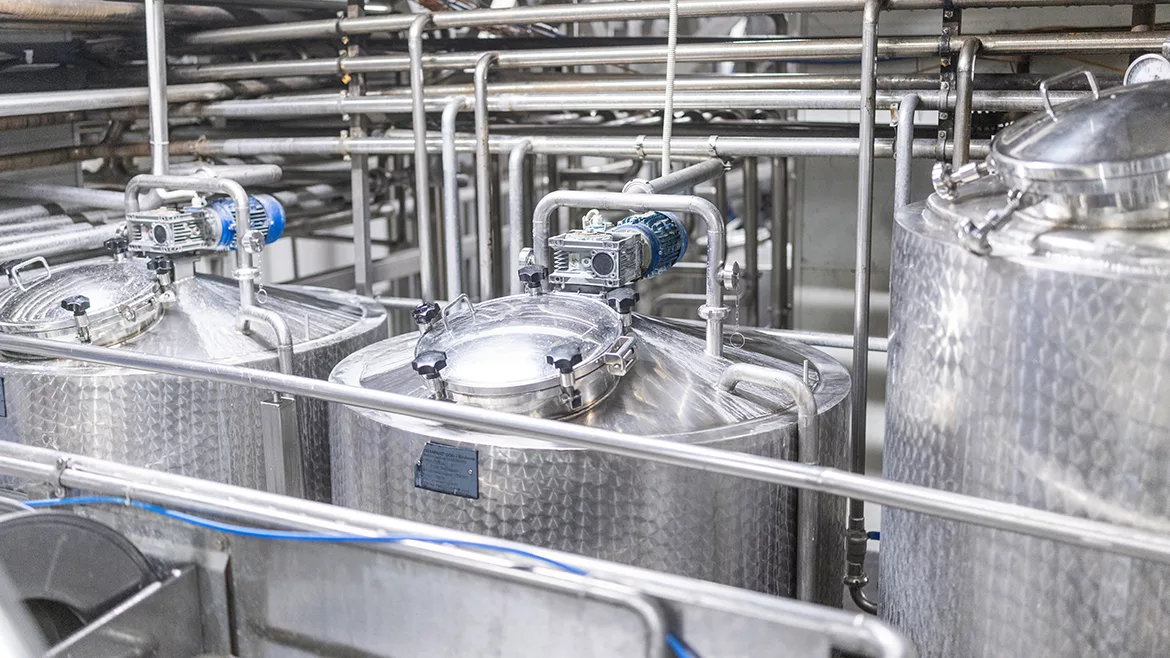
When a major cheese manufacturer implemented AI-driven yield optimization, the results were compelling — a margin improvement of 1% to 3% and potentially millions of dollars in additional revenue. Within 90 days, the system was making real-time adjustments to production parameters, with efficiency soaring beyond expectations.
But success raised a critical question: How do we scale AI innovations while maintaining hygienic design principles that protect public health?
Courtesy of 3-A Sanitary Standards
This is exactly why the 3-A Sanitary Standards are intended to work like guardrails to keep food safe, irrespective of future innovations. The standards offer minimum hygienic design requirements that ensure the mechanical action of sanitizing agents renders product contact surfaces completely sanitized. Clean product contact surfaces equate to clean product and no cross contamination, or worse. Rather than slowing innovation, the 3-A Standards give processors confidence to invest in innovation, including in AI-enhanced equipment.
AI Adoption Accelerating in Dairy Equipment
"We are absolutely seeing growth in aseptic sales, especially in the dairy sector, and, in fact, we believe that dairy will actually accelerate in this direction in the coming years," says Mat Rutz, vice president of Contract Manufacturing for Tetra Pak U.S. and Canada, in a recent Dairy Foods article.
AI is being deployed across multiple equipment categories:
Process Optimization: AI-driven systems help processors achieve production improvements in weeks rather than months, analyzing milk composition and formulation strategies in real time to reduce variability and increase output.
Predictive Maintenance: The IDFA and Ever.Ag "State of AI in the Dairy Industry Report" indicated these tools could be instrumental in reducing plant downtime. Equipment manufacturers like Rockwell Automation offer systems that monitor pumps, heat exchangers, and centrifuges, learning failure patterns and predicting breakdowns before they occur.
CIP (clean in place) Optimization: AI-enhanced cleaning systems from providers like Schneider Electric monitor multiple parameters — water temperature, flow rates, chemical concentrations — making real-time adjustments while maintaining hygiene standards.
Quality Control: AI-powered vision systems from providers like Cognex detect surface defects, contamination, and packaging integrity issues at production speed.
As AI systems become more sophisticated, validating their safety and effectiveness becomes more complex. This is where hygienic design standards become critical.
Why Standards Matter More in the AI Era
Traditional equipment followed a straightforward path: design, verify, document and produce repeatably. AI-enhanced equipment changes this. Systems learn and adapt, making thousands of micro-adjustments based on real-time conditions. This complexity amplifies the value of hygienic design standards.
Verified Boundaries Define Safe Innovation: Sophisticated AI systems must establish verified baseline parameters, then optimize within those boundaries. For example, when AI optimizes centrifugal pump performance (3-A Standard 02-12) or spray devices (3-A Standard 78-04), the systems must maintain flow characteristics and pressure parameters that ensure proper cleanability. AI improves efficiency within a framework that ensures sanitation is never compromised with a focus on increasing energy efficiencies.
Objective Evaluation Criteria: Processors need objective standards to compare competing AI systems. Whether evaluating AI-enhanced robot-based automation systems (3-A Standard 103-00) or automated milking installations (3-A Standard 102-00), certification provides the baseline. Processors can require compliance to the standard and then evaluate AI capabilities on top of that foundation.
Regulatory Confidence: FDA ‘Grade A’ Pasteurized Milk Ordinance, FSMA preventive controls, and state regulations reference established equipment standards. When AI-enhanced equipment maintains 3-A certification, processors have documentation that regulatory requirements have been satisfied.
Critical Questions for Equipment Evaluation
1. Does AI-Enhanced Equipment Meet Applicable 3-A Standards?
Advanced AI systems should optimize performance without violating design criteria established in 3-A Standards, such as 3-A 02-12 (centrifugal pumps), 3-A 78-04 (spray devices), 3-A 103-00 (robot-based automation systems), or 3-A 102-00 (automated milking installations). Processors should verify AI optimization parameters, whether adjusting pump speeds, spray patterns, or process timing remain within boundaries that maintain cleanability, drainage, and surface finish requirements.
2. How Do AI-Enabled Sensors Meet Hygienic Design Requirements?
AI requires additional sensors, temperature probes, flow meters and conductivity sensors. Each represents a potential penetration point. Processors should verify that sensors use sanitary connections or other 3-A compliant methods, and that surfaces meet finish requirements (typically 32 Ra or better), and can withstand standard CIP temperatures and chemicals.
The Path Forward
Successful AI and hygienic design integration requires partnership among equipment manufacturers, processors, and standards organizations. For manufacturers, integrating 3-A compliance reduces customer validation burden and provides market differentiation. For processors, 3-A Standards provide objective evaluation criteria that reduce AI investment risk.
The 3-A Summit on Hygienic Design, May 4-7, 2026, in Chicago, will advance this integration with sessions examining AI-enabled equipment design from multiple perspectives: engineering considerations, verification approaches, and implementation challenges.
Standards as Competitive Advantage
As AI reshapes dairy processing, 3-A Sanitary Standards serve as both foundation and catalyst for innovation. Standards provide the framework that makes AI technology investment lower-risk and higher-return.
This role is not new. When the U.S. Public Health Service developed the Pasteurized Milk Ordinance in 1924 to establish temperature and time requirements for pasteurization, 3-A Sanitary Standards emerged to address the practical question: How should equipment be designed to meet these requirements while remaining cleanable? For over 80 years, 3-A has bridged the gap between regulatory mandates and practical implementation, providing equipment design standards that enable innovation while ensuring food safety.
The AI era presents the same challenge. Processors and equipment manufacturers need practical guidance on integrating intelligent systems without compromising hygienic design. Companies that lead won't be those with the most sophisticated algorithms. They will be the ones whose algorithms respect these principles from the start. 3-A SSI exists to make that integration seamless, just as it has for every major technological advance in dairy processing.
Learn more about AI and 3-A Sanitary Standards at the 3-A SSI 2026 Summit on Hygienic Design, May 4-7, 2026, in Chicago. Visit conference.3-A.org for details.
This article represents the perspective of 3-A Sanitary Standards, Inc. For more information, visit 3-A.org.
Looking for a reprint of this article?
From high-res PDFs to custom plaques, order your copy today!