All the latest on ethically sourced ingredients
Ethical sourcing can be far-reaching and complex.
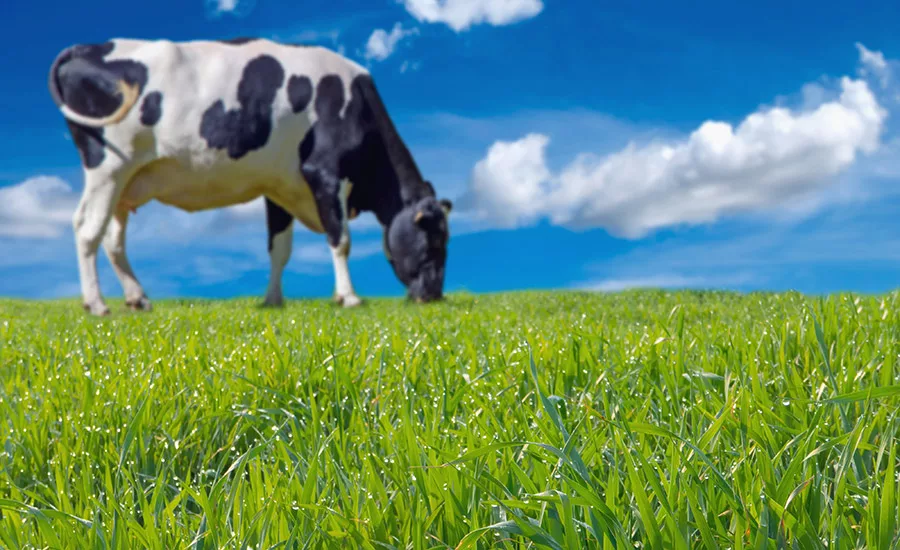
Photo courtesy of Photitos2016 via gettyimages.com
The sourcing of ingredients for dairy products is becoming increasingly complex.
Evolving consumer and corporate interests regarding the development of food and its impact on the environment, people, and animals is triggering greater demand for ingredients that were sourced in an ethical manner.
Ethical sourcing can be far-reaching. While the term often refers to the leveraging of ingredients that suppliers produce using processes and systems that are non-polluting, economically efficient, and conserve non-renewable natural resources and energy, it also can include animal welfare, environmental sustainability, and worker treatment and wages.
“In today’s competitive marketplace, it’s no longer enough to create a great-tasting product,” says Kate Clancy, group sustainability director for ingredient supplier Cargill Cocoa & Chocolate, a unit of Minneapolis-based Cargill Inc. “Increasingly, it’s the compelling story that captivates consumers.”
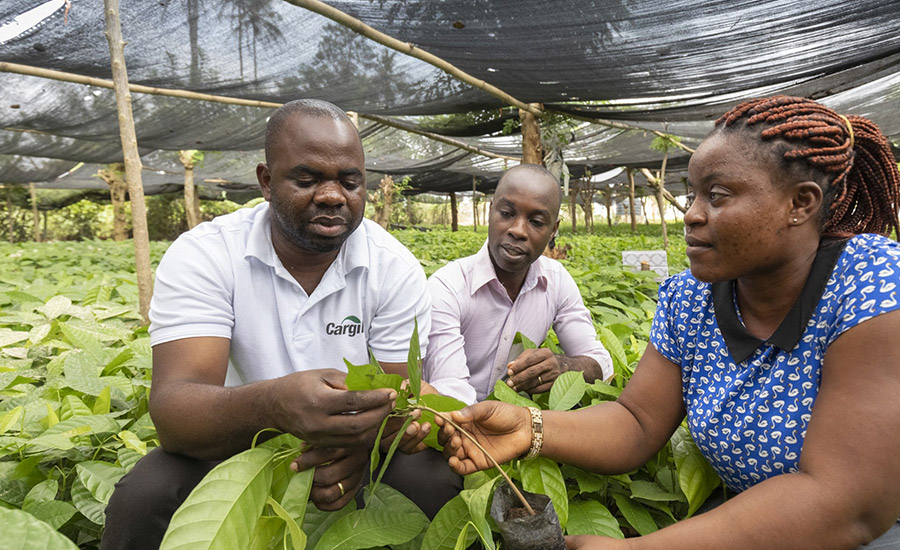
By sourcing ingredients responsibly, companies also can better meet their environmental corporate governance (ESG) goals, which typically include reducing greenhouse gas emissions, more efficiently managing water, and supporting human rights and farmer livelihoods, Clancy says.
Retailers join the movement
Whole Foods Market is among the retailers focusing on ethical sourcing by, for instance, only offering cage-free or “better” eggs in its dairy cases. The operator’s Animal Welfare Standards for Laying Hens requires that suppliers’ hens have room to roam and scratch about; that no antibiotics are given to hens; that there are no land-animal byproducts in hen feed; that nests and perches are available for hens to roost at night; and that hens receive foraging material.
Stores communicate such ethical sourcing to shoppers by tagging all eggs in dairy cases with one of four logos that indicate how the chickens live.
Designations include: “cage-free plus,” in which birds must be able to move about freely indoors with amenities that support their natural behaviors; “outdoor access,” which signifies access to an outdoor area that is at least equivalent to the area of the house; “pasture-raised,” in which birds must have access to rangeland or grassland; and “outdoor living,” where birds are raised in an outdoor system that supports life on rangeland or grassland for their entire production cycle.
Farmers choose their production system based on climate and their farm’s unique environment, and Whole Foods audits each farm on a 15-month interval to ensure compliance and to see the farm in all seasons over the course of time, the retailer reports.
“Consumers want their consumption to have a positive impact,” says Jennifer Block, senior vice president, of dairy community relations for the Rosemont, Ill.-based Innovation Center for U.S. Dairy. “They want to know where their food comes from; that it’s healthy for their bodies; and that it’s produced in ways that take care of the environment, animals, and workers.”
Some processors are emphasizing the ethical sourcing of ingredients through the U.S. Dairy Stewardship Commitment, a voluntary pledge in which companies document and demonstrate social responsibility progress in such areas as animal care, environmental stewardship, product traceability, and community contributions. To date, 36 dairy companies representing approximately 75% of U.S. milk production have adopted the Stewardship Commitment, reports the Innovation Center for U.S. Dairy.
“Ethical sourcing policies and programs are seen not only as ‘the right thing to do,’ but also as a way of gaining a competitive advantage,” says Mike Aquino, director of ESG for the Washington, D.C.-based International Dairy Foods Association (IDFA). “Long-run chances of supply chain disruption will be lower in well-managed chains that consider environmental, social, and governance risk factors.
The demographic difference
Demand for dairy products with ethically sourced ingredients, meanwhile, is set to rise as millennial and Gen Z shoppers increase their share of overall grocery spending and baby boomer activity declines, states Anne-Marie Roerink, president and founder of 210 Analytics LLC, a San Antonio-based market research and marketing strategies firm.
“It is these younger generations that have a much higher tendency to weigh ethnical sourcing into their purchasing decisions, whether it be fair wages throughout the supply chain, taking care of the animal, or being mindful of the impact on the planet,” she notes. “This means that the importance of ethical sourcing is only going to get bigger over the next decade.”
Product claims also will increasingly spotlight the use of grass-fed cows for cheese and milk production, as well as regenerative agriculture, Roerink highlights. Regenerative agriculture is a food production system that is designed to nurture and restore soil health while protecting the climate, water resources, and biodiversity, and enhancing farm productivity, she explains.
“There is a growing group of consumers that understand that they are voting with their dollars on how the world is used,” says Andrew Martino, category manager of sugar and sweeteners at Global Organics, a Cambridge, Mass.-based certified organic ingredient supplier. “Dairy processors will benefit by communicating clearly to these consumers that they use ethically sourced ingredients and how they selected them.”
Such shoppers also are often willing to pay more for products that they perceive as being ethically and sustainably sourced, says Amanda Greenlee, Global Organics sustainability coordinator.
“As more ethically sourced products come in the marketplace across multiple departments, the gap between interest and purchase will start to narrow,” Roerink states. “Stores with a high focus on ethical sourcing may also use pasture-raised eggs or grass-fed milk in their cakes and other baked goods and will often call this out in the bakery or on pack. The rise in assortment will subsequently drive an increase in awareness and demand.”
Verification is vital
Processors, meanwhile, can demonstrate their commitment to ethical sourcing and guarantee product integrity by incorporating ingredients that meet the guidelines of third-party certification organizations, notes James Ede, Cargill sustainability lead for starches, sweeteners, and texturizers.
Yet, verifying that suppliers are meeting ethical standards is perhaps the biggest challenge for processors that are seeking to incorporate ethically sourced ingredients, relays David Thorrold, general manager, sales and marketing, for Hamilton, New Zealand-based Monk Fruit Corp.
“Dairy processors should ask their suppliers to provide details of how they incorporate ethical sourcing into their business practices,” he states, adding that “third-party certification can be helpful for reducing the administrative burden when verifying that suppliers are meeting the expected ethical standards.”
Company sustainability programs that establish standards and requirements for compliance and typically undergo audits on a yearly basis by independent third parties will further spotlight an adherence to ethical sourcing, Ede maintains. “It starts by partnering with a trusted supplier that offers sustainable, ethically sourced ingredients and transparent, traceable supply chains,” he notes.
Establishing baseline expectations for all suppliers, which can involve working with stakeholders and legal counsel to develop a supplier code of conduct, will strengthen ethical sourcing initiatives as well, IDFA’s Aquino says.
In addition, programs should have clearly defined, transparent, and, when applicable, science-based methodologies or criteria that is understandable to shoppers, he notes. “It is important to assess consumer familiarity with such programs in order to have sustainable sourcing certifications that build trust,” Aquino states.
Yet, operating in an ethical manner can be challenging. The absence of a single unified definition for ethical, responsible, or sustainable sourcing, for instance, is making it difficult for processors to identify and incorporate the optimal ingredients, Cargill’s Clancy says.

“The proliferation of definitions and indicators for monitoring, along with the lack of standardization, is a key issue facing not just dairy processors but the entire industry,” she notes. “As a result, making comparisons between the available solutions has become an unenviable task.”
Additional issues include tight supplies; uncertainty that consumers will notice and choose to pay for a differential product; the need to ensure that actions and communications will convey credibility with stakeholders; and having to instruct shoppers on standards and certifications, IDFA’s Aquino says.
Education is essential
Indeed, 210 Analytics' Roerink notes “the real challenge and opportunity are to educate consumers and clear up a lot of the confusion in the marketplace. That’s step one before the various production and sourcing methods can truly become differentiators.”
Such confusion includes uncertainty regarding the difference between “free range” and “pasture-raised” products, and a lack of knowledge about regenerative agriculture, she states.
“I had one shopper speculate that regenerative agriculture is taking the cells of an animal and growing the meat in a laboratory,” Roerink notes. “These are powerful reminders that industry jargon may not have the same meaning, and certainly not the impact, among consumers while demand for such products is growing.”
It also can be arduous for processors to confirm that all the necessary product ingredients have valid third-party ethical sourcing certifications, Martino says.
“As sustainability is becoming more of a consumer priority, there’s a lot of greenwashing going on and it isn’t always easy to decipher what’s really 'sustainable' without having oversight over your entire supply chain,” Global Organics’ Greenlee notes. “It’s important to work with trusted suppliers who do their due diligence and vet their sources well.”
Processors also should team with suppliers that focus on ethically sourced ingredients, Cargill’s Clancy suggests.
“Responsible sourcing efforts provide brands with visibility into their supply chains, giving manufacturers peace of mind, while further benefiting from the assurance that sustainability risks in the chain are being assessed and addressed,” she explains. “At the same time, it provides opportunities to build credible brand stories, engage with consumers, and foster trust and brand preference.”
Dairy processors seeking ethically sourced ingredients, meanwhile, should first survey their existing suppliers as they “may be pleasantly surprised that many are already doing things the 'right way,'” Global Organics’ Martino says.
Martino notes that operators also should give preferential treatment in the bid process to suppliers that ethically source. “Treating a farmer or ingredient producer ethically often involves giving them more money as those farmers and producers should not be forced to match the bid from those with non-ethically produced goods,” he suggests.
While he says that it may be difficult for processors to locate all the necessary ingredients that have a valid third-party ethical sourcing certification, Greenlee concludes that there still are “ethical options for nearly any ingredient a processor is interested in sourcing.”
Looking for a reprint of this article?
From high-res PDFs to custom plaques, order your copy today!