Operation revival: inside Lifeway Foods' dairy plant
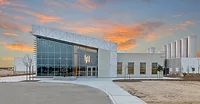
Lifeway Foods is breathing new life into an aging dairy plant in Waukesha, Wis
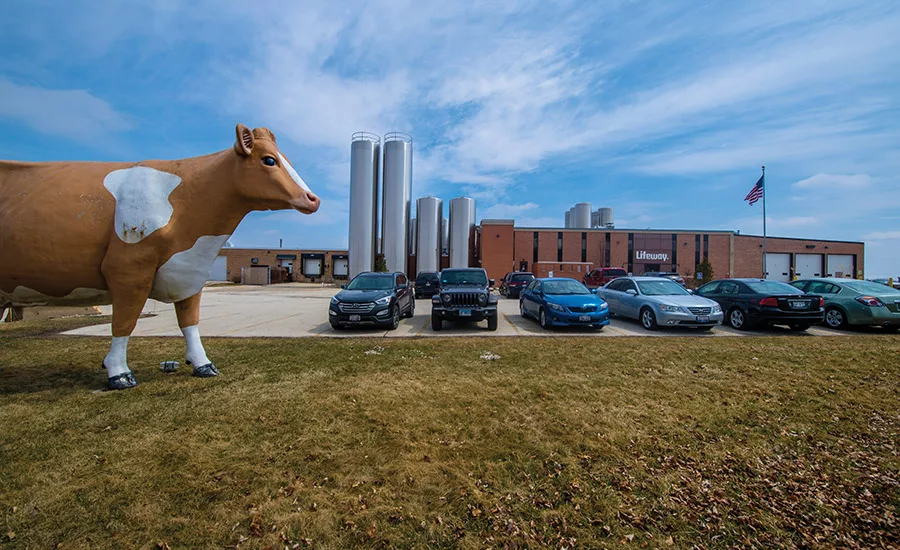
The larger-than-life cow left behind by Golden Guernsey now greets people visiting or passing Lifeway Foods’ Waukesha, Wis., plant
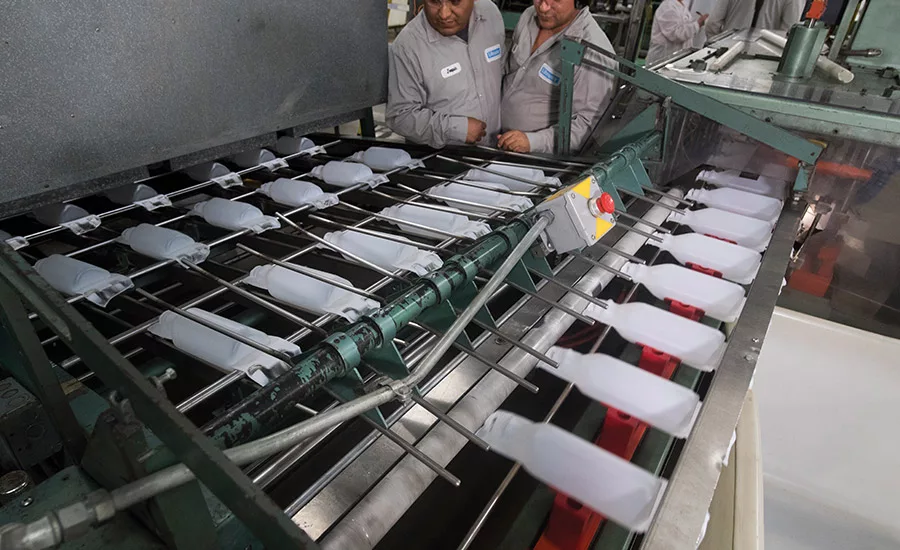
Lifeway Foods retooled the two existing blow-molding units with new molds to make the recyclable bottles used for its 32-ounce kefir offerings

Bottles are conveyed overhead from the blow-molding room to the bagging/debagging room
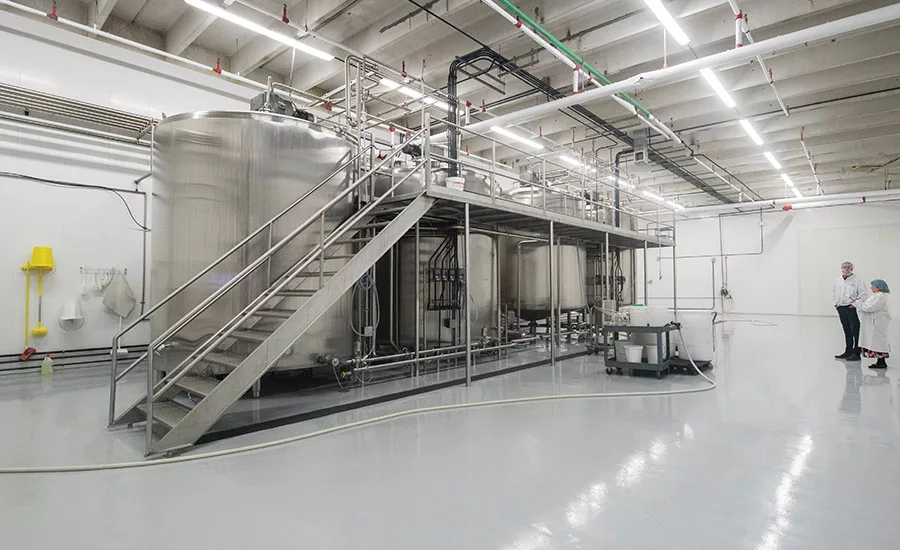
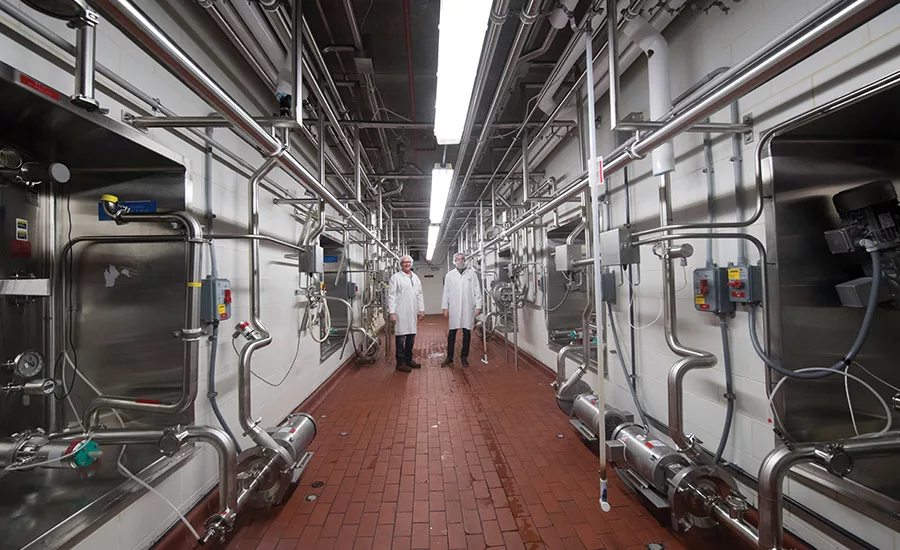
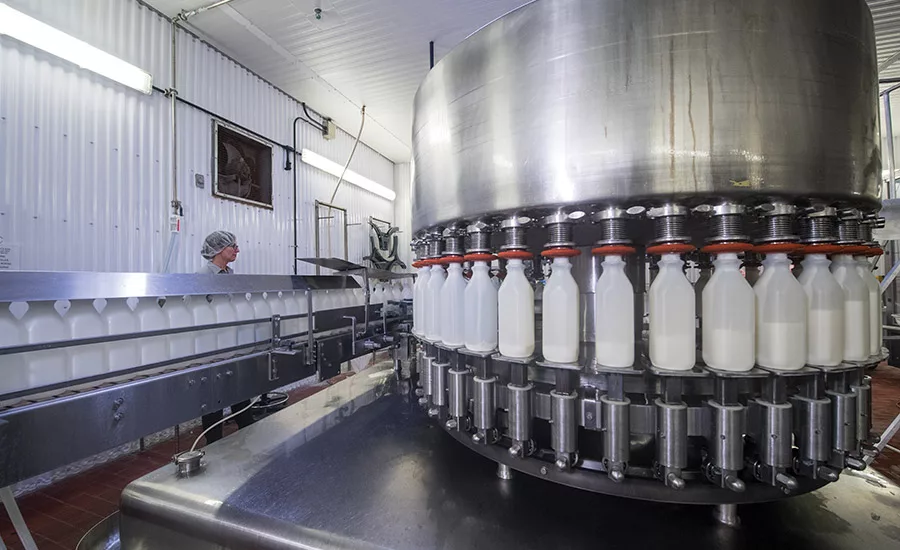
One of two fillers was in operation during Dairy Foods’ visit

Filled bottles are conveyed to the labeling area

When Lifeway Foods Inc. purchased the former Golden Guernsey fluid milk plant in Waukesha, Wis., at a bankruptcy auction in 2013, it faced an uphill battle in readying it for production of the company’s signature 32-ounce kefir line. Although the 157,000-square-foot, 60-plus-year-old facility had “good bones,” its former tenant had shut down very quickly with no exit plan.
“The facility was pretty raw when we came in,” admitted Todd West, vice president of operations for Morton Grove, Ill.-based Lifeway Foods. “It took a tremendous amount of effort to get everything closed down from Golden Guernsey and start bringing in equipment to do what we needed to do to get it up and running.”
Those efforts were further complicated by the unique nature of Lifeway Foods’ kefir production.
“We have many more strains of cultures than typically go into a cultured dairy product,” West noted. “With those additional strains comes a higher level of complexity from a formulation and fermentation standpoint.”
The company ultimately approached the project in stages. The plant’s existing milk intake area was “the easiest part to turn on first,” West said. The second easiest was the surviving bottle-making area.
Lifeway Foods retooled the two existing blow-molding units with new molds to make the 32-ounce recyclable bottles destined to be filled with kefir, he noted. The belts for the units also had to be tailored to that bottle size.
Once the units were operational, the Waukesha facility commenced blow-molding operations and also started to receive and process milk, noted Marv Hinnenkamp, the plant’s vice president of operations. Both the milk and the bottles were then shipped to Lifeway Food’s Morton Grove processing facility for kefir production.
Other areas of the plant required more work, as well as new equipment.
“Everything leading into the filler and everything coming out is new,” West explained.
In August of 2015 — more than a year after it started to make bottles and receive milk — Lifeway Foods celebrated the Waukesha plant’s official revival. The facility finally had begun the production of kefir.
Today, the plant boasts more than 50 employees working days and shifts that vary by department. Kefir production — flavored and unflavored — runs five days a week, West said. All kefir is packaged in the 32-ounce bottles the facility makes on-site.
The road to kefir
Kefir production begins with the delivery of fresh milk. The facility, which holds gluten-free and organic certifications, receives approximately 40 tanker loads of milk each week, Hinnenkamp said.
After it’s tested, the milk undergoes processing, including standardization for the recipe, in the original milk intake area. The area boasts much of Golden Guernsey’s former equipment, he noted.
From there, the processed milk is pumped through overhead piping to the fermentation and flavoring room. Here, four large tanks, specially customized for Lifeway Foods’ unique needs, transform the milk into various varieties of kefir.
Once the fermentation process is complete, the finished kefir is transferred into stainless steel storage silos. The facility’s 14 silos vary in capacity, West said.
From the silos, finished product is pumped through overhead piping to the filling lines. During Dairy Foods’ visit, one filler and one capper were in use. A second filler and a second capper, however, will soon be in operation, West said, after the facility completes the piping project associated with them.
Filled and capped bottles then hitch a ride on a long conveyor to the labeling area. The filling/labeling areas actually house two conveyors to allow the production of two different kefir flavors or to avoid downtime if an issue arises with one of the conveyors, West explained.
Labeled bottles next move into the packaging area, where one of two bundlers groups them into six-packs (for Lifeway brand products) or 12-packs (for products the facility makes for private label customers), he noted. A machine then shrink wraps the bundles.
From that point, a robotic palletizer grabs each bundle and drops it onto a pallet. Pallet movers then transport each full pallet to the facility’s 75,000-square-foot cold storage area, which is kept at a temperature of 34 degrees Fahrenheit. Loading docks situated in the rear of the cold storage area welcome the trucks that transport the finished product to its various destinations.
Meanwhile, in a separate area, plant employees manufacture all of the 32-ounce kefir bottles used by the plant, working in three traditional shifts. Any scrap from the blow-molding operations is placed into special containers for regrinding; no material is wasted, West explained.
Finished bottles are conveyed overhead to an unscrambler in the bagging/debagging room. From the unscrambler, bottles are either conveyed to the filler area or bagged for future use.
Not finished yet
Although the facility is fully operational, the behind-the-scenes rework continues. For example, a major re-piping project is currently underway to address the “tremendous amount of piping” the former operators installed in the plant, Hinnenkamp said.
As West explained, the goal is to tailor the piping to the facility’s needs, ultimately reducing the distance the product travels through it and building in some efficiencies.
Other improvements are on the company’s wish list as well. For example, automation has reduced labor needs within the packaging department — allowing staff to be shifted to other, more labor-intensive areas of the plant — but automation supporting increasingly popular multipack options is not yet a reality.
“It is extremely labor-intensive to put two different flavors in one case,” West explained. “The automation side on how to merge all of those into one case is growing, but it’s fairly expensive. The outputs we have can’t justify making those investments.”
But if the business continues to grow, as the company believes it will, those outputs will certainly expand. And the facility definitely has room to grow.
“We have a sizeable amount of capacity left at the facility,” West said. “The steps that we’re taking now will allow us to kind of plug in what we need to plug in for additional capacity.”
In the meantime, the facility will continue to look at ways to improve upon the existing operations.
“Marv has been in the business for a long time and has some strong relationships with the vendors,” West said. “They’re always keeping us updated on how to tweak the equipment or different materials
to use.”
Efficiencies related to energy and water use also are constant considerations, West said. The piping rework, for example, will help reduce the water used in cleaning operations, while an equipment reduction already performed in other areas has resulted in decreased energy needs.
“We’re working with the state to see if we have some opportunities to get some credits on some of the changes that we’d like to do from an energy standpoint,” he added.
Product shrink is getting some attention, too, Hinnenkamp noted.
“In a culturing plant, shrinks are normally higher; more product gets wasted,” he said. “We’re on the low end of that and continue to try to drive it down.”
The facility also is looking into air blowing technology to flush more usable product out of the piping, Hinnenkamp said. That product normally would go down the drain with the water used to clear it out.
Keeper of quality
The ongoing projects never compromise the facility’s food safety and quality standards. As Hinnenkamp explained, the plant achieved Safe Quality Food (SQF) level 3 certification, the highest level possible, according to the SQF Institute. The certification acknowledges that a comprehensive food safety and quality management system, based on a HACCP plan, is in place.
“We really welcome it,” West said. “It really puts the guardrails in place on how to run everything.”
The plant requires its suppliers to be SQF certified as well, Hinnenkamp said. That requirement significantly reduces all of the administrative back and forth taking place.
The facility’s in-house lab also is a critical element in ensuring product safety and quality. Quality assurance personnel randomly pull samples throughout the day, West noted, beginning with the fresh milk from the tankers and continuing throughout the kefir production process. Outside of regulatory agency-performed testing, the majority of testing — for things such as coliform count, viscosity, pH, yeast and more — is performed in house.
But the facility does call on a third party from time to time to verify the ingredients, calorie counts or nutritional panels “at a higher level,” West noted.
“There are things that we’ll send out to get a second opinion or to make sure that we’re benchmarking our numbers correctly,” he said.
Not without challenges
Looking ahead, the facility faces a number of challenges in addition to those tied to ongoing plant and process tweaks. One of those challenges is attracting and retaining plant-level workers. After all, the area’s job market is extremely competitive, West pointed out.
“We’re trying to keep a pulse on what’s going on in the marketplace from a pay standpoint, from a pay-within range,” he said. “If we have a candidate that has a lot of the skills that we’re looking for but may not have some defined skill for a particular department, we’re willing to do training, to invest in that person and spend extra time with someone.”
Lifeway Foods is also looking into different retention strategies such as bonus programs or profit-sharing for the future, West noted.
Another challenge lies in producing new flavors or tweaking the attributes of existing products.
“Any little request — whether it’s how thick the product is, how thin, pH levels, taste profiles, coloring, flavoring, any of that — even if it’s minor, has some impact on the overall process and the way we react throughout the plant,” West pointed out.
But this is an operation with employees who managed to successfully revive and reinvigorate an outdated dairy plant. So don’t expect Lifeway Foods to be weighed down by these hurdles in the years to come.
“We’re happy to take over a plant and bring life to it,” West stressed. “We continue to want to grow as business dictates. We’re in it for the long haul.”
Photos by Vito Palmisano
Looking for a reprint of this article?
From high-res PDFs to custom plaques, order your copy today!