Dairy Foods logo
search
cart
facebook twitter linkedin youtube
  • Sign In
  • Create Account
  • Sign Out
  • My Account
Dairy Foods logo
  • NEWS
    • DAIRY REGULATIONS
  • PRODUCTS
    • New Products
    • Butter
    • Cheese
    • Cultured Dairy
    • Frozen Desserts
    • Ice Cream/Novelties
    • Milk
    • Non-Dairy Beverages
    • Sales Data
    • Whey, Milk Powder
    • Dairy Alternatives
  • INGREDIENTS
    • Cocoa
    • Colors/Flavors
    • Cultures/Enzymes
    • Fiber
    • Gums, Stabilizers, and Texturants
    • Inclusions
    • Omegas/Lipids
    • Prebiotics
    • Probiotics
    • Sweeteners
    • Other
  • OPERATIONS
    • SUSTAINABILITY
    • Equipment
    • Processing
    • Packaging
    • Food Safety & Sanitation
    • Membrane Technology
  • MEDIA
    • Dairy Foods TV
    • Podcasts
    • Webinars
  • DIRECTORIES
    • Buyers Guide
    • Dairy Plants USA
  • MEMBRANE FORUM
  • MORE
    • Associations
    • Dairy Foods' News & Views Newsletter
    • Blogs
    • Case Studies
    • Classifieds
    • Custom Content & Marketing Services
    • Dairy Foods Store
    • Market Research
    • Supplier Spotlights
    • Tradeshows and Events
    • Strategy Guides
  • AWARDS
    • Dairy Plant of the Year Award
    • Breakthrough Award
    • Dairy Processor of the Year
  • EMAGAZINE
    • eMagazines
    • Archive Issues
    • Contact
    • Advertise
    • SIGN UP!
    • Columnists
    • Dairy 100
    • State of the Industry Report
    Dairy Foods & BeveragesDairy Foods ColumnistsCheese

    Studying cheese functionality and machinability

    How easy is it to cut, dice, slice and shred cheese without material loss?
    By Prateek Sharma Ph.D., Nitin Joshi Ph.D., CFS
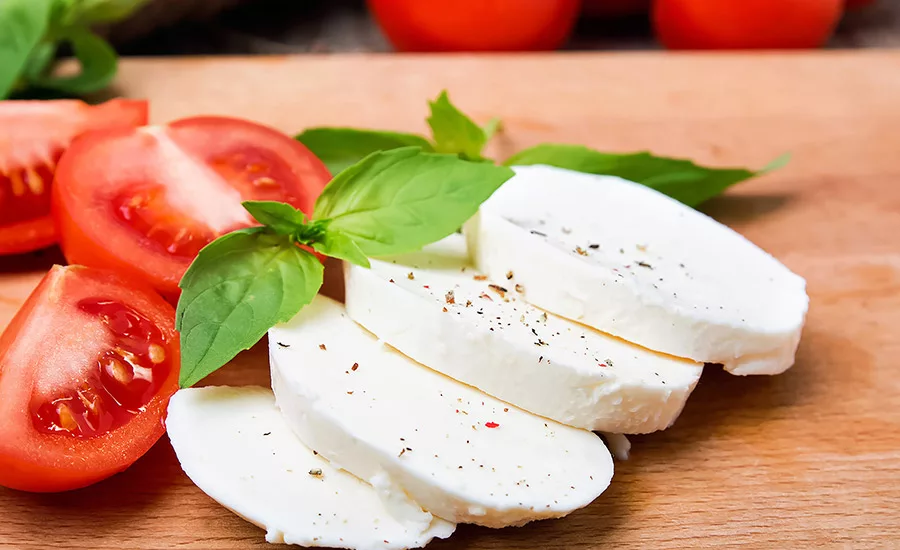
    tomato and mozzarella

    Photo courtesy of Chiociolla / iStock / Getty Images Plus

    March 19, 2025
    Sharma Prateek
    Nitin Joshi
    Prateek Sharma, Ph.D., is an Associate Professor-Dairy Technology at Utah State University. He has 15-plus years of research experience working in both academia and the dairy industry in multiple countries.

    Nitin Joshi, Ph.D., CFS, is a Senior Principal, R&D at PepsiCo’ Frito Lay Business. He has more than 30 years of experience in dairy and cheese research and their application in several food products.

    With 6.45 million metric tons (MT) of cheese production in 2023, the U.S. cheese market is projected for a 4.64% compound annual growth rate (CAGR) and a business of almost $56 billion by 2029. This growth is mainly attributed to the “ready to eat” and foodservice industries. Around 80% of cheese used in the foodservice sector is for the restaurant industries where the functionality of the cheese plays a critical role in its handling.  

    Cheese offers a variety of functionalities depending on its end use. Mozzarella-like cheeses, where stretching, melting, oiling off, blistering, and browning characteristics are important for pizza applications. Cheddar and semi-hard cheeses are sliced, diced, or shredded for use in various retail, culinary, and food service applications. Hard cheeses, such as Parmesan and Romano are used in grated or shaved forms. Hardness, viscoelasticity, and stickiness are important qualities of cheese for converting them into different forms.

    Structurally, cheese is a complex network of proteins (caseins), in which fat globules, water, minerals, bacteria, and dissolved solutes, such as sugars, acids, salts, free amino acids, and peptides, are all interspersed. The functionality of the cheese is derived from the way all these components are embedded with each other.  

    Machinability is a measure of how easy a cheese is to cut, dice, slice, shred, grate, shape, or finish on a machine without incurring a significant material loss (due to sticking or producing fines).

    Good slicing or shredding behavior is observed in a narrow range of textural properties, and it is not fully understood, or controlled, by cheese manufacturers. Sliceability is cheese’s ability to cut cleanly into thin slices, resisting breakage or fracture at the edges of the slice. It also must undergo a high level of bending before breaking. On the other hand, shreddability is comparable to sliceability in several physical attributes, such as the ease with which cheese undergoes the machine/operation, retention of the shape and integrity of shreds. 

    Good shreddability is showcased by absence of propensity of shreds to mat or clump together, and excessive fines. Intuitively, both sliceability and shreddability depend on the chemistry, microstructural, and rheological properties of the casein network in the cheese. 

    During the process of slicing or shredding, fines are generated and there is also a material loss from cheese sticking to the moving parts of machinery or crumbling during high-speed operations. This wearing phenomenon during shredding/slicing / other mechanical operations causes significant financial losses to the cheese manufacturers. 

    The machinability of cheese is greatly impacted by cheese manufacturing conditions, intrinsic factors such as composition (e.g., protein, free moisture), age/ripening (extent of proteolysis), temperature (ratio of solid to liquid fat), pH, and solubilization of colloidal calcium phosphate. Extrinsic factors, such as the temperature of cheese block, cutting speed, normal force, type of cutting force (wire versus blade), etc. also play important role in deciding the quality of resulting end products (e.g., shreds, slices, dice, etc.) and the amount of sticking loss and fines.

    At present, there are little or no means available to predict cheese machinability attributes. There is a need for developing tools to evaluate shredding/slicing/grating performance of a cheese block using wear behavior, rheological, and textural properties. This information will be invaluable to the cheese industry for evaluating a variety of cheese products for their suitability for various size-reduction operations, which will change the processing conditions to reduce wastage and rework.

    In the next article on cheese, we will discuss other important functionalities, such as melting, blistering, browning, stretching, flowability, oiling off, and many more aspects.

    About Authors

    • Prateek Sharma, Ph.D., is an Associate Professor-Dairy Technology at Utah State University. He has 15-plus years of research experience working in both academia and the dairy industry in multiple countries. He is past chair of IFT Dairy Foods Division and a member of the AMSPAP (Annual Meeting Scientific Programs Advisory Panel) committee.
    • Nitin Joshi, Ph.D., CFS, is a Senior Principal, R&D at PepsiCo’ Frito Lay Business. He has more than 30 years of experience in dairy and cheese research and their application in several food products. Dr. Joshi is a past chair of IFT’s AMSPAP, Dairy Foods Division, Hot topics, and Philadelphia section. At present he is a Technical chair at Longhorn section of IFT.

    Reference

    • U.S. Cheese Market Size, Share & Growth: Forecast [2029] https://www.fortunebusinessinsights.com/u-s-cheese-market-106630
    • USDA FAS (2024). Production-Cheese. https://fas.usda.gov/data/production/commodity/0240000
    • Findlay, R. (2022). Restaurant drive cheese sales and usage. https://hoards.com/article-31518-restaurants-drive-cheese-sales-and-usage.html
    • Pace, N., Verma, A., Parhi, A., & Sharma, P. (2024). The utility of a slice defect score method in understanding factors impacting the sliceability of commercial Cheddar cheese blocks. International Dairy Journal, 151, 105865.
    KEYWORDS: casein cheese equipment cheese manufacturing foodservice and dairy functional ingredients mozzarella

    Share This Story

    Looking for a reprint of this article?
    From high-res PDFs to custom plaques, order your copy today!

    Sharma prateek 560 0850

    Prateek Sharma, Ph.D.,  is an associate professor-dairy technology director of the Western Dairy Center at Utah State University. He has 15-plus years of research experience working in both academia and the dairy industry in multiple countries. He is past chair of IFT Dairy Foods Division and is a member of the AMSPAP (Annual Meeting Scientific Programs Advisory Panel) committee.

    Joshi nitin

    Nitin Joshi, Ph.D., CFS, is a Senior Principal, R&D at PepsiCo’ Frito Lay Business. He has more than 30 years of experience in dairy and cheese research and their application in several food products. Dr. Joshi is a past chair of IFT’s AMSPAP, Dairy Foods Division, Hot topics, and Philadelphia section. At present he is a Technical chair at Longhorn section of IFT.

    Recommended Content

    JOIN TODAY
    to unlock your recommendations.

    Already have an account? Sign In

    • Lifeway Organic Kefir in different flavors inside a refrigerated grocery shelf.

      Dairy Foods names Lifeway Foods 2025 Processor of the Year

      Lifeway Foods donates $10,000 to wildfire victims,...
      Dairy Foods & Beverages
      By: Brian Berk
    • Two female farmers are standing in a field, holding a large milk canister, looking at several cows at dairy farm.

      Honoring Women Leaders Shaping the Dairy Industry

      For the fourth consecutive year, Dairy Foods is proud to...
      Dairy Foods & Beverages
      By: Barbara Harfmann
    • Main feature for State of the Industry with dairy products album cover with a gradient circular--patterned backgorund.

      2025 State of the Dairy Industry

      Welcome to the 2025 State of the Industry report. For...
      Sales Data
    Manage My Account
    • eMagazine Subscription
    • Dairy Foods News & Views Newsletter
    • Online Registration
    • Manage My Preferences
    • Subscription Customer Service
    • Connect with Dairy Foods

    More Videos

    Popular Stories

    Close up of a whipped frozen dessert with a light green color.

    The keys to high-protein dairy formulations

    A row of Frios Gourmet Pops with a tie dye pattern as a background.

    How Frios Gourmet Pops delivers happiness

    Closeup of young Asian man preparing yogurt and muesli breakfast at modern home. Diet and healthy food morning routine concept.

    Cultured dairy products are a good fit for the new Dietary Guidelines for Americans

    Outlook Report: Women in Dairy

    Products

    Probiotic Ice Cream: Science and Technology

    Probiotic Ice Cream: Science and Technology

    See More Products
    Let's Talk Dairy podcast promo

    Related Articles

    • A spatula with a slice of pizza taken from a whole pizza on a tray with a blurred background.

      The baking properties of cheese functionality

      See More
    • Cargill

      New ingredients for cheese add formulation functionality

      See More
    • cartoon of robot and human shaking hands

      Digitalization in dairy through AI

      See More

    Related Products

    See More Products
    • GlobalData_Consumer.jpg

      Cheese (Dairy & Soy Food) Market in North America - Outlook to 2022: Market Size, Growth and Forecast Analytics

    • foods analysis.jpg

      Handbook of Dairy Foods Analysis, 2nd Edition

    • handbook.jpg

      Handbook of Dairy Foods and Nutrition, 3rd Edition

    See More Products
    ×

    Stay ahead of the curve. Unlock a dose of cutting-edge insights.

    Receive our premium content directly to your inbox.

    SIGN-UP TODAY
    • RESOURCES
      • Advertise
      • Contact Us
      • Directories
      • Store
      • Want More
    • SIGN UP TODAY
      • Create Account
      • eMagazine
      • Newsletter
      • Customer Service
      • Manage Preferences
    • SERVICES
      • Marketing Services
      • Reprints
      • Market Research
      • List Rental
      • Survey/Respondent Access
    • STAY CONNECTED
      • LinkedIn
      • Facebook
      • YouTube
      • X (Twitter)
    • PRIVACY
      • PRIVACY POLICY
      • TERMS & CONDITIONS
      • DO NOT SELL MY INFORMATION
      • PRIVACY REQUEST
      • ACCESSIBILITY

    Copyright ©2026. All Rights Reserved BNP Media, Inc. and BNP Media II, LLC.

    Design, CMS, Hosting & Web Development :: ePublishing