Impact of the avian flu outbreak in cattle for dairy processing
H5N1 influenza strain found in 549 dairy herds in 15 states; tips on eliminating the spread.
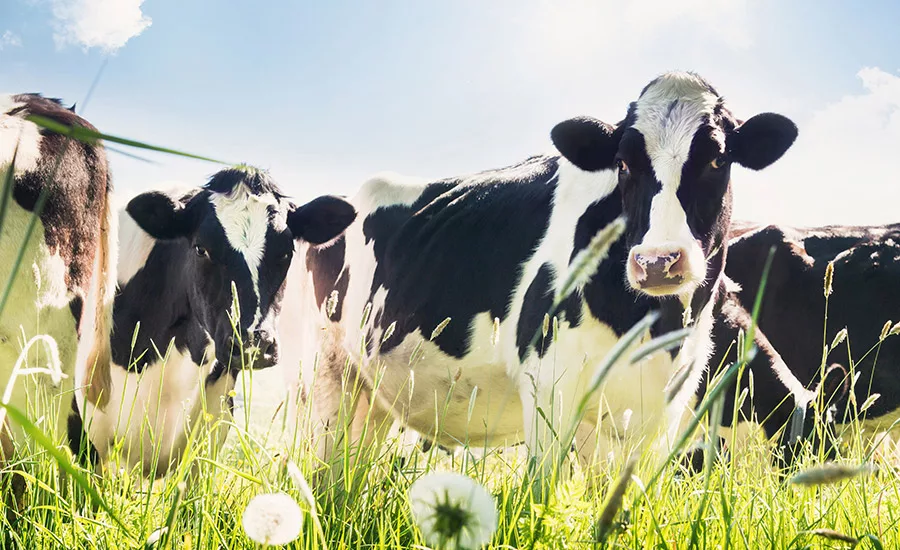
Photo by kamisoka / E= / Getty Images

John Lucey, Ph.D., is the Owen R. Fennema Professor in Food Chemistry at the University of Wisconsin-Madison’s Center for Dairy Research.
Early last spring, some dairy cows, initially in Texas, started to get ill. The cows’ symptoms included dehydration and increased temperature. They also stopped ruminating and their milk production plummeted. Farmers didn’t know the cause of the illness. Then, cats on these farms began to get ill and/or die after drinking raw milk from these cows. Testing on these cats confirmed that they had a strain of the highly pathogenic avian influenza H5N1. It was a major surprise that this virus had jumped to cattle, and how this occurred is unknown. We do know that this virus is in migratory wildfowl.
As I write this column in late November, there have been 549 confirmed cases (herds) of infected cattle in 15 states with California, Utah, and Idaho the latest states to become infected. Dr. Keith Poulsen, director of the Wisconsin Veterinary Diagnostic Laboratory, shared some updates and insights at the recent Center for Dairy Research (CDR) Research Forum. Most of this spread between states seems to be linked to the movement of animals as researchers have found that cattle can have significant levels of virus for up to 2 weeks before exhibiting clinical symptoms.
Within a state, movement of animals, people, and vehicles, are all suspected as contributing to the spread. Enhanced biosecurity measures at the farm and testing prior to moving cattle are two strategies used to limit spread. Once the virus gets onto a farm, it very quickly spreads from cow to cow with most animals likely to eventually become infected.
Among other symptoms, cows get a slimy discharge from their nose, and another potential mode of transmission is via contaminated milking equipment. Fortunately, the mortality rate in infected cows in low and not anything like the high rate observed in poultry. The mortality rate was higher in the recent outbreak in California, likely due the extreme (hot) weather they were experiencing, which put further stress on the animals as dehydration is a common symptom.
Most cows recover within a few weeks but it’s unclear if their milk production returns to pre-infected levels. Rates of culling are high in many of the infected herds. The infected milk has greatly altered color, composition, appearance (thicker), and, in tests conducted at the University of Wisconsin-Madison, infected milk did not coagulate when rennet was added. It is unclear why this infected milk does not clot; it could be due to the altered composition or this milk could have a very high pH (like in mastitic milk). More research is needed.
Milkers at dairy farms are strongly recommended to use personal protective equipment (PPE), such as clothing and eyewear. We know that some dairy farm workers have become sick from contact with this virus – mostly this seems to be due to touching their face with their hands that have some contamination by virus. Fortunately, the virus derived from cattle has not caused any serious illnesses in humans, only pink eye and/or some minor respiratory distress. No human-to-human transmission has been demonstrated. However, since this H5N1 virus first appeared in Hong Kong in 1997, the mortality rate for humans who contracted it directly from birds has been about 50% (out of <1,000 reported cases). We need to stay very vigilant and monitor any significant changes in this virus that is derived from cattle. < p>
As far as milk is concerned, it appears that the virus replicates (has a receptor) in the mammary glands of cows. In fact, the highest levels of virus in cattle are found in the mammary gland. Thus, the levels of the virus in the milk from infected cows are extremely high. Fortunately, earlier this year, a group here at the University of Wisconsin-Madison, led by the scientists at the Influenza Research Institute (and supported by CDR) were the first to demonstrate that pasteurization was effective in destroying this virus in infected milks. This result has since been confirmed by other labs, as well as the FDA using typical milk pasteurization equipment.
Various surveys of pasteurized milk products and bulk raw milk tanks from across the U.S. have found fragments of RNA from the H5N1 virus. No live virus has been detected in pasteurized milk samples. The presence of viral RNA in pasteurized milk products is not a surprise – it indicates that some milk from infected cows made it into the bulk tank and was transported to dairy plants, where pasteurization inactivated the virus. The purpose of pasteurization is to inactivate pathogens and fortunately it also inactivates this H5N1 virus. As mentioned previously, cows can have high levels of virus in their milk for up to two weeks before exhibiting clinical signs so the farmer could unknowingly be milking her during this period.
This avian flu outbreak in cattle adds to our concerns about the safety and risks to people consuming raw milk. In addition to previous concerns, regarding the potential presence of common pathogens found in milk like E. coli and campylobacter, avian flu adds another serious danger to consuming raw milk. We do not know yet what the outcome of consuming infected raw milk would be for humans, but it could be very significant and serious due to the high virus levels in infected milk.
This also raises questions about the safety of raw milk cheeses. We do know that the virus is stable in raw milk held at low temperatures for several weeks, but we do not know if the virus will die off under cheese conditions (e.g., acid, salt, low pH). Dr. Sam Alcaine, and other scientists at Cornell University, are currently looking at the safety of raw milk cheeses made with infected milk. This should provide more guidance on the risk from consuming raw milk cheeses. Initial findings indicate the heat-treated milk (not as high a temperature as legal pasteurization) used by some raw cheese producers is sufficient to inactivate the virus, but we await more research reports.
It has been reported that H5N1 virus remained active for several hours on dairy milking equipment on the farm (Le Sage et al., 2024). Based on that study, it should be assumed that the same is true with process equipment in a dairy plant that comes into contact with raw infected milk. It is very important to properly clean and sanitize process equipment in order to avoid cross-contamination.
State and federal agencies are working to eliminate the virus from U.S. cattle. These efforts initially involve surveying milk silos and raw milk bulk tanks to try and understand where the virus is currently located. It also includes various biosecurity measures and restrictions on animal movement with the ultimate goal of eliminating the virus among cows in the U.S.
There are reasons to be cautiously optimistic as the virus seems to be currently only in a couple of western states. However, viruses are constantly changing and mutating and very difficult to control. We definitely want to be on top of this issue and do our best to control it and take the proper biosecurity measures on the farm as well as effective cleaning and sanitation measures in the plant.
1,000>Looking for a reprint of this article?
From high-res PDFs to custom plaques, order your copy today!