The quest for sugar reduction in dairy products
Consumers want to have their cake and eat it, too — and dairy processors have more sweetener options than ever to meet their expectations.

Back in 2016, FDA announced an update to the Nutrition Facts label. As part of that update, the agency called for food and beverage manufacturers to list “added sugars” instead of only “total sugars.”
Most manufacturers with $10 million or more in annual sales were required to update their labels by Jan. 1, 2020; most manufacturers with less than $10 million in annual food sales were required to update them by Jan. 1, 2021.
The move puts an additional spotlight on a set of ingredients that many consumers already are trying to slash in their diets.
“ADM Outside Voice research indicates that eight out of 10 U.S. consumers are engaged in sugar reduction, with 69% expressing sugar reduction to be even more important in dairy offerings,” says Sarah Diedrich, marketing director, sweetening solutions and fibers for Chicago-based ADM.
Moreover, ADM’s research indicates that 47% of dairy shoppers actually review the Nutrition Facts label for added sugar per serving, and 49% of them check for the type(s) of sweeteners used. Dietrich does note that consumer expectations surrounding sugar can fluctuate according to the particular type of dairy product.
“In certain applications, like indulgent dairy treats, traditional sugars may be more permissible,” she offers. “However, when it comes to better-for-you or plant-based dairy [alternatives], many consumers prefer zero-sugar labels that don’t sacrifice taste.”
Artificial is out
When it comes to sweeteners overall, however, a natural status boasts the most appeal, Casey McCormick, director of product development for Rancho Santa Margarita, Calif.-based Sweegen, suggests.
“Dairy products and personalized diets that can help achieve health goals are trending as consumers increasingly acquire a more holistic approach to health and wellness,” he says. “More than 66% of consumers prefer to see natural sweeteners rather than artificial options on labels,” he adds, citing findings from FMCG Gurus’ “Evaluating Health & Wellness in 2019 – Global Focus” report.
Indeed, artificial sweeteners have fallen out of vogue.
“It is my experience that consumers are avoiding — and thus consumer brands are avoiding — artificial sweeteners of any kind, particularly sucralose and aspartame,” says Thom King, CEO of Portland, Ore.-based Icon Foods.
Many brands are instead relying on plant-sourced high-intensity sweeteners for sugar replacement or reduction, says Andrew Ohmes, global director, high-intensity sweeteners for Cargill Inc., Minneapolis.
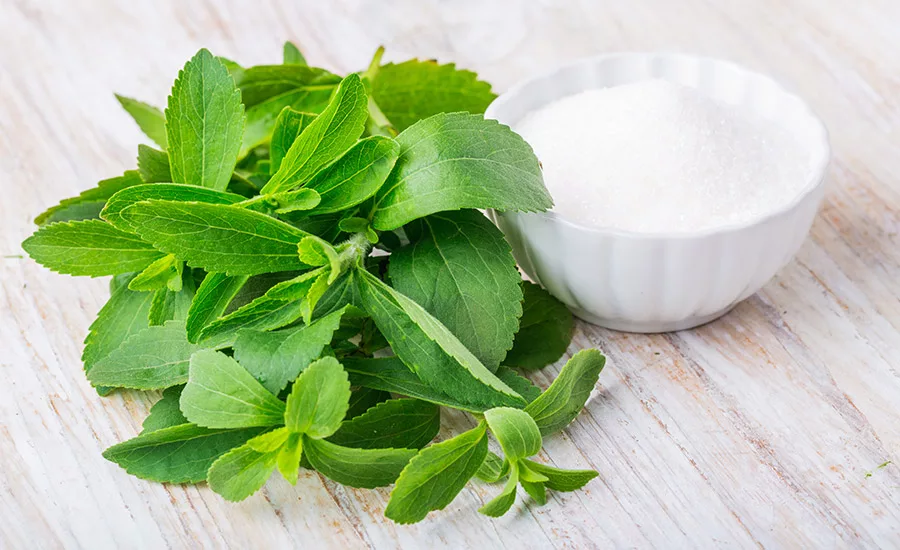
Stevia leads the way
As plant extracts, both stevia and monk fruit are becoming the “preferred sweeteners,” adds Jorge Cortines, Application Center manager for Jungbunzlauer Inc., Des Plaines, Ill.
King notes that both stevia and monk fruit can serve as great replacements for artificial sweeteners, but cautions that they also can introduce off-notes — with stevia associated with an off-note reminiscent of licorice and monk fruit with one of melon rind.
“But when these two high-intensity sweeteners are combined with low-intensity sweeteners such as erythritol and allulose, they provide masking, mouthfeel and, in the case of allulose, functionality,” he says.
Luke Rincker, category manager, sweeteners for Fenton, Mo.-based IFPC, agrees that monk fruit works well as a natural sugar-reduction complement, but not as a 100% sugar replacement, in some dairy applications.
“The fruit-like notes may come through and might not be received well in a deep brown-note dairy application like chocolate or caramel,” he explains.
Stevia appears to have an edge over monk fruit, however, when it comes to consumers. Cargill’s proprietary research suggests that stevia has the most positive impact on purchase among plant-based high-intensity sweeteners, Ohmes says.
“When compared to 12 of the leading low-/no-calorie sweeteners, consumers ranked stevia leaf extract as the most healthful, as well as having the most positive perception on the label,” he says.
What’s more, McCormick notes that stevia continues to gain traction when it comes to new food and drink launches, citing a 2020 report from global market research firm Mintel.
“As consumers are more open to learning what is in their food and beverages, they are forming more opinions on trusting natural sweeteners that contain stevia and blends with other naturally derived sweeteners such as monk fruit,” he says.
On the stevia front, Rincker says he most often sees requests for Reb A, but he notes that Reb M can also provide a great flavor — and a liquid version of it can help guarantee solubility in the final product.
Plenty of other natural choices
Rincker also adds agave nectar, honey and coconut sugar to the list of alternatives to traditional sugar with a more natural connotation.
Consumer perception, rather than sugar reduction, plays a big role here. Even though coconut sugar and honey are counted as added sugars on the Nutrition Facts label, some processors are using these sweeteners because the ingredients are perceived to be less “processed-sounding” than traditional sugar, says An Ho, director of R&D for IFPC.
Allulose is another natural alternative (actually a rare sugar) gaining traction — and it has a flavor profile similar to traditional sugar, Rincker says. USDA ruled that the ingredient, which offers 1/20th of the calories of sugar, can be excluded from label’s total and added sugar declarations (but then must be included under “total carbohydrates”).
“It is also bulky, so it can help with ease of use and standardization when combined with high-intensity sweeteners, just like erythritol,” he says.
Speaking of erythritol, it has long been used in sugar-reduction applications and, like allulose, has only a fraction of the calories of sugar, Rincker notes. However, unlike allulose, erythritol does not count toward total carbohydrates. He notes that both allulose and erythritol work well for adding solids to ice cream formulas and more.
But despite consumers’ collective clamor for natural and less-processed sweetener offerings — and less sugar overall — taste still rules.
“Consumers want better-for-you dairy products, but not at the cost of good taste,” Ho says. “Balancing different variables in formulating dairy products is the key to meeting these consumer demands.”
Christine Addington, senior dairy technical service specialist for Cargill Inc., notes that dairy brands are responding in different ways to deliver on consumers’ taste and sugar-reduction expectations.
“We have customers that simply reduce serving sizes to lower the sugar content on the label,” she points out. “In other segments, most notably yogurt, consumer expectations around sweetness have evolved. Today’s Greek and Icelandic yogurts are less sweet and contain less sugar than the top-selling yogurts of a decade ago.”
Address formulation challenges
A more common practice for dairy brands, however, is reformulation, Addington notes. Product developers typically will replace some of the sugar with alternative sweeteners such as stevia and erythritol and use texturizers to address functional needs.
“Choosing the best approach really depends on the application and the extent of the sugar reduction desired,” she adds.
In general, when removing sugar from products, dairy processors need to rebuild mouthfeel, bulk and texture, McCormick notes.
Addington concurs — and expands on that point.
“Sugar reduction in dairy is often complicated,” she explains. “Sugar not only provides sweetness and flavor; it also contributes to texture, moisture control, freezing-point depression, microbial control and more. As a result, successful sugar reduction often requires a combination of ingredients.”
High-intensity sweeteners, for example, remove a good portion of sweetener solids from any product formula, notes Charlie Hall, food technologist, product development for IFPC. That reality can negatively influence ice cream and other frozen desserts by changing the texture of the finished product.
“We have to be creative in adding solids back in so that the texture isn’t lost while maintaining low carbohydrates and calories,” he says.
And each sweetener is unique, “triggering a distinct sensory response” in consumers’ taste buds, Shawn Sprankle, beverage scientist with ADM, points out.
“Dairy products are known for their rich flavor and creamy texture, and these attributes may be challenging to maintain without the right alternative sweeteners and formulations knowhow,” Sprankle says.
New offerings from ingredient suppliers promise to help in sugar-reduction formulation challenges across a number of dairy applications.
Within the frozen dessert realm, for example, Jungbunzlauer has been working on sugar reduction over the past year and has developed “some nice solutions” that rely on erythritol and stevia and erythritol and monk fruit, Cortines says. They work well in both dairy- and plant-based frozen desserts, minimizing the impact on freezing, texture and scooping while still providing significant calorie reduction.
For its part, Sweegen developed its Bestevia flavors for taste modulation platform (with e+ stevia sweetener), which provide solutions to common formulation challenges, McCormick notes. To mask off-tastes, the platform has advanced bitter blockers. It also includes natural sweetness enhancements and more.
“Sweegen’s Bestevia e+ taste solutions for dairy is great for reduced- or zero-added-sugar dairy applications,” he adds. “From ice cream to fruit preparations, using Sweegen’s proprietary next-generation stevia platform as a foundation, we incorporate the right combination of proprietary flavors and best-in-class texturants to create cost-effective solutions for the toughest sweetness challenge.”
Cargill also offers stevia-related sweetening assistance, Addington notes.
“Within our ViaTech portfolio, we’re able to leverage the full power of the stevia leaf using our proprietary taste-prediction model to precisely predict which combination of the leaf’s sweet components deliver optimal taste and sweetness,” she explains. “Using this insight, we’ve developed a ViaTech SKU that pairs especially well with milk and dairy applications.”
And when it comes to “the deepest sugar reductions,” Cargill offers the EverSweet sweetener — created through a partnership with DSM, Addington says. Using Reb M and Reb D (“the best-tasting parts of the stevia leaf”) produced sustainably via fermentation, the cost-effective ingredient has a “clean, sugar-like taste” and allows sugar reductions of 70%-plus.
ASR Group, West Palm Beach, Fla., also produces Reb M — via the fermentation of sugarcane, notes Tom Sanders, global applications manager, research and development.
Moreover, ADM offers Fibersol, a complementary ingredient in its sugar-reduction solutions that enriches taste and texture, the company says. The low-viscosity ingredient is process-stable and water-soluble and exhibits “exceptional” clarity, making it suitable for frozen treats and dairy beverages. In addition, the company’s SweetRight erythritol, tapioca starches and hydrocolloid blends can replace solids and help optimize mouthfeel in sugar-reduction applications.
For its part, IFPC offers a number of sweetener systems that combine sweeteners with flavors, maskers and/or texturizers for various sugar-reduction applications. It also continues to work on new systems.
“For example, one of our suppliers introduced sugar distillates to us which actually can mask bitterness,” Ho says. “Flavor houses have endless options for masking and enhancing pleasing properties when sugar is sacrificed in a formula. Our suppliers provide us with the latest ingredients, and we do the benchtop work to see if it fits in our customer’s end application.”
IFPC also recently introduced an entirely new brand of products — Legacy. The first line under the brand consists of sweetener blends.
“The first line of Legacy products, aptly named Legacy Sweet, is a complete assortment of sweetener blends, including sucralose, sugar replacers and sugar reducers that are adaptable to virtually all products,” explains Renee Famula, marketing manager. “The unique and most beneficial part about the Legacy Sweet products is the products may be easily converted into a custom blend made solely for our customers’ products.”
For Icon Foods, the most recent sugar-reduction focus has been on inclusions instead of the base dairy product, King explains.
“Certainly allulose is one of our leaders, and we have been moving into the frozen dessert space with great fervor, but our most exciting and fastest-growing portfolio of items for us are our no-added-sugar inclusions such as sprinkles, sanding sweeteners, chocolate chips and flavor bits of all kinds,” he says. “These are finding their way into several bars, cookies, bake mixes and — yes — dairy.”
Still room for sugar?
Despite all the work taking place around sugar reduction, there is still a place for what Diane Stevenson, director of sustainability and marketing for New Canaan, Conn.-based Sugaright, calls “the real thing.”
“With increased focus on health and wellness and sustainability, we promote the moderate consumption of cane sugar in sweet indulgences,” she says. “We also promote sustainable sourcing that assures the supply chain meets social and environmental metrics.”
Stevenson also notes that consumer preference for non-GMO foods is not waning, a reality that is influencing the sugar market.
“This results in an increased demand for cane sugar made from non-GMO sugarcane rather than GMO beet sugar,” she points out.
Moreover, consumers’ desire for less-processed products has spurred increased interest in raw cane sugar and sugar derivatives such as molasses and organic and raw cane sugar syrups, Sanders notes. He adds that ASR Group offers sugar cane distillates, cane molasses distillates and rare sugars that are suitable for dairy applications.
Looking for a reprint of this article?
From high-res PDFs to custom plaques, order your copy today!