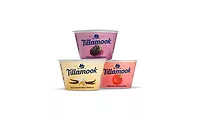
Tillamook County Creamery Association has high expectations
The cooperative’s rigorous quality standards extend to not only its own plant operations, but also its process for auditing suppliers and co-manufacturers.


Nestled along the Pacific coast in upper Oregon is the town of Tillamook. It’s the name given to not only the town itself, but also the surrounding bay, the county in which it’s located, the local high school and Tillamook County Creamery Association, a 112-year-old cooperative that calls the area home.
The company produces a range of dairy products out of its 299,000-square-foot plant in Tillamook, including its popular family-size and foodservice/scoop shop ice cream. In fact, Tillamook is now the No. 1-selling ice cream brand by volume in the Western United States, the company says, citing data from Chicago-based market research firm IRI.
Milk and cream
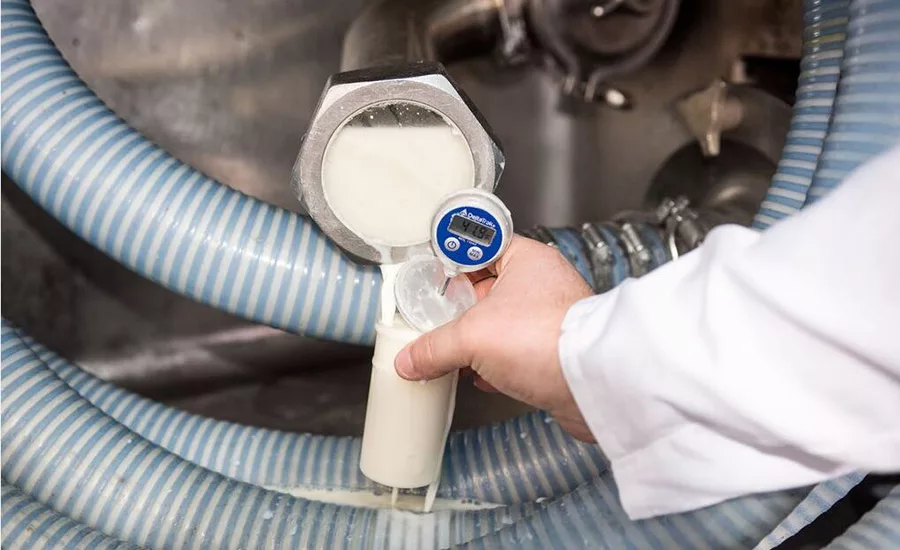
The ice cream operations at the Tillamook facility start in receiving, where milk is delivered via tanker trucks from the 80 farmer-owners in the surrounding area that are part of the cooperative.
“All the milk produced by our farmer-owners is used in the production of Tillamook dairy products here at our manufacturing facility in Tillamook,” says Kristin Holleran, director, plant operations.
Most of the milk at this plant is diverted into Tillamook’s cheese manufacturing, Holleran points out. Some of it goes through a separation process that creates skim milk and cream, and that cream, along with nonseparated whole milk, is used in ice cream production. (Tillamook also produces ice cream products through co-manufacturers.)
“We receive anywhere from 45-50 truckloads of milk per day here at our Tillamook plant,” she notes, “each carrying between 20,000 and 60,000 pounds of milk.”
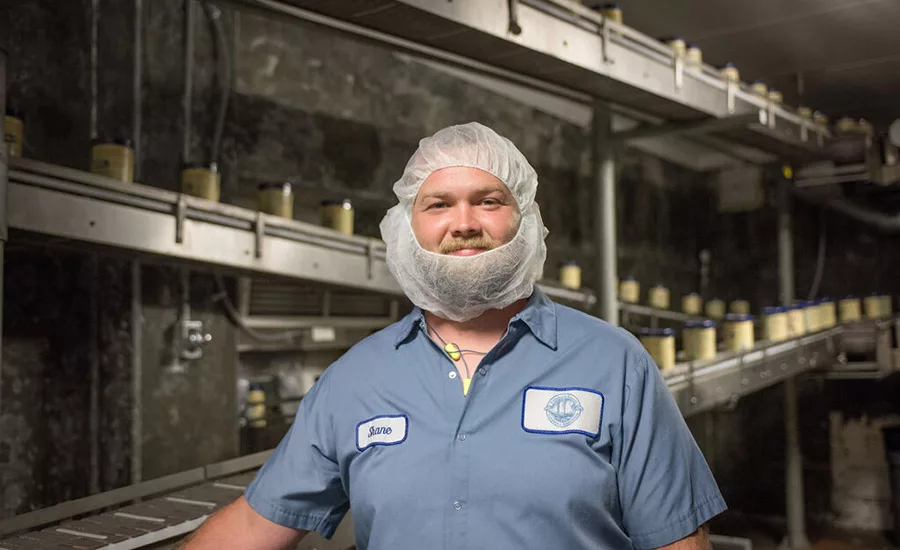
The milk that is to be used in ice cream production is set aside in a silo, says Luke Stahle, ice cream production manager. From there, the milk is pumped into a 2,000-gallon batching tank, where it is combined with cream, skim milk solids, egg yolks and sugar to make either a plain or chocolate mix.
“So all of that stuff goes in [the mixer] before it hits the pasteurizer — when it all comes together,” he explains.
After the ice cream mix is pasteurized, it goes through the critical aging process step. The mix is put into a 4,000-gallon aging tank for four to 24 hours to allow it to settle and let the fats “crystallize a little harder,” Stahle remarks.
After aging, the ice cream mix moves into one of Tillamook’s 500-gallon flavor tanks. The company makes one flavor at a time, explains Stahle, but might run two or three varieties on a given day, depending on demand.
The flavored product is now ready for its initial freeze. It goes through a horizontal-barrel continuous freezer at minus 40 degrees Fahrenheit.
“It's very critical from that point on, and you want to make the trip as short as possible,” Stahle says. “So if you're gonna add any other inclusions for a different flavor — say we're making chocolate chip — you take that, your mix that comes through the freezer, you have a big hopper that has an auger in it, and you dose those chocolate chips into it.”
After any inclusions are added, the ice cream goes right into a mixer and is then immediately pumped into a carton. It goes through a metal detector and checkweigher before traveling into a blast freezer for two hours, Stahle notes.
“It comes out of the freezer, and then we put it in the six-packs … and that goes right into another freezer where we hand-stack and palletize pallets of ice cream,” Stahle says. “And then we send it off-site for long-term storage and distribution.”
A safe product
After any ice cream products are produced, there is a three-day process of testing before any product is released, Holleran points out.
“First, the lab takes a sample from the finished carton for micro-testing. This protects the food safety of our products,” she says. “Our lab also samples multiple cartons throughout a production run to ensure our consumer is getting the best-quality product they know and love.”
After the initial lab sampling, two more tests are conducted. The positive release test “ensure[s] the finished, frozen product is safe,” and then the Sensory Department tests the product for “taste, texture and visual.”
When the product has passed all these benchmarks, it is released from Tillamook’s facilities. Three on-site laboratories handle these pre-release tests, among others, Holleran notes, so third-party testing is rarely necessary.
“In the sensory lab, a team of trained sensory scientists evaluates several samples from every lot to verify the product’s appearance, aroma, taste and texture all meet Tillamook’s rigorous standards,” she elaborates. “The primary on-site lab tests for traditional indicator organisms, including PAC, coliforms, and E. coli. Finally, our pathogen lab is in a self-contained building on-site where Salmonella and Listeria testing is conducted.”
Tillamook’s plant employees are very involved in the food safety process. The cooperative requires its employees to complete monthly food safety/quality videos, Holleran points out. And once the ice cream goes through pasteurization, “it gets classified as a ready-to-eat product,” and all hands are on deck to make sure it is safe.
“Our frontline employees are the first and best line of defense, and I work with a great group of people that take pride in the Tillamook name and do not want to see anything get out the door that is substandard or unsafe,” Holleran says. “It is truly a full team effort to produce the best ice cream on the market.”
Upgraded technology
Tillamook is dedicated to staying up to date on the latest technology and processing equipment, Holleran explains. For example, the cooperative’s engineering and operations departments attend Pack Expo and other conferences to ensure Tillamook is “utilizing the best equipment and staying up to speed on the most efficient processing technique.”
A recent innovation in Tillmook’s ice cream operations was investing in equipment “allowing spent ice cream to be sent to the dump silo for proper disposal rather than down the drain to the wastewater treatment plant [WWTP], where it would need to be treated with expensive chemicals,” says Holleran. The new equipment saves Tillamook $400,000 annually in chemicals at its WWTP and paid for itself within a year.
Tillamook has plans to add more automated equipment and update components at the plant, says Stahle.
“Additionally, we are upgrading the carton former, security bander and the shrink bundler which packages our ice cream cartons into six-packs,” he adds. “Lastly, we are also looking into upgrading some of our tanks and valves to ensure that our consumers continue to get the highest-quality product on the market.”
Whenever new technology is added to the plant, Tillamook makes sure to take advantage of the safety trainings that equipment vendors offer, Holleran says.
Another technology advancement at the plant is the Red Zone system, which is run on tablets and helps Tillamook monitor its overall equipment effectiveness (OEE). The software enables the plant team to “understand where the biggest gaps are” and improve operational efficiencies, Holleran explains.
“Our packaging and ice cream departments utilize Red Zone for OEE tracking, and all departments use Red Zone for quality and safety checks throughout their departments,” she continues.
Beyond Tillamook
The Tillamook facility is not the only plant that the company runs. In 2001, the cooperative opened a cheesemaking plant in Boardman, Ore., says Erin Kelleway, director, strategic sourcing. And as the company “continues to grow,” it is partnering with co-manufacturers in other parts of the country. For example, Tillamook selected a co-manufacturer in Michigan to help it get its products out to the East Coast while reducing cross-country transport.
“Our co-manufacturing partners help us make Tillamook family-size ice creams, frozen custards and novelties (ice cream bars and sandwiches),” Kelleway says.
Products manufactured at an outside facility retain the same recipe, and Tillamook’s product development team works closely with co-manufacturers to confirm everything tastes up to standard. Additionally, Kelleway explains that any potential co-manufacturers go through “extensive reviews” to ensure they meet Tillamook’s “rigorous, high quality standards.” The review process includes looking into the company’s milk supply, values and food-safety standards.
“Having a high-quality, transparent and dedicated milk supply is critical to ensuring exceptional quality, consistency with taste and texture, and protecting animal welfare and environmental sustainability,” she emphasizes. “We have an entire team solely dedicated to tracking and evaluating our milk supply and monitoring the engagement of farmers that supply milk for Tillamook products.”
In addition to its rigorous process for verifying co-manufacturers, Tillamook has an extensive auditing process for suppliers, Kelleway emphasizes. The cooperative not only looks at potential suppliers’ quality and food safety records, but also evaluates them from a flavor perspective and examines if their values mesh with Tillamook’s.
“We take extensive measures to ensure a safe, quality, consistently excellent product for our consumers,” she adds. “This doesn’t start — or stop — within our own walls, but includes the careful selection of our ingredients and packaging suppliers and every aspect of our supply chain.”
While Kelleway says pricing is always a concern in selecting suppliers, as Tillamook wants to run a profitable business for its farmer-owners, it is not the “primary driver.”
“Rather, it’s doing what’s right,” she emphasizes. “and that means finding ingredients or materials that come from suppliers with similar values, that meet — or exceed — our quality requirements, and that help us deliver products that taste the same and are of the same high quality to our consumers, bite after bite and year after year.”
Looking for a reprint of this article?
From high-res PDFs to custom plaques, order your copy today!