New inspection technologies enhance adulterant detection
Evolving inspection technologies are enabling dairy processors to better detect adulterants, but selecting the optimal machinery can be tricky.
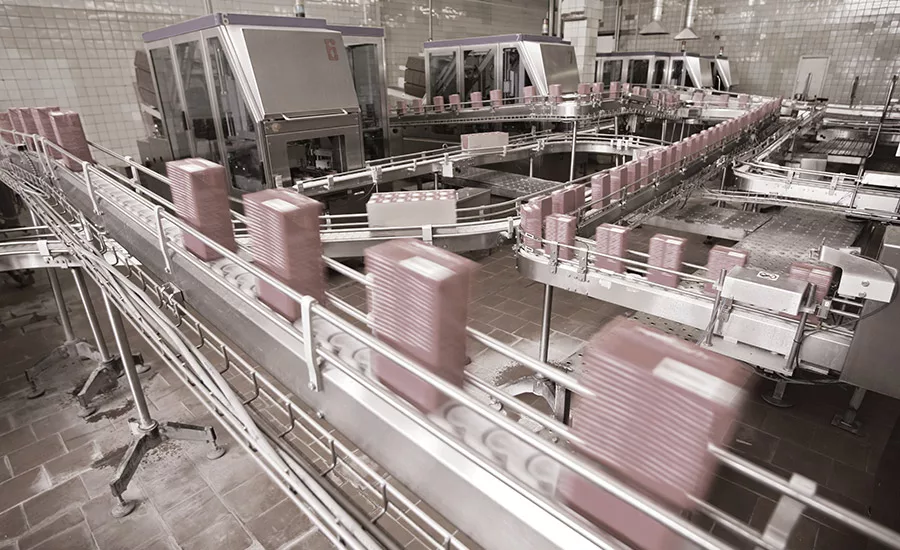


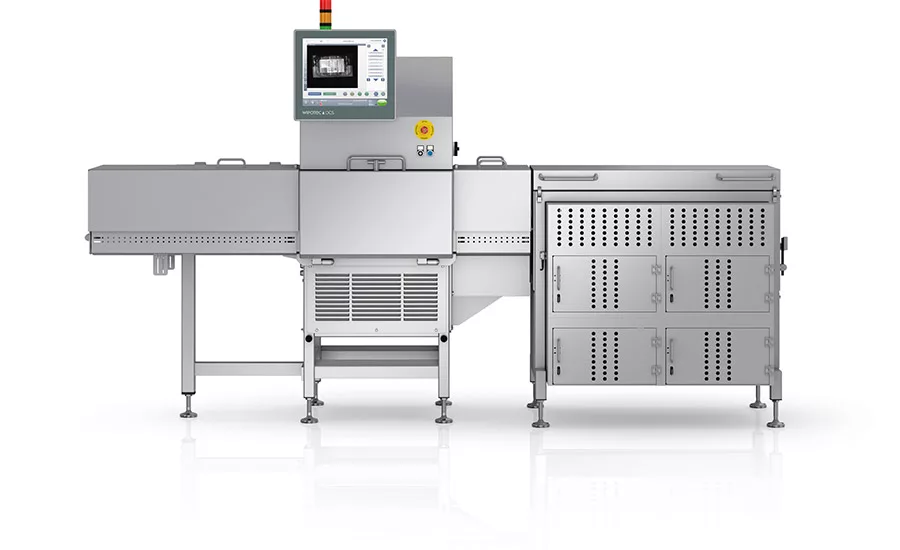
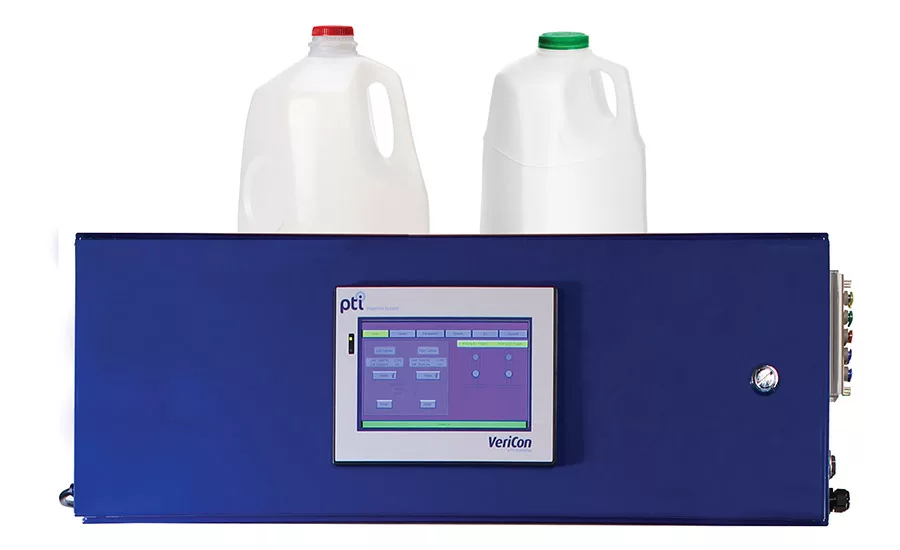


Detecting foreign objects and other contaminants in dairy products is perhaps the most crucial part of the production process. Without the ability to effectively scan for adulterants, processors can compromise food safety and risk costly recalls, product waste and damage to their reputations.
Yet, situating the most productive systems can be mystifying. In addition to investing in equipment that can cost tens of thousands of dollars, operators must determine which technologies are most appropriate for their product lines and ensure they are compatible with their production and plant layouts.
While the major sources of contamination often vary by product, raw materials and equipment degradation are two of the key triggers, says Elizabeth Birr, lead auditor of supply chain food safety audits at NSF International, an Ann Arbor, Mich.-based food safety auditing firm and standards developer.
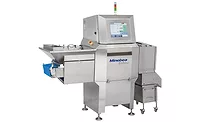
“Dairy processors must evaluate their systems and decide where there is the most potential for physical contamination and implement the appropriate detection technologies,” Birr states, which can include metal detectors for in-process or finished goods, X-rays for bottled glass or metal packaging, and filters that screen incoming liquids.
Indeed, metals, glass and plastics are the three major adulterants, with processing and packaging equipment often causing hazards, says Jim Renehan, senior marketing manager for Wipotec-OCS Inc., a Lawrenceville, Ga.-based provider of inspection and weighing technologies.
He notes, for instance, that flecks of metal may enter shredded cheese from slicers as the blades wear; glass containers can chip or break, sending shards in a variety of directions; bits of plastic from containers or films that seal packages may break off; and aluminum foil that acts as a container sealer can get into foods.
Product degradation also can result from defects in packaging that occur during the production of containers. That includes cuts that form during the blow-molding process and can lead to milk leakage or product spoilage, says Oliver Stauffer, CEO of Packaging Technologies & Inspection (PTI), a Hawthorne, N.Y.-based developer of package testing equipment.
In addition, wire from a sieve net filtering liquid can separate and contaminate products, says Juho Ojuva, director, global sales and customer care for Mekitec Group, an Oulu, Finland-based developer of detection technologies.
“There are even plants that still have glass in their production environment, such as light bulbs and clock covers, that can pose a contamination risk,” he states.
A greater overall plant move to automation, meanwhile, can compromise detection activities.
“Previously, a team of manual operators would visually inspect wear and tear of machine parts and wire mesh from sieves, yet with fewer manual workers on a line, the risk of metal contaminants increases,” says Steve Mason, national sales manager for Fortress Technology Inc., a Toronto-based metal detector manufacturer.
Solve the technology riddle
Leveraging the most effective technologies for specific dairy processing operations can be problematic, as operators face issues such as cost and time constraints and a lack of room in plants to accommodate all equipment.
Processors must determine the degree of risk that they and their customers or retailers can accept and have potential equipment suppliers pinpoint the available solutions, says Bob Ries, lead product manager, metal detection and X-ray inspection, for Waltham, Mass.-based Thermo Fisher Scientific.
“If a producer determines nonmetallic objects are a large risk or if their packaging utilizes metalized film, they should immediately move to X-ray, as metal detectors may not offer the best levels of sensitivity,” he states.
Processors seeking the proper machinery also should consider such factors as the type and size of possible contaminants, desired inspection points, usability for quality control and the price and cost of ownership, says Todd Grube, product manager, inspection systems for Hayward, Calif.-based Heat and Control Inc.
“Users need to be sure that any technical advantage will actually add value, since the pros and cons of metal detectors and X-rays often make it difficult to see which technology is the most effective and cost-optimized solution,” Mason states.
Yet, it can be onerous for dairy processors to determine the total cost of ownership (TCO) of equipment, as the sticker price in some instances accounts for just 10 to 15% of expenses, he says.
“Operational and energy costs, ongoing support, sourcing replacement parts, maintenance and repair fees, lost production time when machines are out of action, productivity and product life cycle should all form part of the TCO equation,” Mason states.
He adds that processors also should ask prospective suppliers to reveal machine failure rates and replacement part costs.
“If the suppliers are not prepared to divulge these, that’s a red flag,” Mason says.
Technology suppliers also should be willing to make design changes to meet unique production line requirements, Renehan notes.
“Processors must talk to their customers to understand their foreign-object detection requirements and then call the equipment supplies to determine if the thresholds can be met,” says Ray Spurgeon, product manager, metal detection for Erie, Pa.-based Eriez Manufacturing Co. “Although there is a lot of helpful information on the internet, that doesn’t make users experts on how to apply the equipment to their processes.”
Operators, meanwhile, must consider the amount of space available to install a system in facilities and on production lines — and if the equipment requires sanitary construction to eliminate points that can harbor bacteria, he states.
“Education, plant surveys and product testing are crucial components to conquering these challenges,” Spurgeon notes, adding that factory representatives must make facility visits as part of efforts to mitigate missteps.
Leveraging technologies that produce complete audit trails to meet FDA inspection requirements is a further necessity, says Lanel Menezes business manager, Safeline X-Ray for Columbus, Ohio-based Mettler-Toledo Product Inspection.
“That is best achieved in cooperation with the equipment supplier,” he states. “Companies need to make ongoing food safety education a priority and maintain focus on the execution of the overall inspection program rather than focusing only on the inspection equipment.”
A mix of machinery
Processors that deploy a variety of inspection technologies, meanwhile, are in the strongest position to safeguard products, analysts note.
“Employing both metal detection and X-ray at various points in the production process leverages the advantages of both technologies,” Grube states. “However, because dairy processors can face cost and/or line-space challenges with that approach, at a minimum they should strategically place inspection equipment in locations established as critical control points.”
Indeed, he says that inspecting products at the head of the process can help protect machinery from damage due to foreign objects, as well as ensuring larger objects do not get reduced into smaller, harder-to-detect pieces.
“Inspecting finished product at the end of the line then provides brand protection by preventing contaminated products from reaching the consumer,” Grube states.
Other useful inspection equipment, he says, includes optical-based vision systems, which enable operators to detect such elements as low-density plastics and organic matter within dairy products, including plant material and insect parts.
Specialized metal detectors also can support a wide array of dairy products, including pipeline detectors for such pumped items as milk and yogurt and rectangular detectors on conveyors for packaged products, Menezes states.
Recent equipment enhancements include the launch of multi-spectrum technologies for metal detectors and X-ray scanners that enable dairy processors to pinpoint more types of contaminants and use spectral analysis of an adulterant to determine the contaminant’s point of origin, Renehan says.
In addition, machine upgrades are helping to eliminate false rejects by suppressing signals from products that are moist or have a high saline content, which can interfere with the detection process, Menezes states.
Yet, the ideal technologies for each plant will vary in accordance with dairy processors’ products, packaging, sensitivity requirements and budgets, Ries notes.
“Recently customers have been migrating to X-ray, but that trend may slow with the advent of multiple frequency metal detectors,” he states.
A feast of functionality
Ries says that upgrades are enabling the concurrent scanning of products at multiple frequencies, which improves sensitivity and the probability of detection.
“Multi-scan can dramatically improve the chance of detecting small fragments of metal in dairy products,” he notes.
There also will be an increase in metal detectors with checkweighers and combination X-ray, vision and checkweigher machines, partly because of floor space limitations, Renehan adds. A checkweigher reveals the weight of packaged commodities to ensure that a product is within specified limits.
“The continual goal of most inspection technology manufacturers is to improve the ability to detect smaller and different types of contaminants,” Menezes states. “The larger goal is to help customers lower costs, improve detection and maximize productivity.”
Spurgeon, meanwhile, notes that his customers are calling for smarter equipment that communicates with information systems to provide electronic records and prompt users for testing.
“Metal detector developers are battling against distracting disturbances from other processing equipment or metalized packaging by adding more detector heads,” Ojuva says. “X-ray technology suppliers also are providing better detection accuracy by revealing lower-density contaminants and developing more quality inspection functions such as seal inspection.”
Cost, however, will remain a key issue for dairy processors seeking to enhance their inspection operations. Renehan notes, for instance, that space limitations can be the most difficult to overcome as they may require major facility or production line retrofits.
“Many producers struggle to fit today’s larger safety inspection technologies into their existing production lines,” Ojuva says, adding that processing plants may have multiple production or packaging lines that require detection systems.
Still, investing in inspection equipment can be a processor’s most important expenditure, Stauffer says.
He notes that operators can pay a “modest” price of about $8,000 for inline technologies that use pressurization to test the integrity of containers.
“There is a cost to poor quality which is not always clear,” Stauffer says. “In addition to product waste, the bigger cost is to the reputation of a brand and the time that a team must take to mitigate the quality issues. These are ancillary expenses that no one typically accounts for but which can add up and affect the profitability of an organization, which makes it an easy choice to pursue an inspection solution.”
Misunderstandings by processors about the effectiveness and requirements of specific technologies, however, are making it difficult for operators to leverage the most practical systems, Spurgeon says.
“We often hear, ‘We need to detect everything,’ but that is a fallacy,” he states. “Regardless of equipment, foreign object detection is limited by physics of the technology.”
Looking for a reprint of this article?
From high-res PDFs to custom plaques, order your copy today!