Dairy Foods logo
search
cart
facebook twitter linkedin youtube
  • Sign In
  • Create Account
  • Sign Out
  • My Account
Dairy Foods logo
  • NEWS
    • DAIRY REGULATIONS
  • PRODUCTS
    • New Products
    • Butter
    • Cheese
    • Cultured Dairy
    • Frozen Desserts
    • Ice Cream/Novelties
    • Milk
    • Non-Dairy Beverages
    • Sales Data
    • Whey, Milk Powder
    • Dairy Alternatives
  • INGREDIENTS
    • Cocoa
    • Colors/Flavors
    • Cultures/Enzymes
    • Fiber
    • Gums, Stabilizers, and Texturants
    • Inclusions
    • Omegas/Lipids
    • Prebiotics
    • Probiotics
    • Sweeteners
    • Other
  • OPERATIONS
    • SUSTAINABILITY
    • Equipment
    • Processing
    • Packaging
    • Food Safety & Sanitation
    • Membrane Technology
  • MEDIA
    • Dairy Foods TV
    • Podcasts
    • Webinars
  • DIRECTORIES
    • Buyers Guide
    • Dairy Plants USA
  • MEMBRANE FORUM
  • MORE
    • Associations
    • Dairy Foods' News & Views Newsletter
    • Blogs
    • Case Studies
    • Classifieds
    • Custom Content & Marketing Services
    • Dairy Foods Store
    • Market Research
    • Sponsor Insights
    • Supplier Spotlights
    • Tradeshows and Events
    • Strategy Guides
  • AWARDS
    • Dairy Plant of the Year Award
    • Breakthrough Award
    • Dairy Processor of the Year
  • EMAGAZINE
    • eMagazines
    • Archive Issues
    • Contact
    • Advertise
    • SIGN UP!
    • Columnists
    • Dairy 100
    • State of the Industry Report
    OperationsDairy Foods ColumnistsDairy Processing and Equipment

    3-A TODAY

    The hidden costs of dairy equipment: A TCO framework for smarter purchasing decisions

    What dairy plant managers and capital equipment decision-makers should calculate before signing the purchase order.
    By 3-A Sanitary Standards Inc.
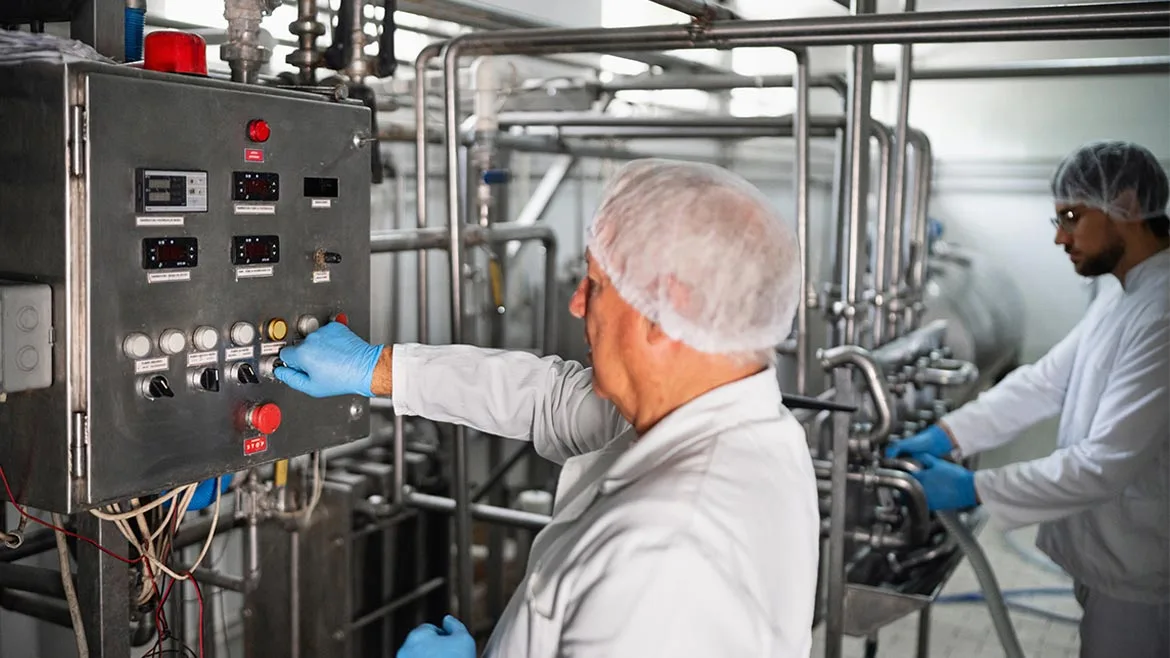
    Two workers in protective clothing monitor and operate machinery in a modern dairy processing plant, showcasing hygiene and production processes.
    Photo courtesy of SrdjanPav / E+ / Getty Images Plus
    July 8, 2026

    Consider a scenario familiar to anyone who has managed a dairy plant budget: a capital equipment decision comes down to two bids. One is $40,000 less than the other. The lower bid wins. Three years later, extended cleaning cycles, accelerated seal replacements, and two unplanned shutdowns have erased that savings — and then some.
    3-A Sanitary Standards logo 250px

    Courtesy of 3-A Sanitary Standards

    This outcome is not unusual. It reflects a gap in how most dairy facilities evaluate equipment: acquisition price receives the scrutiny, while the costs that follow — operating expenses, maintenance, downtime, and compliance burden — are estimated loosely or not at all. Yet those downstream costs routinely represent 70 to 80 percent of what a piece of equipment actually costs over its useful life.

    Total Cost of Ownership (TCO) analysis changes the calculation. It shifts equipment evaluation from a price comparison to a business decision — and it starts with understanding how equipment design drives every cost category that follows purchase.

    Purchase price just the entry fee

    For most dairy processing equipment, purchase price represents a relatively small fraction of total lifecycle cost. The balance accumulates over years of operation — in utilities, maintenance labor and parts, unplanned downtime, workforce training, and regulatory compliance activities. None of these costs appear on the original quote, but all of them are shaped by the design decisions made before the equipment left the manufacturer’s floor.

    This is precisely why hygienic equipment design standards exist. 3-A Sanitary Standards define the design criteria — drainage slope, surface finish requirements, material specifications, cleanability, and inspectability that determine how equipment performs across every TCO category over its service life. Equipment that carries the 3-A Symbol has been designed and independently verified to meet these criteria. That verification has direct implications for TCO.

    When evaluating the four cost categories below, equipment design can make all the difference.

    Operating costs: Every CIP cycle is a cost event

    Water, chemicals, energy, steam, and lost production time accumulate with every cleaning cycle. Equipment designed with self-draining slopes, no dead legs, and smooth product-contact surfaces — requirements addressed in 3-A Sanitary Standards — completes CIP (clean in place) cycles faster and with less resource consumption than equipment that was not built to these criteria. Multiply even modest CIP efficiency differences by the number of cycles per week, 50 operating weeks per year, and a 15-year asset life, and the compounding effect is substantial.

    When evaluating equipment, ask vendors: "What is the validated CIP cycle time for this equipment, and what water and chemical volumes are required per cycle?" Equipment manufacturers holding the 3-A Symbol can answer this question specifically, because cleanability has been built in and verified — not estimated after the fact.

    Maintenance and parts: Design determines durability

    3-A Sanitary Standards specify material requirements such as stainless-steel grades, elastomer compatibility and surface finish minimums that directly affect how equipment holds up under the repeated thermal and chemical stress of dairy processing environments. Equipment manufactured to these specifications resists corrosion, pitting, and seal degradation more effectively than equipment built to less rigorous or unverified design criteria.

    Accessibility requirements in 3-A Standards also matter here. Equipment designed for tool-accessible inspection and maintenance gets serviced more regularly because the labor barrier is lower. Preventive maintenance performed on schedule is consistently less expensive than emergency repairs.

    Ask vendors: "What is the recommended seal replacement interval? Are replacement parts standard or proprietary? What access is required for routine maintenance?" Vendors with 3-A certified equipment have documented answers. Those without may not.

    Downtime: The largest line item nobody budgets for

    Calculate the cost per hour of unplanned downtime at your facility — lost production, wasted product, overtime labor, expedited service calls. For most dairy operations, that figure is significant. Now consider: how many unplanned events over 15 years of equipment service are acceptable?

    Equipment designed and manufactured to 3-A standards includes design features like CIP-compatible construction, quick-disconnect components and verified cleanability. These reduce both the frequency and duration of unplanned events. When a cleaning failure or contamination event forces a line stoppage, equipment that was not designed for reliable cleanability is frequently the root cause. Equipment that carries the 3-A Symbol has been evaluated specifically against the design criteria that prevent those failures.

    Ask vendors: "What is the mean time between failures for this equipment in dairy applications, and does this equipment carry a 3-A Symbol authorization?" A vague answer to the first question and a "no" to the second are both worth noting.

    Regulatory and validation burden: Documentation has value

    Commissioning, cleaning validation, and regulatory documentation represent real costs that rarely appear in equipment price comparisons. Equipment carrying the 3-A Symbol arrives with independent verification that it meets established sanitary design criteria. This documentation directly supports validation activities and reduces the engineering hours required to satisfy FDA Pasteurized Milk Ordinance requirements, FSMA preventive controls, and state regulatory inspections.

    The 3-A Symbol is recognized by regulatory authorities as evidence of hygienic equipment design. Facilities that specify 3-A certified equipment from authorized symbol holders enter the validation process with a documented design foundation. Those that do not may find themselves building that documentation from scratch — at their own expense and on their own timeline.

    Ask vendors: "What cleaning validation documentation do you provide, and is this equipment authorized under a current 3-A Symbol?" The 3-A SSI Certified Equipment Directory at 3-a.org allows buyers to instantly verify any Symbol authorization.

    Putting the framework to work

    Before the next equipment purchase, assign a dollar estimate to each TCO category for every option under consideration. Precision is not required. Reasonable estimates will surface the gaps. Include the maintenance manager, QA lead, and a financial stakeholder in the process. Each brings visibility to costs the others may not see.

    Require that equipment meet applicable 3-A Sanitary Standards before evaluating other features. More than 650 equipment manufacturers hold current 3-A Symbol authorizations across a wide range of dairy processing equipment categories, including pumps, valves, heat exchangers, tanks, sensors and more. Specifying 3-A certified equipment does not limit the competitive field; it defines a performance baseline that protects the investment.

    The equipment that wins the bid is not always the equipment that wins the decade. TCO analysis, when anchored in verified hygienic design standards, can close the gap between those two outcomes.

    This article represents the perspective of 3-A Sanitary Standards, Inc. For more information, visit 3-A.org.

    3-A SSI has developed a downloadable TCO Calculator to help plant managers and procurement teams run this analysis on real equipment decisions. The calculator is available at no charge at www.3-a.org/TCO. To verify 3-A Symbol authorizations or search certified equipment by category, visit the 3-A SSI Certified Equipment Directory at 3-a.org/.

    KEYWORDS: 3-A Sanitary Standards column columnists dairy plant operations dairy plant safety food safety hygienic equipment design hygienic guidelines Total Cost of Ownership

    Share This Story

    Looking for a reprint of this article?
    From high-res PDFs to custom plaques, order your copy today!

    Recommended Content

    JOIN TODAY
    to unlock your recommendations.

    Already have an account? Sign In

    • Lifeway Organic Kefir in different flavors inside a refrigerated grocery shelf.

      Dairy Foods names Lifeway Foods 2025 Processor of the Year

      Lifeway Foods donates $10,000 to wildfire victims,...
      Cultured Dairy
      By: Brian Berk
    • Two female farmers are standing in a field, holding a large milk canister, looking at several cows at dairy farm.

      Honoring Women Leaders Shaping the Dairy Industry

      For the fourth consecutive year, Dairy Foods is proud to...
      Innovation
      By: Barbara Harfmann
    • Main feature for State of the Industry with dairy products album cover with a gradient circular--patterned backgorund.

      2025 State of the Dairy Industry

      Welcome to the 2025 State of the Industry report. For...
      Ingredients for Dairy Processors
    Manage My Account
    • eMagazine Subscription
    • Dairy Foods News & Views Newsletter
    • Online Registration
    • Manage My Preferences
    • Subscription Customer Service
    • Connect with Dairy Foods

    More Videos

    Sponsored Content

    Sponsored Content is a special paid section where industry companies provide high quality, objective, non-commercial content around topics of interest to the Dairy Foods audience. All Sponsored Content is supplied by the advertising company and any opinions expressed in this article are those of the author and not necessarily reflect the views of Dairy Foods or its parent company, BNP Media. Interested in participating in our Sponsored Content section? Contact your local rep!

       close
    • Xylem’s largest BVF reactor at a dairy farm
      Sponsored byXylem

      Preparing water systems for dairy growth in 2026

    Popular Stories

    Close up of man adding Greek yogurt while preparing healthy smoothie in the kitchen.

    An expert guide to dairy and GLP-1 receptor agonists

    Splash of milk in form of arm muscle. 3D illustration.

    Protein: The Powerhouse of Health and Wellness

    Vanila and blueberry ice cream with lavender on blue background.

    Is ice cream a healthy food?

    Nominate your product for the 2026 Dairy Foods Product of the Year!


    Food Safety webinar

    Events

    July 8, 2026

    Membrane Purification Enables Clean Beauty Actives

    The global cosmetics market is undergoing a major shift towards the use of natural bioactive ingredients as consumers grow more skeptical of traditional formulations and demand greater transparency and sustainability.

    July 22, 2026

    Food Safety Today: What Dairy Processors Need to Know

    Join the husband-and-wife team, Rich and Heather Draper, of the Ice Cream Club Inc., who have implemented food safety practices for more than 40 years, for this fascinating and educational webinar.

    View All Submit An Event

    Products

    Probiotic Ice Cream: Science and Technology

    Probiotic Ice Cream: Science and Technology

    See More Products
    health and wellness


    plant of the year

    Related Articles

    • Bosch dairy filling equipment is EHEDG-approved

      Hygienic design of dairy equipment is in the spotlight

      See More
    • News-default-780x439.jpg

      President Biden, Indo-Pacific partners launch the Indo-Pacific Economic Framework for Prosperity

      See More
    • healthy students

      For smarter kids/better students, feed them healthy foods like dairy

      See More

    Related Products

    See More Products
    • foods analysis.jpg

      Handbook of Dairy Foods Analysis, 2nd Edition

    • handbook.jpg

      Handbook of Dairy Foods and Nutrition, 3rd Edition

    • handbook drying.jpg

      Handbook of Drying for Dairy Products

    See More Products

    Events

    View AllSubmit An Event
    • July 17, 2025

      The Future of Dairy Processing: Exploring the Cost-Effectiveness of Next-Generation Reverse Osmosis Sanitary Membranes

      On-Demand Advances in milk processing and changing customer preferences are driving growth in the dairy market. Today, dairy processors face challenges in achieving energy savings while also improving yields without compromising performance. Membrane filtration offers a versatile solution, and advanced technology may be necessary depending on the desired outcome.
    View AllSubmit An Event

    Related Directories

    • Viking Equipment Finance

      Viking Equipment Finance is a leading provider of dairy equipment financing solutions for small to midsize companies seeking $50,000 to $50 million to purchase or refinance essential use equipment and machinery used in the dairy industry.
    • Schneider Packaging Equipment

      Schneider Packaging Equipment has a legacy of over 55 years of excellence in case packing and robotic palletizing solutions. Tailored to optimize efficiency and productivity, our case packing portfolio includes robotic, horizontal, high-speed, bottom-loading, and gable-top models. Our palletizers include collaborative, modular, centralized, high-speed layer, and fully integrated systems. Leveraging the collective expertise and resources of our parent company, Pacteon, Schneider supports some of the biggest food, beverage, and CPG operations. Schneider machines are backed by the Pacteon Promise: We Make It Right!
    • Pride of Main Street Dairy LLC

    ×

    Stay ahead of the curve. Unlock a dose of cutting-edge insights.

    Receive our premium content directly to your inbox.

    SIGN-UP TODAY
    • RESOURCES
      • Advertise
      • Contact Us
      • Directories
      • Store
      • Want More
    • SIGN UP TODAY
      • Create Account
      • eMagazine
      • Newsletter
      • Customer Service
      • Manage Preferences
    • SERVICES
      • Marketing Services
      • Reprints
      • Market Research
      • List Rental
      • Survey/Respondent Access
    • STAY CONNECTED
      • LinkedIn
      • Facebook
      • YouTube
      • X (Twitter)
    • PRIVACY
      • PRIVACY POLICY
      • TERMS & CONDITIONS
      • DO NOT SELL MY INFORMATION
      • PRIVACY REQUEST
      • ACCESSIBILITY

    Copyright ©2026. All Rights Reserved BNP Media, Inc. and BNP Media II, LLC.

    Design, CMS, Hosting & Web Development :: ePublishing