Sustainability impacts secondary packaging
The latest innovations in materials, machinery and sustainability are shaping how secondary packaging supports the growing demands of dairy processors.
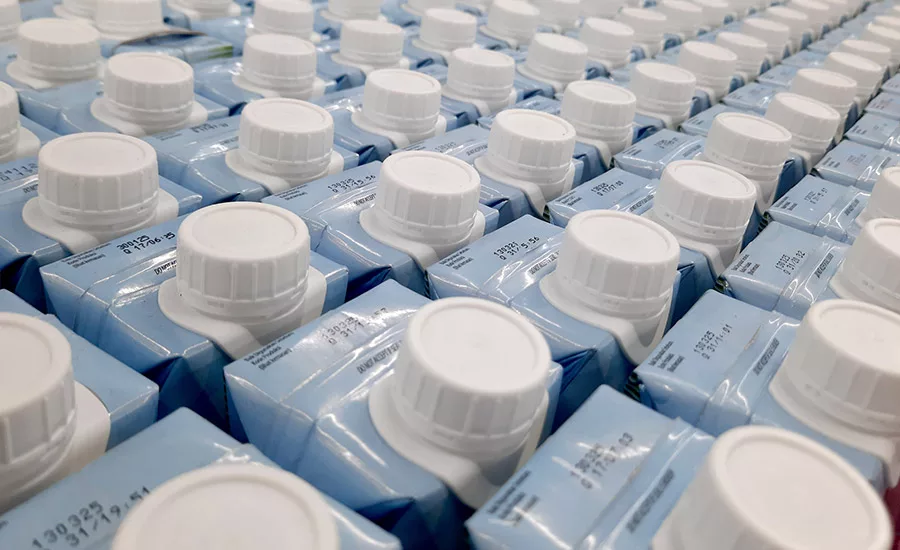
Photo courtesy of Satriady Utomo / iStock / Getty Images Plus
Dairy packaging has long been defined by its complexity. Moisture sensitivity, cold chain logistics and product variety all combine to make it one of the most technically demanding sectors in the food industry. While primary packaging often steals the spotlight, secondary packaging plays a critical role in ensuring that dairy products reach their destinations in good condition.
Behind the scenes, the latest innovations in materials, machinery, and sustainability are shaping how secondary packaging supports the growing demands of dairy processors. From cheese to yogurt, suppliers are seeking smart and versatile solutions that can adapt to evolving product formats, stricter regulations, and higher expectations for efficiency and environmental responsibility.
The unique nature of dairy products
In addition to case packing and preparing products for distribution, manufacturers and suppliers must account for dairy’s temperamental nature. Dairy products are prone to quick spoilage and contamination, so making sure packages are structurally sound and stored in the right environment is critical.
“Dairy products require careful handling due to their perishability,” says Scott Renfrew, director of sales and operations for Accredo Packaging. “Packaging must be durable in cold and humid environments, provide moisture and puncture resistance, and run reliably on high-speed automated equipment.”
Christopher Gabriel, director, Strategic Marketing (Dairy) for TC Transcontinental, concurs: “Dairy packaging has to walk a tightrope: keep food safe and fresh, extend shelf life, reduce waste, run efficiently on high-speed equipment, and now — more than ever — meet demanding sustainability and regulatory expectations. Unlike many categories, dairy has complex technical needs. Cold-chain performance, high-moisture content, and consumer expectations for visual appeal and resealability all converge.”
Few packaging sectors are as intertwined with environmental conditions as dairy. The cold chain demands that materials and machines perform under constant exposure to moisture and low temperatures.
“Cold chain performance is a major challenge. Materials must retain strength and sealing properties despite exposure to low temperatures and moisture,” Renfrew relays. “Films used in secondary packaging also need to perform consistently under variable conditions, such as during freezer-to-retail transitions.”
The importance of versatility and efficiency
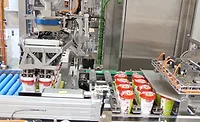
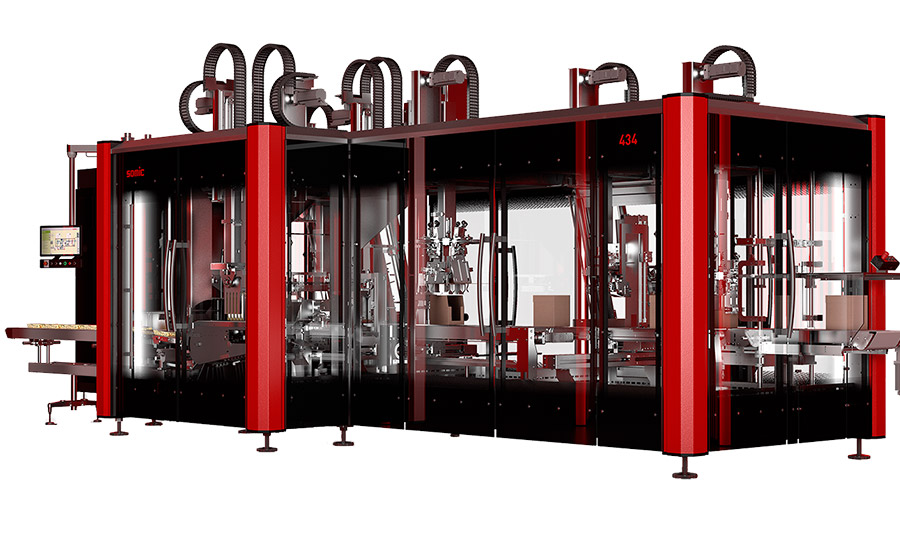
Today’s dairy processors are increasingly demanding systems that can handle multiple package types on a single machine. SOMIC Packaging’s lines, for instance, are running up to 15 different formats with automated changeovers. This level of flexibility helps processors minimize downtime and improve throughput across growing product portfolios.
“Dairy products, such as cheese, are all dimensionally different. For yogurt packaged in stand-up pouches, there are also variations in thickness,” explains Peter Fox, CEO, SOMIC Packaging. “Our focus is on running a wide range of formats on the same packaging line. We have several custom configurations of our series 424 machine, and now our 434 series is handling some of the trickiest applications in packaging. This year, we will be launching an incredibly versatile machine with a goal of offering wide format flexibility. It will be on display at PACK Expo Las Vegas in September."
Massman Automation also shares this goal of machine versatility. The company offers case packing and palletizing equipment for both flexible and rigid dairy containers, and its solutions are designed to handle a wide variety of formats that ensure consistent, reliable performance in downstream packaging operations.
“Unlike primary packaging, secondary packaging must manage variability introduced during the upstream process,” says Mark Suchy, senior vice president of sales and marketing for Massman Cos. “Container dimensions, fill levels or rigidity can shift slightly, and our equipment must compensate accordingly, often through ‘on-the-fly’ adjustments or quick-change components. The goal is to maintain throughput and product integrity despite these inconsistencies.”
In addition to handling a wide variety of package types, machinery must also be efficient. In light of this requirement, companies have strived to embrace automation in their machine offerings as a way of making their processes more streamlined.
“Automatic and semi-automatic changeovers is an area that SOMIC is focused on,” Fox notes. “Removing the human element in the changeover process ensures consistency. This results in faster come-up time after the change is made, especially as it relates to location-specific adjustments. We have eliminated these variable adjustments to ensure repeatability.”
Suchy adds, “We’re seeing continued advancements in servo technology, allowing for more precise and repeatable motion. Verified adjustment points and recipe-driven changeovers are becoming the norm. Additionally, [human-machine interfaces] are becoming more intuitive to support faster troubleshooting.”
Sustainability is a requirement
Sustainability has shifted from being a brand differentiator to being a regulatory and economic necessity. Due to governmental regulations across the world, finding ways to make the packaging process more eco-friendly is a heightened area of focus.
“With EPR legislation rolling out across several U.S. states and parts of Canada, the cost of non-sustainable packaging is now quantifiable. That’s driving rapid change,” Gabriel notes. “[TC Transcontinental has] invested more than $60 million in a BOPE line to commercialize recyclable mono-material films at scale.”
Gabriel adds TC Transcontinental expanded its vieVERTe portfolio, including compostable, post-consumer recycled, and recycle-ready options, “with specific applications for cheese chunks, slices, sticks, and overwraps. And, we’ve aligned our internal teams to stay ahead of evolving recycling infrastructures and regulatory frameworks. Sustainability is now core to our design, not a bolt-on.”
Accredo Packaging also weighs in on the demand for sustainable packaging in the dairy industry. “We’ve been ahead of the curve with innovations like recycle-ready PE films, compostable structures, and bio-based resins made from renewable sugarcane. But it doesn’t stop at the product,” Renfrew points out. “Our operations reflect that same commitment, and we have made long-term investments at our production facility in suburban Houston with processes and closed-loop manufacturing systems that minimize waste and emissions.”
Embracing sustainability is not without its challenges. Because sustainable materials tend to be lighter, and therefore less stable, running them on established machines requires special attention.
“Sustainable packaging often means using lighter, more eco-friendly materials, which can be less structurally stable. This creates additional challenges in maintaining precision and efficiency,” explains Suchy. “At Massman, we’ve adapted our equipment to handle these materials while still targeting a 98% or greater uptime to support uninterrupted production.”
Companies that know the unique properties of these sustainable materials, like recycled corrugated as an example, have an advantage that can lead to smoother operations and less production delays.

“The biggest impact [of the shift toward sustainability] would have to be recycled corrugated, especially 100% recycled content. The material varies in porosity, as well as its proclivity to warp versus virgin material,” SOMIC Packaging’s Fox says. “These factors can cause problems in blank picking and with case erecting. Knowing these factors during the engineering process can significantly reduce production problems associated with these materials.”
The road ahead
Looking forward, all signs point to increasing automation and deeper integration between materials and machinery in the secondary packaging space. In addition, the rise of artificial intelligence (AI) and a further emphasis on sustainability seem to be on the horizon as well.
“Undoubtedly, the advancements of AI and incorporating it into machine learning and on-the-fly machine adjustments based on the variable inputs [will be a trend moving forward],” says Fox. “This technology is in the early stages, but the opportunities are pretty incredible.”
Meanwhile, Renfrew maintains that the biggest long-term trend is the shift towards circular packaging, which involves designing films that are not only recyclable but are also made with recycled or renewable content.
“More of [Accredo’s] customers are asking for secondary packaging with increasing levels of post-consumer recycled content, especially in shrink films and bundling applications,” Renfrew concludes. “This demand is being driven by both internal sustainability goals and external pressure from retailers and regulators.”
Looking for a reprint of this article?
From high-res PDFs to custom plaques, order your copy today!