Dairy Foods logo
search
cart
facebook twitter linkedin youtube
  • Sign In
  • Create Account
  • Sign Out
  • My Account
Dairy Foods logo
  • NEWS
    • DAIRY REGULATIONS
  • PRODUCTS
    • New Products
    • Butter
    • Cheese
    • Cultured Dairy
    • Frozen Desserts
    • Ice Cream/Novelties
    • Milk
    • Non-Dairy Beverages
    • Sales Data
    • Whey, Milk Powder
    • Dairy Alternatives
  • INGREDIENTS
    • Cocoa
    • Colors/Flavors
    • Cultures/Enzymes
    • Fiber
    • Gums, Stabilizers, and Texturants
    • Inclusions
    • Omegas/Lipids
    • Prebiotics
    • Probiotics
    • Sweeteners
    • Other
  • OPERATIONS
    • SUSTAINABILITY
    • Equipment
    • Processing
    • Packaging
    • Food Safety & Sanitation
    • Membrane Technology
  • MEDIA
    • Dairy Foods TV
    • Podcasts
    • Webinars
  • DIRECTORIES
    • Buyers Guide
    • Dairy Plants USA
  • MEMBRANE FORUM
  • MORE
    • Associations
    • Dairy Foods' News & Views Newsletter
    • Blogs
    • Case Studies
    • Classifieds
    • Custom Content & Marketing Services
    • Dairy Foods Store
    • Market Research
    • Supplier Spotlights
    • Tradeshows and Events
    • Strategy Guides
  • AWARDS
    • Dairy Plant of the Year Award
    • Breakthrough Award
    • Dairy Processor of the Year
  • EMAGAZINE
    • eMagazines
    • Archive Issues
    • Contact
    • Advertise
    • SIGN UP!
    • Columnists
    • Dairy 100
    • State of the Industry Report
    Dairy Foods & BeveragesDairy Foods ColumnistsCheeseMilk

    Dairy farm input costs continue volatility

    Feed costs for farmers in US and charges for replacement cows escalate since COVID-19.
    By Nate Donnay
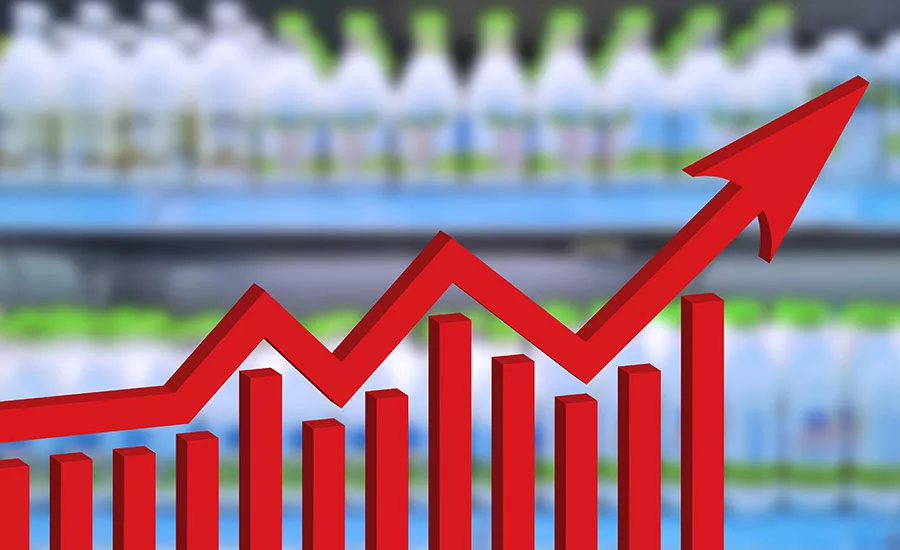
    chart trending upwards

    Photo courtesy of NVS / iStock / Getty Images Plus

    June 11, 2024
    Nate Donnay
    Nate Donnay is the director of dairy market insight at StoneX Financial Inc. He has been applying his interest in large complicated systems and statistical analysis to the international and U.S. dairy markets since 2005.

    We have seen some very dramatic fluctuations in dairy farm input costs in the past four years, and while some costs have come down, not all of them have and most remain elevated compared to pre-pandemic levels. Farm input costs are important because they are the starting point for prices further down the dairy supply chain like milk, cheese, butter and the various powders.

    Technically, the cheese market doesn’t care what the dairy farmer must pay for corn and dairy prices often fall below the cost of production for farmers, but when farmers start losing money, they cut supply, which limits how far dairy prices can fall. So, the price transmission from input prices to dairy product prices is long and lagged, but it is important to understand what is happening with input prices for farmers if we want to understand what is happening in the dairy markets.

    We have seen some very dramatic fluctuations in dairy farm input costs in the past four years, and while some costs have come down, not all of them have and most remain elevated compared to pre-pandemic levels. Farm input costs are important because they are the starting point for prices further down the dairy supply chain like milk, cheese, butter and the various powders.

    Technically, the cheese market doesn’t care what the dairy farmer must pay for corn and dairy prices often fall below the cost of production for farmers, but when farmers start losing money, they cut supply, which limits how far dairy prices can fall. So, the price transmission from input prices to dairy product prices is long and lagged, but it is important to understand what is happening with input prices for farmers if we want to understand what is happening in the dairy markets.

    feed/fertilizer dairy farm input costs chart

    Feeds costs major cost in milk production

    Feed costs often make up 40 to 60% of the cost of producing milk. Feed costs were trending up in 2021 on the back of good demand and production issues is various parts of the world, but the rise in prices was turbo charged by Russia’s invasion of Ukraine. From mid-2020 to the peak in June 2022, feed costs for the average U.S. dairy farm rose 86%. European dairy farmers rely more on their homegrown feed more than U.S. farmers, but feed costs in Europe rose by a similar percentage and dairy farmers there felt the pinch too.

    Dairy farmers in New Zealand primarily rely on pasture to feed their cows, so they were more isolated from the spike in feed costs, but they do apply fertilizer to the fields to help the grass grow. Fertilizer typically accounts for 7-10% of the average costs on a New Zealand dairy farm and from mid-2020 to the peak in late 2022, imported fertilizer costs rose 174%. Russia and Belarus are major exporters of fertilizer and the fear was that the supply would be cut off.

    Fertilizer continued to flow out of Russia and Belarus and exports of various crops continued to move out of Ukraine, which helped to bring prices for these items down since 2022. U.S. feed costs are down about 34% from the peak while the EU price is down 30% and fertilizer imported into New Zealand is down 41%. However, not all costs have come down and some have been increasing since 2022.

    As the graphs demonstrate, In the U.S., the cost of replacement cows has been rising since early 2019. The USDA reported price lags the market and isn’t at a new record high yet, but it could hit a new record high during 2024. U.S. dairy farmers have been reducing the number of heifers they raise to cut costs and increase revenue by selling more calves into beef raising operations.

    How is debt of farmers in New Zealand impacting milk prices?   

    In the EU, energy prices spiked in 2022 on the back of reduced natural gas supplies coming from Russia. Retail energy prices have pulled back from their 2022 peak but remain well above pre-war levels, which raises costs for dairy farmers and processors in the region. Lastly, and this one actually applies to all regions, but I’ve included a graph for New Zealand, interest rates remain near their peak. New Zealand dairy farmers generally carry more debt than the average dairy farm in the U.S. or EU with interest expense making up 13-20% of the cost of milk production in the country. So, the near tripling of effective interest rates since the pandemic has a significant impact on their operating costs.

    beef raising operations charts

    Input costs for dairy farmers are mostly down since their peak in 2022, but they still aren’t down to pre-pandemic levels and some input costs are still increasing or remain near recent highs. The generally elevated input costs mean milk prices can only fall so far before dairy farmers see margins turn negative which usually slows milk production growth.

    This material should be construed as the solicitation of an account, order, and/or services provided by the FCM Division of StoneX Financial Inc. (“SFI”) (NFA ID: 0476094) or StoneX Markets LLC (“SXM”) (NFA ID: 0449652) and represents the opinions and viewpoints of the author. It does not constitute an individualized recommendation or take into account the particular trading objectives, financial situations, or needs of individual customers. Additionally, this material should not be construed as research material. The trading of derivatives such as futures, options, and over the counter (OTC) products or “swaps” may not be suitable for all investors. Derivatives trading involves substantial risk of loss, and you should fully understand the risks prior to trading. Past results are not necessarily indicative of future results. 

    All references to and discussion of OTC products or swaps are made solely on behalf of SXM. All references to futures and options on futures trading are made solely on behalf of SFI. SXM products are intended to be traded only by individuals or firms who qualify under CFTC rules as an ‘Eligible Contract Participant’ (“ECP”) and who have been accepted as customers of SXM.

    SFI and SXM are not responsible for any redistribution of this material by third parties, or any trading decisions taken by persons not intended to view this material. Information contained herein was obtained from sources believed to be reliable but is not guaranteed as to its accuracy. Contact designated personnel from SFI or SXM for specific trading advice to meet your trading preferences.

    Reproduction or use in any format without authorization is forbidden.

    © Copyright 2024. All rights reserved.

    KEYWORDS: columnists dairy price trends feed prices

    Share This Story

    Looking for a reprint of this article?
    From high-res PDFs to custom plaques, order your copy today!

    Nate donnay headshot

    Nate Donnay is the director of dairy market insight at StoneX Group Inc. and has been applying his interest in large complicated systems and statistical analysis to the dairy markets since 2005. As a consultant, he has worked with clients at all levels of the dairy marketing chain from the farm level up to processors and packaged foods companies, food distributors and restaurants, as well as industries such as banks, private equity groups, government agencies and industry associations.

    Recommended Content

    JOIN TODAY
    to unlock your recommendations.

    Already have an account? Sign In

    • Lifeway Organic Kefir in different flavors inside a refrigerated grocery shelf.

      Dairy Foods names Lifeway Foods 2025 Processor of the Year

      Lifeway Foods donates $10,000 to wildfire victims,...
      Dairy Foods & Beverages
      By: Brian Berk
    • Two female farmers are standing in a field, holding a large milk canister, looking at several cows at dairy farm.

      Honoring Women Leaders Shaping the Dairy Industry

      For the fourth consecutive year, Dairy Foods is proud to...
      Dairy Foods & Beverages
      By: Barbara Harfmann
    • Main feature for State of the Industry with dairy products album cover with a gradient circular--patterned backgorund.

      2025 State of the Dairy Industry

      Welcome to the 2025 State of the Industry report. For...
      Cheese
    Manage My Account
    • eMagazine Subscription
    • Dairy Foods News & Views Newsletter
    • Online Registration
    • Manage My Preferences
    • Subscription Customer Service
    • Connect with Dairy Foods

    More Videos

    Popular Stories

    Close up of a whipped frozen dessert with a light green color.

    The keys to high-protein dairy formulations

    Grilling foods

    Dairy’s Enduring Moment: Why Resilience and Renewal Define Today’s Dairy Story

    Idaho Milk Products hosts ribbon cutting

    Idaho Milk Products hosts ribbon cutting for new facility

    Nominate your product for the 2026 Dairy Foods Product of the Year!

    Products

    Probiotic Ice Cream: Science and Technology

    Probiotic Ice Cream: Science and Technology

    See More Products

    Outlook Report: Women in Dairy

    Related Articles

    • Higher feed costs will ripple through dairy markets

      Higher feed costs will ripple through dairy markets

      See More
    • Young man stroking cow in field.

      Is herd head expansion going to continue?

      See More
    • cows

      What is the outlook for U.S. Dairy exports?

      See More

    Related Products

    See More Products
    • df emerging.jpg

      Emerging Dairy Processing Technologies: Opportunities for the Dairy Industry

    • foods analysis.jpg

      Handbook of Dairy Foods Analysis, 2nd Edition

    • 0470655844.jpg

      Sustainable Dairy Production

    See More Products

    Events

    View AllSubmit An Event
    • March 31, 2015

      Raising the bar with in-line mixing and blending technologies: high output with flexibility and low costs

      On Demand In this webinar, you will be introduced to advanced in-line blending, dosing and mixing technologies that offer high flexible productions, reduced product losses, shorter batch times, uniform products, and reduced ingredient costs. As a result, Food Manufacturers can optimize their productions and increase their profitability.
    • June 1, 2009

      Food Plant of the Future: Using Design to Increase Productivity and Drive Down Unit Costs

      On-Demand: The need for food and beverage processors to drive down unit costs never ends. How can new/retrofitted plants be designed to optimize productivity? What solutions will have the biggest influence on productivity?
    View AllSubmit An Event

    Related Directories

    • Marburger Farm Dairy

    • Shaw Farm Dairy

    • Sweet Valley Farm Dairy

      Farmer-owned and operated artisan cheese plant. Hand-raised, hand-milked small (less than 15) Nubian goat herd. Products include Chevre, Feta, specialty Hard Cheeses, Cajeta, Goat Milk Soap, and Goat Milk Ice Cream. USDA/VDACS inspected. In business since 2007.
    ×

    Stay ahead of the curve. Unlock a dose of cutting-edge insights.

    Receive our premium content directly to your inbox.

    SIGN-UP TODAY
    • RESOURCES
      • Advertise
      • Contact Us
      • Directories
      • Store
      • Want More
    • SIGN UP TODAY
      • Create Account
      • eMagazine
      • Newsletter
      • Customer Service
      • Manage Preferences
    • SERVICES
      • Marketing Services
      • Reprints
      • Market Research
      • List Rental
      • Survey/Respondent Access
    • STAY CONNECTED
      • LinkedIn
      • Facebook
      • YouTube
      • X (Twitter)
    • PRIVACY
      • PRIVACY POLICY
      • TERMS & CONDITIONS
      • DO NOT SELL MY INFORMATION
      • PRIVACY REQUEST
      • ACCESSIBILITY

    Copyright ©2026. All Rights Reserved BNP Media, Inc. and BNP Media II, LLC.

    Design, CMS, Hosting & Web Development :: ePublishing