Sustainable ingredients go back to the source
Manufacturers can tell a sustainability story through their ingredient selection.
Photo courtesy of redhumv via gettyimages.com
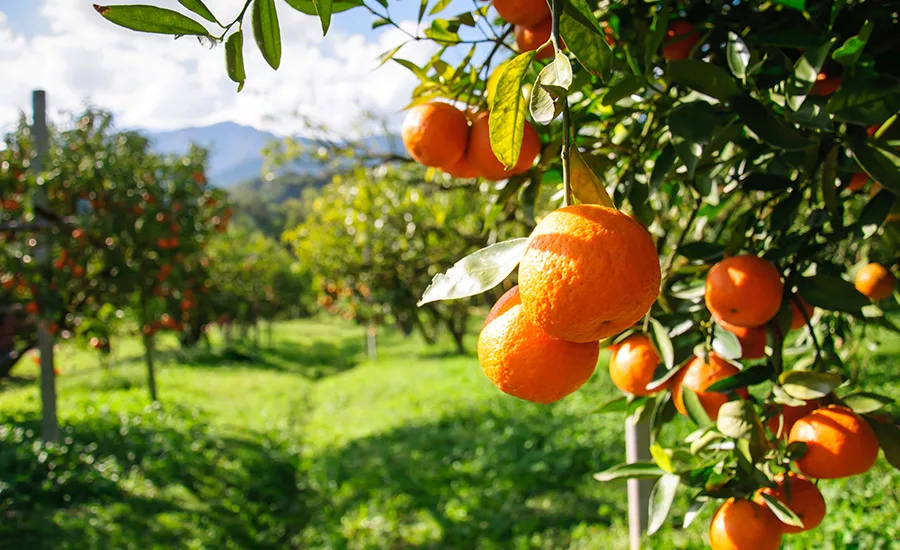
Photo courtesy of sripfoto via iStock / Getty Images Plus
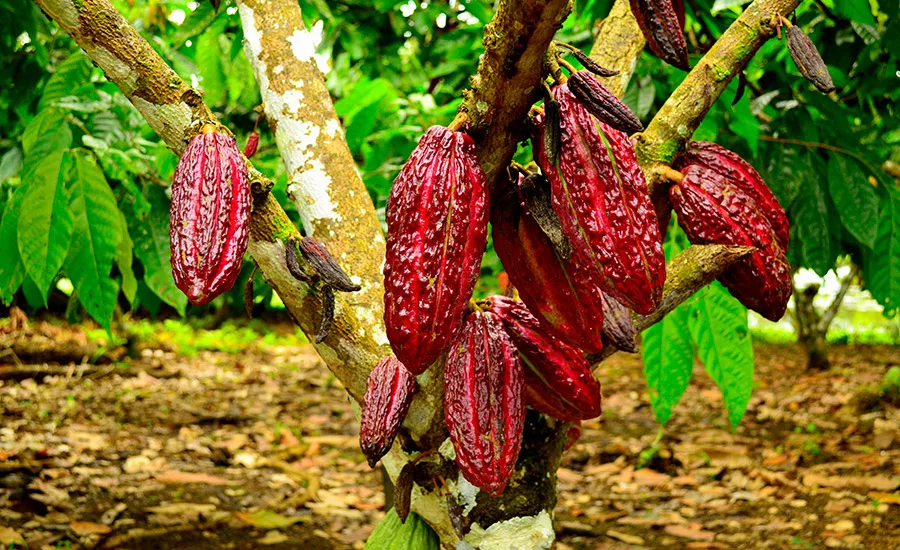
Photo courtesy of Jhon Londono via iStock / Getty Images Plus

image courtesy of abadonian via iStock / Getty Images Plus
Even before the COVID-19 pandemic, many consumers already read labels to confirm food items met their standards — whether in terms of sustainability or nutrition. However, the health and safety concerns that defined the tumultuous past year-plus cemented consumer interest not only in the source of the foods they eat, but also in the ingredients that make up such items.
“Due to changing perceptions from the ongoing COVID-19 pandemic, consumers are now much more likely to pay attention to individual ingredients in their foods and beverages,” says Timo Nieraese, senior area sales manager at Lecico GmbH, Hamburg, Germany.
He points to the International Food Information Council’s (IFIC) 2021 Food & Health Survey, in which 54% of the American adults surveyed “said that it was important that the ingredients didn’t have ‘chemical-sounding’ names.” And 31% of those surveyed said sustainability influences their food/beverage selection.
According to Westchester, Ill.-based Ingredion Incorporated’s proprietary 2020 ATLAS clean-label research, 80% of North American consumers read the ingredient list on back of the package, as well as the claims and descriptors used on the front or side, says Ivan Gonzales, director of marketing, dairy, U.S/Canada.
And Innova Market Insights named transparency as one of the top trends for 2021, says Eric Reynolds, director, global EHS&S (environment, health, safety and sustainability) for Atlanta-based CP Kelco.
“Transparency is closely linked to trust in the mind of the consumer, and manufacturers can earn the trust of consumers with simple and clear labeling,” she explains. “Above all, it proves that ingredients matter.”
Surveys say
Today’s consumers do their research before purchasing products. And many look for those with ingredients that sound natural and are sourced ethically, notes Nieraese.
“Brands that are able to offer [fewer] ingredients or more naturally sounding ingredients — as opposed to chemical ones — and are backed by eco-ethical sourcing transparency are likely to perform well in this space with consumers,” he adds.
Many surveys demonstrate this consumer desire for transparency from food and beverage manufacturers. For example, Nielsen research found that “73% of global consumers agree they feel more positively about companies that are transparent about where and how products were made, raised or grown,” says Mike Medina, category marketing director, specialized nutrition, dairy and private label for Chicago-based ADM.
The specific source of ingredients in a product matters, too. According to Medina, the same Nielsen research found “26% of global consumers are closely looking for the country of origin on food and drink labels.”
A part of the picture is clean label, which was a trend before the pandemic. According to Reynolds, this concept is here to stay.
“The desire for sustainability and traceability is closely tied to the clean-label trend,” Medina concurs. “Conscientious consumers are checking labels for ingredients that they perceive as closer to nature. ADM Outside Voice research finds 69% of consumers say simple, recognizable ingredients influence their purchasing decisions.”
Reynolds says other emerging trends in this space “include knowing that ingredients are sustainably sourced and responsibly produced, perhaps with upcycling to help the planet. For manufacturers, this means becoming more transparent about the supply chain.”
Ingredion’s ATLAS study looked into the most important claims from food and beverage producers to North American consumers.
“The top-ranked claims (>79%) when purchasing a food or beverage product were: made with fresh ingredients, made only with recognizable ingredients and ‘natural,’” says Gonzales. “The next level of claims important to consumers (70%-79%) were no artificial [ingredients]/no preservative, naturally sourced, contains sustainable sourced ingredients and locally sourced ingredients.”
Gonzales explains that the next tier of claims that consumers valued included non-GMO, organic and no-additives.
Label it
One way manufacturers can tell their sustainable-sourcing story to consumers is on product packaging, Gonzales points out. This can include everything from non-GMO to grass-fed to locally sourced or organic. Consumers also want to see that a product is produced safely.
“Consumers are looking for products that can convey third-party health certifications in a simple and transparent way,” says Nieraese. “This means they need to be clearly labeled on the packaging, so that consumers can instantly verify whether a product has been produced ethically and has been certified by an internationally recognized governing body.”
However, the trick is not overwhelming consumers with too many label declarations and certifications, he explains. This could mean sticking to well-known labeling such as organic and non-GMO or researching if other third-party certifications tell the story the company wants to communicate. There are many options here, including the “Certified Wildlife Friendly” product seal from the Wildlife Friendly Enterprise Network.
“Essentially, labels should be used to attach meaning to a product’s creation story. It needs to be instantly recognizable to the consumer — anything else could lead to added confusion,” Nieraese adds.
Additionally, some label declarations matter more to consumers than others, notes Andrew Ohmes, global product line manager for high-intensity sweeteners, Cargill, Minneapolis.
“About a third of shoppers report purchasing food and beverages that advertise on the label as ’natural,’” he says, citing data from the IFIC 2021 Food & Health Survey. “Two in 10 consumers find organic and non-GMO labels similarly impactful.”
Medina says he has seen more companies communicating the story behind their products — whether on a label or on their website — with customers.
“Sharing these personal stories helps consumers understand the local connection of products and brands with global reach,” he adds.
Back it up
Nieraese says meeting consumers’ sustainability demands requires collaboration across the supply chain, which includes checking the source of raw ingredients used in foods and beverages. And this means that ingredient suppliers need to verify that the ingredients they offer meet standards.
“At Lecico, we focus on quality and are backed by a fully integrated and transparent supply chain,” he adds. “All our lecithin and phospholipid ingredients are fully analyzed by independent laboratories for chemical and biological parameters, possible GMO events, and are also fully checked for allergen-free characteristics through Elisa tests.”
According to Gonzales, more and more manufacturers are looking to their ingredient suppliers to help them tell sustainability stories. And companies can tell these narratives “by providing transparency, starting with where and how raw materials are sourced and how the products are processed to the environmental and social practices.”
However, processors need to verify that any ingredient suppliers’ claims are backed up by third-party certifications, explains Nieraese.
“Dairy processors need to be looking for companies that are independently verified by international governing bodies,” he says. “Ingredients suppliers that state they are using organic or non-GMO raw materials should have proven certification from organizations such as the Non-GMO Project, Eurofins, the National Organic Program, etc. Transparency is key here, so dairy processors must do their due diligence and work with those who are recognized widely for their ethical processes.”
Ohmes concurs.
“Voluntary schemes such as certification or company programs help guarantee the integrity of the ingredients,” he points out. “They establish standards and requirements for compliance and are typically audited on a yearly basis by independent third parties.”
Ingredion showed transparency about its sustainability steps through a recently released report. The document details the company’s journey in meeting its goals in areas such as everyday life (people and planet safety; human rights; diversity, equity and inclusion and belonging; innovation), planet life (environmental impact, biodiversity protection), and connected life (sustainable and regenerative agriculture, food security, community impact).
Highlights include increasing female representation at the executive level from 14.5% at year-end 2019 to 22.2% year-to-date in 2021, recognition on the 2020 CDP Supply Chain Engagement Leaderboard for driving environmental solutions across the supply chain, and completing phase 2 of a sustainable agriculture project in Pakistan.
For its part, CP Kelco has focused on sourcing since its founding, notes Reynolds. As part of that emphasis, one of the company’s objectives is to understand the “triple bottom line impact” of any new products and processes.
“We embed lifecycle thinking into our innovation process — with tools to help guide our new product development teams through the course of understanding the sustainability story, including impact, tradeoffs and opportunities from supply chain, manufacturing and application perspectives,” she adds. “Our focus on sustainability from product ideation through product launch ensures our teams make informed decisions, so [food and beverage] manufacturers receive the product transparency they expect and consumers require.”
CP Kelco looks to achieve its sustainability goals through its partnerships with its suppliers. The company uses tools such as questionnaires and on-site audits to evaluate the “specific people and planet risks associated with the raw materials that are used in our products,” explains Reynolds.
Sustainable choices
If a processor wants to change a recipe to be more sustainable, some ingredients will be easier to source sustainably than others will, explains Nieraese.
“Those that are easier to source are found abundantly in natural resources like sunflower, corn, soya, egg yolks and milk,” he adds.
However, according to Michelle French, director, global sustainability programs for ADM, every ingredient has its own sustainability challenges across the supply chain.
“When looking at soy, for example, sustainable sourcing in South America is focused on the protection of forests and ecosystems, while sustainably sourcing soy in North America is focused on regenerative agriculture practices that improve soil health,” she remarks. “Rather than viewing a supply chain as ‘easy,’ we work to identify solutions that will enable sustainable sourcing for the commodity and geography from which we are sourcing.”
Fortunately, ingredient suppliers have many options to meet dairy and dairy-alternative manufacturing demands. One ingredient that Nieraese recommends manufacturers look into for emulsifying is deoiled lecithin. This ingredient “can help to solve several manufacturing challenges for dairy and instantizing products, including poor wettability from free surface fat and rapid swelling via a gel formation on the
surface,” he explains.
“Deoiled lecithin is an excellent and sustainable addition that’s easy to obtain, offering reduced transport cost, less packaging disposal and reduced storage capacity,” he points out. “Since these types of ingredients are much easier for manufacturers to handle during production, primarily due to their improved wetting properties and the ability to emulsify surface fat, they are much more sustainable in the long term.”
Adding to the organic lecithin’s sustainability appeal is that Lecico uses a CO2 extraction method to produce the ingredient, instead of hexane, “thereby ensuring it is ecologically produced and 100% natural,” notes Nieraese.
Dual-purpose ingredients can help reduce the number of ingredients in a formulation, which can increase sustainability. For example, CP Kelco offers dual-function gellan gum that provides both suspension and mouthfeel. It also offers “a new pectin that simplifies the process of making fruited yogurt drinks,” notes Reynolds.
She also points out that fermentation is an ancient process “that nature has given us to provide more reliable functionality and help us towards a more sustainable, resilient future.” CP Kelco utilizes fermentation to produce a number of its ingredients, including its gellan gum.
“After discovering gellan gum in the 1970s, CP Kelco leveraged fermentation technology to reproduce it for commercial purposes,” she notes. “The ancient method of fermentation provides a consistent, more sustainable approach to ingredient technology that is less reliant on climate and harvesting, thus avoiding some of the volatility farmers experience.”
Cargill also uses fermentation to produce its EverSweet stevia sweetener in a more environmentally friendly manner. The company’s process uses “less water, less land and [has] a smaller carbon footprint,” Ohmes points out.
The company recently completed a life cycle analysis (LCA) of the ingredient to measure its environmental impact.
“To complete the LCA, Cargill and joint venture partner DSM compared the environmental impact of their ground-breaking EverSweet sweetener to other stevia-based solutions, as well as conventional sugar,” he notes. “The third-party-verified LCA study found EverSweet offers significant environmental advantages over other sweetener choices.”
CP Kelco also has a sustainability story for its Genu carrageenan. The company works with communities in Zanzibar to grow and harvest the seaweed needed to create the ingredient.
“Seaweed farming in Zanzibar provides much-needed employment opportunities — especially to women who previously had limited options to enter the workforce,” says Reynolds.
Additionally, CP Kelco’s pectin is made from citrus peels upcycled from the juice industry, notes Reynolds.
“What little wastewater is left from peel preparation is recycled as fertilizer and fertigation (fertilized irrigation) to nurture citrus orchards and eucalyptus groves near our plant in Brazil,” she says. “We also turn leftover peels into food for animals to considerably reduce our plant’s waste output.”
Cocoa is one ingredient commonly used in dairy that has been under a lot of sustainability scrutiny. And Cargill offers a number of options here, including “third-party certification solutions such as UTZ/Rainforest Alliance, Fair Trade” for companies looking for sourcing verification, explains Kate Clancy, sustainability manager, Cargill Cocoa & Chocolate, Milwaukee.
“For those seeking greater visibility into where their cocoa comes from, we suggest Promise Cocoa — sustainable beans sourced exclusively from known and trusted farmers within Cargill’s direct-sourced cocoa network,” she says. “Cargill also recently launched the digital portal CocoaWise, which provides customers increased knowledge and ‘shareability’ of the origin of the products they source from Cargill’s direct supply chain.”
And ADM has created a sustainable operation in Madagascar to produce another key ingredient in many dairy products — vanilla.
“Almost 80% of the world's vanilla is sourced from Madagascar, where it's produced and collected from villages in a complex supply chain. ADM simplifies this process with an extensive vertically integrated supply chain,” explains Mukul Juneja, vice president of commercial development, vanilla, ADM. “Through Savan, our joint venture with Sahanala, we responsibly source vanilla direct from farmers.”
Looking for a reprint of this article?
From high-res PDFs to custom plaques, order your copy today!