Crave Brothers Farmstead Cheese boasts fresh-from-the-farm appeal
The company makes high-quality fresh cheeses from milk produced on its on-site farm.
For many cheese producers, sourcing milk from farms within a small radius — often 100 miles or so — is very important. Doing so not only boosts sustainability by slashing transport miles, but also helps to ensure freshness.
Farmstead cheese operations, however, have an even stricter definition of local sourcing. They source their milk directly from the farm on which the cheese is made.
And among the growing number of U.S. farmstead cheese producers, Crave Brothers Farmstead Cheese LLC is a standout. The family-owned company milks more than 2,000 cows on its farm in Waterloo, Wis. (which also grows feed crops such as corn, alfalfa, soybeans and winter wheat). That milk is pumped across the street, via piping underneath the road, to the company’s cheese plant. The facility produces fresh cheeses for both the retail and foodservice channels. The total process, from milking the cows to packaging finished cheese, is measured in hours instead of days.
It all started with the farm
You might say that the foundation for Crave Brothers Farmstead Cheese was put into place back in 1978, when brothers George and Charlie Crave, who had grown up on a dairy farm in Beloit, Wis., began milking a small herd of cows on a rented farm in Mount Horeb, Wis. In 1980, the brothers purchased the Waterloo dairy farm, and their brothers Tom and Mark eventually partnered with them in the venture.
Twenty years later, the brothers had become disenchanted with what George Crave, president of Crave Brothers Farmstead Cheese, calls “the commodity treadmill of the cow milking business.” He began researching a way to get off that treadmill, eventually deciding to enter the cheese business.
“We finally decided to build our own on-farm cheese factory in 2001,” he explains. “And then in February of 2002, we pumped our first milk from the farm over to our cheese factory.”
In the beginning, the factory was dedicated solely to fresh mozzarella, a product that was largely unfamiliar at the time to many U.S. retailers and consumers.
“A lot of people were skeptical about it — you know, the short shelf life, turning the rotation, keeping it fresh on the shelf,” George Crave notes. “It turned out it was a very fast-growing category, and we worked with distributors and transportation/logistics. We’ve worked out the details to keep it very fresh.”
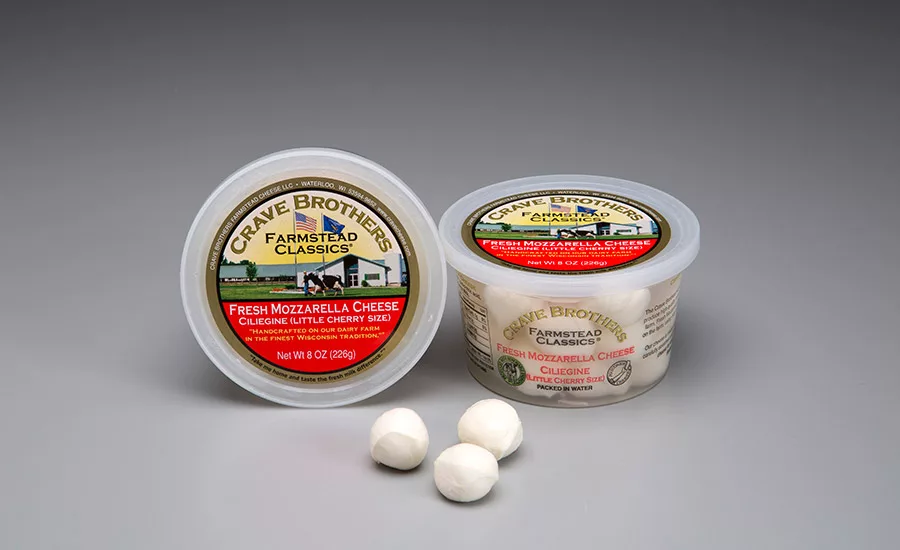
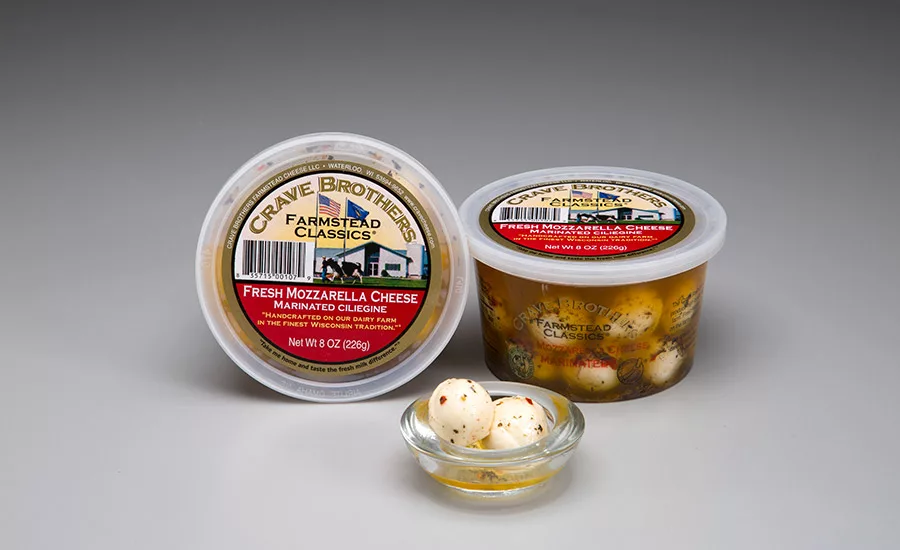
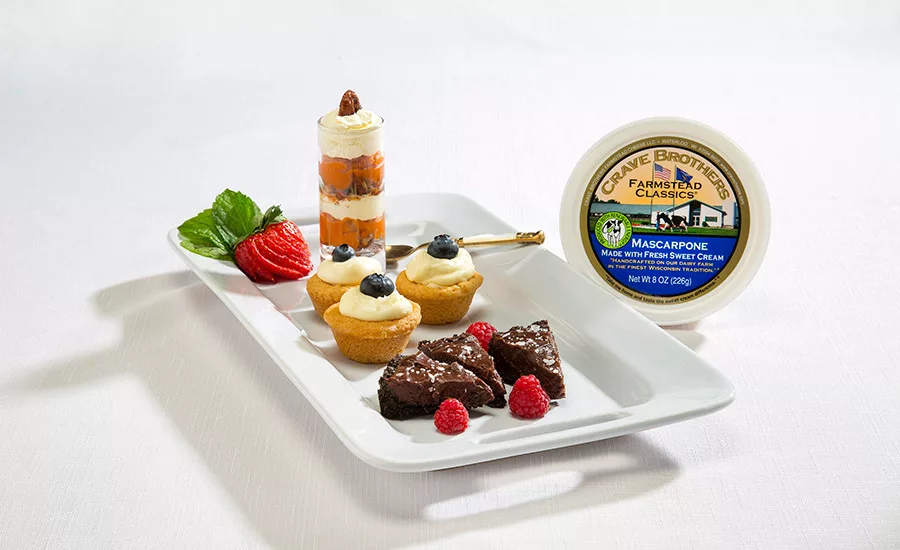
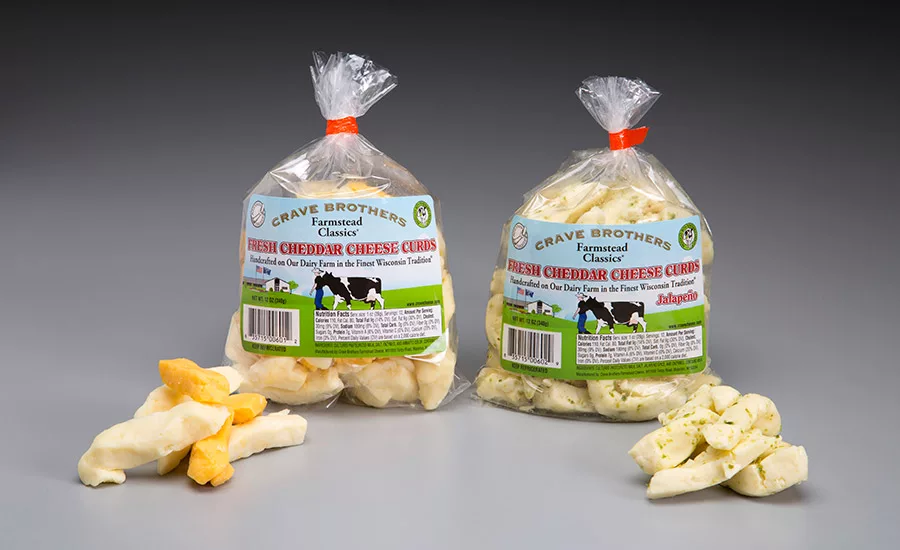
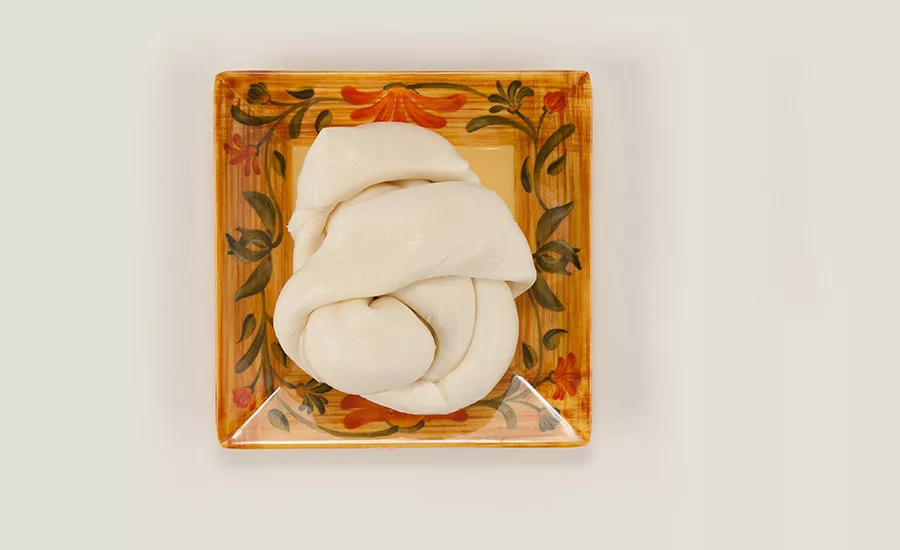
Today, the cheese plant still turns out a whole lot of fresh mozzarella, which George Crave calls the company’s “flagship product,” in an abundance of formats and sizes. But it also produces sweet cream mascarpone (including a chocolate variety), Oaxaca cheese, string cheese (Farmer’s Rope) and fresh cheddar cheese curds in white, yellow and jalapeño varieties.
The products are marketed under the Crave Brothers Farmstead Classics and Crave Farmstead brands. The company also makes cheese for private label and co-pack customers, George Crave says. All are made with hours-old, farm-refrigerated milk that is consistent in its high quality.
And the operation remains a family affair. Charlie Crave is responsible for administrative work on the farm, while Tom Crave oversees remodeling and building projects on both the farm and in the cheese factory. As general manager of the farm, Mark Crave oversees general financial and operations management. What’s more, the four brother-owners now have help from a new generation of owners: Patrick Crave (dairy herd manager), Jordan Crave (crop and forage manager) and Andy Crave (maintenance manager).
A powerful story to tell
As a farmstead cheese company, Crave Brothers Farmstead Cheese knows it has a powerful story to tell. Moreover, most supermarkets and specialty stores appreciate that story, George Crave points out.
“It’s no secret how we operate,” he says. “We’re farmstead, meaning we control everything from the crops and cows to the cheese to the consumer. I like to call it our four C’s — and that’s all the way from what we grow on our fields and how we farm to our cows and their production and their humane treatment.”
The company uses its packaging to communicate some of that story. “Handcrafted on our dairy farm in the finest Wisconsin tradition” is front and center on retail products. In addition, when the packaging format allows, the company communicates the larger story about how it works “in harmony with the land.”
Debbie Crave, George Crave’s wife and company vice president, says the company’s target consumers are those who really care about the products they eat.
“Everyone says people want the story, and many do, and those are the people that we’re after,” she emphasizes. “The people who care to learn about the family, the farmstead, the green energy” (see the “Green energy proponent” section below).
Crave Brothers Farmstead Cheese’s business model allows for more than a powerful story, however. It provides flexibility, George Crave explains.
“We know what we’re going to make next week or in two weeks; we just don’t know the volume or how many cases of each SKU,” he says. “But that’s where we’re very flexible in what we do every week here. And our customers do appreciate our story, our flexibility and our ability to make custom cheeses for them also.”
As an example on the custom side, George Crave says the company was asked to make a pizza cheese for a high-end gourmet pizza.
“That’s something we’re very proud of, that we were able to adapt and customize the product,” he says. “That’s really our claim to fame, I think — or our little secret for our little business — is that we’ve been able to adapt.”
Master of adaptation
Speaking of adapting, prior to the COVID-19 pandemic, retail accounted for approximately 60% of Crave Brothers Farmstead Cheese’s business, with foodservice accounting for about 40%. But the pandemic brought with it increased demand on the retail side and decreased demand on the foodservice side, George Crave notes.
Fortunately, the company was able to pivot quickly to meet the shifting demand.
“We’ve been able to really expand our retail,” George Crave says, noting that the division currently is approximately 90% retail and 10% foodservice. “We were already set up for it — we had a retail line, retail distribution and some terrific retail customers. And they increased their orders, and we just moved it from one package to another. We started making a lot more [mozzarella] cups and the 8-ounce balls and 1-pound logs.”
Debbie Crave stresses that the shift was not as easy as it might sound.
“The pandemic came right when spring and summer were upon us,” she notes. “That’s when things are busier; we were already expecting to be busier. And then all of a sudden, we had these increased orders. So our challenge was personnel — we needed to hire more people, and we needed longer shifts. And it’s been very challenging to hire and train and keep people.”
Thankfully, the company’s workforce was willing to work “a lot of Saturdays,” Debbie Crave says, to meet every order. In addition, she credits organizations such as the Wisconsin Cheese Makers Association and the University of Wisconsin’s Center for Dairy Research for helping employees work safely.
“We had really good meetings and calls to help us put together plans and protocols for wearing masks and for food safety and all the procedures we put in place to keep people safe,” she says.
Green energy proponent
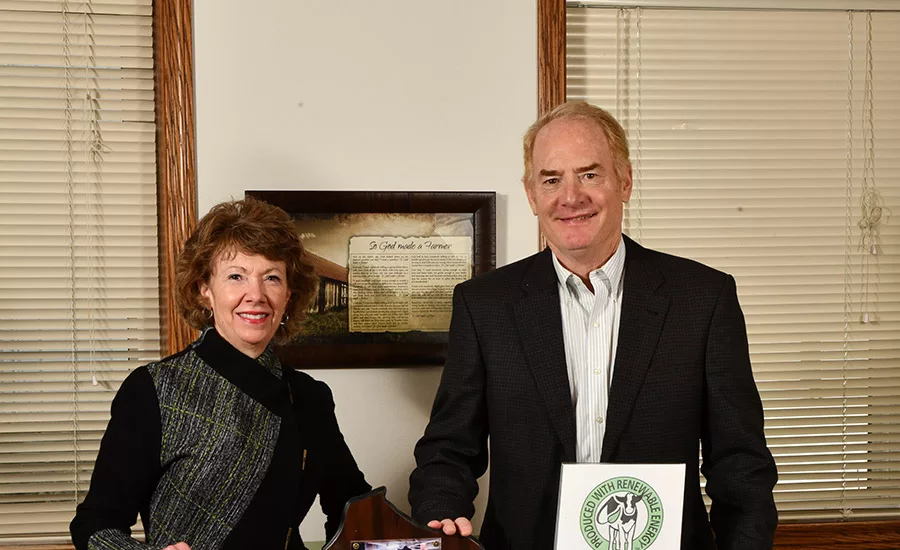
Crave Brothers Farmstead Cheese has bragging rights for more than its fresh farm-to-cheese process, adaptability and custom capabilities. The company is a sustainability standout, too, especially on the green energy side. Its cheese plant is powered by a computer-controlled anaerobic methane digestion system that also generates enough electricity to power the farm and 300 area homes. Cheese packaging bears a seal that states, “Produced with renewable energy.”
As George Crave explains, the system was installed about a dozen years ago, starting with one 750,000-gallon tank that collects the waste from both the farm (manure) and the factory. A second 750,000-gallon tank was added a few years later. Under anaerobic fermentation, the two tanks produce methane gas that powers an electric generator to produce electricity.
According to the company’s website, the digester reduces odor from the manure and also results in some additional byproducts. For example, the liquid byproducts serve as fertilizer for the farm, and the solid byproducts (dry organic matter) are used in animal bedding.
“So every day, new base fuel goes in and is being fermented,” George Crave says. “Old waste comes out and gets squeezed and dried using methane, again, to dry the fibers, which are just like fiber pulp, and that goes back under the cows for bedding. Eventually, it all ends up in a big liquid fertilizer tank that goes back to the fields for recycling the nutrients back to the fields to produce next year’s crops.”
To George Crave, this type of sustainability effort translates into repeatability — that what the company is doing now is “good enough” to ensure it can do it next year, five and 10 years beyond that, and so on. But it also goes hand in hand with the care the company takes with everything else.
“We’re taking care of our calves; we’re taking care of our cows; we’re taking care of our fields because they’re our fields,” he stresses. “But it all has to work agriculturally wise, agronomically wise and also economically wise.”
Preparing for growth
Over its two decades of operation, Crave Brothers Farmstead Cheese has grown its business substantially.
“Within our current facility, we have expanded three times since we started 20 years ago,” George Crave says. “So we’ve grown the building and business as our customer base has grown while still handling our milk supply within the fundamental values of our business.”
And as it looks ahead, Crave Brothers Farmstead Cheese is eying what he calls “manageable growth.”
“Our customer base now, if they grow 5% or 10% a year, we’ll grow 5% or 10% right along with them,” George Crave says.
The company’s high product quality and its story will be critical to growth as well, as will be competitive pricing, he points out. Targeted marketing also will continue to be important.
On the advertising side, Debbie Crave says Crave Brothers Farmstead Cheese attends key trade shows and places a few ads in cheese and other dairy trade publications, but not in consumer magazines. And it takes advantage of a cost-sharing program from Dairy Farmers of Wisconsin in doing these activities. Perhaps the most effective marketing, however, takes place on the company’s grounds. That marketing starts with a visit to the tasting room on the cheese plant premises for potential (and existing) customers.
“We taste cheese; we watch a video; we walk down the hall of our cheese plant and observe cheesemaking,” she says. “We drive through the farm and see the cows, how the farm actually works. They meet some calves and just really get a taste and a feel for the whole operation. They see the digester and see how it’s pumping out steam and drying fibers and producing electricity.”
On the consumer side, Facebook plays a pivotal marketing role, Debbie Crave says.
“Facebook is managed by our daughter (Roseanne) — she’s more savvy and into how it should be. We do a little bit on Instagram, too. And, of course, we have a website that we’re selling cheese on and trying to keep up to date.”
As it eyes continued growth, Crave Brothers Farmstead Cheese will have to address some ongoing hurdles, too. One of those is the false perception that agricultural livestock production is bad for the environment, George Crave notes.
“I feel like dairy farmers and our checkoff dollars need to do a better job of telling the real story,” he says.
Some of the company owners and/or management, including George and Debbie Crave, are approaching retirement, too, so the development of new leaders will be a challenge. However, it is a challenge George Crave views as a positive.
“To develop new leaders in the business — family and nonfamily leaders — is really our goal for the next couple of years here, and we look forward to that,” he says.
Looking for a reprint of this article?
From high-res PDFs to custom plaques, order your copy today!


