It's a matter of teamwork for Borden Dairy's Dallas plant
Under Borden Dairy’s new ‘people-first’ approach, employees at the company’s Dallas milk plant understand their value — and are motivated to work together to create the highest-quality product.
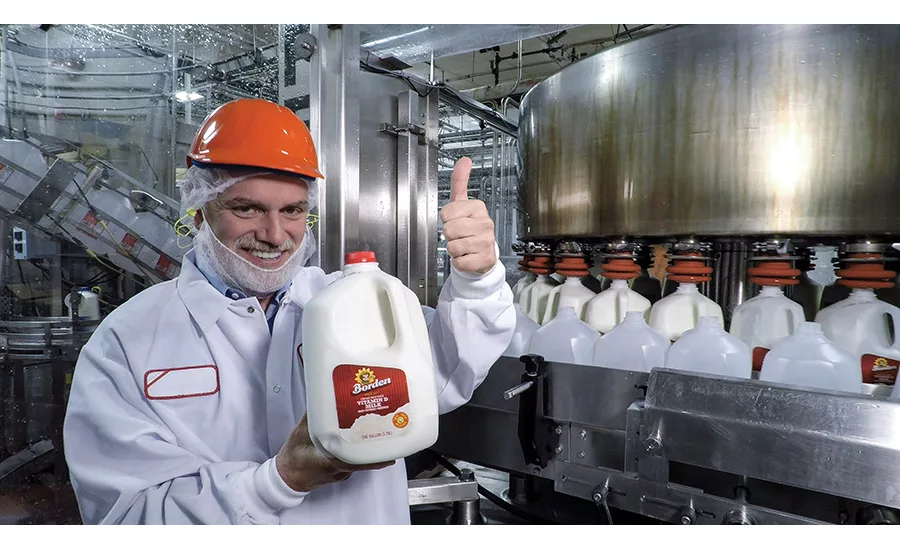
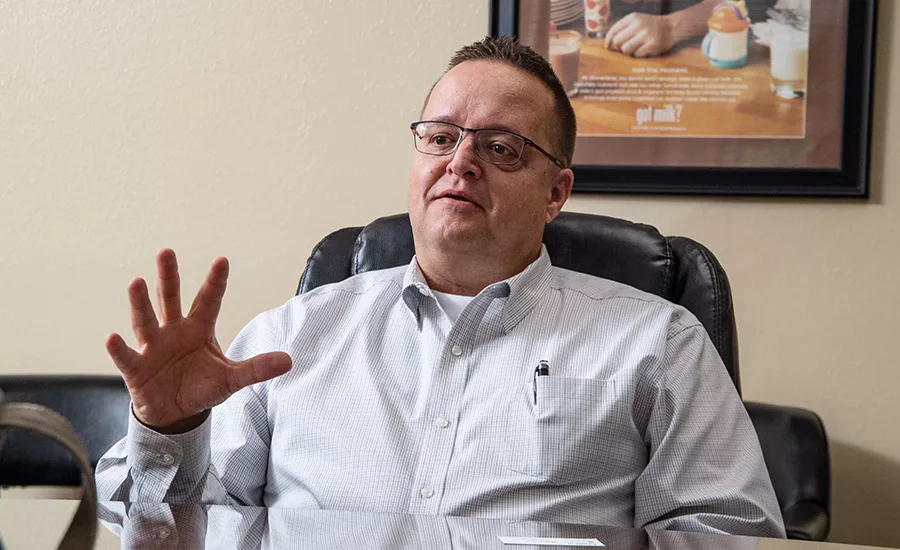
There’s a welcome change in the air for employees of Borden Dairy Co.’s Dallas milk plant. The company’s new commitment to being a “people-first” organization means production is secondary to people, explained Chuck Lacy, plant manager.
Employees are reminded often that they are all needed — and that they all play an equal role in the quality of the products produced at the plant. And regular town hall meetings, led by Lacy, keep employees filled in on the current “state of the business.”
That’s quite a contrast to the general indifference that sometimes permeated operations in recent years.
“To be able to breathe new life into things is really cool,” said Lacy, who took charge of plant operations about a year ago. “Our hearts are all in the right place. We all want Elsie to be the best,” he added, speaking, of course, about Borden Dairy’s beloved cow mascot.
From tanker to container
The 196 newly energized and upbeat employees at Borden Dairy’s 200,000-square-foot Dallas facility (an additional 188 work on-site in distribution) produce approximately 52 million gallons of finished product annually. Most of that product is fresh fluid white and flavored milk across all fat levels, but buttermilk, cream, half & half, ice cream mix and some ready-to-drink nondairy beverages also are among the product mix. Production takes place six days a week, Monday through Saturday, during three shifts.
“We run for 20 hours in the day, and we sanitize for four hours,” said Kevin Gallagher, chief supply chain officer for Dallas-based Borden Dairy. “So one shift is half production, half sanitation.”
Milk production begins with milk delivery; milk is delivered seven days a week around the clock, Gallagher noted. The facility receives between 28 and 32 tanker trucks of milk per day.
The raw milk is then tested for temperature, antibiotics, added water and more in the on-site lab before it is processed, explained Kathy Tucker, quality assurance manager. Lab technicians also perform a chemical analysis and a bacterial analysis on the raw product before releasing the milk for processing.
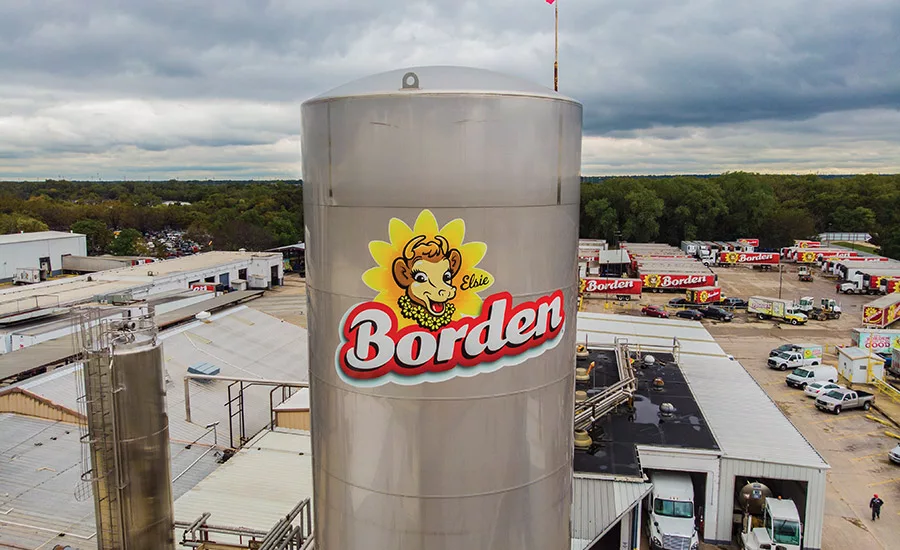
Milk that meets all of the testing criteria is then released to be transferred into one of four raw milk silos on-site. Together, the silos hold 165,000 gallons of milk.
From the raw milk silos, the milk enters one of two high-temperature/short-time (HTST) pasteurization units on the raw side of operations. After treatment, the milk enters a separator, which removes all of the fat, Lacy explained. The milk then is transferred to a standardizer, which adds the right amount of cream for the desired fat level. The milk then goes back to the HTST unit for brief (7-second) holding.
From the HTST unit, the milk is transferred to a homogenizer to break up the fat. It then is sent to a cooling unit until it reaches a temperature of 35 degrees Fahrenheit. After cooling, the milk enters the pasteurized side of the facility to be bottled. (If the milk is flavored, the flavoring is added in batch tanks on the raw side of operations during initial processing.)
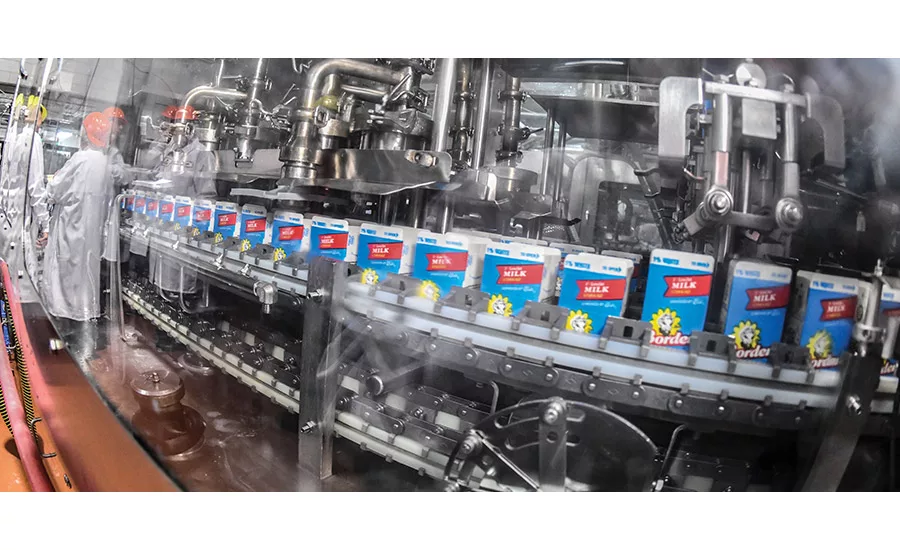
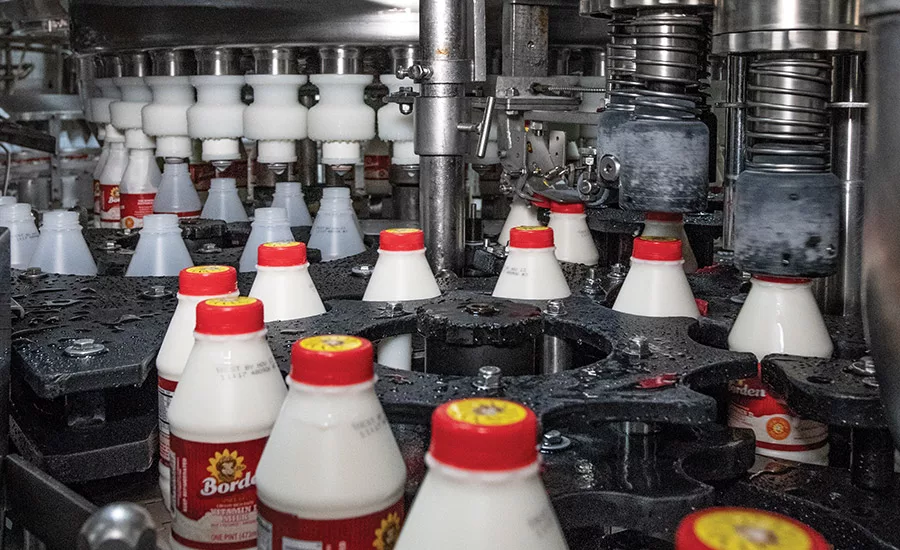
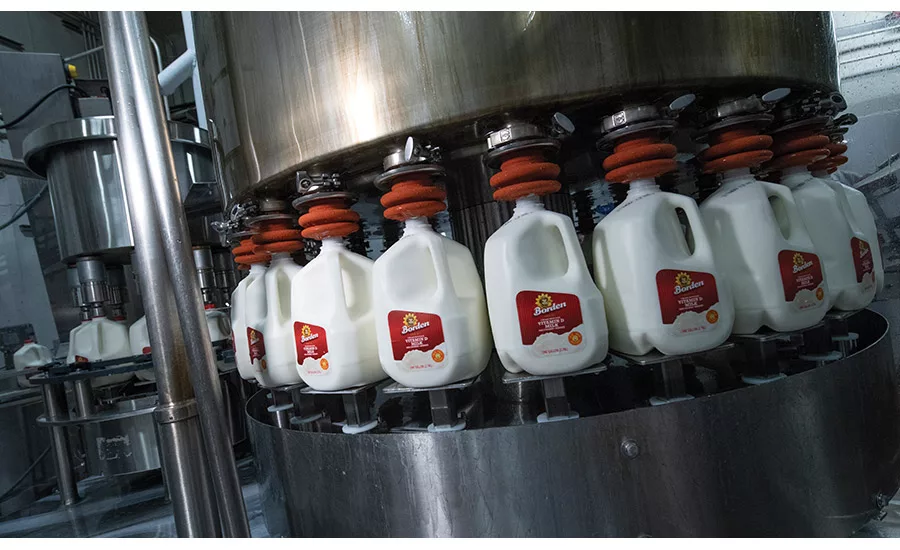
The facility features a number of high-speed milk fillers — two dedicated solely to school milk cartons; one PET filler that runs 8-ounce, 16-ounce and 32-ounce containers; three 1-gallon fillers; and one half-gallon filler. Gallon containers represent the largest share of the facility’s output — approximately 125,000 containers a day, Lacy noted.
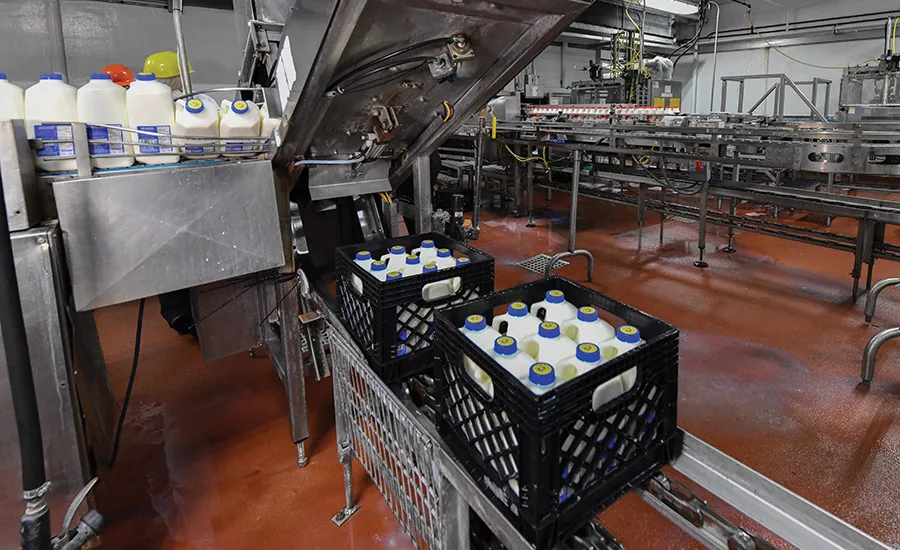
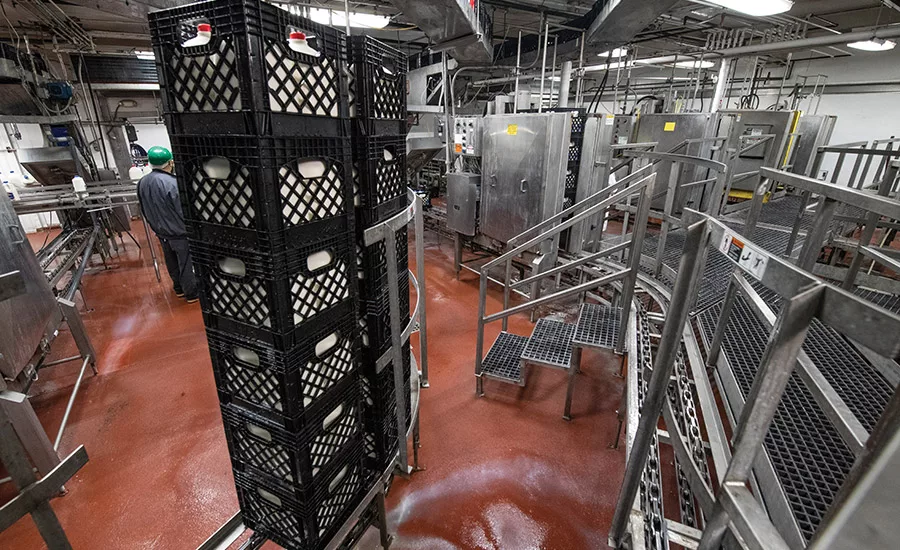
Filled containers are conveyed to the packaging/caser room, which houses seven casers. Here, filled milk crates are automatically stacked six high before they are moved into a vault cooler, where they await transfer to the plant’s 60,000-square-foot main cooler.
Quality’s a team effort
Quality product is critical to Borden Dairy, so the plant takes a number of steps to ensure everything goes perfectly. For example, the facility pulls samples, beginning with the startup of any given milk filler, testing them for things such as temperature, butterfat, total solids and added water. A spin test is performed to ensure no residue remains from a previous product run, and a sensory analysis also is conducted.
“We do start, middle and end,” Tucker explained. “But it also depends on the volume that we’re producing. If it’s a 10,000-gallon run, we’re going to be testing more often.”
The testing and review process is a team effort that includes the filler operator, the lab technicians, sanitary supervisors and, of course, Tucker herself.
“It’s maintaining a system of checks and balances,” Lacy explained. “It’s really important for us to ensure that the operators and the lab technicians are working together and verifying that the results that one says he is getting are accurate.”
Ingredients destined for flavored milk and other products also undergo scrutiny. The majority of ingredients are purchased by Borden Dairy’s corporate supply chain and are required to have a certificate of analysis (COA), Tucker said. For other ingredients that enter the warehouse, the plant requires on-site lab testing to confirm they are within specifications before use.
“We also have the COA for those, but there’s additional testing that we do once they arrive for confirmation,” Lacy noted.
The plant conducts environmental swabbing on a monthly basis, too. A third-party lab handles the testing.
Investing in technology, sustainability
One of the larger plants in Borden Dairy’s 13-plant operation, the Dallas plant has been growing in production and in capabilities in recent years,
Gallagher noted. And as it looks to meet the shifting needs of consumers, investments in technology will be critical.
The plant itself is definitely not new. The original building — very little of which still stands — was constructed way back in 1890.
Major expansions were made to the facility in 1984 and 1996, Gallagher said. And the main cooler was added in 2013.
But even newer and arguably more important to the plant’s future success are its more than $1 million in process-control automation upgrades. Installed within the past year, the technology will allow the facility to better track and record the movement of the milk during the processing steps.
And the Dallas plant soon will be adding some automation to the packaging side to improve efficiencies and the employees’ work environment, Gallagher noted. The addition will consist of a high-speed automated corrugate line that will package milk in one-trip/one-use cardboard containers to meet the needs of a number of retail customers. Right now, employees must manually transfer product from the caser-packed milk crates to cardboard containers.
And more automation is on the plant’s radar.
“We have a lot of things that are being done manually or in a way that’s just more work than it needs to be for the employees, from a work environment efficiency standpoint,” Gallagher said. “So we are going to be continuing to drive efficiencies into the facility.”
Sustainability also is an ongoing focus — as a cost saver and as the “right thing to do.” For example, the plant has a team that identifies and addresses product loss challenges. And it pretreats the wastewater it produces before discharging it to the public treatment works.
“We also do recycling of waste plastics ourselves,” Gallagher pointed out. “And we do recycling of all waste oil solvents. All of that is captured — nothing goes out of the plant.”
The Dallas plant is in the process of finishing up an LED lighting project as well. The project will result not only in cleaner, better lighting, but also in cost savings related to electrical consumption, he noted.
Safety is also a team sport
Food safety and employee safety are priorities for the plant, too. The facility is SQF Level 3 certified, Gallagher said, and follows all of the standard good manufacturing practices. But it’s the teamwork that makes it all work.
“There’s a lot of cross-functional work between the quality manager, the quality techs, the production supervisor, the production manager, the line operators,” Gallagher said. “They really function well as a team.”
On the ingredients side, the plant asks for copies of supplier third-party audits to make sure those suppliers have been audited correctly, he added.
To ensure the highest level of safety for its employees, meanwhile, the Dallas plant put together a safety committee, which is led by employees, Gallagher explained.
“Of course, we have resources for them with our regional safety managers and the safety director,” he said. “They provide a monthly training topic. And the committee also does monthly safety audits and interviews with employees on a monthly basis.”
The plant also communicates weekly safety topics to employees; the topics are covered daily at shift transition meetings and leadership staff meetings.
“So we’re really driving the safety theme throughout the organization,” Gallagher stressed.
Positive outlook
As Borden Dairy looks to innovative new products as a growth engine (see the Processor Profile), the Dallas facility looks like it is well-positioned to aid in that growth. Its employees — many of them with more than 30 or 40 years of tenure — are re-energized. New technology is creating efficiencies and opportunities.
But the facility does face at least one challenge: The low unemployment rate makes it more difficult to hire new employees. That being said, a bit of a wait to hire the right person is worth it in the end, Lacy suggested.
“I’m looking for a drive; I’m looking for somebody who is interested and hungry to be part of a team,” he said. “If they happen to have manufacturing experience, specifically dairy, then that’s a big positive for us. But culture fit is more important than anything for me and our leadership team.”
The plant currently works with a few agencies to help locate the right potential employees, Lacy noted. And it also is working hard to retain the employees it already has.
“There are a lot of us who are fairly new to Borden, and it’s a part of our growth steps to ensure that we are presenting every opportunity for our employees to be as successful and happy as they can be,” he said. “It’s a hill we’re climbing right now, but I think there are nothing but positives coming down the road.”
Looking for a reprint of this article?
From high-res PDFs to custom plaques, order your copy today!