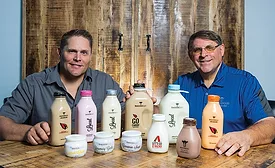
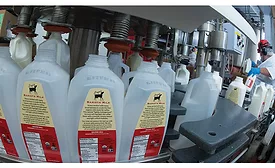
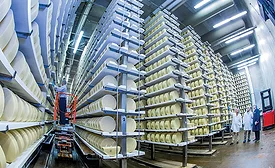
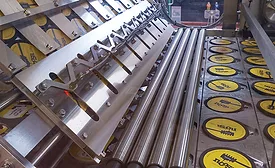
You won't find any fancy-looking equipment at the creamery operated by Phoenix-based Danzeisen Dairy LLC. Tucked into a mixture of farm, industrial and residential properties in Phoenix's Laveen neighborhood, the creamery relies on retrofitted vintage milk processing equipment, much of it from the 1940s, 1950s and 1960s, and all of it from U.S. manufacturers, to produce its craft dairy products.
Cedar Crest’s Manitowoc, Wis., plant crafts ice cream in small batches — in dozens of creative flavors such as Jumping Jersey Cow and Coconut Explosion.
Cedar Crest Ice Cream makes an impressive amount of ice cream in its 45,408-square-foot facility in Manitowoc, Wis. The plant currently produces approximately 26 million pounds of product annually. The company uses the space wisely and continues to upgrade equipment and technology as product demand increases.
As the company prepares to build a new processing facility, one that will more than double its current 16,000 square feet to approximately 40,000 square feet, it is working to maximize production rates and efficiencies at the Marshall, Calif., plant in which it has been operating since the company’s inception in 1994.
Dairy plant managers work to keep their processing equipment running as frequently as possible to optimize plant efficiency and minimize operating costs.
Lake Country Dairy makes award-winning Italian-style and alpine cheeses. The plant supports four family dairy farms and spurred an investor to build a whey processing facility across the street.
In northwest Wisconsin, about 25 miles from the Minnesota border, Schuman Cheese makes award-winning cheeses with techniques borrowed from French and Italian cheesemakers.
Litehouse makes award-winning blue cheese and buttermilk at separate plants in Sandpoint, Idaho, then combines them at a third to make its best-selling refrigerated salad dressings.
Ed Hawkins invented a blue cheese buttermilk salad dressing that he served in his steakhouse. When customers asked if they could buy a bottle to take home, he knew it was a hit.
A Colorado dairy farmer had a nice milk bottling operation. Then he founded a yogurt company with an Australian ex-pat. Today, yogurt far eclipses the milk business.
Rob Graves is a dairy farmer and dairy processor who owns Morning Fresh Dairy in Bellvue, Colo. He sells his white and flavored milks up and down the front range of Colorado’s Rocky Mountains. Business was good for the fourth-generation farmer. Demand was growing from home delivery customers, restaurants and Whole Foods. Graves had plans to expand the milk processing plant. That is, until yogurt got in the way.
If you manufacture branded dairy foods, then you should consider taking on private label products if you have the capacity. By manufacturing foods and beverages for other companies, dairy plants can keep their production lines moving.
When Whole Foods said it wanted to carry pints of The Comfy Cow’s super-premium ice cream, the founders invested in a bigger plant and additional equipment. A growing franchise operation also is creating demand.
In 2015, The Comfy Cow invested a reported $2 million in the building it’s leasing in the Regency Pointe Business Center in Louisville’s Jeffersontown neighborhood. Over the next 10 years, the project is expected to create 40 to 50 new jobs. Currently there are 14 employees. The Kentucky Economic Development Finance Authority approved tax incentives up to $350,000.
Consumers looking for foods with a clean label and ‘pure’ attributes often choose organic products. California’s Humboldt Creamery, located in prime dairy country, is serving those consumers with fluid products, ice cream and powders.
April 11, 2016
Humboldt County, California, is a great place to operate an organic dairy farm. The mild temperatures and ample annual rainfall allow cows to be in pasture 200 days or more a year. The county is roughly bounded by the Shasta-Trinity National Forest on the east and Pacific Ocean on the west. Warmed by the ocean currents, Eureka (the county seat) enjoys average temperatures ranging from 41 F (in December and January) to 64 F (in August and September).