Maximize efficiency and food safety in a dairy plant
Equipment producers explain how to optimize heat exchanger and homogenizer performance.
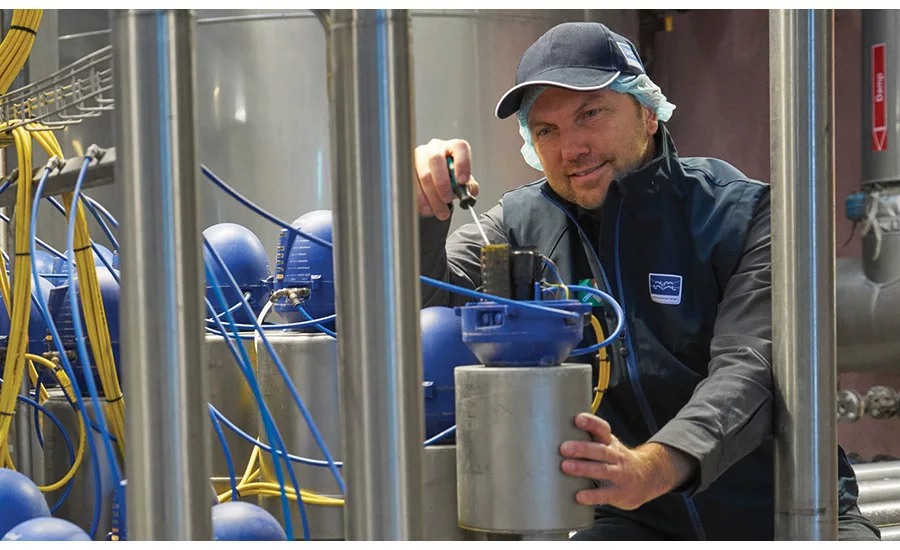
Alfa Laval recommends regular servicing of heat exchangers and homogenizers to ensure performance, lengthen equipment lifetime and reduce workplace accidents.
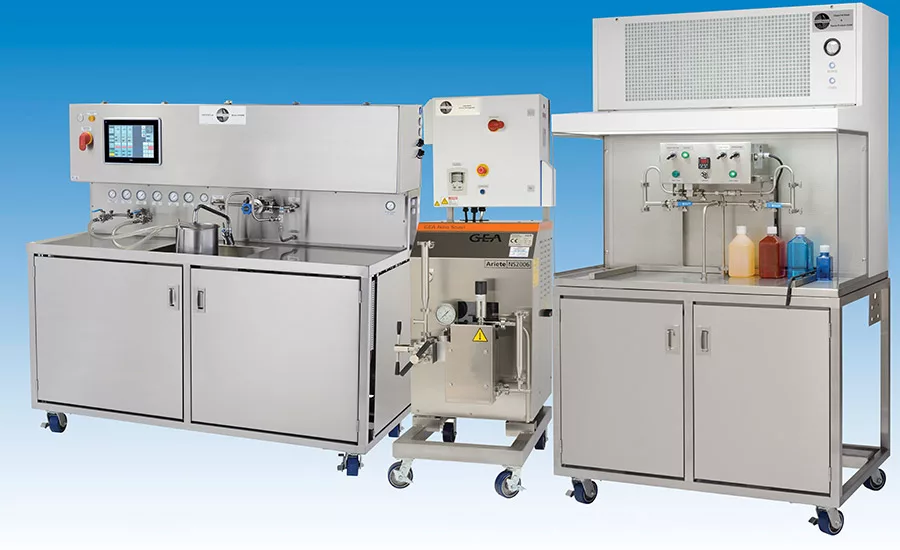
MicroThermics showcases a complete laboratory UHT/HTST processing line.
Dairy plant managers work to keep their processing equipment running as frequently as possible to optimize plant efficiency and minimize operating costs.
But they also need to clean equipment such as heat exchangers and homogenizers frequently to maintain hygienic and product safety — and to meet regulations and ensure good manufacturing practices. And they need to plan maintenance time to keep the equipment in top condition and avoid unplanned stops.
Heed their advice
Equipment manufacturers shared a number of thoughts about heat exchanger- and homogenizer-related efficiency and food safety.
Dairy processors need to avoid the problem of burn-on in plate heat exchangers, which often is the result of unmixed ingredients that can hide under bottom-entry impellers and seals in conventional tank mixers, said Rick Earley, national sales manager for Admix Inc., Londonderry, N.H. A quality disperser can eliminate burn-on, he said, while powder induction systems can wet, disperse and eliminate the potential for unmixed ingredients to hide under tank impellers.
When unmixed ingredients burn onto heat exchanger plates, it requires more plant energy to maintain the same pasteurization temperature, Earley noted. But dairies can run pasteurizers longer than they typically think they can, he said, by using a homogenizer that minimizes burn-on and runs at lower pressures, “thus saving energy, especially when all ingredients are completely mixed prior to reaching the homogenizer.”
Litre Service Inc., Auburn Hills, Mich., offers scraped surface heat exchangers that heat and cool products such as ice cream, sauces, peanut butter and shortening. The equipment mixes and churns product inside a jacketed cylinder to reach a specific consistency. But the equipment is prone to wear and tear over time, which can impact processors’ ability to move product and increase the potential for metal contamination, the company noted.
To avoid these problems, Litre recommends checking scraper blades for sharpness, length and chips; examining the dasher and mutator shafts for wear and tear; and measuring the chrome and thickness of the cylinder.
“Getting periodic repairs and replacement parts for your scraped surface heat exchanger equipment ensures it runs optimally and keeps food safe for customer consumption,” Litre said.
Alfa Laval, Inc., Wood Dale, Ill., provides specialized products and engineering solutions around technologies such as heat transfer, separation and fluid handling. The company recommends regular servicing of heat exchangers and homogenizers to ensure performance, reduce unplanned stops, lengthen equipment lifetime and reduce workplace accidents.
Alfa Laval has several granular suggestions to this end: Processors should regularly service and maintain valves for optimal performance, following a simple preventative maintenance program to prolong their lifespan in a cost-effective manner. They should check the oil level in the gearbox of rotary lobe pumps and refill as necessary, consulting the manual for the re-lubrication schedule. In addition, they should maintain tank equipment at scheduled service intervals to keep it in top condition. Finally, they should make sure water has been connected to centrifugal pumps so the shaft seal does not run dry, damaging the seal and, eventually, the pump itself.
MicroThermics Inc., Raleigh, N.C., builds small processors that do small-scale production, as well as research and development. All such equipment needs to be properly cleaned — not only for food safety, but also to ensure top performance of the equipment and the lack of need for additional maintenance, said David M. Miles, executive vice president of MicroThermics.
“Processing equipment, of course, should be cleaned at the very least at the end of each process day,” he explained. “However, for some products, and often in R&D, it may need to be more frequent. Additionally, just as important as the frequency of the cleaning is the quality of the cleaning.”
Clean-in-place (CIP) quality should be ensured through an inspection at the end, but since that’s the last step in the process, it’s often neglected — either skipped because people are anxious to finish their shift, or not done thoroughly enough to be effective, Miles said.
“The result is that the processing equipment is ‘mostly clean,’” he said. “In these conditions, it is possible to sterilize it prior to processing, so it is likely safe, but the overall performance of the equipment is compromised.”
Under “mostly clean” conditions, the equipment will have higher heating medium temperatures, which adversely affect product quality and result in shorter run times as fouled material builds up over time in the processor, Miles said.
MicroThermics suggests a number of solutions to this dilemma:
- The CIP procedure should be inspected by someone other than the person running said procedure, to ensure that it’s been double-checked.
- Companies should rotate cleaning reagents because they all have strengths and weaknesses; doing so will increase the chance of removing stubborn materials.
- Staff should regularly check equipment performance against baseline parameters by running water on it and comparing differences in medium temperatures, controller outputs, power draws and the like — all of which help pinpoint the machine’s condition.
- Equipment should be inspected more deeply on a regular schedule, especially when running highly formulated products. Different products foul different areas — some affect heaters, for example, while others impact homogenizers.
Fewer CIP procedures for fluid milk?
In June, Denton, Texas-based Tetra Pak published research based on large-scale experiments in dairy pasteurization. The research shows that while the traditional running time limitation of eight hours is still valid for products such as cheese and powders, it can be doubled or more for consumption milk — reducing the frequency of CIP without sacrificing performance.
The Tetra Pak white paper notes that all heat exchangers are prone to fouling, which leads to higher temperature differentials and/or system pressure — which eventually leads to a system stop and the need for unplanned CIP. This is because some parts of milk pasteurization lines, including integrated separators and plate heat exchangers, can develop layers of the thermoduric thermophilic bacteria, typically found in raw milk, which survive pasteurization.
Cheese and milk powder cannot harbor anything beyond very low counts of these bacteria in the pasteurized milk used to make them — hence the eight-hour running-time limitation, Tetra Pak said. This same eight-hour standard has been applied to consumption milk, despite the fact that the product is typically stored at temperatures that are cold enough to inhibit bacteria growth.
The Tetra Pak experiments showed, over seven closely monitored production runs, that the thermoduric bacteria count in consumption milk did not change significantly during a processing time of up to 18 hours, and it’s possible the result would be the same during a processing time well beyond 20 hours.
“We do not assume that pasteurization is a one-size-fits-all situation. We propose that it is possible to differentiate pasteurization line running times, based on different product requirements with regard to critical microorganisms,” the report concluded. “Our findings open up opportunities for increased productivity and cost savings. For consumption milk processing, this change will allow saving at least one CIP cycle for each pasteurizer, every day.”
Looking for a reprint of this article?
From high-res PDFs to custom plaques, order your copy today!