Milk phospholipids bring essential nutrients for infants’ brain development
Lower cholesterol among the benefits of MPLs.
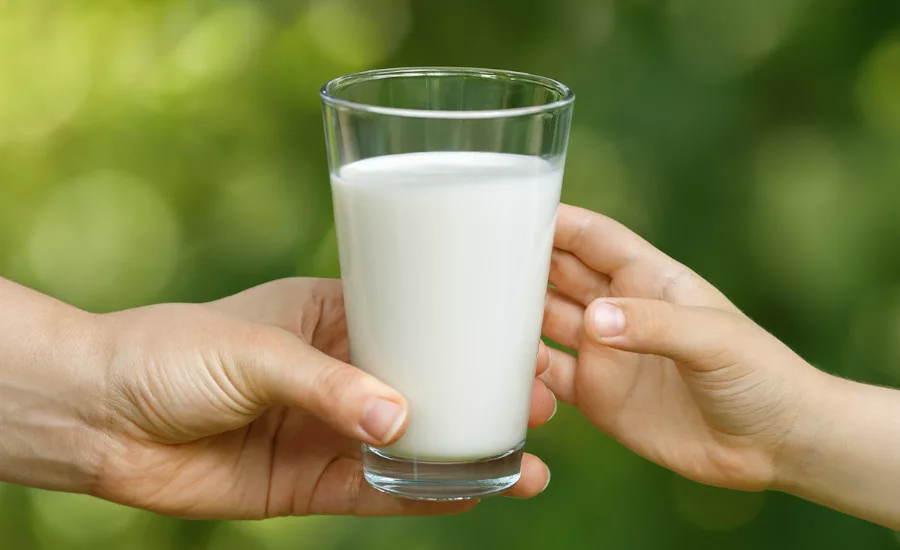


Milk is widely recognized as a source of essential nutrients like protein and calcium, but it’s also rich in a unique class of bioactive lipids known as milk phospholipids (MPLs). These polar lipids are naturally found in the milk fat globule membrane (MFGM) and other membranous material of skim milk phase. The main MPLs include phosphatidylcholine, phosphatidylethanolamine, phosphatidylinositol, and phosphatidylserine, while sphingomyelin is the predominant milk sphingolipid. In addition to emulsifying properties, MPLs offer a range of health benefits, from supporting brain development in infants to improving cholesterol levels in adults.
Infant nutrition and brain development
MPLs are gaining attention for their key role in infant nutrition, particularly in supporting gut health and brain development. Research shows that adding MFGM-derived phospholipids to infant formula can strengthen the gut barrier, enhance cognitive performance, and promote healthy brain growth. These benefits are linked to specific bioactive components in milk. Sphingomyelin supports myelin sheath formation and helps protect against infections. Phosphatidylserine aids brain cell signaling. Phosphatidylcholine contributes to memory and learning by helping produce acetylcholine. In addition, gangliosides in milk may support both brain function and immune health.
Adult health and therapeutic potential
In adults, MPLs help maintain gut integrity, reduce intestinal inflammation, and support a healthy balance of gut bacteria. These actions are associated with improved insulin sensitivity, better lipid metabolism, and less liver fat accumulation in animal models. In postmenopausal women, daily supplementation with 3–5 grams of dairy-derived MPLs has been shown to lower total cholesterol, LDL, and triglycerides, as well as reduce atherogenic sphingomyelin and ceramide species. MPLs can also promote cholesterol excretion and, when paired with protein, may improve balance and physical function.
Together, these effects highlight the therapeutic potential of MPLs in managing obesity, reducing cardiovascular risk, and protecting against neurodegenerative conditions. By influencing fat metabolism, cholesterol regulation, gut barrier function, and microbial health, MPLs emerge as promising ingredients for functional foods that support cardiometabolic health throughout life.
Functional and technological potential
Besides nutritional benefits, MPLs also provide technical functionalities in food systems. They have been used in liposomes preparation and bioactive compounds. MPLs are known for their emulsification and surfactant, foaming, texture improving agents. Commercially available MPL products are usually sourced from dairy product streams such as Buttermilk, acid cheese whey buttermilk, whey protein phospholipid concentrates, whey buttermilk or butter serum. Depending on the specific source and the processing methods employed, the MPL content can range from as low as 2% to as high as 26% on a dry matter basis.
To isolate and concentrate these high-value lipids for commercial use, the dairy industry employs a range of extraction and enrichment processes
Solvent extraction, often with ethanol or ethanol-hexane mixtures, denatures and separates proteins to yield MPL-rich fractions; it can produce high purity but may leave solvent residues or have incomplete recovery. Supercritical fluid extraction uses CO₂ (sometimes with ethanol or dimethyl ether) to extract MPLs without toxic solvents, producing high-purity products, though recovery rates and complete extraction of all phospholipid types can be a challenge. Membrane filtration — typically through microfiltration and ultrafiltration, sometimes combined with enzymatic proteolysis — separates MPL-rich particles from proteins, lactose, and minerals, achieving high recovery rates with minimal chemical inputs.
While solvent and supercritical methods can deliver very high purities, membrane filtration is often preferred in the dairy industry due to existing infrastructure, lower investment needs, and food-safe processing. Each method balances trade-offs between purity, yield, cost, and scalability, making process selection dependent on the intended application and plant capabilities.
Whether destined for infant formulas, performance nutrition, functional dairy beverages, or even pharmaceutical and cosmetic applications, MPLs deliver a rare combination of health-promoting bioactivity and desirable processing functionality. With growing consumer interest in clean-label, functional foods and advances in sustainable extraction technologies, milk phospholipids are poised to play an even larger role in next-generation dairy innovation.
Challenges and opportunities
While plant-based sources like soy lecithin and egg yolk are common, they contain low levels of glycerophosphatidylserine (GPS) and sphingomyelin (SM). Animal-derived sources such as brain or bone marrow offer higher concentrations of phospholipids but raise safety and regulatory concerns.
Milk offers a safe and rich source of polar lipids, but their composition and functionality are highly sensitive to processing conditions. Studies show that high-heat treatments (e.g., pasteurization, spray drying) and homogenization can degrade key fatty acids like myristic, palmitic, and oleic acids, impacting overall functionality of phospholipids
Additionally, milk fatty acid composition — and thus phospholipid profile — is influenced by animal species and breed, stage of lactation and Health and diet. For instance, camel milk is rich in phosphatidylethanolamine, phosphatidylserine, and sphingomyelin, while buffalo milk contains high levels of phosphatidylinositol.
To fully harness the potential of MPLs, optimized processing technologies and standardized green extraction methods are essential. With growing demand for clean-label, functional ingredients, milk phospholipids represent a promising frontier in both nutrition science and dairy innovation
References:
- Pimentel, L., Gomes, A., Pintado, M., & Rodríguez-Alcalá, L. M. (2016). Isolation and analysis of phospholipids in dairy foods. Journal of Analytical Methods in Chemistry, 2016, 9827369, 12 pages. https://doi.org/10.1155/2016/9827369
- Huang, Z., Zheng, H., Brennan, C. S., Mohan, M. S., Stipkovits, L., Li, L., & Kulasiri, D. (2020). Production of milk phospholipid-enriched dairy ingredients. Foods, 9(3), 263. https://doi.org/10.3390/foods9030263
- Silva, R. C. d., Colleran, H. L., & Ibrahim, S. A. (2021). Milk fat globule membrane in infant nutrition: A dairy industry perspective. Journal of Dairy Research, 88(1), 105–116. 10.1017/S0022029921000224
- Ortega-Anaya, J., & Jiménez-Flores, R. (2019). Symposium review: The relevance of bovine milk phospholipids in human nutrition—Evidence of the effect on infant gut and brain development. Journal of Dairy Science, 102(3), 2738–2748. 10.3168/jds.2018-15342
- Le Barz, M., Vors, C., Combe, E., Joumard-Cubizolles, L., Lecomte, M., Joffre, F., Trauchessec, M., Pesenti, S., Loizon, E., Breyton, A. E., Meugnier, E., Bertrand, K., Drai, J., Robert, C., Durand, A., Cuerq, C., Gaborit, P., Leconte, N., Bernalier-Donadille, A., ... Michalski, M. C. (2021). Milk polar lipids favorably alter circulating and intestinal ceramide and sphingomyelin species in postmenopausal women. JCI Insight, 6(10), Article e146161. https://doi.org/10.1172/jci.insight.146161
- Kamili, A., Wat, E., Chung, R.W. et al. Hepatic accumulation of intestinal cholesterol is decreased and fecal cholesterol excretion is increased in mice fed a high-fat diet supplemented with milk phospholipids. Nutr Metab (Lond) 7, 90 (2010). https://doi.org/10.1186/1743-7075-7-90
Kritika Gaba, M.S., is a Scientific and Regulatory Affairs Compliance and Innovation Technician at The Coca-Cola Company in Toronto, Canada. She has more than five years of experience in product development along with two years of hands-on industry experience in the U.S. dairy sector. She holds a master’s degree in Dairy Science Manufacturing from South Dakota State University as well as a bachelor’s degree in Food Technology.
Zifan Wan, Ph.D., is an Assistant Professor in the School of Agriculture at the University of Wisconsin – Platteville since 2021. She specializes in nonthermal processing technologies, with a focus on applications in dairy manufacturing. She earned a doctoral degree in Food Science and Technology from Iowa State University and a bachelor’s degree in Food Science from Purdue University.
Looking for a reprint of this article?
From high-res PDFs to custom plaques, order your copy today!