Dairy Foods logo
search
cart
facebook twitter linkedin youtube
  • Sign In
  • Create Account
  • Sign Out
  • My Account
Dairy Foods logo
  • NEWS
    • DAIRY REGULATIONS
  • PRODUCTS
    • New Products
    • Butter
    • Cheese
    • Cultured Dairy
    • Frozen Desserts
    • Ice Cream/Novelties
    • Milk
    • Non-Dairy Beverages
    • Sales Data
    • Whey, Milk Powder
    • Dairy Alternatives
  • INGREDIENTS
    • Cocoa
    • Colors/Flavors
    • Cultures/Enzymes
    • Fiber
    • Gums, Stabilizers, and Texturants
    • Inclusions
    • Omegas/Lipids
    • Prebiotics
    • Probiotics
    • Sweeteners
    • Other
  • OPERATIONS
    • SUSTAINABILITY
    • Equipment
    • Processing
    • Packaging
    • Food Safety & Sanitation
    • Membrane Technology
  • MEDIA
    • Dairy Foods TV
    • Podcasts
    • Webinars
  • DIRECTORIES
    • Buyers Guide
    • Dairy Plants USA
  • MEMBRANE FORUM
  • MORE
    • Associations
    • Dairy Foods' News & Views Newsletter
    • Blogs
    • Case Studies
    • Classifieds
    • Custom Content & Marketing Services
    • Dairy Foods Store
    • Market Research
    • Supplier Spotlights
    • Tradeshows and Events
    • Strategy Guides
  • AWARDS
    • Dairy Plant of the Year Award
    • Breakthrough Award
    • Dairy Processor of the Year
  • EMAGAZINE
    • eMagazines
    • Archive Issues
    • Contact
    • Advertise
    • SIGN UP!
    • Columnists
    • Dairy 100
    • State of the Industry Report
    InnovationDairy Foods ColumnistsCheese

    What’s the significance of lipases in cheesemaking?

    Microbial-sourced lipases help meet kosher and halal requirements.
    By John A. Lucey Ph.D., Director, Center for Dairy Research
    a block of Tickler Extra Mature Cheddar Cheese
    Photo by Motortion / iStock / Getty Images Plus
    October 8, 2025
    John Lucey

    John A. Lucey is a professor of food science at the University of Wisconsin, Madison, and the director of the Center for Dairy Research.

    Most of the fat in milk (around 99%) is in the form of triglycerides. Triglyceride molecules consist of a glycerol backbone with three fatty acids attached (or esterified) to it (hence the name “tri” “glyceride”). There are a couple of hundred different types of fatty acids present in milk, of varying chain length and level of saturation, which can be attached to triglycerides. The position (one, two, or three) or the location of a fatty acid on the triglyceride molecule, also adds another layer to the complexity of milk. Researchers have found that the position of specific fatty acids on the glycerol backbone of a triglyceride is not random. For example, short chain fatty acids typically go on the number three position, medium chain fatty acids prefer the first and second positions, and longer chain fatty acids prefer position number one. 

    Lipases are enzymes that are naturally found in the digestive tracts of animals, including humans, and they help break down and digest fats like triglycerides, releasing “free” fatty acids. It is not known when cheesemakers first started to use lipases to help with flavor development in cheese. Some of the early rennet extracts also contained lipases. Raw milk contains low levels of lipoprotein lipase enzyme and there is likely some lipase activity in cheeses made from raw milk. This lipase activity could contribute to a flavor difference with pasteurized milk cheeses, with more sharper notes often noticed in raw milk cheeses.

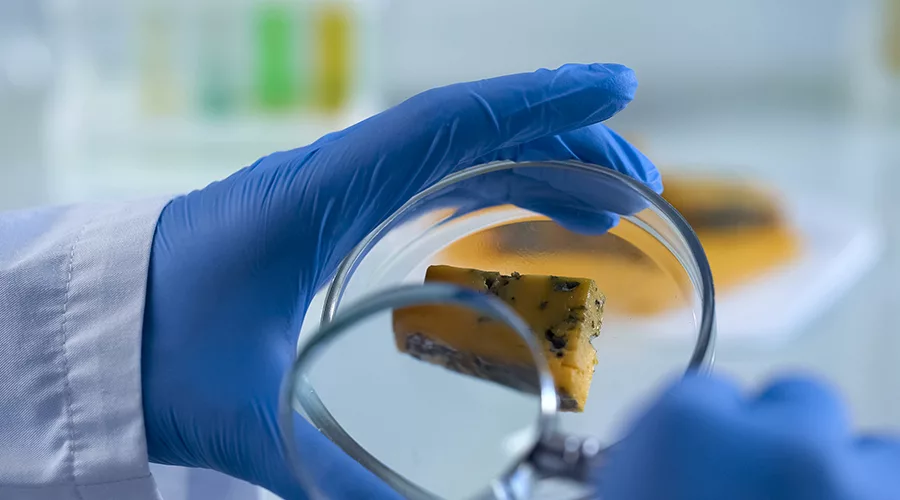
    Cheese with strong lipase activity

    Some starter and nonstarter bacteria have weak lipase activity, whereas blue molds have strong lipase activity. For some cheese varieties (e.g., traditional Provolone and Romano) lipases need to be added to generate key flavors. Most of these cheesemakers use animal-derived lipases, i.e., sourced from the digestive tracts of calves and goats. More recently, some companies have been exploring microbial-sourced lipases to help meet kosher and halal requirements. This has posed a challenge for cheesemakers because the microbial-sourced lipases produce different flavor profiles in the cheese. Lipases from different sources can produce various flavors because each type of lipase can have a preference for which types of fatty acids they release from triglycerides. Typically, the animal-derived lipase sources release more of the shorter chain fatty acids, which results in sharper, rancid or piquant flavors. In contrast, microbial-sourced lipases tend to release a higher proportion of medium and long chain fatty acids, which ultimately produce flavors associated with soapy, waxy and oily. 

    Some level of lipase activity occurs in nearly every cheese, but the concentration of fatty acids released varies tremendously from very low levels in fresh Mozzarella to very high levels in blue cheese. In addition, once the lipase releases fatty acids, these fatty acids can be further transformed into various compounds like alcohols and esters or methyl ketones.  

    For certain cheeses like hard Italian types, lipases are important for flavor, but if the levels become high or if too much of a particular type of fatty acid is released, the flavors can be overpowering. This is a big issue facing industry. Switching their lipase sources makes it challenging for cheesemakers to achieve the desired (traditional) flavor profile. It can be very difficult to know or predict what the resulting flavor profile will be caused by a particular lipase or what is the best usage level for my cheese. Often, cheesemakers have to learn by experimenting with different lipases and amounts added in the make process. 

    CDR developing rapid model system 

    At the Center for Dairy Research, research work is just getting started on the development of a simple and rapid model system to help cheesemakers by screening and predicting the flavor profile in cheese caused by a particular lipase. This research would potentially allow us to test a lipase sample on a bench top system using a small amount of milk. I think that some amount of background lipase activity contributes to the overall flavor profile in many types of cheeses, even Cheddar, greater control and precision for the fatty acids released by lipases will help expand cheese flavor profiles and ultimately consumer choices.  

    KEYWORDS: Center for Dairy Research cheesemaking enzymes for dairy products fatty acids raw milk raw milk cheese

    Share This Story

    Looking for a reprint of this article?
    From high-res PDFs to custom plaques, order your copy today!

    John lucey phd

    John Lucey, Ph.D., is the Owen R. Fennema Professor in Food Chemistry at the University of Wisconsin-Madison’s Center for Dairy Research.

    Recommended Content

    JOIN TODAY
    to unlock your recommendations.

    Already have an account? Sign In

    • Lifeway Organic Kefir in different flavors inside a refrigerated grocery shelf.

      Dairy Foods names Lifeway Foods 2025 Processor of the Year

      Lifeway Foods donates $10,000 to wildfire victims,...
      Cultured Dairy
      By: Brian Berk
    • Two female farmers are standing in a field, holding a large milk canister, looking at several cows at dairy farm.

      Honoring Women Leaders Shaping the Dairy Industry

      For the fourth consecutive year, Dairy Foods is proud to...
      Innovation
      By: Barbara Harfmann
    • Main feature for State of the Industry with dairy products album cover with a gradient circular--patterned backgorund.

      2025 State of the Dairy Industry

      Welcome to the 2025 State of the Industry report. For...
      Ingredients for Dairy Processors
    Manage My Account
    • eMagazine Subscription
    • Dairy Foods News & Views Newsletter
    • Online Registration
    • Manage My Preferences
    • Subscription Customer Service
    • Connect with Dairy Foods

    More Videos

    Popular Stories

    Close up of man adding Greek yogurt while preparing healthy smoothie in the kitchen.

    An expert guide to dairy and GLP-1 receptor agonists

    Grilling foods

    Dairy’s Enduring Moment: Why Resilience and Renewal Define Today’s Dairy Story

    Idaho Milk Products hosts ribbon cutting

    Idaho Milk Products hosts ribbon cutting for new facility

    Nominate your product for the 2026 Dairy Foods Product of the Year!

    Products

    Probiotic Ice Cream: Science and Technology

    Probiotic Ice Cream: Science and Technology

    See More Products

    Outlook Report: Women in Dairy

    Related Articles

    • What's New in Cheesemaking?

      See More
    • A small bowl of Woodland Gourmet Granulated Spicy Chipotle Chiles and larger bowls of whole chiles on a table. Chile powder and chile slices are on the table.

      Ingredient suppliers highlight the latest solutions in cheesemaking ingredients

      See More
    • The FDA permits ultrafiltered milk in cheesemaking

      See More

    Related Products

    See More Products
    • GlobalData_Consumer.jpg

      Milk (Dairy & Soy Food) Market in the United States of America - Outlook to 2024: Market Size, Growth and Forecast Analytics

    • GlobalData_Consumer.jpg

      Impulse Ice Cream – Single Serve (Ice Cream) Market in the United States of America – Outlook to 2024...

    • public role.jpg

      The Public Role In The Dairy Economy: Why And How Governments Intervene In The Milk Business

    See More Products

    Events

    View AllSubmit An Event
    • November 5, 2013

      The Food Safety and Hygiene in Artisan/Farmstead Cheesemaking Workshop

      This hands-on workshop will allow attendees to learn about and implement best practices and food safety techniques for on-farm pathogen control in order to meet the stringent requirements of the Food Safety Modernization Act (FSMA). The FSMA as well as HACCP-based food safety plans and related pre-requisite programs will soon become a regulatory requirement.
    • October 11, 2013

      The Food Safety and Hygiene in Artisan/Farmstead Cheesemaking Workshop

      This bi-lingual one-day workshop will provide FSMA-informed guidance on HACCP-based food safety specifically designed for artisan/farmstead cheesemakers.
    View AllSubmit An Event

    Related Directories

    • The Cheesemaker #1 Inc.

    • Dairy Farmers of America (Farmers, IN)

    • Dairy Farmers of America (Goshen, IN)

    ×

    Stay ahead of the curve. Unlock a dose of cutting-edge insights.

    Receive our premium content directly to your inbox.

    SIGN-UP TODAY
    • RESOURCES
      • Advertise
      • Contact Us
      • Directories
      • Store
      • Want More
    • SIGN UP TODAY
      • Create Account
      • eMagazine
      • Newsletter
      • Customer Service
      • Manage Preferences
    • SERVICES
      • Marketing Services
      • Reprints
      • Market Research
      • List Rental
      • Survey/Respondent Access
    • STAY CONNECTED
      • LinkedIn
      • Facebook
      • YouTube
      • X (Twitter)
    • PRIVACY
      • PRIVACY POLICY
      • TERMS & CONDITIONS
      • DO NOT SELL MY INFORMATION
      • PRIVACY REQUEST
      • ACCESSIBILITY

    Copyright ©2026. All Rights Reserved BNP Media, Inc. and BNP Media II, LLC.

    Design, CMS, Hosting & Web Development :: ePublishing