Making ice cream while the sun shines: Inside the Magnolia ice cream plant
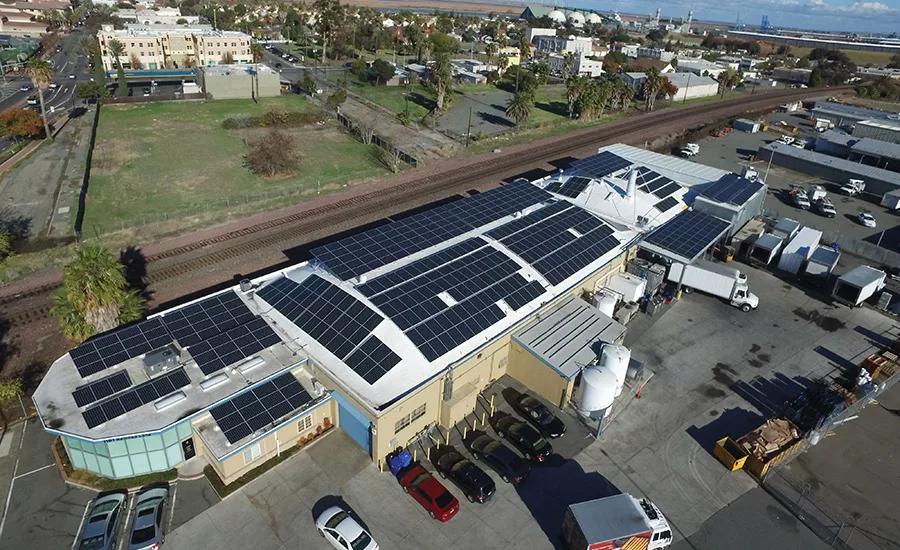
Solar panels cover the roof of the ice cream plant of Ramar Foods. The array generates electricity for the manufacturing facility and the office. Photo courtesy of Ramar Foods
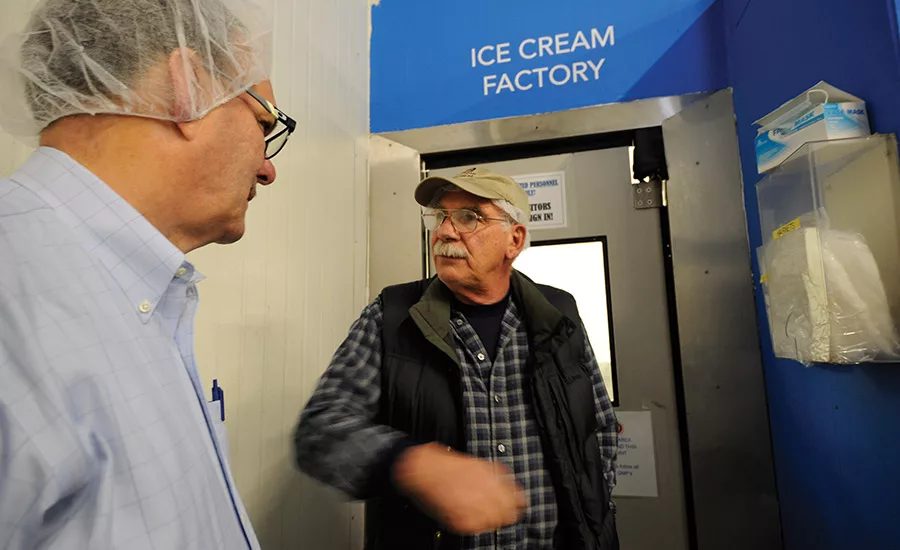
The Emperor of Ice Cream, Steven Eis, prepares to take a visitor on a tour of Ramar Foods’ ice cream production plant.
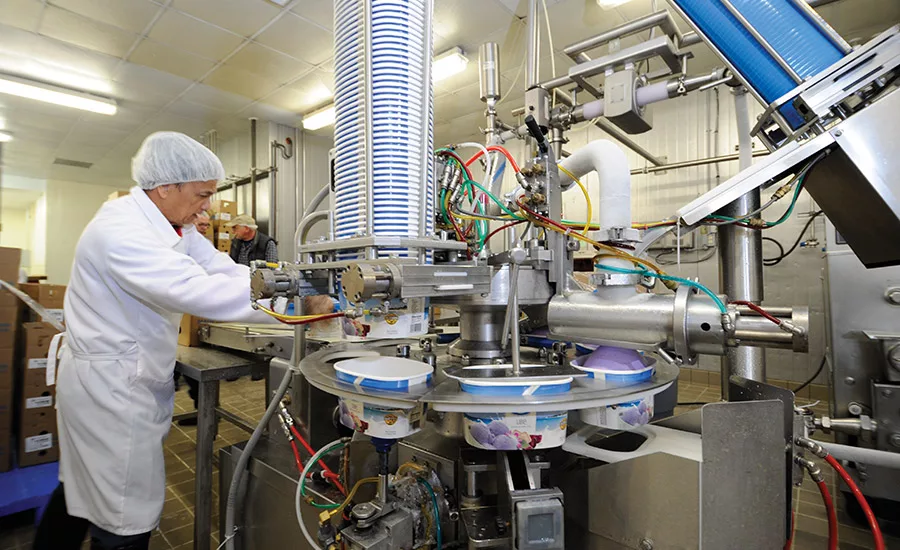
Ramar Foods was filling cartons of ube ice cream on the day that Dairy Foods visited. It modified the freezer to run faster.
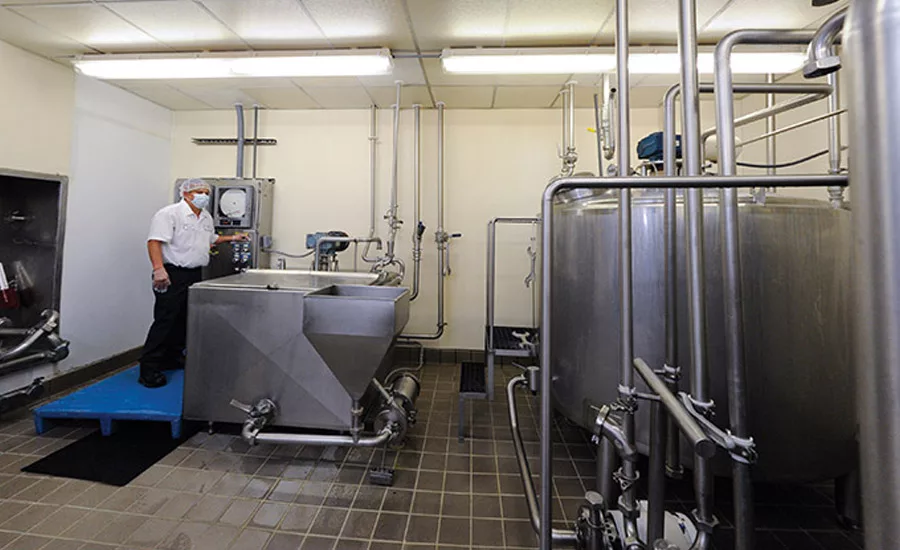
The processing room receives standardized milk from Crystal Creamery. The compact room includes one 4,000-gallon raw milk silo and one 3,000-gallon raw milk silo.
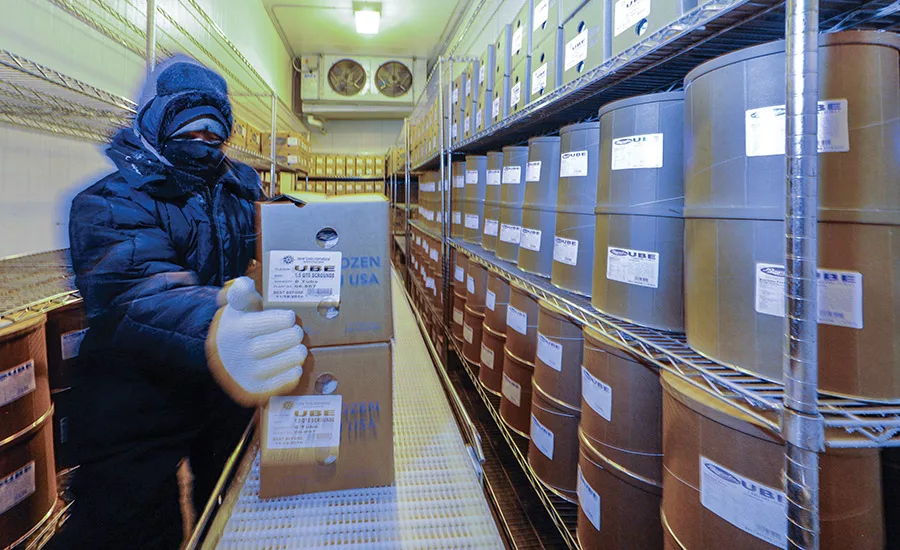
Foodservice tubs and cartons of packaged ice cream harden in the freezer.
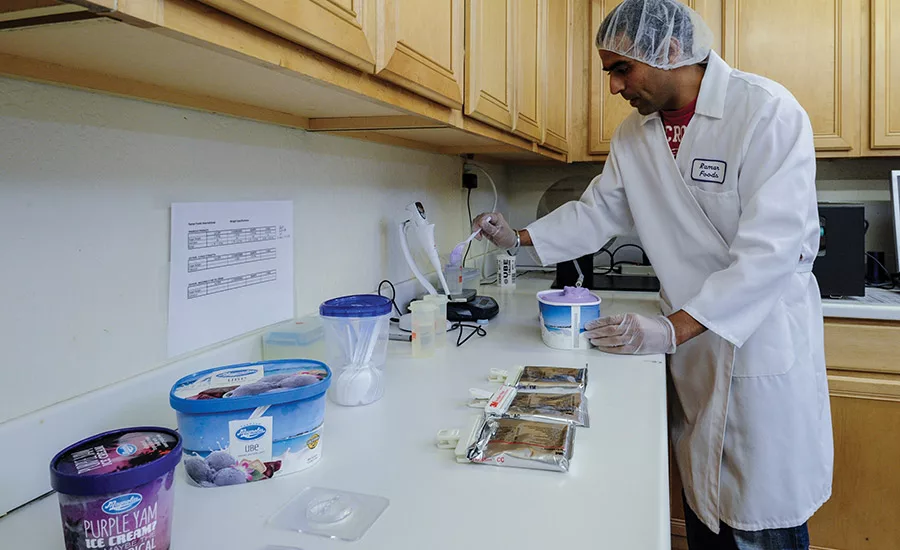
In the on-site lab, manager Amar Dhillon runs various tests on finished product samples.
Ramar Foods of Pittsburg, Calif., is a processor of frozen foods sold in ethnic grocery stores in Asian communities in the United States. It operates a “meat” plant and a dairy plant. In the meat plant on Central Avenue, Ramar makes traditional Filipino foods like pancit (a noodle dish), embotido (meatloaf), highly seasoned chicken adobo and lumpia (a kind of egg roll). Last December, the company said it sold its billionth lumpia since it started 45 years ago. The brands include Baguio, Orientex and Bestaste.
But it is the dairy plant on Railroad Avenue that attracted the attention of Dairy Foods. There, Ramar makes ice cream and novelties under its Magnolia brand. The flavors reflect the Filipino heritage of the owners, the Quesada family. While popular in the Philippines and other Asian nations, ube (purple yam), avocado, red bean and lychee are not the first choice of shoppers in mainstream America. The Quesadas hope to change that.
CEO Susie Quesada and her brothers Ronald and PJ are the third generation to run the company, founded by their grandparents and developed by their parents Primo and Evangeline Quesada. Her parents are “working at retirement,” Susie said. Actually, they are overseeing two Magnolia retail stores in Honolulu and Las Vegas.
The youngest generation of Quesadas is in the process of repositioning Magnolia from “Asian ice cream” to “tropical ice cream” in order to broaden its appeal. So far, that’s working. Mainstream retailers carrying Magnolia include Whole Foods, Ralph’s (Kroger’s division in California), H-E-B in Texas, Kings Supermarkets in New Jersey and Morton Williams in Manhattan. (See related article.)
Making ice cream
The ice cream plant is just one of the 34 facilities making ice cream in California, according to 2015 state records. Steven Eis, a veteran dairyman who retired as plant manager after 15 years, took Dairy Foods on a tour of the processing room, the packaging room and the freezer. Eis earned the nickname “The Emperor of Ice Cream” from the Chinese after years in China teaching them how to make ice cream.
Three to four days a week, the plant receives a tanker of standardized milk from Crystal Creamery (formerly known as Foster Farms). The compact processing room includes one 4,000-gallon raw milk silo and one 3,000-gallon raw milk silo. There are two pasteurization vats and a filler. Besides making mix for its own use, Ramar Foods sells ice cream mix in 2.5-gallon bags and in larger totes to area ice cream companies that don’t have the capability to pasteurize.
Ramar vat-pasteurizes milk, liquid sugar and powders for 30 minutes at 160˚F and cools the mix to 37˚F. It is then pumped through stainless steel pipes to the production room in a separate part of the plant. On the day of our visit, Ramar was filling 1.5-quart packages of ube. This is the company’s best-selling flavor.
Ramar sources the starchy root from the Philippines where it works with grower cooperatives to guarantee a supply of high-quality product. This and other fruits arrive in puree form in 2-kilogram plastic pouches. Other fruit also is imported from the Philippines but the avocados are sourced from California.
The pasteurization tanks are also used to brew tea for Magnolia’s Thai Tea ice cream. It is one of the most popular flavors among the Millennial generation, PJ Quesada said.
In all, Ramar makes 20 flavors of ice cream and seven flavors of dairy and dairy-free stick novelties. Novelty production is in the spring and summer, when demand is greatest. Ice cream formats are pints, 1.5 gallon tubs and 3-gallon foodservice cans.
The ice cream freezer is an older model that originally had a capacity of 500 gallons per hour. Ramar rebuilt the equipment so it runs faster. As a result, productivity has increased. Purees are added into flavor vats. There are two 250-gallon flavor vats in the packaging room and a brine vat for novelties which are quiescently frozen in molds.
On the “wish list” is a freezer that could fill containers with two or more flavors at once. Then Ramar could make a Neapolitan-style product with a combination of tropical flavors. Quesada has these flavor combinations worked out already.
The plant runs four weekly 10-hour production shifts during the winter and more shifts in the busier summer months. Four employees work the line, which includes the flavor vat, freezer, filler and boxing operations.
After pints and tubs are filled, they are case-packed and conveyed to the blast freezer. They remain there for four to six hours to harden in -30 F temperatures. Ramar then loads its own trucks for delivery. Some product also is loaded into shipping containers bound for Honolulu, where Ramar has a scoop shop and a frozen warehouse.
In the on-site quality assurance lab, manager Amar Dhillon runs tests on finished product samples pulled off the line three times during a production run — at start up, in the middle and at the end. He performs standard tests on the samples, including total solids, pH and various microbial tests for yeast, mold and coliform.
Energy investments
At the end of 2015, Ramar completed a solar-panel installation which generates electricity for the plant and the office. Every square foot of the meat and dairy plants are covered in panels. The impetus was rising energy costs and favorable economic incentives, PJ Quesada said.
“There’s no money up front for a company like ours, so of course the numbers penciled out,” Quesada said. “It’s a project that does have some savings, but our favorite thing about it is that it’s the right thing to do, especially right now.”
In addition to the solar panels, a natural-gas fuel cell powers the nearby meat plant. Quesada said he would have liked to have had biofuel, but there were some complications with securing a reliable source of methane.
Another important investment of 2015 was in enterprise planning software to enable computerized lot traceability. The company converted from a manual system, which PJ called “tedious” because of 250 products and hundreds of suppliers.
The manufacturing facility received organic certification, a process started in 2014. Ramar’s own brands are not labeled organic, but the plant does co-manufacture organic products for customers.
“We do have eyes on making some of our own products fully certified organic,” PJ said, but that is a long-term goal.
“One of the main challenges is our supply chain in the Philippines,” PJ said. “None of our ingredients are (non-GMO) because who’s going to put all the money into genetic sequencing on a specific type of purple yam? Certifying the farmers, the soil and the whole processing chain as organic does represent a significant challenge.”
Spreading the culture
Every conversation with the Quesadas turns to the importance of food in Filipino gatherings. This third generation is intent on sharing the flavors of the Philippines with a broader audience. With sales in the United States, Canada and Europe, they just might make ube ice cream as popular as vanilla and chocolate. If not, they at least will have shared the flavors and foods of their beloved Filipino heritage.
At-A-Glance
Looking for a reprint of this article?
From high-res PDFs to custom plaques, order your copy today!


