Consumers are clearly taking ingredient labels more seriously, but that doesn’t mean they have the same mindset regarding every dairy product. We take a look at what consumers are seeking and how dairy processors can meet those needs.
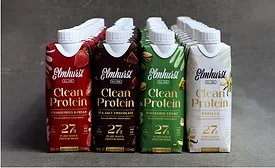
Protein as an ingredient is no longer a trend, but an integral part of modern food positioning. Several forces are driving the protein phenomenon simultaneously.
The IFT FIRST Annual Event and Expo returns to Chicago from July 12-15, showcasing innovations in food science. This year features scientific programming within the expo hall, Ignite Sessions for professional development, and keynotes addressing pressing industry challenges.
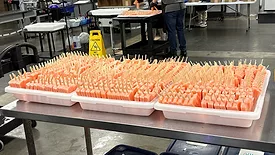
Frios Gourmet Pops’ Mobile, Ala., facility, located near Interstate 65 and spanning some 21,000 square feet, can employ up to 25 people based on time of year and product demand. Upon visiting the facility, it is clear that the company can expand its operations significantly.
The evolution of flavor modulation in dairy highlights the challenge of maintaining indulgent taste and smooth texture while integrating high-protein and functional ingredients. As consumer preferences shift, formulators are turning to layered systems of flavor builders and modulators for innovative solutions.
Jacqueline Van Schaik, global lead nutritionist, Fonterra, joins Dairy Foods for episode 64 of the “Let’s Talk Dairy” podcast. During this podcast, she discusses GLP-1s and dairy.
Cream cheese is becoming a powerful vehicle for global flavor fusion, moving far beyond its traditional Western applications, and evolving into a canvas for regional tastes and storytelling, states Mary Wilcox.
Normally, I run my predictions for the upcoming year in January. This year, I'm doing it in February, and I will summarize many of the prediction trends I have seen throughout the industry. Many of the experts have a great story about the future to tell.
Aseptic and extended-shelf-life (ESL) production lines offer a promising opportunity for dairy processors, particularly as aseptic juice sales have increased by nearly 7%, reaching $2.6 billion. The global aseptic packaging market is expected to grow significantly, rising from $80 billion in 2024 to $185.8 billion by 2032.