Fortress Technology celebrates 30th anniversary
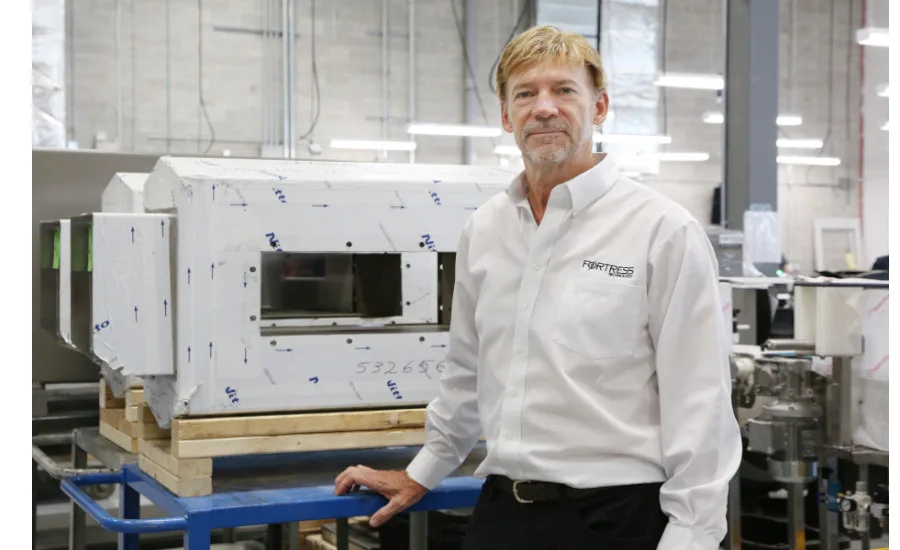
In 1996, the food production floor was predominantly a high-touch environment. A typical packaging line often required between 10 to 15 operators to closely monitor equipment and make manual adjustments to inspection equipment settings. In this era, metal detection was largely reactive rather than proactive. Attention was only really directed to inspection machines if an alarm sounded or the production line stopped.
Although there were whispers of an impending digital revolution, comprehensive food safety regulations had not yet been implemented. The Food Safety Modernization Act (2011) was yet to establish the standardized safety protocols that are now commonplace in food processing environments worldwide.
Today, the bustling factory floor has undergone a tectonic shift in operational philosophy, evolving into what Gidman describes as a ‘ghost town’. Modern plants are defined by high-speed automation with machines processing 200 to 300 packs per minute and requiring minimal human intervention. In this new landscape, the metal detector has transitioned from a standalone hardware requirement to a sophisticated, data-driven partner essential for brand protection. All pointing towards the rise of the intelligent and integrated food factory.
UX always prioritized
During the early development days of food metal detectors ‘feature creep’ increasingly occurred. As manufacturers sought to introduce new functionalities, machines sometimes became burdened with unnecessary features that complicated operation and maintenance.
Engineers frequently loaded machines with complex interfaces that looked impressive on a spec sheet but baffled operators on the floor, recalls Gidman. Drawing on his extensive knowledge of signal processing and radio frequency, the industry pioneer instantly recognized the importance of user-centric simplicity and reliability. The company’s original tagline Simple Operation, Outstanding Reliability, Exceptional Performance, is indicative of the company’s enduring commitment to excellence. Customers value these qualities just as much today as they did from the start.
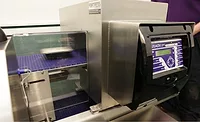
In challenging food processing environments, a metal detector interface must be intuitive enough for a distracted operator to manage during a high-pressure shift, explains Gidman. "One of the things we really concentrated on from the outset was to make a machine that you could walk up to without a manual, look at the buttons and know what to do,” he asserts. This same philosophy has been applied to the latest generation touchscreen unveiled at Interpack 2026.
Making digital waves before Industry 4.0
The move toward total automation isn't just about increasing throughput to 300 packs a minute. Digitalization, combined with heightened awareness of food safety and more stringent rules, has seen the technology progress significantly, particularly in relation to inspection and metal detection sensitivity.
Some of the latest advancements occurred around 2011. This is when the US enacted its most sweeping food safety rules, the Food Safety Modernization Act (FSMA). With these legislative reforms, rather than just analyzing hazards, the focus shifted towards prevention. Supply chain disruptions, a pandemic, several financial crisis situations, labor shortages and incidents like the European horsemeat scandal means that processors have navigated multiple challenges.
Simultaneously there has been a huge focus on sustainability. Streamlining workflows, smaller footprint combination systems, introducing remote monitoring and networked exchange of data are all technologies developed that support modern day food manufacturers.
“When we look back to 1996, food processing staff had the ‘extra bandwidth’ to calibrate the machine and perform tests manually. Now, fewer employees are expected to manage more high-priority systems. On a high-speed line, asking an employee to manually insert and retrieve test pieces is a liability risk and inefficient,” notes Gidman.
The imperative to mitigate safety risks and minimize human errors was a driving force behind the development of the Halo Automatic Testing System. This revolutionary concept represented a significant breakthrough for automated testing in advance of the widespread adoption of Industry 4.0, IOT and AI. Its introduction even predated the 2012 German Hannover fair where these digitalization trends began to gain significant momentum!
Entering the prove it era
Retailers and restaurant chains are behind some of the most significant advances in global food safety. The switch from being passive recipients of products to being ‘active architects’ of food safety has been initiated through collaborations with key stakeholders, including food safety organizations and audit groups, reports Gidman.
Increasingly, retailers now demand granular proof of every test, setting change and rejection. By the time the new FDA Food Traceability Final Rule (FSMA 204) is implemented in 2028, Gidman expects most food processors will have switched from manual paper logs to digital record keeping. “When you think about it, a piece of paper floating around food plants is a risky idea in this day and age."
Farm is the new inspection frontier
In recent years, a significant strategic shift has occurred whereby manufacturers no longer tolerate contamination issues originating from their suppliers. Instead, they have adopted a proactive approach known as 'looking upstream', where they closely assess and monitor supplier processes and quality controls to prevent problems before they arise. Product tampering in potato harvests and the 2014 nationwide recalls was a pivotal moment. It led to changes in sourcing transparency in the farm to fork supply chain.
The logic is mathematical. A larger chunk of metal is easily caught at the farm or ingredient stage. If that same contaminant reaches the high-speed production line, it could be ground into thousands of microscopic pieces by processing machinery. Potentially turning a single avoidable issue into a massive, multi-pack recall.
As a result of these activities, upstream inspection after harvesting and before processing is now widely regarded as best practice.
“By demanding that suppliers implement their own detection protocols, manufacturers can ensure the integrity of the entire food chain rather than just the final packaged product,” highlights Gidman
Cleverer and compact decade
Currently, the food processing industry stands at the threshold of the AI machine-driven era, asserts Gidman. As technology advances, the focus will inevitably shift towards ‘smaller footprint’ inspection systems. “With floor space at a premium, the future is not more machines, just more intelligent ones,” believes Gidman
Already, the company founder foresees the development of compact, fully integrated inspection systems that combine metal detection, checkweighing, X-ray and vision inspection cameras, all working and communicating together in real-time. Many different future functionalities are being considered. For example, combination inspection systems may comprise a camera sharing the position of randomly presented products on a conveyor with a metal detector, or checkweighers verifying product weight and communicating this to the X-ray system.
This seamless communication between different inspection modules contained in the same frame is ambitious and advanced. However, combined technology will ensure that every product in the future is thoroughly examined from multiple perspectives reducing the risk of undetected contamination even further.
“AI will be central to this future process. The ability to constantly refine and adapt processes allows manufacturers to achieve the highest possible standards of safety and accuracy, protecting both product integrity and brand reputation,” anticipates Gidman.
Changing mindsets not machines
The most profound change observed by Gidman over the last 30 years isn't in the hardware, but the cultural mindset adopted by the food manufacturing industry.
“The end goal of brand protection remains the same. However, the metal detector has transitioned from being a mere 'policeman' stationed at the end of the production line to becoming an integral partner in a comprehensive education and food safety ecosystem,” notes Gidman.
As production rates accelerate and the need for direct human interventions decline, Gidman suggests that rather than viewing digital as another obstacle, it is part of the food safety evolution. “These innovative and connected systems are poised to play a crucial role in ensuring the continued safety and integrity of food processing operations, making them indispensable for safeguarding the industry's future for years to come.”
Listen to Steve Gidman’s recent podcast interview with Food Engineering Magazine for more reflections on Fortress Technology’s 30 year food safety journey covering analogue to digital to AI.
Looking for a reprint of this article?
From high-res PDFs to custom plaques, order your copy today!