Everything to know about X-ray and metal detection systems
Selecting the ideal equipment can be complex.
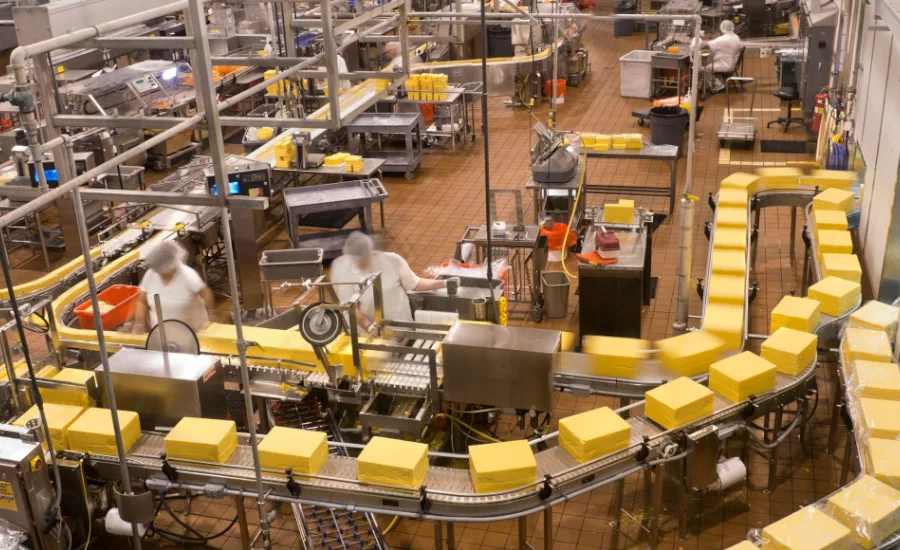
The most effective systems have inspection and detection devices at multiple areas of the production line. Photo courtesy of Fortress Technology Inc.
Leveraging highly effective X-ray and metal detection systems that pinpoint foreign objects in all stages of dairy food production is essential for reducing food safety risks. Yet, situating the optimal inspection and detection technologies often is complex.
Processors must consider a wide range of variables when seeking and selecting the most functional equipment, starting with the products under production and their unique technology requirements. Operators typically use X-ray equipment to identify such contaminants as glass, calcified bone, ceramics, and stone, while metal detectors can locate ferrous and non-ferrous metals and often stainless steel.
In addition, sophisticated X-ray systems can perform such quality control checks as estimating mass, counting components, identifying missing or broken products, monitoring fill levels, and inspecting seals for food entrapment, says Todd Grube, product manager of inspection systems for Heat and Control Inc., a Hayward, Calif.-based X-ray and metal detector manufacturer. He notes that among the possible equipment requirements is the number of sensors in the apparatus.

While most X-ray devices have a single sensor, multiple sensors can provide contrasting images that are useful in applications that require the detection of lower-density contaminants, such as bone-in poultry, Grube states. The power and functions of an X-ray system’s imaging software, meanwhile, which analyzes the line sensor signals to determine what is foreign material versus a good product, can be the most important factor in detecting foreign objects, he notes.
Other important considerations include the ease in which users can remove machine parts for cleaning and if the equipment can support a product’s unique dimensions, says Juho Ojuva, vice president, commercial operations, for Mekitec Ltd., an Oulu, Finland-based detector manufacturer. “Processors should evaluate if a top-down or so-called side-shooter X-ray system is better suited to detect the required foreign bodies at the desired level,” he notes.
It also is vital that a device’s aperture is suitable for the product size and that the metal detector can operate with both dry and wet products and in dry and wet environments, says Eric Garr, regional sales manager for Fortress Technology Inc., a Toronto-based metal detector manufacturer. “Being able to withstand regular high pressurized washdowns is paramount to prevent bacteria from accumulating on devices,” he states
Make it painless
Ease of setup and the ability to quickly adjust devices to meet the unique sensitivity requirements of products is important as well, says Robert Slauson, assistant sales manager for Advanced Detection Systems, a Milwaukee-based metal detector developer. He notes, meanwhile, that the appropriate metal detectors will differ in accordance with product type. Options, Slauson states, include conveyor mount detectors which can inspect packaged or bulk products prior to packing as the items move through the detector by conveyor belt; gravity drop detectors which are ideal for dry powder products and arranged vertically so a product can be gravity fed (dropped) through the devices; and pipeline systems that processors use to inspect liquid or viscous products, including ice cream and cream cheese.
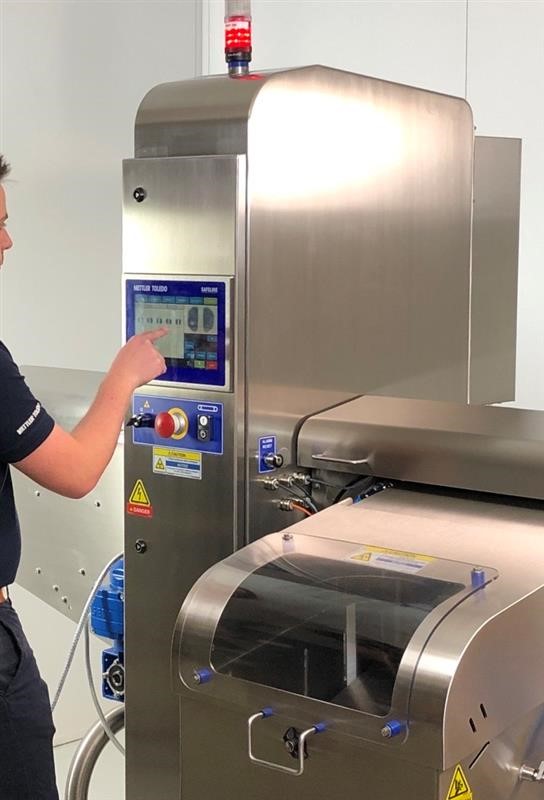
Processors also should consider the simplicity in using a system, says Geri Foley, product manager of X-ray at Mettler Toledo LLC, a Columbus, Ohio-based developer of X-ray and metal detectors. An efficient icon-driven human-machine interface (HMI), for instance, which is the dashboard or screen that operators use to control machinery, can result in faster set-ups while reducing operator training time, she notes. It also is crucial that processors choose systems with advanced software that offers the highest probability of detection and the least false rejects, Foley states.
“Speed and sensitivity are the linchpins in this evaluation,” adds Kye Luker, vice president of operations for FlexXray, an Arlington, Texas-based provider of X-ray inspection and metal detection services. “As you increase sensitivity you must reduce speed,” he notes. “Processors must find the right sweet spot.”
X-ray technologies, however, often perform differently in accordance with product characteristics, Grube says, noting, for instance, that there can be a reduction in effectiveness while analyzing thick, dense products, such as large blocks of cheese. Indeed, product type can have a major impact on system choice.
“If you just make butter, there is no need to spend on the best technology when the product has no inclusions and is easy to see through,” Luker explains. “But with a dual compartment package with nuts on one side and dairy on the other, there is probably going to be a need to beef up the spend on the in-line instrument to get the most out of the process.”
It also is important that users go beyond technical features when contemplating suitable X-ray equipment, Ojuva states, as focusing solely on functions “rarely results in the selection of the best, and processors may end up paying more for features that do not necessarily bring any additional value or higher detection capabilities for their needs.”
Operators must assess their unique requirements or have industry experts do so for them, which can include the foreign object risks in their HACCP plan, Ojuva states. “In many cases it matters more where the detection is happening than the hardware that is used,” he notes.
“Single packaging lines, for instance, offer the best performance for X-ray and for minimizing the differences between hardware options.”
More is better
The ideal metal detector placement, meanwhile, will depend on its intended purpose, Slauson says. “If you are chasing product purity the inspection equipment should be placed as close to the end of the production line as possible to catch any contaminants introduced from all points within the process,” he notes, adding that processors should situate detectors just prior to packaging if packages contain metallic materials or labels. In addition, devices should inspect cased products just prior to casing to ensure a high level of sensitivity, Slauson states.
The most effective inspection and detection systems, meanwhile, will have multiple devices at different points in the production process, analysts explain. This requires using technologies to inspect incoming ingredients to help protect machinery and eliminate contaminants before they can be fragmented by downstream equipment into pieces that may be too small for detection at the end-of-line inspection points, Heat and Control’s Grube maintains.
“The processing of ingredients upstream means that many dairy processors will inspect liquid forms using pipeline systems before inspecting packaged dairy products using conveyor metal detectors,” Garr states. “Upstream is often the place where we can get two or three times the performance level.” He suggests that having multiple units along the line is especially effective in operations that add ingredients at different points or perform a multitude of processes.
The initial inspection might include the use of filters or sieves that separate large physical contaminants from raw materials and prevent contaminants from damaging the processing equipment at later stages of the process as more and even smaller foreign bodies enter production, Mekitec’s Ojuva says.
“Ideally, systems would be placed in multiple critical control points,” Foley adds. “End-of- line placement can ensure products are free of physical contaminants, as well as ensure the packing is sealed, and all components within the closed package are intact. Systems placed upstream are helpful as they can reject bad product before adding more value, hence saving money.”
Incorporating the ideal detection systems in facilities, however, can be difficult, particularly when a processor’s line runs an extensive range of products that differ in size and weight, Grube notes. “Selecting a machine that can handle the largest product by size while still meeting the speed and/or sensitivity requirements of a smaller package is a common challenge,” he states.
In addition, processors must deal with the false rejects that cause waste, while also facing the issue of detecting low-density foreign objects, such as ceramics and plastics, and being able to demonstrate proof of product safety in the event of reclamations, Ojuva says. “By inspecting individual products at primary packing and comparing the tiniest differences across products, you can achieve the highest level of accuracy while also detecting problematic low-density impurities,” he states.

Slauson says that the conductive nature of dairy products, myriad of product sizes, and sheer number of products “makes dairy applications some of the most difficult in the food industry.” It is important, he states, that processors understand the limitations of metal detectors to ensure they are “working with the system instead of fighting with it. The correlation between a product and how it affects detector sensitivity should be determined up front. If you are trying to detect metal contaminants that are too small, you will have constant false detects and frustrating line stoppages.”
Keep your eye on the guidelines
X-ray inspection users also must adhere to regulatory compliance requirements before leveraging the technology, says Eduard Mekler, product market manager, printing and inspection for Multivac Inc., a Kansas City, Mo.-based supplier of X-ray and metal inspection systems. “Each state has regulations for radiation monitoring, periodic testing of safety features, and operator training requirements,” he states, noting that 47 states and the District of Columbia also require X-ray inspection system owners to register the technology with their respective radiation control agency.
Processors, he adds, should plan to address regulatory compliance early and often, which includes having a radiation safety officer that takes responsibility for implementing and filing documentation. “The first choice is choosing an equipment supplier who can help not only with the application and equipment, but also implementation of regulatory compliance requirements,” Mekler says.
Other issues include the arduous tasking of having to situate advanced equipment in dairy facilities with older infrastructures that lack the necessary floorspace, Luker says. In response, Foley notes that operators should consider incorporating technologies into a single unit, such as a checkweigher/X-ray combination system.
Before purchasing equipment, however, it is important that operators verify that they are getting a suitable return on investment, Fortress Technology’s Garr says. “Dairy processors need to be sure that any technical advantage will actually add value and will be the most effective and cost-optimized solution in practice,” he states. “The upfront financial expense of installing new equipment is naturally a major consideration. However, the sticker price of equipment is just a small part of the story. In some instances, it can be just 10% to 15% of the total cost of ownership. Yet, it can be a challenge for processors to get any credible figures to compare performance.”
While X-ray and metal detection systems are essential for safeguarding dairy foods, investments in additional inspection technologies can further enhance product safety. This can include the use of vision systems that focus on verifying a container is sealed correctly to prevent bacteria and spores from entering the container.
“Area scan cameras verify the integrity of the tamper band and measure the height of the cap to ensure it was seated correctly when capped,” says A.J. Miller, director of marketing for Silgan Closures, a Downers Grove, Ill.-based equipment developer. Yet, such systems can create their own set of issues. Processors, for instance, need to ensure that they can maintain line speeds during detection, he concludes, noting that “slow computer vision algorithms can cause a bottleneck in the packaging process.”
Looking for a reprint of this article?
From high-res PDFs to custom plaques, order your copy today!


