Go with the eco-friendly flow in dairy processing operations
Dairy processors are in a position to reduce water and energy volumes, but taking advantage of the opportunities will require the proper attitude.
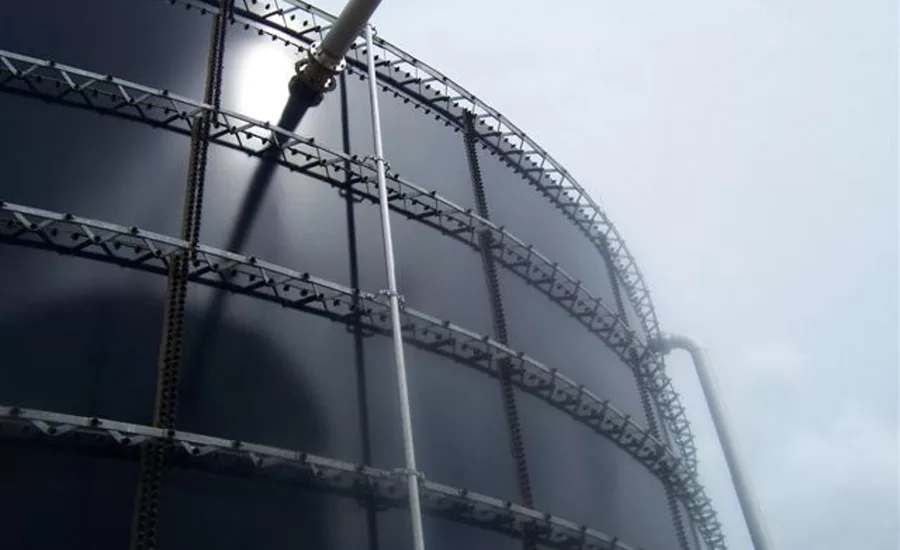
A focus on water conservation can help decrease the need for large wastewater treatment tanks such as this 750,000-gallon tank. Photo courtesy of Hixson Architecture & Engineering.
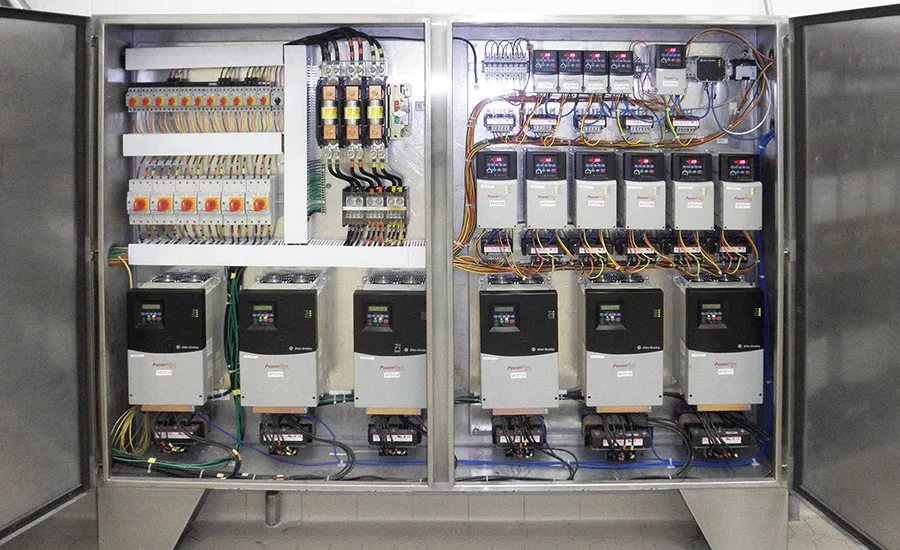
A variable frequency drive panel helps save energy by controlling the speed of such devices as fans and pumps. Photo courtesy of Koss Industrial Inc.
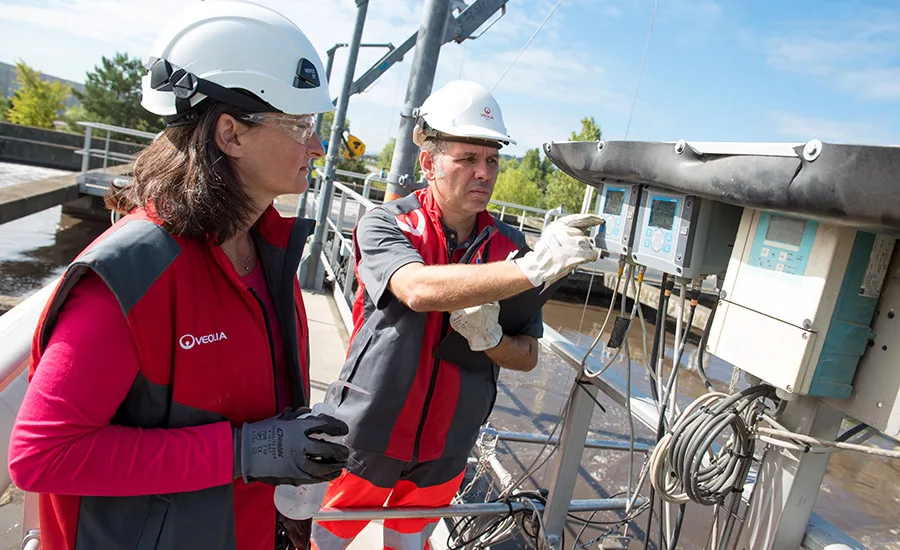
Reducing water and energy expenditures requires close monitoring of usage rates. Photo courtesy of Veolia Water Technologies.
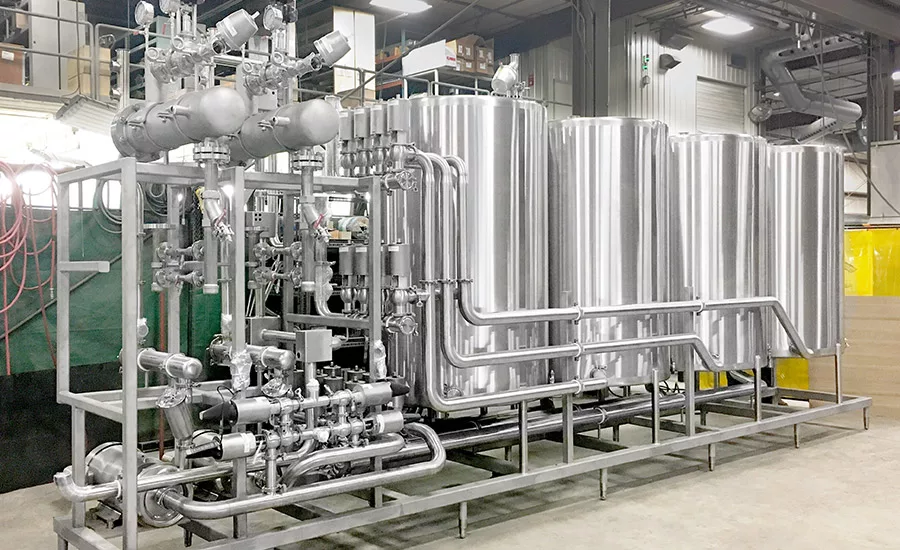
Clean-in-place systems are ripe structures for water-reduction efforts. Photo courtesy of Koss Industrial Inc.
Sustainability is becoming an increasingly important subject for dairy processors. With more operators seeking to “go green” to meet the growing eco-focus by consumers, retailers, and business partners, the ability to reduce wastewater and energy during production can cut costs while enhancing a company’s “eco halo.”
While there are ample ways for processors to streamline usage, little headway will occur without a commitment from corporate management, analysts say.
“Often, being comfortable with the status quo is the biggest obstacle to overcome,” says Pat Walsh, application development manager at Hach Co., a Loveland, Colo.-based supplier of analytical instruments, services, software, and reagents that test the quality of water and other fluids.
He notes that it takes buy-in from top management for a plant to operate optimally, and “there is a lot of low hanging fruit in this area.”
Indeed, a key factor in saving on wastewater and energy is “a mindset change,” states Brett Robison, strategic business leader, food and beverage, for Kurita America (formerly U.S. Water Services Inc.), a St. Michael, Minn.-based provider of water treatment equipment, technologies, chemistries, and engineering services. He notes that few operators are anxious to invest in wastewater equipment when they are focusing on production increases or productivity efficiency.
“The biggest obstacle is organizational will,” adds Kevin Milici, Kurita America executive vice president of marketing and technology. “It has to come from the top. The challenge is to decide to do or not to do.”
Yet, focusing on water and energy reduction not only can reduce operating expenses, but also can demonstrate a company’s devotion to sustainability, he states, noting that “being green is good business.”
Closely observe operations
Pinpointing the baseline water and energy activity in a plant is an important early step for cutting waste, says Ryan Hertel, channel manager – food separations, for Trevose, Pa.-based Suez Water Technologies & Solutions. “By understanding where and how energy is being used, plants can incrementally audit the processes and focus their technology and maintenance teams most accurately for the quickest return on energy investment,” he says.
Metering devices can help prevent processors from overusing water when pasteurizing, says Steve Swanson, lead electrical and controls technician for Koss Industrial Inc., a Green Bay, Wis.-based designer, and manufacturer of stainless steel processing equipment. In addition, the use of conductivity sensors to monitor the amount of cleaning solution and product in the water during the clean-in-place (CIP) process may also result in lower expenses. He notes that with such sensors, operators can better determine optimal operating times, as well as when to switch valves so the flow can go to a high-strength holding tank for treatment or a normal waste stream.
Installing flow meters on the pipes that send wastewater to municipalities will further enable processors to gauge wastewater use, says Joe Weisgerber, manager, environmental health and safety for Cincinnati-based Hixson Architecture & Engineering.
“Careful study of the data will let you know when abnormal operations are causing higher than expected wastewater flows,” he says.
An optical sensor in the wastewater, meanwhile, can detect milk losses and quickly alert the wastewater operator to spills, leaks, or poor adherence to operating procedures, Weisgerber says.
“Once monitoring is in place, new ideas for utility reductions can be tested with a direct, measurable outcome,” he adds. “Your instrumentation will let you know if the idea did not work.”
Indeed, easily rectifiable energy losses will persist and inflate waste treatment utility expenses if operators do not have the data that reveals plant inefficacies, Hertel says.
“Energy monitoring, benchmarking between the shifts and lines, and large displays showing the actual status often help to reduce energy as people start to think about improvements,” states Holger Schmidt, head industry segment manager, food and beverage for Baumer Electric AG, a Frauenfeld, Switzerland-based provider of sensor technology, encoders, measuring instruments and components for automated image processing.
Savings can be substantial
By closely analyzing wastewater activity, processors also will be in a position to implement more effective treatment methodologies, analysts note.
Because dairy wastewater typically contains significant amounts of fats, oils, grease, and dissolved organics, treatment is usually necessary before discharging the liquids to the environment or a publicly owned treatment works, says Timur Dunaev, technical manager for Veolia Water Technologies, a Saint-Maurice, France-based designer and provider of water and wastewater treatment plants and water treatment equipment.
“Many dairies spend a large amount of operating expenses to ensure their wastewater is treated appropriately,” he says, noting that it is valuable for processors to perform site audits and engineering studies to better understand the costs and identify how to best implement changes or install new technologies that can bring down the overall lifecycle costs of the wastewater treatment plant.
Walsh says that reducing the amount of wastewater going to a treatment plant from production saves on chemical usage, energy, treatment costs, sludge removal, and possibly fines and surcharges when discharging to a municipal treatment facility.
“There is a lot of unnecessary treatment of process wastewater, improper dosing of chemicals, and wasted energy usage, especially with regards to improper use of aeration systems within the waste treatment portion of the plant,” he says.
Processors, meanwhile, will benefit from implementing anaerobic wastewater treatment, says Barry Reicker, food, and beverage vertical market manager for Evoqua Water Technologies LLC, a Pittsburgh-based provider of water and wastewater treatment solutions. Anaerobic is a type of biological treatment in which anaerobic microorganisms, in the absence of oxygen, are used to break down and remove organic contaminants from wastewater prior to discharge.
Reicker notes that “there are aerobic systems in place where there should be anaerobic systems,” as aerobic uses more energy and produces sludge, which requires dewatering and hauling. He says that it is not unusual for companies to save more than $1 million annually by leveraging anaerobic technologies, which can have just a two- to three-year payback.
Yet it can be taxing for dairy processors to adopt newer wastewater technologies, particularly if they are not versed in biological wastewater or anaerobic treatment, Reicker says.
Indeed, while Dunaev says that biological processes such as anaerobic digestion can enable processors to transform wastewater into renewable green energy, Reicker states that “you have to get them comfortable to change.”
He notes, however, that adopting new procedures and technologies can be difficult, as what is reasonable in one facility “may not make sense in another plant of the same size because of such factors as existing equipment or the footprint available for equipment. Cookie-cutter standard products do not exist in the wastewater world.”
Declare war on waste
Processors could realize further production savings by using the proper pumps for their specific operating conditions, says Ben VanKauwenberg, Koss mechanical engineering manager. A pump that is too small for an application will run above standard operating speed, which can cause overheating and premature failure, he says. Conversely, a pump that is too large will incur greater purchase and operating costs.
“If the pump is incorrectly sized for duty, operating costs can quickly outpace the initial cost,” VanKauwenberg states.
Adam Koss, Koss mechanical engineer, agrees, noting that “upfront costs to improve energy and water use are nothing compared to the long-term waste when these upgrades are not made or become emergency situations.”
Leaky and cracked pipes, faulty valves, and bad seals and connections also can squander water, Swanson adds, while inappropriate employee behavior will further increase costs. He says, for instance, that a Koss staffer observed a worker at a plant “chasing a cheese curd around a plant floor with a hose for half an hour to get it in the drain when that person could have picked it up, thrown it out and not loaded all that water into the waste stream.”
Effective insulation of pipes and tanks, meanwhile, will reduce energy loss, Schmidt states, adding that processors should also focus on the effectiveness of their heating system, CIP system, and cleaning regime, along with the impermeability of their compressed air system.
In addition, the use of single-tank CIP skids that do not incorporate recovery of the final rinse water for use as a first-push water also can result in waste, says Warren Green, Hixson vice president, and manager, process engineering. First-push water rinses the piping and equipment of bulk food prior to the start of the first caustic cleaning cycle. The final rinse cycle of the CIP program uses relatively clean water and will typically contain a sanitizing agent, making the final rinse water well suited for re-use as the first-push water, he says.
A plethora of possibilities
Processors also will benefit by seeking guidance from their local original equipment manufacturer (OEMs) when seeking to reduce wastewater or energy use, says Christopher Orgon, technical sales engineer with Synder Filtration, a Vacaville, Calif.-based nanofiltration, ultrafiltration, and microfiltration membrane manufacturer specializing in sanitary and industrial applications.
“The OEM would be able to assist in either getting a new process designed or to set up some feasibility tests,” he says. “By reusing wastewater from intermediate steps, you can reduce the amount of wastewater down the line and increase percent yield.”
As part of their effort to achieve savings, processors should concentrate on stripping as many British thermal units (BTUs) as possible out of water before release, says Tim Daniels, corporate account manager, food and beverage, for Chem-Aqua Inc., an Irving, Texas-based designer of water treatment programs. A BTU is the amount of heat required to raise the temperature of one pound of water by one degree Fahrenheit.
“It takes an incredible amount of energy to create a single BTU, and once they have been created, we should do everything we can to maximize their use,” he says. “Whether it’s using the hot or ever warm water in a different process or simply running the hot water through a heat exchanger, there is an opportunity to save energy anytime water is being sent to drain.”
The use of ultraviolet (UV) systems as an alternative to heat-based pasteurizing for water will further reduce energy use and provide operational flexibility, as water treated by UV is available on-demand with no need to wait for temperature elevation, says Ytzhak Rozenberg, chief technology officer for Atlantium Technologies Ltd., an Israel-based provider of UV water treatment technologies. He notes that the UV technology uses less energy, or kilowatt hours, than traditional heat-based pasteurizers.
Daniels adds that the biggest challenge in implementing conservation initiatives “is either the capital expenditure, space within the plant, or both,” but notes, “that shouldn’t stop a plant from getting creative in order to save energy.”
Looking for a reprint of this article?
From high-res PDFs to custom plaques, order your copy today!


.webp?height=200&t=1673539888&width=200 "Tillamook (4).jpg")