Do your homework when selecting pumps and valves
The right pumps and valves can generate powerful paybacks for dairy processors.
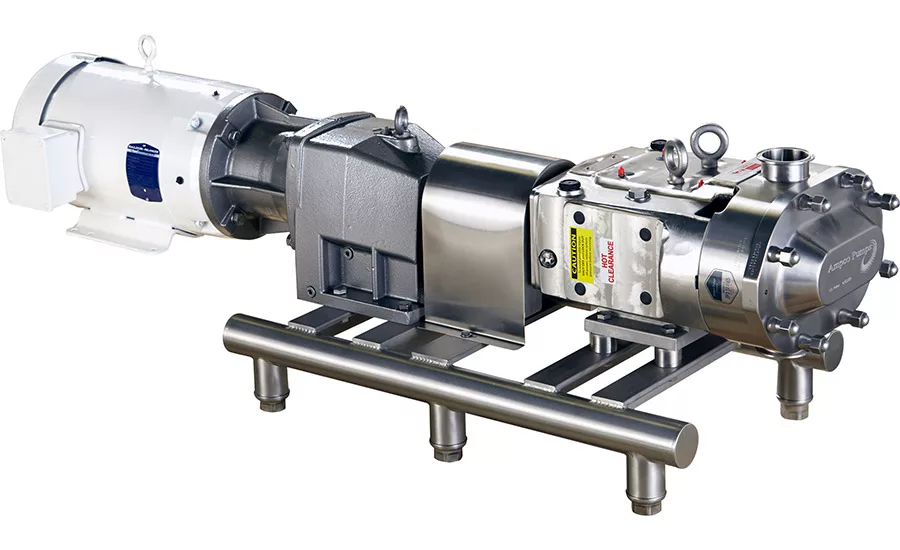
Pumps and valves can be a dairy processor’s secret weapon for maximizing plant efficiencies and producing superior products. Being able to move liquids swiftly and safely through piping can reduce operating expenses while enhancing food quality. Yet pinpointing and incorporating the most effective equipment designs can be baffling.
“Dairy products vary greatly, and processors must select equipment to meet specific application requirements, along with the needs and expectations of customers,” says Jim Brink, district sales manager for SPX Flow Inc., a Charlotte, N.C.-based pump and valve supplier.
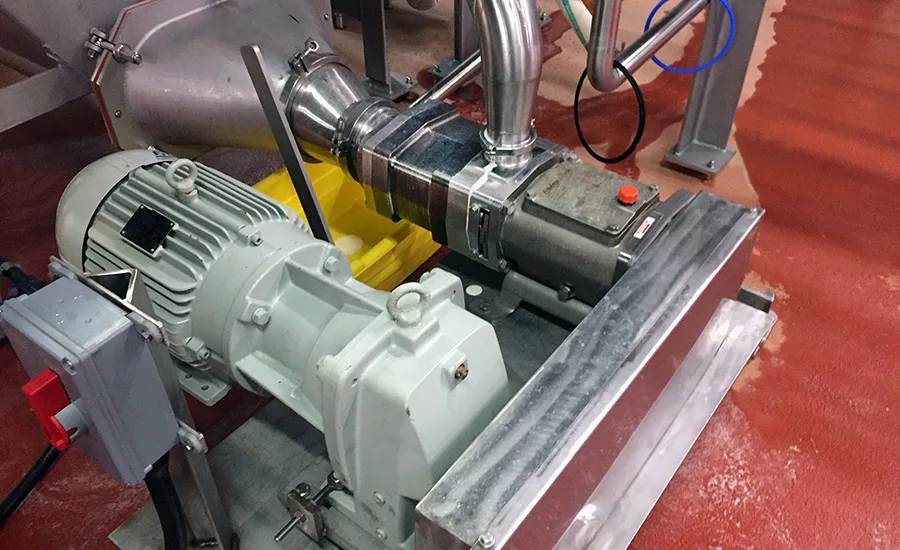
Prominent pump options include centrifugal devices, which typically are best suited for low-viscosity products, including thin fluids such as milk and clean-in-place (CIP) liquids. Also common are positive displacement (PD) pumps, which usually are best for higher-viscosity products such as yogurt, sour cream, cheeses and heavy creams that require gentle treatment.
The specific demands for producing particular dairy products also drive the selection of valves, which stop and direct the flow of liquids in the pipe system. Considerations might include the need for back pressure and smoothing or the need to meet regulatory requirements — for example, when valves must be pasteurized milk ordinance- (PMO-) compliant, says Ginny Mathis, project manager for Central States Industrial, a Springfield, Mo.-based pump and valve provider. The PMO is a set of minimum standards and requirements set by FDA for the production, processing and packaging of Grade A milk.
Equipment, meanwhile, is becoming more functional, says Kevin Trauth, vice president of engineering for Rodem Inc., a Cincinnati-based pump and valve developer. Processors, for instance, can streamline operations and apparatuses by leveraging twin-screw pumps that support both food processing and CIP duties, he says.
Twin-screw pumps operate over a wide speed range, enabling operators to pump products at a low speed and the CIP fluid at quicker levels, Trauth says.
“This pump flexibility saves space and money while giving end users the ability to decrease downtime for cleaning procedures,” he says. “Being able to change from very thin to very thick liquids with the same pump also reduces the number of pumps in the plant, which makes maintenance simpler.”
In addition, equipment designers are making it easier to clean pumps and access the hardware for modifications. Brink notes that processors can replace internal seals in centrifugal pumps simply by removing the casing and impeller, and that front-loading seals on PD pumps are enabling seal replacement on both shafts without having to remove the pump body from the gearcase or to disconnect the piping.
Greater value from valves
Evolving valve options also are helping to boost plant efficiencies. Mixproof valves, for instance, allow two products to flow through the valve at one time without risking cross contamination.
“It’s the perfect solution for large-scale manufacturing facilities that need to produce several products concurrently,” Trauth notes.
Newer valves that contain fewer parts, including gaskets, are enabling processors to enhance process safety and lessen maintenance demands as well, says Enrico Koeninger, sales director – strategic sales, for Rieger Flow Products LLC, a Kenosha, Wis.-based valve supplier.
“Every gap and groove in the equipment is a potential risk for contamination, as product residue could sit there,” he says. “Reducing the sealings in contact with products in mixproof valves lowers that threat.”
Koeninger adds that operators often can slice maintenance requirements by 50% when reducing gaskets.
More processors, meanwhile, are automating the monitoring of valves to reduce failures, says Marcus Traber, area sales manager for Burkert Fluid Control Systems, a Huntersville, N.C.-based supplier of valves and pumps that support measurement and control systems for liquids and gases.
“Operators cannot manually monitor valve cleanliness, as there are too many valves of different varieties that are mixed in with instruments, pumps and process piping,” he says.
He adds that automation also is enhancing preventative maintenance via cycle counting and by sounding alarms when systems do not achieve intended temperatures.
Indeed, the dairy industry’s digital transformation is providing processors with real-time data about valve status while supporting diagnostics, says Anne Sophie Kedad, director of marketing, fluid and pneumatic controls for Emerson Electric Co., a St. Louis-based valve supplier.
“A proactive rather than reactive strategy minimizes the risks associated with equipment failure, data loss and machine downtime,” she notes.
Give cleaning strong consideration
Processors will further benefit from using components that are easy to clean and can withstand the harshest washdowns, Kedad says.
Such pumps and valves are becoming increasingly prominent, with additional designs featuring a larger radius and tapered body. These designs drain and clean more effectively by eliminating corners in the product contact area and the creases that can trap liquids and cause contamination, says Matthew Bender, sales engineer for Dixon Sanitary, a Pewaukee, Wis.-based pump and valve supplier.
Hygienic improvements for CIP pumps include the incorporation of slots that make it simpler to sanitize behind the rotors, “which means dairy processors no longer need to remove rotors or the rotor housing to show U.S. Department of Agriculture inspectors that the equipment is clean,” says Eric Soderstrom, sales engineer for Kennesaw, Ga.-based Uni-Bloc Pump LLC.
Pump disassembly for cleaning, if necessary, is also becoming easier, adds Bob Garner, engineering manager with Glendale, Wis.-based Ampco Pumps Co. Indeed, he notes that processors should analyze cleanability and ease of maintenance when identifying the prime pumps for their operations.
Flow rates, temperatures, product viscosity and density, and system pressure are additional elements that operators need to consider to make wise purchasing decisions, Trauth says. He adds that regardless of components, it is vital that all equipment pieces “are compatible with one another and the process as a whole.”
Analyzing the properties of the food under production will further enhance pump selection, says Randy Verges, senior applications engineer for Middleton, Wis.-based Fristam Pumps USA.
“Processors may end up with undersized or oversized pumps if the estimates of product viscosities are not accurate,” he says.
Soderstrom adds that it is important for processors to identify the equipment’s potential impact on product integrity.
“Some dairy products require gentle transfer or they become whipped, thereby changing the food characteristics,” he says, noting that the wrong pump can shear solid products such as cheeses curds “or break them apart into smaller undesirable pieces.”
To maintain product quality, “it is often better to get a larger pump and run it slower to hit target flowrates than to get a small pump and run it fast, and that is especially true for shear-sensitive and high-viscosity items,” Soderstrom says.
You get what you pay for
While equipment prices might deter some processors from leveraging the most effective pumps and valves, Trauth says that analyzing the long-term payback could reveal a strong cost-benefit ratio. Indeed, he notes that operators should study the total price of ownership when evaluating selections, as newer options often have higher upfront expenses but deliver longer-lasting advantages.
“Companies are generally able to recognize a rapid return on investment when they consider the efficiency gains that more flexible products add to their processes,” Trauth says, which can include greater throughput, more effective cleaning and less maintenance time and fewer related expenditures.
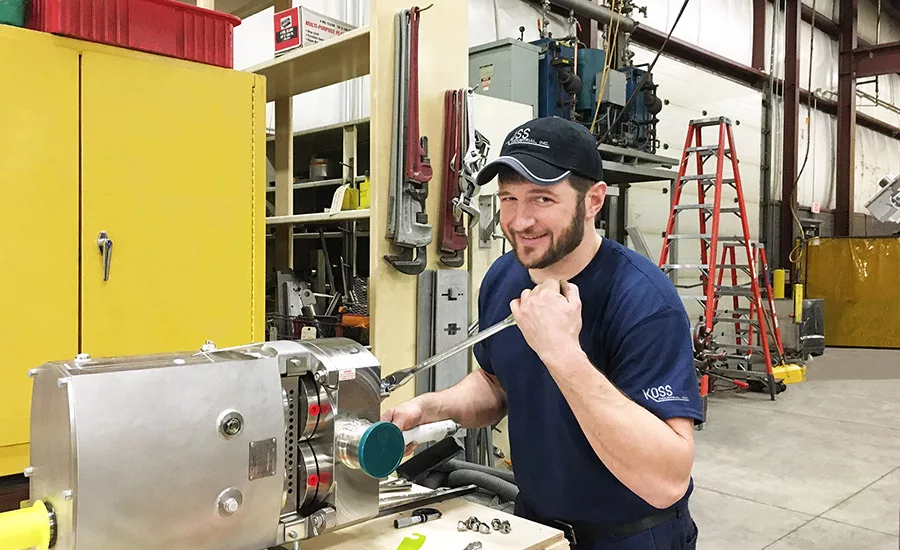
“A premium, efficient pump that helps save on power costs or a valve that better ensures product quality and safety by letting operators know it is time for a seal change can offer long-term savings that far outweigh the higher initial purchase prices,” adds Adam Koss, a mechanical engineer with Koss Industrial Inc., a Green Bay, Wis.-based pump and valve manufacturer.
He notes that proper seal selection for pumps and valves also can reduce expenses by slicing servicing frequency. An ethylene propylene diene monomer rubber seal, for instance, will better withstand the harshness of CIP cleaning chemicals than a nitrile rubber seal, Koss says.
“All applications have their unique challenges, and processors should not base valve selection solely on basic design or cost,” says Trent Arnold, SPX Flow technical product manager – valves.
Indeed, Mathis notes that processors who focus on unit cost “risk getting locked in” with equipment that meets only the minimum operating requirements.
“When you take more than the initial equipment expense into account and consider savings in downtime, inventory costs and production losses, while reducing overhead and inefficiencies, the true value of pumps and valves becomes clear,” she says.
Seek assistance from select suppliers
Leveraging the most relevant equipment also is a function of staying current with industry standards, Bender says. Processors, for instance, should follow the guidelines set by 3-A Sanitary Standards Inc., the not-for-profit organization that devises hygiene design specifications for manufacturing equipment in the food, beverage and pharmaceutical industries.
“Standards are always changing,” he says, “and resulting in better designs and efficiency improvements.”
An industrywide shortage of skilled field technicians is contributing to slower adoption of newer and more effective pumps and valves, Trauth says.
“There often is either a lack of understanding regarding how the equipment should be functioning or a lack of resources within the plant to identify and make the changes,” he says.
Equipment suppliers are valuable resources for guiding processors to the most effective pumps and valves for their specific circumstances, Brink says, noting that the vendors can assist with model selection, configuration and feature choices.
It also is prudent for processors to partner with equipment distributors that understand the diverse needs for producing different dairy products, Mathis says. Such vendors, she notes, can identify sanitation demands, process piping challenges and product and recipe requirements.
Adds Soderstrom: “Having open and clear communication with the supplier is often the best way to avoid simple, yet costly mistakes.”
It is crucial, however, that processors consider the suppliers’ availability when they have a question or need support and identify the firms that are likely to commit to a strong partnership when making purchase decisions, he says.
“Any number of companies can sell as pump or valve, but not everyone understands the impact of the equipment on overall production efficiency and potential repercussions that the wrong pump or valve may have downstream,” Trauth says.
Monitoring the newer technologies, even if there are no plans to alter existing installations, should be another processor priority, Brink notes.
“Otherwise, the operators may be missing out on considerable processing improvements and cost savings,” he says. “It is important that processors learn how step-by-step manufacturing upgrades can improve product development and safety.”
Looking for a reprint of this article?
From high-res PDFs to custom plaques, order your copy today!


.webp?height=200&t=1710441521&width=200 "rotary valve")