Regular maintenance keeps heat exchangers running
Dairy processors could avoid costly downtime with regular and long-term maintenance plans for their heat exchangers
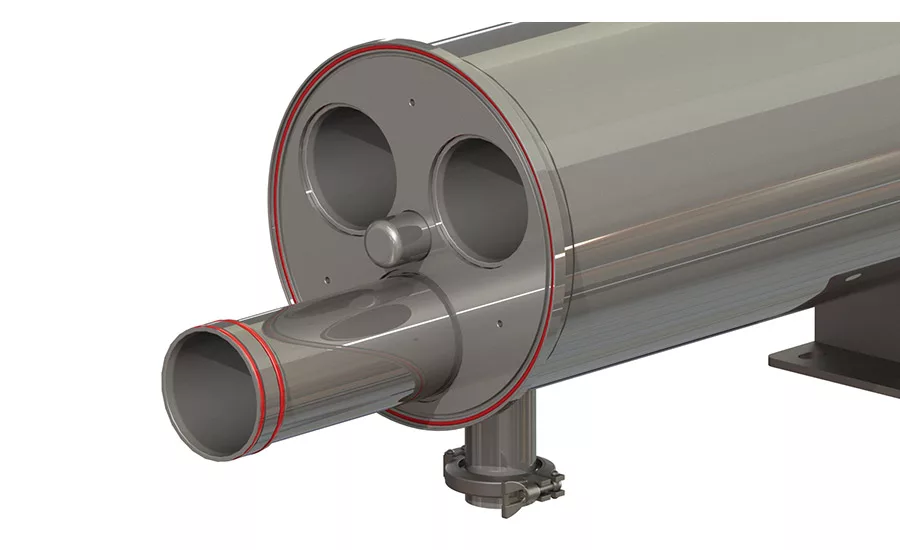
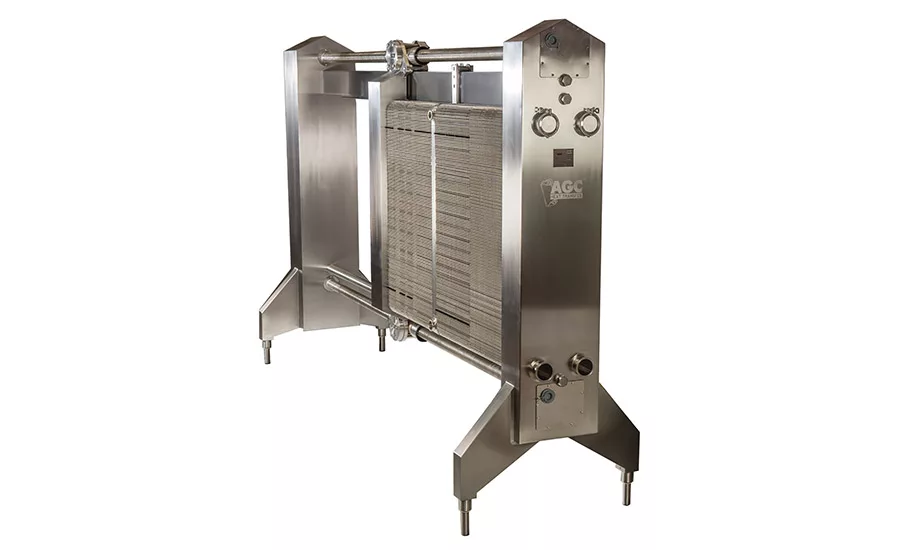
Blown gaskets. Misaligned plates. Burn-on. Heat exchangers, which transfer heat between liquids, are crucial to the processing operations of dairy plants, but can also cause a world of headaches if not maintained correctly.
By keeping maintenance in mind when choosing a heat exchanger — and following through with a plan to care for the equipment — processors could avoid downtime issues and replacement costs.
Cost of ownership
Dealing with broken heat exchangers can cause costly downtime. That’s why it’s important to consider the total cost of ownership — including maintenance time and expenses — from the get-go when purchasing a heat exchanger, said Erica Perez, sales and marketing coordinator, AGC Heat Transfer Inc., Bristow, Va.
Bruce Hanke, North American aftermarket sales manager, SPX Flow Inc., Charlotte, N.C., agreed. He said that certain models of heat exchangers lend themselves to faster clean-in-place (CIP) processes and easier maintenance.
“Plant uptime is a prime consideration for dairy producers, so selecting heat exchanger units that are easily inspected, cleaned and repaired is vital to minimizing any downtime, maximizing productivity and ensuring equipment cleanliness,” he added. “Designs which offer improved sanitary performance and ease of cleaning will help to reduce downtime.”
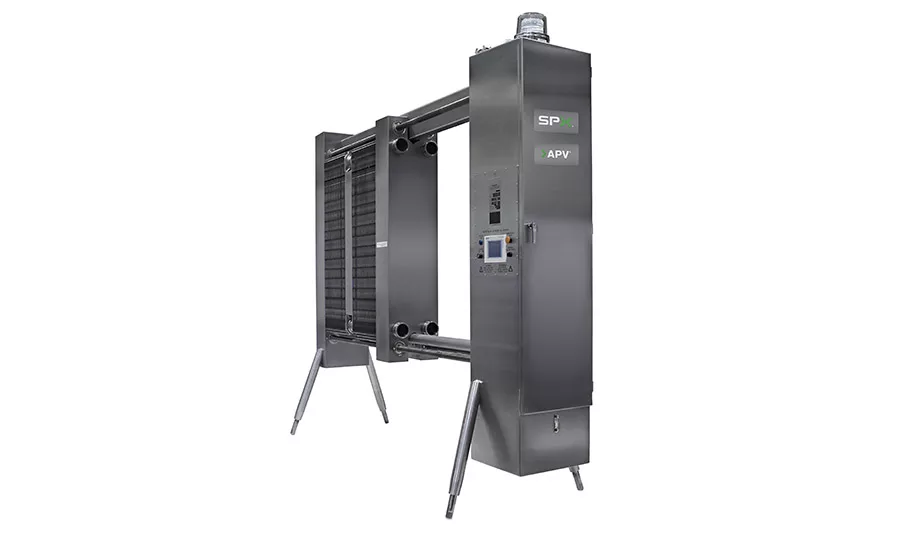
For example, hydraulic plate heat exchangers may seem much more expensive upfront, Perez said, but they also result in less downtime because they open and close faster and present less risk of injury to personnel. So processors should keep health and safety in mind as additional costs beyond the initial price tag.
“Although [hydraulic heat exchangers] have a slightly higher initial cost than standard plate units, they promote accurate, repeatable opening/closing operations,” Hanke said. “Manual units are more labor-intensive and can be susceptible to misalignment and over-compression. This can cause considerable damage, lost production time and, in some situations, even a costly product recall due to a failed CIP process.”
Another factor to consider when making an initial heat exchanger purchase is the availability of service parts and repair centers, said Hanke. While most companies stock common parts such as gaskets, others aren’t as widely available or can take a long time to ship to the plant.
Have a plan
After purchasing a heat exchanger, dairy processors should be thinking about short- and long-term maintenance of the equipment. Preventive care done daily or weekly will help processors avoid some costly repairs, while quarterly and yearly processes may help processors see if any parts are worn or need replacement.
“It is much easier — and less expensive — to conduct preventative maintenance than it is to repair damage that has been done and could have been avoided. This is probably one of the most difficult lessons for companies to learn,” said David M. Miles, executive vice president with MicroThermics Inc., Raleigh, N.C.
According to Cameron Creech, general manager, HRS Heat Exchangers USA, Marietta, Ga., companies should have a standard practice in place for CIP cleaning on a regular basis. It will vary by company, but no more than two to three days should pass without a full CIP process.
“And that’s pushing it; most plants are far less than that,” he added. “Some use two full CIP processes in a day.”
Along with regular cleanings, companies should use monitoring systems to check for abnormalities, said Lor Vang, sales engineer for West Bend, Wis.-based Pick Heaters Inc. This includes routine monitoring of process conditions such as flow rates, pressures and temperatures during normal operation of the equipment.
“If abnormal readings are seen, this is an indicator something may have changed in the process requiring immediate attention,” he said.
Tetra Pak, Lausanne, Switzerland, created a monitoring technology called the Integrity Tester that helps processors identify leakage issues in heat exchangers. Holes as small as 1 micrometer be detected in a 0.6-millimeter plate.
“For heat exchangers, internal and external leaking are the most common issues to cause product contamination and loss,” said Ping Zhao, cluster product manager, Tetra Pak. “With integrity testing, not only is actual leaking detected, but potential leaks are noted, allowing the manufacturer to plan their service in a more effective way.”
Long-term perspective
Beyond short-term maintenance steps, Creech said that processors should have time set aside on a quarterly or yearly basis to inspect their heat exchangers. This will allow companies to be proactive in finding a problem before it becomes a much larger one. He once saw the consequences of a plant not checking on the status of its equipment: The scrapers of its heat exchangers had stopped moving, which led to even more issues.
“Enough of the product froze to inner tube of the exchanger that when they turned scrapers back on, there was buildup that had caused damage,” he said. “If that happens during regular production, there’s a chance it’s not reported or seen as a big issue.”
John Coppieters, service manager, AGC Heat Transfer, said he follows the motto “seeing is believing” when it comes to maintenance of heat exchangers: Companies need to set time aside to audit the status of their equipment. He recommends they do this every three to four months.
“If processors or plants are not opening their plate heat exchangers, they really have no idea what the condition of the plates and the gasket [are] and their CIP response is,” Coppieters said. “Many times we open [the heat exchanger] up and we find that their CIP process is very, very poor. They’re not cleaning plates properly, and leaving behind a lot of burn-on and product residue.”
To help companies with maintenance, AGC Heat Transfer offers a plate check service where Coppieters and his team of technicians will come in person to dye-check the units by hooking them up to food-grade dye and checking for pinhole leaks and plates, Perez said.
Common mistakes
Heat exchanger maintenance missteps can exacerbate problems and lead to even more costly repairs. Miles said the most common mistakes he sees relate to companies’ CIP processes; for example, running at too low of a flow rate, not using appropriate temperatures, or skipping or shortening steps.
“When this is done repeatedly, it results in loss of performance of the processor and can cause problems in other equipment components,” Miles said.
He added that processors should make sure to use the appropriate cleaning reagents for whatever product they are producing. They should also make sure to rotate the cleaners to see if the reagents are leaving any deposit behind.
Creech said the biggest issue he sees is customers not replacing parts as often as specified. Processors should replace parts in the recommended time frame, not wait until they fail to buy new ones. For example, in heat exchangers with scrapers, if the scrapers aren’t replaced frequently enough, they wear down and lose their ability to scrape (which is a self-cleaning action).
“Product will start to burn on or freeze on to the inside tube of exchanger, which can lead to serious issues like loss of heat transfer,” he said.
Not replacing seals in time is another problem, he added, as it may lead to some pieces of a seal being sharper than others. This may cause leaking, and it could damage the metal shaft that’s driving the scraping motion.
“That bar can wear out and that leads to less life next time you change the seal,” Creech said. “It’s an issue that leads to more issues.”
Coppieters said the biggest mistakes companies make relate to plate and gasket installation.
“A lot of times, we’ll find plant personnel who have to open a heat exchanger due to a blown gasket,” he added. “They have good intentions, but end up making matters worse when they try to fix it. If they get plates out of sequence, it ends up causing more problems in the long run.”
AGC Heat Transfer thinks more education can help solve this problem. That’s why it offers a Plate Heat Exchanger (PHE) 101 training course, Perez said. The program helps plant staff learn about the inner workings of exchangers; it is offered at the company’s sales offices in Bristow, Va.;, Portland, Ore.; and Pleasant Prairie, Wis. The company will also come in person to a plant to lead a training.
“Our course goes over identifying a plate, how to read a drawing a plate-streaming diagram, some basic PHE knowledge that will prevent personnel from installing plates incorrectly once they’ve opened it, etc.,” she said.
Coppieters is one of the people who teaches the PHE 101 course. And for him, it’s personal. When he comes in to lead the class, he always thanks the host company’s employees for the opportunity to come in and train them.
“Even though I work for AGC Heat Transfer, I am a consumer and my family is,” he said. “I love a company that is trying to be proactive and teach their employees and their personnel to keep the products safe. That product is going out the door to millions of people, and I love knowing the products that are sitting in my refrigerator are coming from plants that are taking the best steps to put out a quality product.”
Looking for a reprint of this article?
From high-res PDFs to custom plaques, order your copy today!