Building texture into sugar-reduced products
Sugar slashers take note: building back sweetness is only half the equation. You have to tend to texture, too, to deliver a sensory experience.
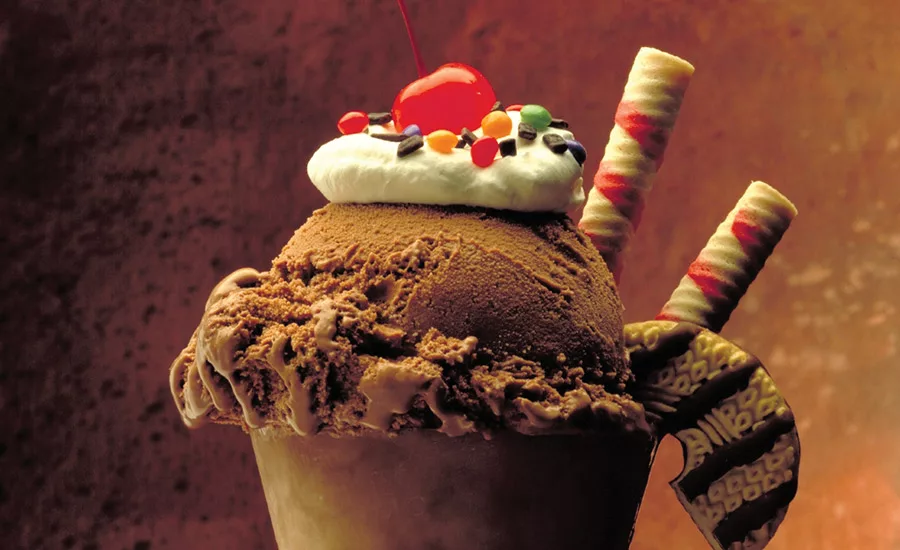
Locust bean and guar gums minimize ice-crystal size in reducedsugar ice creams. And carrageenan’s synergistic reaction with milk proteins gives high viscosity at low shear to provide a mouth coating that mimics milkfat, says Cargill’s Joe Klemaszewski.
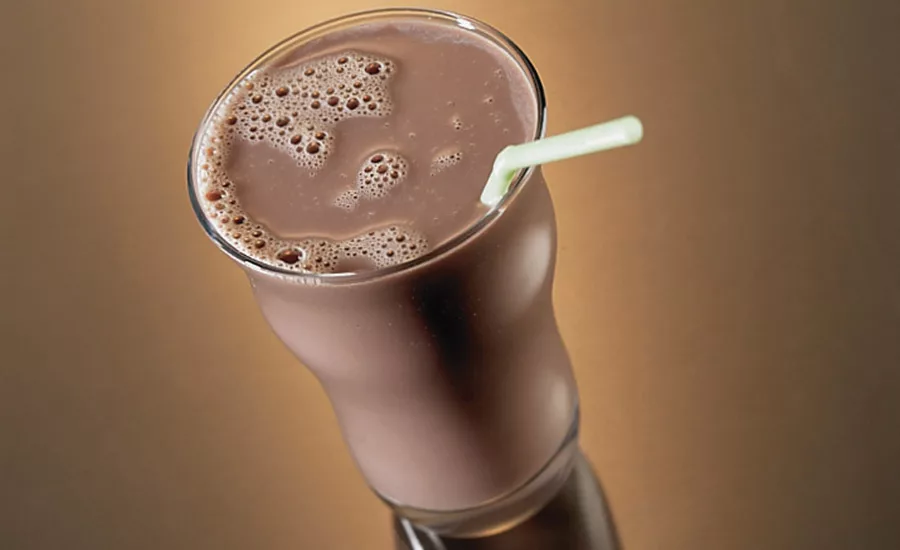
Sediment in chocolate milk is a manifestation of texture gone awry. Each dairy category has unique challenges to delivering the textural attributes formulators are looking for, says Donna Klockeman of TIC Gums.
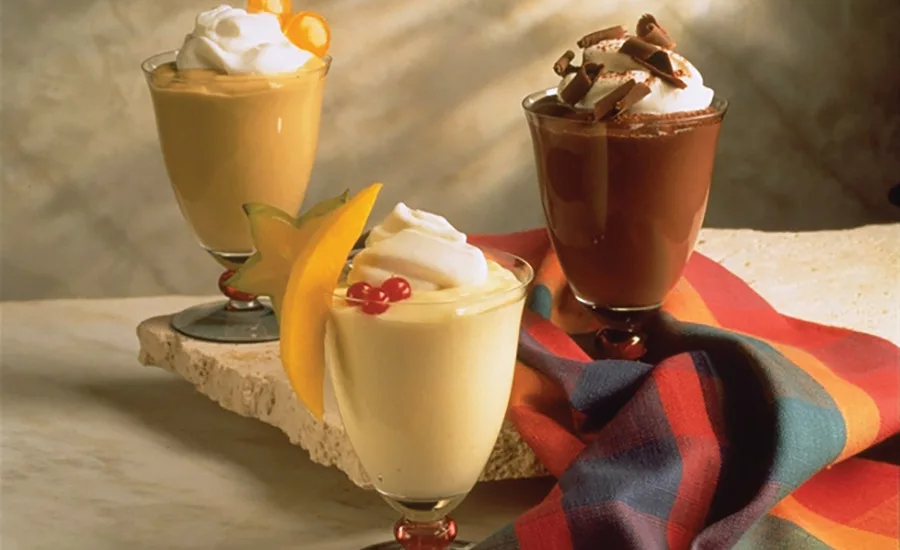
When dairy formulators cut sugar, there is an effect on texture.They need to tend to texture to deliver the desired sensory experience, says a scientist at Cargill.
When yogurt manufacturers reduced sugar levels, there was a direct impact on flavor profile and important textural attributes such as mouth coating, says Donna Klockeman of TIC Gums. Hydrocolloids can provide texture and stability in lieu of sugar in yogurt applications. All photos courtesy of Cargill
"New year, new you,” right? How about “New year, new dairy formulation”? As we settle into 2017, one thing that isn’t changing — amidst a whole lot that is — is the public’s not-so-subtle request that food processors substantively change the formulations of their favorite foods and beverages, dairy included.
The change they currently request above all others is sugar reduction. Market research firm Mintel found fully 70% of Americans professing concern over how sugar affects their general health. In its May 2015 “Sugars and Alternative Sweeteners Report,” Mintel found that 36% of consumers now scrutinize the sweetener levels in their ice cream choices, while 35% do the same when evaluating yogurts.
No wonder then that the number of new dairy products with “low-/reduced-sugar” claims has risen steadily from 65 in 2011 to 156 in 2015, per Mintel’s count. Indeed, with the Food and Drug Administration’s updated sugar-labeling regulations requiring the disclosure of “added sugars” (in grams and as a percent Daily Value) on product labels in 2018, those low-sugar launches now look prescient.
But when slashing sugar levels, dairy formulators aren’t just tweaking taste; they’re playing with an important textural determinant, as well. So sugar slashers take note: Building back sugar’s sweetness is only half the equation. As Wade Schmelzer, principal scientist at Wayzata, Minn.-based Cargill put it, you’ve got to tend to texture, too, “to deliver the desired sensory experience.”
Texture is hard
Somewhat paradoxically, despite our living in a food-obsessed age, when gastro-bloggers deconstruct every facet of the eating experience for social-media consumption, texture remains an unsung sensory modality — often as hard to describe as it is easy to overlook. But dairy developers overlook it at their peril.
That’s because “texture can greatly influence the consumer’s sensory experience, and can result in an unfavorable perception if not managed accordingly,” said Donna Klockeman, senior principal food scientist at TIC Gums of White Marsh, Md.
Whether it is syneresis in yogurt, sediment in chocolate milk or chunky crystals in ice cream, all are real-world manifestations of texture gone awry, and all reinforce Klockeman’s contention that “each dairy category has unique challenges to delivering the textural attributes formulators are looking for.”
In other words, optimizing dairy texture is hard.
Making it harder are the exigencies of modern dairy production itself. As Cargill’s Senior Technical Services Manager Joe Klemaszewski pointed out, “Dairy products were traditionally produced near the point of consumption because of transportation costs and short shelf lives.”
But with consolidation of dairy farms and plants, not to mention advances in processing, packaging and distribution, that’s no longer the case. Dairy’s map has broadened. The upshot, said Klemaszewski, is that dairy processors face the task of maintaining an acceptable texture for a longer time.
Sugar’s textural touch
Cutting sugar from formulations doesn’t make that task any easier. The reason: all sugars and sugar polymers that associate with water — from glucose and sucrose to fibers, bulking agents and hydrocolloids — have an important impact on texture, Klockeman said. Through their contributions to moisture control, mouthfeel, freezing-point depression and more — even through mere bulk — sugars and related carbohydrates prove just as important in dairy for texture as they do for sweetness.
Thus, product developers “need to take a systems approach to compensating for the missing sugar” in low-sugar reformulations, said Nesha Zalesny, the technical sales manager at Fiberstar, River Falls, Wis. Replacing sugar at 12% with a high-intensity sweetener at 1% not only opens up an 11-percentage-point gap in a mix’s bulk, but also it eliminates sugar’s functionality. Zalesny noted, “this results in a watery product.”
Sugar’s textural touch — and the void left in its absence — are especially apparent in frozen dairy. Because simple sugars like glucose and fructose, disaccharides like sucrose and lactose and large carbohydrate polymers — think maltodextrins — have “a significant effect on the freezing point of the application,” Klockeman said, they also “have the largest impact on frozen dairy products,” helping to keep their eating texture palatable.
In so doing, they improve the flavor profile, as well.
“Texture encompasses a product’s melting characteristics, which directly affect flavor delivery. So a reduction or change in the amount of sugar will not only influence texture, but will also influence the perception of flavor components at eating temperature,” Klockeman said.
Hydrocolloids to the rescue
Given all the above, Adams Berzins couldn’t have said it better when he declared that reductions in nutritive sweetener levels “often require adjustment of the existing stabilizer system or the addition of hydrocolloids.” Berzins wrote that in an August 2016 white paper for Bridgewater, N.J.-based Ingredion, where he is the sweetener solutions technical service project leader.
That certainly echoes the conclusions of Ross White, nutrition applications manager for FMC Health and Nutrition, Philadelphia, who noted that hydrocolloids’ ability to influence texture is much the same as sugar’s; that is, just as sugar binds formulation water to boost viscosity and mouthfeel, so do hydrocolloids. As such, “a proper use of hydrocolloids can be implemented to replace a significant amount of the viscosity and mouthfeel lost when sugar is removed.”
Consider what hydrocolloids bring to fermented dairy.
“Several yogurt manufacturers have recently reduced sugar levels in their products,” Klockeman noted, and this “has had a direct impact on flavor profile and important textural attributes such as mouth coating, mouth clearing and mixes with saliva.” Hydrocolloids like cellulose gum, inulin and gum acacia all help pick up the slack and can provide texture and stability in lieu of sugar in yogurt applications.
In frozen dairy, polyols, maltodextrin and soluble fibers are go-to ingredients for increasing process viscosity and slowing ice-cream melt, and “are necessary to provide the softness and scoopability consumers expect,” Klemaszewski said. But “the challenge is often greater in reduced-sugar products as manufacturers replace sugar with water.”
Managing that water is key to emphasizing the cream and not the ice in product texture, and his team has done just that with very low levels of a pectin- and agar-based functional system. “In theory, we could do the same thing with low-sugar carbohydrates like maltodextrin or inulin,” he noted.
Klemaszewski added that both locust bean and guar gums also earn praise for minimizing ice-crystal size in reduced-sugar ice creams. And carrageenan’s “synergistic reaction with milk proteins gives high viscosity at low shear, providing a mouth coating that mimics milkfat,” he added.
Carrageenan is a staple of dairy beverage formulation, where one of the greatest challenges to sugar reduction involves maintaining a fluid consistency and eliminating the risks of gelation that can occur when a higher water content is available, White noted.
“Carrageenan can form a wide range of textures in water-based systems to impart a smooth mouthfeel and manage the excess water present when sugar solids are removed. In particular, iota carrageenan can form clear, glossy gels that reform after processing, resulting in unmatched suspension,” White explained.
The hydrocolloid works by tightly binding formulation proteins. In a low-sugar pudding, for instance, exposed proteins on the surface of the dairy micelle will interact with carrageenan’s sulfated groups “to create this strong milk gel and successfully replace the removed sugars in this and similar dairy products,” White said.
Even better, only a very small amount — about 0.2% — suffices to do the trick.
Know your limits
Not all dairy formulators choose to deploy standard hydrocolloids in their low-sugar reformulations, however, and for them, alternative texturizers come in the form of products like one that Zalesny described as a complex of pectin, cellulose and hemicellulose citrus fibers “organized together in a way that only Nature can create inside the plant cell walls.”
Because the ingredient comprises both an insoluble portion with a high surface area and a partially soluble colloidal portion, “in each particle, it creates a microcosm of a full- and short-bodied texture,” Zalesny explained, “while avoiding the long texture characteristic of high-molecular-weight texturants.” Blended with water, it produces viscosity and enough bulk that “the molecule itself can create drag across the tongue similar to sugar,” she said.
The ingredient can appear on labels as citrus fiber, dried citrus pulp or citrus flour, all of which “resonate well in the clean-label market,” said Kurt Villwock, Fiberstar’s director of R&D. And that’s no small matter in today’s transparency-minded climate.
“Although many texturants come from natural sources and can even be used without chemical functionalization, there are only a few that perform without purification of the key component. Even amongst these natural options, many texturants cannot be called clean simply because of negative consumer perception,” he said.
The trick, experts say, is to know your destination — both from a labeling standpoint and, especially, from a textural one — before you start formulating. Paulo H. Santos, a senior associate in hydrocolloid systems at Ingredion, noted that “Rheology (the study of the deformation and flow of materials) and tribology (the study of lubrication and friction) can be useful tools” in reaching that destination to all parties’ satisfaction.
White agreed. “If viscosity is the key parameter, then a discussion regarding the product expectations when measured at a specific temperature, shear rate and equipment often help speed up development time and ensure a successful recommendation,” he said.
Ultimately, he concluded, the most common challenge his team faces when helping customers optimize texture in reduced-sugar formulations is meeting expectations.
“It’s not enough for a customer simply to ask for a match to the sugar-based control,” he said. Scientists from both sides have to know where they’re going, and measure how close they are to getting there.
Looking for a reprint of this article?
From high-res PDFs to custom plaques, order your copy today!