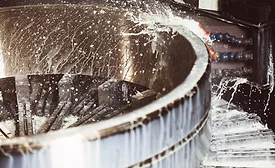
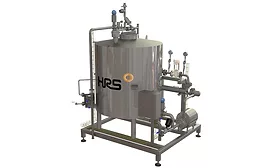
When specifying or designing dairy processing equipment, the first criterion is functionality for its purpose. But it is critical to remember that functionality includes cleaning and sanitizing. It is commonly thought that cleaning and sanitizing is the last step in the process, but it is not — it’s the first step.
Nashville, Tenn., is known as “Music City.” But another Nashville — one situated in the state of Michigan — could be referred to as “Ice Cream City.” After all, Moo-Ville Creamery produces 60 flavors of the cold, creamy treat in this tiny village of just over 1,600 residents.
On May 30, 2021, meat processor giant JBS USA determined that it was the target of an organized cybersecurity attack, which impacted some of the servers supporting its North American and Australian IT systems.
Opportunities are knocking in our industry today, and thus, our organizations are fraught with “challenges,” given the social, scientific, and geopolitical environments in which we coexist.
It has been quite a year for the dairy industry. Its challenges are many — from ongoing labor and supply chain issues to higher consumer expectations and increased competition from dairy alternatives.
While it may not be as prominent as many other dairy processing technologies, the heat exchanger is far from lowly. The equipment, which is used to transfer heat between two or more fluids during the cooling and heating processes without mixing the fluids together, can have a major impact on processing efficiencies and operating expenses.