How to sidestep the allergen minefield in dairy processing
Dairy processors must be attentive and ardent in their allergen-control initiatives if they are to safeguard consumers and their operations.
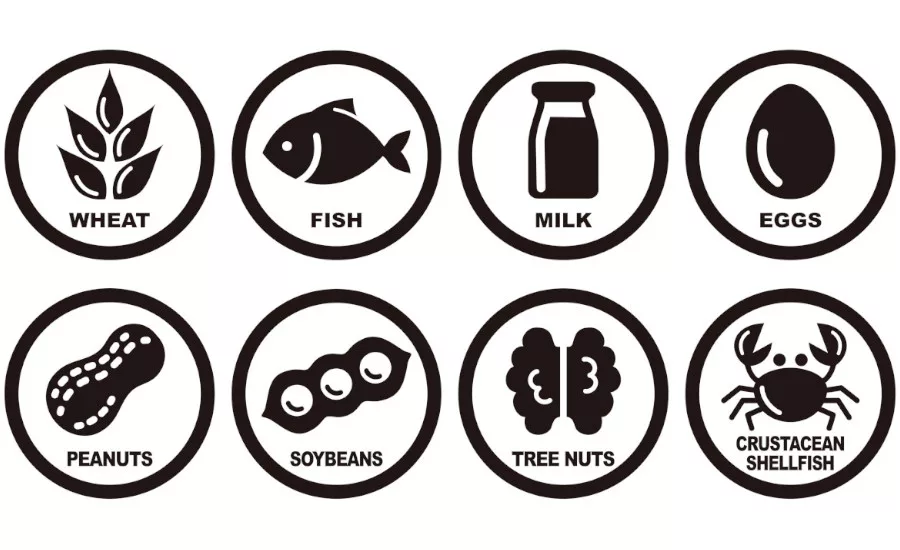
Image courtesy of MichikoDesign via iStock / GettyImages.com
Protecting dairy consumers with food allergies from potentially deadly allergens, and merchandisers from the product recalls and damages to reputations that can occur from incidents, can be a tricky proposition. Dairy processors must have stringent safeguards in place, as well as the discipline to follow strict operating procedures if they are to minimize risks to the large base of susceptible individuals.
About 26 million U.S. adults, or approximately 11% of the adult population, have food allergies, along with about 5.6 million, or nearly 8%, of children, reports the Arlington, Va.-based Asthma and Allergy Foundation of America (AAFA). Milk is the most common allergen for children, followed by egg and peanuts, while shellfish is the most common allergen for adults, along with peanuts and tree nuts, AAFA states.
Those foods or food groups are among the eight major food allergens identified in the Food Allergen Labeling and Consumer Protection Act of 2004. Along with fish, wheat, and soybeans, they account for 90% of food allergies. The act mandates the listing of potential allergens in food labels. Yet despite such efforts to reduce allergen risks, product contamination and expensive recalls still are occurring.
For example, last November, Federal Way, Wash.-based Ellenos Real Greek Yogurt recalled its 16-ounce yogurt cups because of possible undeclared egg. And in December, Reston, Va.-based Maryland & Virginia Milk Producers Cooperative Association recalled one lot of Howling Cow Butter Almond ice cream pints due to undeclared soy and wheat, FDA records show.
A host of hot spots
Dairy products are more prone to undeclared allergen recalls because of the wide variety of ingredients in many selections, states Mamun Chowdhury, technical manager for SGS North America Inc., a Rutherford, N.J.-based provider of inspection, testing, verification, and certification services. He notes that the unintentional presence of allergens often occurs from the mishandling of allergen ingredients; failure to carefully investigate each ingredient; inadequate equipment cleaning between production runs; incorrect label verification; and product misformulation.
To further reduce the chance of incidents, processors should implement a testing program that identifies undeclared allergens in ingredients and finished products.
“Dairy processors must be vigilant in tracking what surfaces and equipment come into contact with their milk and milk-derived products,” says Jack Payne, director of solution consulting, food and beverage, for Aptean, an Alpharetta, Ga.-based enterprise resource planning (ERP) software provider. “If that information isn’t captured and made highly visible, employees could make a critical mistake that results in traces of milk being incorporated into dairy-free items.”
The same mistake can occur if processors neglect to follow sanitation protocols, he notes.
“It doesn’t take a large quantity of the allergenic ingredient to cause an adverse reaction in a susceptible individual,” Payne states. “The slightest amount of milk residue could result in a health emergency down the line, so rigorous cleaning and inspection will always be necessary in these situations.”
Keeping allergenic ingredients and products separate from non-allergenic lines also is essential and should start as soon as processors receive and store the materials with the rest of their inventory, he says. “Airtight seals should be used on all containers, and allergens should never be stored above non-allergenic items,” Payne notes.
Dairy operators, meanwhile, should process allergen-containing items in a separate area of the facility, he says.
“It’s best if there’s a physical barrier like a wall between that space and the rest of the factory floor, and ideal if certain machinery can be dedicated to processing allergens while other equipment is dedicated to non-allergenic products,” Payne notes.
Indeed, an effective allergen control plan requires keeping allergenic foods and ingredients separate from all other products and ingredients from the time they enter a facility until they are introduced into the production line and beyond, states the “Components of an Effective Allergen Control Plan” report, developed by the Food Allergy Research and Resource Program at the University of Nebraska in Lincoln. Operators could spotlight allergens by appropriately identifying each case, pallet, or bag of raw materials with a mark, tag, or color code, the report states, adding that “every attempt must be made to visibly identify allergens and isolate them, at every step, from other foods, ingredients, and equipment.”

ERP software, meanwhile, can assist operators by highlighting the materials that have allergen risk — and detailing where processors are storing and processing the items, as well as the protocols workers should follow when dealing with the materials, Payne says. The software also can assist processors in scheduling separate production runs for allergenic and non-allergenic products, as well as the final sanitation sweep at the end of the day, he notes.
“This helps those businesses that don’t have dedicated equipment for their allergenic items safeguard against potential contamination risks,” Payne states.
In addition, an organization-wide digital platform can help keep important allergen information highly visible, including the allergens currently in operation and the requirements for restoring a sterile environment for the processing of non-allergenic items once the run is complete, he notes.
The take on testing
To further reduce the chance of incidents, processors should implement a testing program that identifies undeclared allergens in ingredients and finished products, Chowdhury states.
“A good strategy is to test ingredients and products in their earliest, least complex forms and always within the context of an allergen control plan which focuses on a start clean, stay clean approach,” he says. “Incoming materials and processing steps that are at higher risk should be tested more intensively. Similarly, finished products manufactured in a site that produces both allergen-free and allergen-containing products should be tested regularly, especially if products are made on shared equipment or in a common room.”
Indeed, dairy processors should have a clearly defined and comprehensive allergen-management program, Payne states.
“That involves creating a dedicated allergen management team; mapping the allergens in your facility; structuring your facility with designated areas for allergens and non-allergenic products; and establishing cleaning procedures and verification processes,” he says.
Proper sanitizing is an especially vital part of an allergen management program, says John Clawson, senior process engineer for CRB Group, a Kansas City, Mo.-based engineering, architecture, construction, and consulting firm. He notes that the improper operation of a clean-in-place (CIP) system between incompatible production runs is one of the most common causes of cross-contamination.
“Clean-in-place is ineffective in equipment that is insufficiently designed for CIP cleaning,” Clawson says, adding that the surface finish, threads, and crevices inside the equipment can create sanitizing obstacles.
Plant managers, he notes, should be fully aware of the allergen risks so they can ensure CIP operates optimally in between the processing of non-allergenic and allergen-containing products. Clawson states; however, “the facility and ingredients logistics should be organized to help separate these operations.”
Contamination also can occur from personnel carrying allergen loads through the plant carelessly or not using or having access to adequate cleaning stations, including foot baths and handwashing outlets, he states. In response, modern plant designs often will completely isolate systems that could affect the quality of another area, Clawson says.
“Processors should find an experienced partner to help them design their processing systems for full cleanability,” he notes. “The partner should train operators, supervisors, and maintenance crews on the principles of cleaning. This will ensure the system is maintained and used properly to avoid contamination.”
Cleanliness is crucial
Adhering to effective hygiene practices “is the single thing that dairy processing facilities cannot cut corners on,” says Eric Garr, regional sales manager for Toronto-based Fortress Technology Inc. “Where potential allergens in ingredients could be present, sanitation policies must go well beyond normal hygienic requirements. Even where heat processing is involved, allergens can still survive high temperatures.”
Operators should formalize and include sanitizing protocols in staff training, he notes, which include verifying and documenting each cleaning process while also conducting regular tests, including swabs of critical control points, to ensure the areas are hygienic and free of allergens.
In addition, processors should leverage equipment, including conveyors, pipelines, and gravity systems, that have smooth, crevice-free contact surfaces to better ensure no traces of allergens are left following cleanings, Garr states.
“Allergen control and good housekeeping [are] ultimately common sense,” he says. “Being careless with compliance can become a catalyst for more shortcuts. It’s not a cycle any food business would or should encourage, especially given that many a shortcut results in a bigger problem that takes longer to correct.”
The optimal system, meanwhile, will include instructing workers on assessing cross-contact risks and the importance of isolating allergen-containing ingredients and products while using dedicated equipment, processing, and packaging lines. Chowdhury says.
In addition, dairy processors should educate personnel on what constitutes an allergen risk and why, and how to quickly control and isolate contaminants following an event, Payne says.
Operators should formalize and include sanitizing protocols in staff training, which include verifying and documenting each cleaning process while also conducting regular tests.
“Everyone in the organization has to learn and internalize the importance of allergen management and realize that the health and safety of consumers should be a top priority,” he states. “From there, employees must also be made aware of what represents a hazard when it comes to contamination and how best practices can prevent incidents from occurring.”
Chowdhury adds that workers should regularly test all critical and suspect ingredients along with finished products to ensure accurate results.
“An allergen-monitoring program should be supported by a cross-functional team effort with high level of management support,” he states.
Processors should have a rapid response plan to manage the unintentional presence of allergens in food as well, he says. Such a system could list potential corrective actions, including follow-up tests on retained samples along with a recall procedure, Choudhury states. Non-recall options may include product re-labelling, reworking, or disposal in accordance with on-site or external lab test results.
Indeed, it is crucial that operators have technologies that track allergens through facilities and a program for responding to food safety emergencies. Bidirectional traceability, regular internal audits and a recall plan that can be executed quickly and efficiently are critical, Payne says.
“Conquering these challenges requires a coordinated approach involving both experienced and careful internal personnel who thoroughly understand the ingredients and allergen concerns, and an engineering and architectural team who can provide layout, process, mechanical utilities, and control system support,” Clawson says. “A coordinated team can address these concerns quickly and efficiently.”
Looking for a reprint of this article?
From high-res PDFs to custom plaques, order your copy today!