New research: Consumers want more indulgence
Americans are making more room for indulgence, not less, according to the inaugural State of Indulgence report from independent creative and media agency Method1.
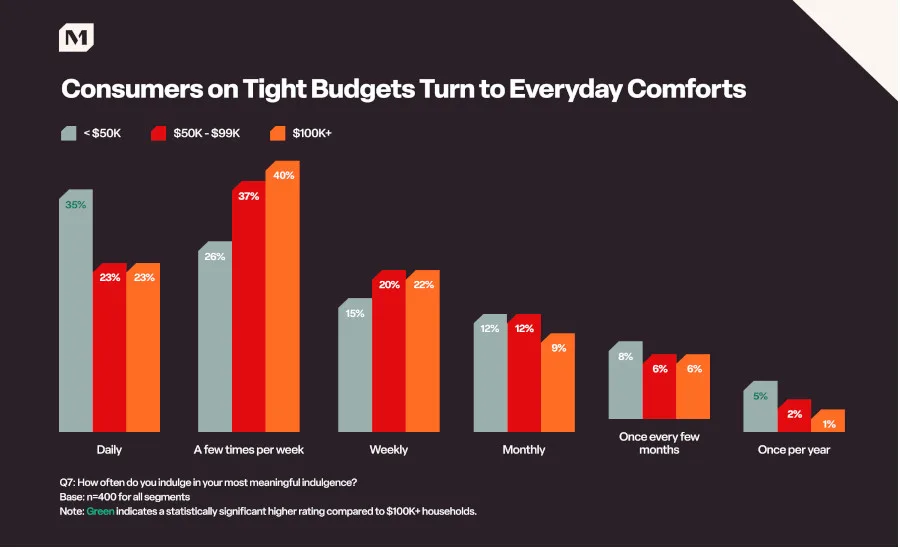
The research found consumers continue to prioritize indulgent purchases, with households earning less than $50,000/year most likely to enjoy their top treat every day. Increasingly, consumers view indulgence as an essential tool for improving mood, creating balance and navigating everyday life.
The report is based on a national survey of 1,200 U.S. consumers across generations (Gen Z, Millennials, Gen X, Boomers), household types and income levels, with consumer insights firm Morpheus Brand Consulting. It examines consumable indulgences — alcohol, snacks, coffee, sweets, non-alcoholic beverages and cannabis — as a single category, bringing a fresh lens to a market worth hundreds of billions that has rarely, if ever, been studied as a whole.
Grounded in behavioral science, the findings challenge the long-held assumption that consumers see indulgence as excess. Instead, Americans describe treating themselves to favorites as emotionally essential.
"For years, marketers have viewed indulgence as something consumers believe they should only occasionally allow themselves. Our research suggests a different reality,” said Jodi Heelan, CEO of Method1. “Consumers increasingly see indulgence as part of maintaining their emotional wellbeing and bringing balance in their lives. The products and rituals vary, but the underlying need remains remarkably consistent, there for brands to meet."
The report's key findings include:
- Indulgence is becoming a more frequent part of everyday life, with 34% of Millennials and 30% of Gen Z reporting they consume their primary indulgence daily. Across all respondents, 45% say they’re more permissive about indulging than they were a year ago.
- Wellness and indulgence are no longer viewed as opposing forces. At least two-thirds of every generation surveyed—led by 72% of Millennials, the generation that built the wellness economy—agree indulgence is part of a healthy, balanced life.
- Economic pressure does not eliminate indulgence. In fact, households earning less than $50,000 annually report enjoying their favorite treats daily at higher rates than any other income group surveyed.
- A little guilt only sweetens the experience. Only 4% of respondents say feeling guilt-free makes indulgence feel worth it, one of the lowest-ranked factors studied. Tellingly, it isn’t the most budget-conscious who feel it most. Consumers who describe themselves as financially confident report more guilt after indulging than those that don’t (45% vs. 32%).
According to Method1's analysis, indulgence is anchored to repeatable rituals—an afternoon treat, a weekend drink shared with friends—that serve as "infrastructure for mood management.” The sense of reward carries real weight; a majority (51%) say it's highly important that their indulgence feels earned.
"The chocolate lover and the bourbon sipper have more in common than you'd think," said Allison Arling-Giorgi, Head of Brand at Method1 and the architect behind the study. "And what’s fascinating is the emotional role these products play. People consistently return to favorite indulgences that help them reward themselves. Even product quality isn’t as important as the mood lift a treat delivers when it feels deserved, which is a feeling brands can absolutely cultivate."
The findings arrive amid broader cultural conversations around wellness culture, sober curiosity, moderation, GLP-1 adoption, economic uncertainty and the rise of "little treat" culture, all of which are reshaping how consumers think about reward, self-care and consumption.
The full State of Indulgence 2026 report is available for download at: www.method1.com/state-of-indulgence/2026
Looking for a reprint of this article?
From high-res PDFs to custom plaques, order your copy today!