Dairy Foods logo
search
cart
facebook twitter linkedin youtube
  • Sign In
  • Create Account
  • Sign Out
  • My Account
Dairy Foods logo
  • NEWS
    • DAIRY REGULATIONS
  • PRODUCTS
    • New Products
    • Butter
    • Cheese
    • Cultured Dairy
    • Frozen Desserts
    • Ice Cream/Novelties
    • Milk
    • Non-Dairy Beverages
    • Sales Data
    • Whey, Milk Powder
    • Dairy Alternatives
  • INGREDIENTS
    • Cocoa
    • Colors/Flavors
    • Cultures/Enzymes
    • Fiber
    • Gums, Stabilizers, and Texturants
    • Inclusions
    • Omegas/Lipids
    • Prebiotics
    • Probiotics
    • Sweeteners
    • Other
  • OPERATIONS
    • SUSTAINABILITY
    • Equipment
    • Processing
    • Packaging
    • Food Safety & Sanitation
    • Membrane Technology
  • MEDIA
    • Dairy Foods TV
    • Podcasts
    • Webinars
  • DIRECTORIES
    • Buyers Guide
    • Dairy Plants USA
  • MEMBRANE FORUM
  • MORE
    • Associations
    • Dairy Foods' News & Views Newsletter
    • Blogs
    • Case Studies
    • Classifieds
    • Custom Content & Marketing Services
    • Dairy Foods Store
    • Market Research
    • Supplier Spotlights
    • Tradeshows and Events
    • Strategy Guides
  • AWARDS
    • Dairy Plant of the Year Award
    • Breakthrough Award
    • Dairy Processor of the Year
  • EMAGAZINE
    • eMagazines
    • Archive Issues
    • Contact
    • Advertise
    • SIGN UP!
    • Columnists
    • Dairy 100
    • State of the Industry Report
    Dairy Foods & BeveragesDairy Foods ColumnistsCheese

    Emerging benefits of cheese for healthy aging

    Many cheeses contain 25% protein.
    By John A. Lucey Ph.D., Director, Center for Dairy Research
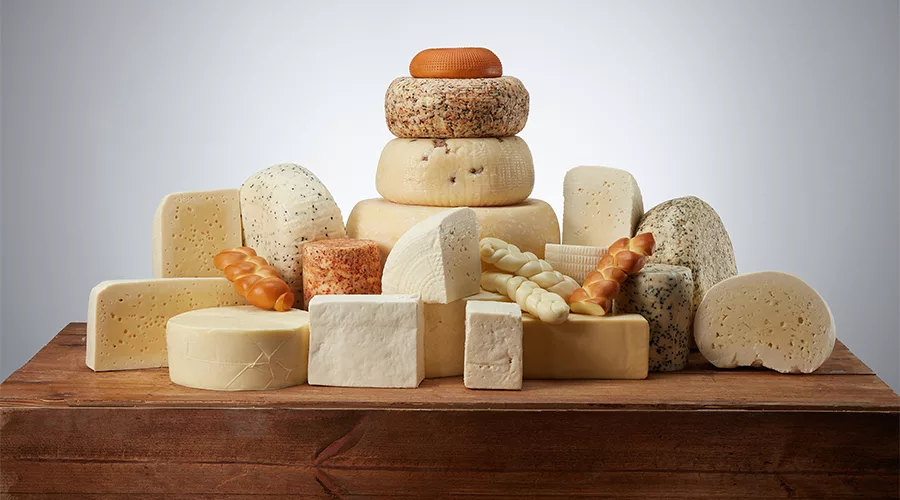
    variety of cheese
    Photo by workinc / E+ / Getty Images
    August 11, 2025
    John Lucey

    John A. Lucey is a professor of food science at the University of Wisconsin, Madison, and the director of the Center for Dairy Research.

    For thousands of years, people of all ages, across various cultures, have eaten cheese for its great taste and versatility in food products. It is also well recognized that cheese contains essential nutrients like protein, minerals, and vitamins while containing very little, if any, lactose. While researchers have extensively explored the flavor, texture and functional properties of cheese (like melt, stretch and sliceability), new research is now showing potential health benefits to eating cheese, especially for people as they age. 

    It is important to understand that cheese is more than just a package of nutrients. The cheese structure or “matrix” is complex and during human digestion the properties of this cheese matrix can impact how nutrients and other bioactive (meaning having an effect on the body) components are released and absorbed. Recent meta-analyses (reviews of various clinical studies) have refuted the hypothesis that the types of fats in cheese have any (negative) association with cardiovascular diseases. Unfortunately, policymakers seem reluctant to accept this growing consensus about dairy fats. 

    Exciting new research is looking at a different kind of impact of eating complex fermented foods, like cheese. During fermentation and aging, the protein and fat in cheese are broken down, or converted, into a vast array of compounds and metabolites. Some of these compounds have been reported to benefit cognitive health. For example, in one study from Kyoto University in Japan, researchers gave Camembert cheese to mice and found it improved their cognitive skills and connected that to a specific type of fatty acid derived compound (amide) produced during cheese ripening. Another recent study from Japan found that in a group of older people (>65 years), lower cheese consumption was associated with lower cognitive functions. Fermented foods like cheese generate thousands of small metabolites, some of which may even cross the gut/brain barrier. 

    Consumption of fermented dairy products, including cheese, have been associated with improved sleep quality, likely due to the tryptophan in dairy proteins (which is a precursor for serotonin). Serotonin levels in the brain have been associated with depression, mood and stress. Fermented dairy products have been explored for their production of key protein-derived metabolites that could potentially pass the blood-brain barrier, such as 5-hydroxytryptophan (5-HTP) and gamma-aminobutyric acid (GABA). 

    One’s gut microbiome may also be positively impacted by cheese consumption as cheese is a rich source of bacteria, including a number of potential probiotics. Our gut microbiome is likely altering the levels of key metabolites and thereby impacting our health and wellness.  

    Since an important part of healthy aging is fighting sarcopenia, or the loss of muscle mass, researchers are also discovering that cheese consumption can help maintain or even improve muscle strength and mass in older populations. Cheese has high proportions of proteins and many cheeses have more than 25% protein content. 

    It’s encouraging to learn regular consumption of cheese can help ward off sarcopenia. Perhaps, then, new cheese products could help benefit aging populations as well. Researchers are looking at fortifying cheese with additional compounds like bioactive peptides or other nutritional materials like milkfat globule membrane or whey phospholipid protein concentrate (WPPC).

    In the case of bioactive peptides, several have positive physiological properties like the ability to lower blood pressure. It might be possible to add/fortify these specific bioactive peptides to levels in cheese that could result in a positive impact on reducing hypertension. 

    The good news is that cheese consumption continues to rise. Overall per capita consumption of dairy is increasing in the U.S., and cheese is mostly driving that increase. From 2013 to 2023, per-capita cheese consumption increased by 6.8 pounds. 

    There is a lot of exciting research on cheese as it relates to nutrition and health benefits, especially for aging populations. More research is needed to understand the mechanisms and preclinical and clinical studies are necessary to clearly demonstrate benefits. It appears there are several health benefits of consuming cheese, even as we age — even more reason for enjoying  delicious, nutritious cheese.  

    KEYWORDS: Center for Dairy Research cheese aging health and wellness healthy aging protein in dairy

    Share This Story

    Looking for a reprint of this article?
    From high-res PDFs to custom plaques, order your copy today!

    John lucey phd

    John Lucey, Ph.D., is the Owen R. Fennema Professor in Food Chemistry at the University of Wisconsin-Madison’s Center for Dairy Research.

    Recommended Content

    JOIN TODAY
    to unlock your recommendations.

    Already have an account? Sign In

    • Lifeway Organic Kefir in different flavors inside a refrigerated grocery shelf.

      Dairy Foods names Lifeway Foods 2025 Processor of the Year

      Lifeway Foods donates $10,000 to wildfire victims,...
      Dairy Foods & Beverages
      By: Brian Berk
    • Two female farmers are standing in a field, holding a large milk canister, looking at several cows at dairy farm.

      Honoring Women Leaders Shaping the Dairy Industry

      For the fourth consecutive year, Dairy Foods is proud to...
      Innovation
      By: Barbara Harfmann
    • Main feature for State of the Industry with dairy products album cover with a gradient circular--patterned backgorund.

      2025 State of the Dairy Industry

      Welcome to the 2025 State of the Industry report. For...
      Ingredients for Dairy Processors
    Manage My Account
    • eMagazine Subscription
    • Dairy Foods News & Views Newsletter
    • Online Registration
    • Manage My Preferences
    • Subscription Customer Service
    • Connect with Dairy Foods

    More Videos

    Popular Stories

    Close up of a whipped frozen dessert with a light green color.

    The keys to high-protein dairy formulations

    A row of Frios Gourmet Pops with a tie dye pattern as a background.

    How Frios Gourmet Pops delivers happiness

    Closeup of young Asian man preparing yogurt and muesli breakfast at modern home. Diet and healthy food morning routine concept.

    Cultured dairy products are a good fit for the new Dietary Guidelines for Americans

    Outlook Report: Women in Dairy

    Products

    Probiotic Ice Cream: Science and Technology

    Probiotic Ice Cream: Science and Technology

    See More Products
    Let's Talk Dairy podcast promo

    Related Articles

    • Dairy foods are essential for healthy aging in baby boomers

      See More
    • Vitamin D is vital for healthy aging

      See More
    • two women drinking milk together

      Why dairy is a key component for healthy aging

      See More

    Related Products

    See More Products
    • milk dairy.jpg

      Milk and Dairy Foods Nutrition, Processing and Healthy Aging

    • df emerging.jpg

      Emerging Dairy Processing Technologies: Opportunities for the Dairy Industry

    • Handbook of Antioxidants for Food Preservation, 1st Edition

    See More Products

    Related Directories

    • Brunkow Cheese of Wisconsin Inc.

    • Great Lakes Cheese of NY Inc.

    • Great Lakes Cheese of WI Inc.

    ×

    Stay ahead of the curve. Unlock a dose of cutting-edge insights.

    Receive our premium content directly to your inbox.

    SIGN-UP TODAY
    • RESOURCES
      • Advertise
      • Contact Us
      • Directories
      • Store
      • Want More
    • SIGN UP TODAY
      • Create Account
      • eMagazine
      • Newsletter
      • Customer Service
      • Manage Preferences
    • SERVICES
      • Marketing Services
      • Reprints
      • Market Research
      • List Rental
      • Survey/Respondent Access
    • STAY CONNECTED
      • LinkedIn
      • Facebook
      • YouTube
      • X (Twitter)
    • PRIVACY
      • PRIVACY POLICY
      • TERMS & CONDITIONS
      • DO NOT SELL MY INFORMATION
      • PRIVACY REQUEST
      • ACCESSIBILITY

    Copyright ©2026. All Rights Reserved BNP Media, Inc. and BNP Media II, LLC.

    Design, CMS, Hosting & Web Development :: ePublishing