California dairy sector achieves major sustainability milestone
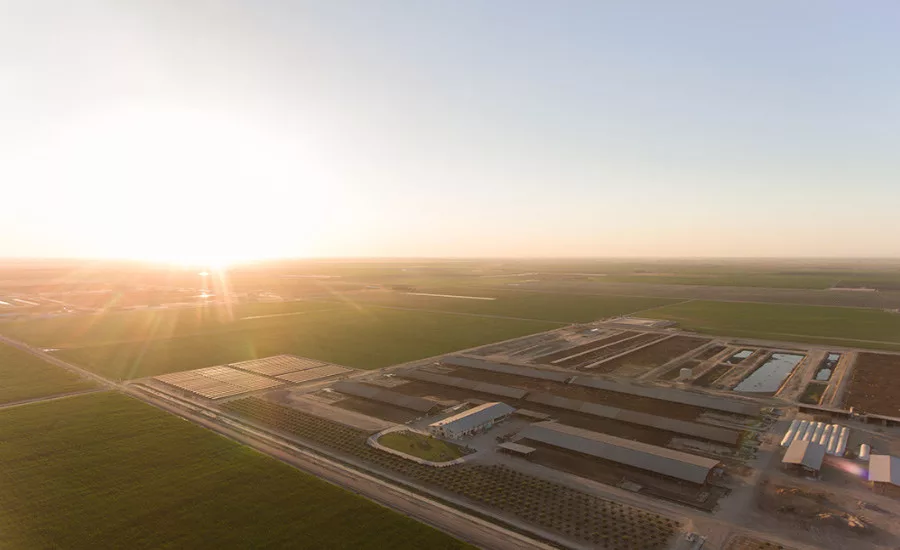
Courtesy of Dairy Cares
Dairy Cares and the California dairy sector announced that this year, the state's dairy farms will achieve an annual reduction of 5 million metric tons of methane. This has been accomplished through on-farm projects to improve manure management and continuous gains in milk production efficiency, as the state's dairy herd continues to shrink.
"While many countries and jurisdictions across the globe have pledged to reduce methane, California dairy farmers have demonstrated action and great success," said dairy farmer Charles "Chuck" Ahlem, Chair of Dairy Cares. "This work has been done through tremendous partnership with the state, displaying an effective model for other regions to follow. Through continuation of the state's incentive programs, we expect to meet the state's full goal on time."
California dairy farms have achieved methane reduction through several ongoing strategies:
- Methane Capture and Utilization: California has 168 dairy digesters operating with about 75 more projects in development. Digesters capture methane from manure storage and put it to productive use as carbon-negative transportation fuel or other renewable energy needs. As projects under development come online, methane from manure will be captured from 270 dairy farms, creating either renewable electricity, renewable natural gas, or hydrogen fuel. Estimated total annual reductions from operating projects to date are 2.53 million MTCO2e, according to information from the California Department of Food and Agriculture (CDFA) as well as digester developers.
- Methane Avoidance: California dairy farms have implemented more than 128 alternative manure management projects, with another 65 projects funded and in development. Projects include manure separators, compost pack barns, manure scrape and vacuum systems, and other practices that avoid methane creation from manure management operations. Estimated total annual reductions from operating projects to date are 254,000 MTCO2e, according to information from the CDFA.
- Milk Production Efficiency/Herd Attrition: California dairy farms continue to shrink their environmental footprint by producing more milk (or consistent total milk volume) with fewer cows. Milk production efficiencies continue to be gained in many ways, including improved animal nutrition, selective breeding, and enhanced animal care and comfort. Overall, while total milk production has remained relatively stable, the number of dairy cows in California has continued to shrink, resulting in far fewer emissions. Estimated total annual reductions achieved to date are 2.13 million MTCO2e, based on herd numbers from the California Air Resources Board's California Dairy and Livestock Database.
Administered by CDFA, livestock methane reduction efforts are supported through the Dairy Digester Research and Development Program (DDRDP) and the Alternative Manure Management Program (AMMP). A total of $356 million in grants has been made available since 2015. Incentive payments buy down the capital costs of methane reduction projects on farms. Project construction and maintenance is creating jobs and economic growth in rural, disadvantaged communities, while providing significant air quality and public health benefits.
"California has long led the nation in the production of milk and dairy foods," said Michael Boccadoro, executive director of Dairy Cares. "Milk and dairy products are our state's most valuable agricultural commodity, generating more the $8 billion in annual cash receipts, providing quality year-round jobs, and nourishing lives with wholesome and nutritious foods. Maintaining this leadership and commitment to local communities while successfully reducing 5 million tons of methane is a remarkable feat. Our farmers are setting an example for the world of what can accomplished through sustainable partnerships."
Looking for a reprint of this article?
From high-res PDFs to custom plaques, order your copy today!