Dairy Foods logo
search
cart
facebook twitter linkedin youtube
  • Sign In
  • Create Account
  • Sign Out
  • My Account
Dairy Foods logo
  • NEWS
    • DAIRY REGULATIONS
  • PRODUCTS
    • New Products
    • Butter
    • Cheese
    • Cultured Dairy
    • Frozen Desserts
    • Ice Cream/Novelties
    • Milk
    • Non-Dairy Beverages
    • Sales Data
    • Whey, Milk Powder
    • Dairy Alternatives
  • INGREDIENTS
    • Cocoa
    • Colors/Flavors
    • Cultures/Enzymes
    • Fiber
    • Gums, Stabilizers, and Texturants
    • Inclusions
    • Omegas/Lipids
    • Prebiotics
    • Probiotics
    • Sweeteners
    • Other
  • OPERATIONS
    • SUSTAINABILITY
    • Equipment
    • Processing
    • Packaging
    • Food Safety & Sanitation
    • Membrane Technology
  • MEDIA
    • Dairy Foods TV
    • Podcasts
    • Webinars
  • DIRECTORIES
    • Buyers Guide
    • Dairy Plants USA
  • MEMBRANE FORUM
  • MORE
    • Associations
    • Dairy Foods' News & Views Newsletter
    • Blogs
    • Case Studies
    • Classifieds
    • Custom Content & Marketing Services
    • Dairy Foods Store
    • Market Research
    • Supplier Spotlights
    • Tradeshows and Events
    • Strategy Guides
  • AWARDS
    • Dairy Plant of the Year Award
    • Breakthrough Award
    • Dairy Processor of the Year
  • EMAGAZINE
    • eMagazines
    • Archive Issues
    • Contact
    • Advertise
    • SIGN UP!
    • Columnists
    • Dairy 100
    • State of the Industry Report
    Case Studies

    Making the world’s favorite cheese

    gea favorite cheese

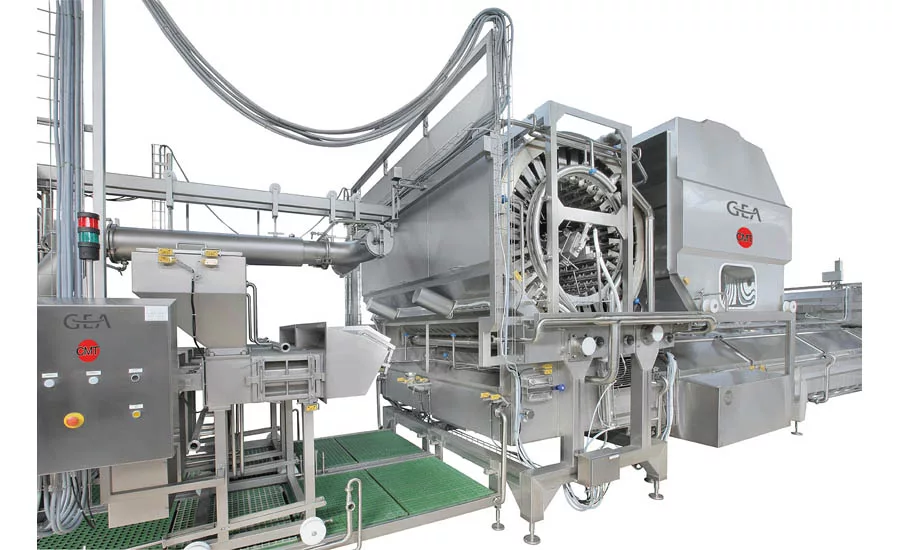
    Image 1: Continuous steam stretching machine DISCOVERY PLUS – production rate 6.000 kg/h
    gea favorite cheese

    Image 2: Moulding and pre-hardening carousel PRATER – production rate 6.000 kg/h
    gea favorite cheese
    gea favorite cheese
    gea favorite cheese
    gea favorite cheese
    May 23, 2016

    Pasta filata cheeses, of which Mozzarella is the most widely known type, are Italian dairy specialties known worldwide. In recent years, their increase in consumption has outstripped other cheeses mainly owing to the increasing consumption of pizza. In this article, GEA looks at the techniques for making this unique ’ricetta’ of cheese that is enjoyed by so many people the world over.

    One of the reasons for the growth in the consumption of pasta filata cheese is the increasing trend for consumers to care about what they eat: more customers now want products with a fresh, light style with a subtle flavor. Mozzarella, for example, fits this profile perfectly. It is delicious eaten fresh and is essential for many Italian dishes.

    It is also a ‘fast turn round’ product for producers providing an immediate return on the investment in raw materials and production time as mozzarella is ready for consumption immediately without the need for a ripening period. The slogan ‘yesterday milk, today mozzarella, tomorrow on the table’ clearly illustrates how quickly the product can be turned into fast cash flow.

    That said, there are two main different types of pasta filata cheese available on the market. Mozzarela has a high moisture content, is made in different shapes and sold in handy-sized packages.  It is dipped in a preserving liquid giving it a shelf life of around 30 days.

    Industrial products, so called pizza cheese, are made of mostly dry pasta, have a lower moisture content, are packed for commercial use and have a much longer shelf life of up to 4 months. This product is essential for another Italian ‘ricetta: the pizza.

    Provolone, Scamorza, Caciocavallo cheeses are made by dry pasta, have a lower moisture content and are matured for weeks; Scamorza can also be smoked. This process intensifies the taste of this typical Italian product.

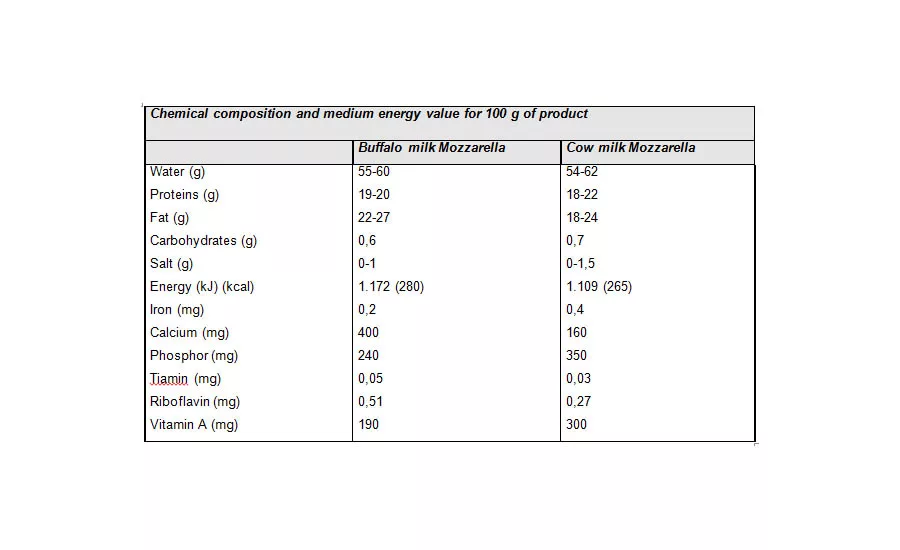
    Mozzarella can be made with either buffalo or cow’s milk or by a combination of them. The table below shows the chemical composition of the relative products:

    Production technology

    The pasta filata cheese production process makes a clean, sour curd which, with the addition of heat, acquires the characteristic ‘filanti’ features: it can be stretched and molded for a range of applications. The main process steps are as follows:

    • Milk is heated to 35°C/38°C in a cheese-making vat. Rennet for coagulation is added.  Depending on the specific recipe different starters or acids – citric, lactic or vinegar - are added for acidification process to reach pH 4,9 – 5.8. A combination of starters and acids is also common.
    • The curd is cut in pieces.
    • A second heating process up to 40°C/42°C is necessary for Provolone and Scamorza cheeses.
    • The soured curd is stretched at 60°C/62°C with the traditional warm water or with the unique patented CMT steam injection process (or a combination of them) to create a plastic and extensible consistency with optimized fiber length.
    • The pasta filata is molded in different shapes and configurations at a temperature of around 60°C.
    • The product is cooled, smoothly, down to 10°C before packing.
    • Pasta filata cheeses are required to be salty; this can be done through direct salt addition or through a brine vat.

    Each specific ’ricetta’ for pasta filata cheeses can change from product to product and from market to market; the different milk compositions, caused by different feeds or milk production techniques, can also affect the final product. Each producer has his own ’ricetta’.

    Features of Biological Acidification (starters)

    • Traditional product
    • Superior organoleptic quality
    • Protection against contamination
    • Longer shelf life

    Features of Chemical Acidification (acids)

    • Reduced acidification time
    • Industrial efficiency increase (reduced production time)
    • Softer structure
    • Light taste

    Differences in manufacturing for mozzarella and pizza cheese

    The manufacturing technique changes when producing mozzarella compared with pizza-cheese.

    Fresh mozzarella (bocconcino, ciliegina and treccia) is a very soft cheese with a high moisture content (58-65%). Production requires the use of pasteurized whole milk to which enzymes and rennet are added. This is coagulated at 35-38°C followed by curd stretching. The cheese is generally lightly salted during stretching phase. Molding, hardening and packing phases follow.

    Pizza-cheese has a lower moisture content (48-52%) and is obtained from full fat or skimmed milk. The curd is processed at 35-38°C, followed by a maturation period and a stretching process. Molding, brining and hardening occur before packaging.

    GEA North America
    9165 Rumsey Road
    Columbia MD 21045
    United States
    Tel +1 844 432 2329
    Fax +1 410 997 5021
    E-mail: sales.unitedstates@gea.com

    Share This Story

    Looking for a reprint of this article?
    From high-res PDFs to custom plaques, order your copy today!

    Recommended Content

    JOIN TODAY
    to unlock your recommendations.

    Already have an account? Sign In

    • Lifeway Organic Kefir in different flavors inside a refrigerated grocery shelf.

      Dairy Foods names Lifeway Foods 2025 Processor of the Year

      Lifeway Foods donates $10,000 to wildfire victims,...
      Dairy Processor News
      By: Brian Berk
    • Two female farmers are standing in a field, holding a large milk canister, looking at several cows at dairy farm.

      Honoring Women Leaders Shaping the Dairy Industry

      For the fourth consecutive year, Dairy Foods is proud to...
      Dairy Foods & Beverages
      By: Barbara Harfmann
    • Main feature for State of the Industry with dairy products album cover with a gradient circular--patterned backgorund.

      2025 State of the Dairy Industry

      Welcome to the 2025 State of the Industry report. For...
      Cheese
    Manage My Account
    • eMagazine Subscription
    • Dairy Foods News & Views Newsletter
    • Online Registration
    • Manage My Preferences
    • Subscription Customer Service
    • Connect with Dairy Foods

    More Videos

    Popular Stories

    Close up of a whipped frozen dessert with a light green color.

    The keys to high-protein dairy formulations

    A row of Frios Gourmet Pops with a tie dye pattern as a background.

    How Frios Gourmet Pops delivers happiness

    Closeup of young Asian man preparing yogurt and muesli breakfast at modern home. Diet and healthy food morning routine concept.

    Cultured dairy products are a good fit for the new Dietary Guidelines for Americans

    Outlook Report: Women in Dairy

    Products

    Probiotic Ice Cream: Science and Technology

    Probiotic Ice Cream: Science and Technology

    See More Products
    Let's Talk Dairy podcast promo

    Related Articles

    • Borden to find out America's Favorite Grilled Cheese

      Borden commences search for "America's Favorite Grilled Cheese"

      See More
    • Making the case for fiber in dairy foods

      See More
    • man picking up milk at the grocery store

      Making the case for a more expansive dairy incentive program

      See More

    Related Products

    See More Products
    • two world.jpg

      The Potential Effect Of Two New Biotechnologies On The World Dairy Industry

    • Making Artisan Gelato

    • public role.jpg

      The Public Role In The Dairy Economy: Why And How Governments Intervene In The Milk Business

    See More Products

    Related Directories

    • The Cheese Factory

    • Fuchs Gruppe-North America

      That moment when a new-to-you food becomes a new favorite food. The second when a craving becomes fully satisfied. The day that favorite seasonal LTO gets released every year. These are the moments that motivate us. At Fuchs Gruppe, our mission is to bring the joy of food to life for consumers around the world. As a go-to seasoning supplier for food industry leaders, we deliver on this mission by partnering with brands on developing consumers’ next obsession.
    ×

    Stay ahead of the curve. Unlock a dose of cutting-edge insights.

    Receive our premium content directly to your inbox.

    SIGN-UP TODAY
    • RESOURCES
      • Advertise
      • Contact Us
      • Directories
      • Store
      • Want More
    • SIGN UP TODAY
      • Create Account
      • eMagazine
      • Newsletter
      • Customer Service
      • Manage Preferences
    • SERVICES
      • Marketing Services
      • Reprints
      • Market Research
      • List Rental
      • Survey/Respondent Access
    • STAY CONNECTED
      • LinkedIn
      • Facebook
      • YouTube
      • X (Twitter)
    • PRIVACY
      • PRIVACY POLICY
      • TERMS & CONDITIONS
      • DO NOT SELL MY INFORMATION
      • PRIVACY REQUEST
      • ACCESSIBILITY

    Copyright ©2026. All Rights Reserved BNP Media, Inc. and BNP Media II, LLC.

    Design, CMS, Hosting & Web Development :: ePublishing