Dairy Foods logo
search
cart
facebook twitter linkedin youtube
  • Sign In
  • Create Account
  • Sign Out
  • My Account
Dairy Foods logo
  • NEWS
    • DAIRY REGULATIONS
  • PRODUCTS
    • New Products
    • Butter
    • Cheese
    • Cultured Dairy
    • Frozen Desserts
    • Ice Cream/Novelties
    • Milk
    • Non-Dairy Beverages
    • Sales Data
    • Whey, Milk Powder
    • Dairy Alternatives
  • INGREDIENTS
    • Cocoa
    • Colors/Flavors
    • Cultures/Enzymes
    • Fiber
    • Gums, Stabilizers, and Texturants
    • Inclusions
    • Omegas/Lipids
    • Prebiotics
    • Probiotics
    • Sweeteners
    • Other
  • OPERATIONS
    • SUSTAINABILITY
    • Equipment
    • Processing
    • Packaging
    • Food Safety & Sanitation
    • Membrane Technology
  • MEDIA
    • Dairy Foods TV
    • Podcasts
    • Webinars
  • DIRECTORIES
    • Buyers Guide
    • Dairy Plants USA
  • MEMBRANE FORUM
  • MORE
    • Associations
    • Dairy Foods' News & Views Newsletter
    • Blogs
    • Case Studies
    • Classifieds
    • Custom Content & Marketing Services
    • Dairy Foods Store
    • Market Research
    • Supplier Spotlights
    • Tradeshows and Events
    • Strategy Guides
  • AWARDS
    • Dairy Plant of the Year Award
    • Breakthrough Award
    • Dairy Processor of the Year
  • EMAGAZINE
    • eMagazines
    • Archive Issues
    • Contact
    • Advertise
    • SIGN UP!
    • Columnists
    • Dairy 100
    • State of the Industry Report
    Dairy Foods ColumnistsDairy Processing and EquipmentEquipment

    Writing standards for robotic equipment

    Robotic automation equipment is common in the auto industry, but the wet conditions in dairy plants have created a need for equipment standards to comply with strict food safety and hygiene rules. Here is what we have done so far.

    By Timothy Rugh
    August 12, 2014

    Traditional applications for robot-based automation in food processing have been basic pick-and-place packing operations. On the processing side, dairy plants contain many applications that are repetitive or labor-intensive. These are perfect candidates for robot-based automation.

    One of the many challenges is the environment. Most industrial robots are only designed for the automotive industry. Many are not suited to the high humidity and wet environment or the sanitary requirements of the food industry.

    Fabrication specifications that define criteria for sanitation, cleanability and inspectability have been requested by the principal stakeholder groups in 3-A SSI, including fabricators, processors and regulatory sanitarians. 3-A SSI reached out further to the European Hygienic Equipment Design Group and the Robotics Industry Association to develop a sanitary standard for robot-based automation systems.

    Collaboration on 3-A Sanitary Standard number B-103-00 (Tentative Proposal) for Robot-Based Automation Systems began at the end of 2012. Due to the nature of this work and the importance to various stakeholders, this standard is being proposed as a candidate American National Standard. This standard will cover the robot arm mechanism or manipulator (the tool that performs the work on the product), any tool changer or mounting, and any associated cabling or arm dressing.

    Protecting product and equipment

    The draft standard will cover protection of the product from the equipment and the equipment from the environment. Protecting the equipment from the environment is one element of the document that is bringing to light multiple hygienic factors for consideration. Robots need to be of a sealed design and protected from water entry in order to protect internal electronic components. Many robot manufacturers include a low-pressure purge to ensure that water cannot be drawn into the arm mechanism as a means of protecting their equipment.

    Other factors discussed in the Working Group include cables for power and communication and the route that these cables take through sanitary areas, which pose a difficult cleaning situation. One solution might be employing cables that enter underneath the robot base so that the robot is mounted and sealed to its mounting surface and all cabling is routed below the clean area.

    A smooth design of the arm is required for drainage and ease of cleaning. Covering an unsealed robot or one without a smooth surface finish using one of the common robot covers is not a recommended practice as this allows condensation build-up underneath these covers and this humidity degrades the performance and life-cycle of the robot itself. Additionally, the possibility of not refitting or poorly refitting the cover exists whenever it is routinely removed for cleaning.

    Robots should not be mounted directly over the product zone, including the areas above open unfilled containers. However to be fully functional, a sanitarily designed manipulator arm will enter the product zone. These sanitary manipulator arm designs will require careful attention to hygienic design principles.

    Limit time in the clean zone

    Robots are programmable and can be put into a variety of postures. Therefore, it follows that there should be a recommended program that could be designed in such a way so as to ensure the robot or robot arm does not operate in the product or clean zone any more than necessary to perform the work required. “Waiting” should be done outside the clean zone in a posture that promotes draining away from product. Programmers and operators should also be instructed to avoid reaching over the food product zone in the work cycle.

    End-of arm tooling is considered a product contact surface. This mechanism shall be removable for cleaning and inspection either via simple hand tools or via an automatic tool changer commonly used in the robot industry.

    Many robots include internal wiring and pneumatic lines for use in tooling to eliminate the cable dressing from being routed outside the robot arm. Internal cables are protected from the environment and cleaning is eliminated. If, however, dressing is required outside or inside the arm, the draft standard will define how to do this in the most sanitary method possible.

    Through the drafting process, new challenges have been presented. Some of these challenges include cleaning moveable joints and materials of construction. Traditionally, cast aluminum is not allowed for hygienic equipment, yet cast aluminum is used throughout the robot industry.

     Development of this standard is in progress. 3-A SSI and RIA are actively soliciting input from all interested parties. To learn more about our standards development effort or to join the 3-A SSI Working Group, contact 3-A SSI Director of Standards and Certification Eric Schweitzer at erics@3-a.org or 703-790-0295. 

    This article was written by Eric Schweitzer of 3-A SSI and Bob Rochelle of Staubli Robotics, chair of the 3-A SSI Working Group. 

    KEYWORDS: dairy plants warehouse automation

    Share This Story

    Looking for a reprint of this article?
    From high-res PDFs to custom plaques, order your copy today!

    Timothy R. Rugh is the executive director of 3-A Sanitary Standards Inc., www.3-a.org.

    Recommended Content

    JOIN TODAY
    to unlock your recommendations.

    Already have an account? Sign In

    • Lifeway Organic Kefir in different flavors inside a refrigerated grocery shelf.

      Dairy Foods names Lifeway Foods 2025 Processor of the Year

      Lifeway Foods donates $10,000 to wildfire victims,...
      Innovation
      By: Brian Berk
    • Two female farmers are standing in a field, holding a large milk canister, looking at several cows at dairy farm.

      Honoring Women Leaders Shaping the Dairy Industry

      For the fourth consecutive year, Dairy Foods is proud to...
      Innovation
      By: Barbara Harfmann
    • Main feature for State of the Industry with dairy products album cover with a gradient circular--patterned backgorund.

      2025 State of the Dairy Industry

      Welcome to the 2025 State of the Industry report. For...
      Sales Data
    Manage My Account
    • eMagazine Subscription
    • Dairy Foods News & Views Newsletter
    • Online Registration
    • Manage My Preferences
    • Subscription Customer Service
    • Connect with Dairy Foods

    More Videos

    Popular Stories

    Close up of man adding Greek yogurt while preparing healthy smoothie in the kitchen.

    An expert guide to dairy and GLP-1 receptor agonists

    Splash of milk in form of arm muscle. 3D illustration.

    Protein: The Powerhouse of Health and Wellness

    Grilling foods

    Dairy’s Enduring Moment: Why Resilience and Renewal Define Today’s Dairy Story

    Nominate your product for the 2026 Dairy Foods Product of the Year!


    MTF webinar


    Food Safety webinar

    Events

    July 8, 2026

    Membrane Purification Enables Clean Beauty Actives

    The global cosmetics market is undergoing a major shift towards the use of natural bioactive ingredients as consumers grow more skeptical of traditional formulations and demand greater transparency and sustainability.

    July 8, 2026

    Advancements in RO for Dairy Processing

    Reverse osmosis (RO) membranes are well established in dairy processing but continue to evolve to improve performance, reduce energy use, and increase operational longevity. 

    View All Submit An Event

    Products

    Probiotic Ice Cream: Science and Technology

    Probiotic Ice Cream: Science and Technology

    See More Products
    health and wellness


    plant of the year

    Related Articles

    • Dairy processors seek training, robotic equipment

      See More
    • robot making coffee

      Standards for robot-based automation systems

      See More
    • Dairy Detective: New Standards for Fermented Milk Drinks

      See More

    Related Products

    See More Products
    • eng practices milk.jpg

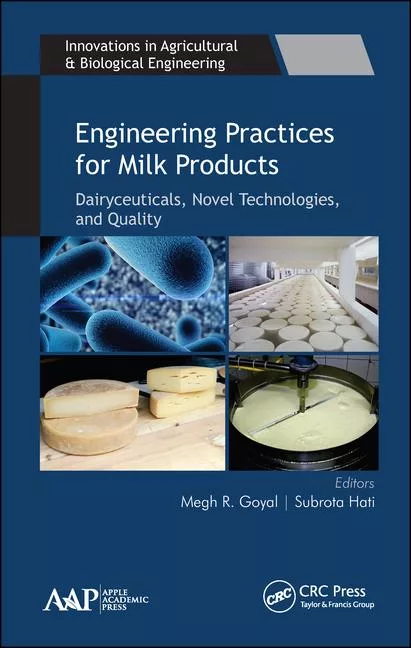
      Engineering Practices for Milk Products: Dairyceuticals, Novel Technologies, and Quality

    • Handbook of Antioxidants for Food Preservation, 1st Edition

    • Global Legislation for Food Contact Materials, 1st Edition

    See More Products

    Related Directories

    • Schneider Packaging Equipment

      Schneider Packaging Equipment has a legacy of over 55 years of excellence in case packing and robotic palletizing solutions. Tailored to optimize efficiency and productivity, our case packing portfolio includes robotic, horizontal, high-speed, bottom-loading, and gable-top models. Our palletizers include collaborative, modular, centralized, high-speed layer, and fully integrated systems. Leveraging the collective expertise and resources of our parent company, Pacteon, Schneider supports some of the biggest food, beverage, and CPG operations. Schneider machines are backed by the Pacteon Promise: We Make It Right!
    ×

    Stay ahead of the curve. Unlock a dose of cutting-edge insights.

    Receive our premium content directly to your inbox.

    SIGN-UP TODAY
    • RESOURCES
      • Advertise
      • Contact Us
      • Directories
      • Store
      • Want More
    • SIGN UP TODAY
      • Create Account
      • eMagazine
      • Newsletter
      • Customer Service
      • Manage Preferences
    • SERVICES
      • Marketing Services
      • Reprints
      • Market Research
      • List Rental
      • Survey/Respondent Access
    • STAY CONNECTED
      • LinkedIn
      • Facebook
      • YouTube
      • X (Twitter)
    • PRIVACY
      • PRIVACY POLICY
      • TERMS & CONDITIONS
      • DO NOT SELL MY INFORMATION
      • PRIVACY REQUEST
      • ACCESSIBILITY

    Copyright ©2026. All Rights Reserved BNP Media, Inc. and BNP Media II, LLC.

    Design, CMS, Hosting & Web Development :: ePublishing