Dairy Foods logo
search
cart
facebook twitter linkedin youtube
  • Sign In
  • Create Account
  • Sign Out
  • My Account
Dairy Foods logo
  • NEWS
    • DAIRY REGULATIONS
  • PRODUCTS
    • New Products
    • Butter
    • Cheese
    • Cultured Dairy
    • Frozen Desserts
    • Ice Cream/Novelties
    • Milk
    • Non-Dairy Beverages
    • Sales Data
    • Whey, Milk Powder
    • Dairy Alternatives
  • INGREDIENTS
    • Cocoa
    • Colors/Flavors
    • Cultures/Enzymes
    • Fiber
    • Gums, Stabilizers, and Texturants
    • Inclusions
    • Omegas/Lipids
    • Prebiotics
    • Probiotics
    • Sweeteners
    • Other
  • OPERATIONS
    • SUSTAINABILITY
    • Equipment
    • Processing
    • Packaging
    • Food Safety & Sanitation
    • Membrane Technology
  • MEDIA
    • Dairy Foods TV
    • Podcasts
    • Webinars
  • DIRECTORIES
    • Buyers Guide
    • Dairy Plants USA
  • MEMBRANE FORUM
  • MORE
    • Associations
    • Dairy Foods' News & Views Newsletter
    • Blogs
    • Case Studies
    • Classifieds
    • Custom Content & Marketing Services
    • Dairy Foods Store
    • Market Research
    • Supplier Spotlights
    • Tradeshows and Events
    • Strategy Guides
  • AWARDS
    • Dairy Plant of the Year Award
    • Breakthrough Award
    • Dairy Processor of the Year
  • EMAGAZINE
    • eMagazines
    • Archive Issues
    • Contact
    • Advertise
    • SIGN UP!
    • Columnists
    • Dairy 100
    • State of the Industry Report
    OperationsDairy Processing and EquipmentProcessing

    The heart (and heat) of dairy processing

    Unless you make raw-milk products, you need a pasteurizer and a heat exchanger. A panel of experts answers your questions about pasteurizing milk and nondairy beverages.

    By James Carper
    October 13, 2012

    Meet the panel

    Dan Björklund, Manager, Dairy Chilled & Fermented Solutions, Tetra Pak, Lund, Sweden

    John C. Bohn, Founder and Director of Sales and Marketing, AGC Heat Transfer, Portland, Ore.

    Rick Earley, Beverage and Dairy Market Manager, Admix, Greensboro, N.C.

    Carl Lemke, Business Development Manager, Heat Exchangers, Alfa Laval, Kenosha, Wis.

    David M. Miles, Vice President, MicroThermics, Raleigh, N.C.

       Bill Snow, Technology Group Manager, SPX Flow Technology Systems, Delavan, Wis.

    Heat exchangers are key components in a dairy processing plant that can directly affect food product quality, a supplier tells Dairy Foods. Other suppliers tell us that pasteurizers are not all alike. To learn more about processing milk and the equipment that is used, we convened a “virtual roundtable” of equipment manufacturers. What follows are edited remarks received via e-mail.

    Dairy Foods:True or false: A pasteurizer is a pasteurizer is a pasteurizer. What key points are important for a dairy processor to know about pasteurization equipment?


    David M. Miles: This is definitely not true. While reaching a qualified hold time and temperature will ensure that the product is truly pasteurized or sterilized, the heating rates and cooling rates have a huge affect on product quality. This is especially true in UHT- and aseptic-processed products.

    Essentially, the heating (and to a smaller extent, cooling) rates actually have a larger impact on the quality of the product. So, it might be properly pasteurized or sterilized, but the process will affect the palatability of the product.

    We see this often when working with clients because they have variability in product quality from one processing location to another. In the end, we simulate both to enable them to make a formulation that is robust enough to provide the product identity they need. This can include not just organoleptic qualities, but nutritional qualities as well.

    We have even worked with clients who end up changing one or more production lines so that they all have the same or similar heating profiles so that they can have control over their product quality.


    John C. Bohn:False. In the sanitary plate heat exchanger field there are obvious differences in surface finish, plate gap, plate thickness and after-sales support. Cleaner-looking bright anneal (BA) surface finishes (not a dull 2b finish) allows processors to easily determine if they’re getting a good CIP (clean-in-place) response.

    Plate gap (the distance between the plates) and a viscous and CIP-friendly inlet design is important for extending the run times and/or reducing operating pressures with viscous products.


    Dan Björklund: In the past, dairy pasteurizers have often been regarded more or less as commodities, simply a plate heat exchanger with a pump and a holding cell. But is it really that simple?

    Growing price pressure on milk and increasing energy costs are forcing processors to focus on the total cost of ownership. When all these costs are taken into account, the differences between pasteurizers can be significant.

    The focus on food safety is also growing. Where pasteurizers are concerned, differentiating factors will obviously concern both the cleanability of pasteurizer design and the uniformity of performance, that is, to consistently deliver a process that fulfills pasteurization criteria.

    But there is also another key factor. The role of pasteurization in the value chain is just one step, so producers are increasingly recognizing the value of focusing on an entire solution, from raw milk intake to the packaged product, with uncompromising food safety and full traceability throughout. When this can be achieved with a low total cost of ownership, there is suddenly no such thing as “just a pasteurizer.”


    Carl Lemke: False. Key points [about pasteurizers] have not changed much over the years. They are:

    • Thermal and mechanical impact of the design on product quality
    • The cleanability of the system
    • Reliability of the equipment
    • Energy savings in form of heat recovery achieved
    • Overall operating efficiency and reliability

    Particular attention should be paid to the last points, given the cost of energy and costs associated with downtime and repairs.

    KEYWORDS: heat exchangers milk processing pasteurizers pasteurizing

    Share This Story

    Looking for a reprint of this article?
    From high-res PDFs to custom plaques, order your copy today!

    Jim Carper is the former editor-in-chief of Dairy Foods.

    Recommended Content

    JOIN TODAY
    to unlock your recommendations.

    Already have an account? Sign In

    • Lifeway Organic Kefir in different flavors inside a refrigerated grocery shelf.

      Dairy Foods names Lifeway Foods 2025 Processor of the Year

      Lifeway Foods donates $10,000 to wildfire victims,...
      Dairy Foods & Beverages
      By: Brian Berk
    • Two female farmers are standing in a field, holding a large milk canister, looking at several cows at dairy farm.

      Honoring Women Leaders Shaping the Dairy Industry

      For the fourth consecutive year, Dairy Foods is proud to...
      Innovation
      By: Barbara Harfmann
    • Main feature for State of the Industry with dairy products album cover with a gradient circular--patterned backgorund.

      2025 State of the Dairy Industry

      Welcome to the 2025 State of the Industry report. For...
      Cheese
    Previous 1 2 3 4 5 Next
    Manage My Account
    • eMagazine Subscription
    • Dairy Foods News & Views Newsletter
    • Online Registration
    • Manage My Preferences
    • Subscription Customer Service
    • Connect with Dairy Foods

    More Videos

    Popular Stories

    Close up of man adding Greek yogurt while preparing healthy smoothie in the kitchen.

    An expert guide to dairy and GLP-1 receptor agonists

    Splash of milk in form of arm muscle. 3D illustration.

    Protein: The Powerhouse of Health and Wellness

    Grilling foods

    Dairy’s Enduring Moment: Why Resilience and Renewal Define Today’s Dairy Story

    Nominate your product for the 2026 Dairy Foods Product of the Year!


    MTF webinar


    Food Safety webinar

    Events

    July 8, 2026

    Membrane Purification Enables Clean Beauty Actives

    The global cosmetics market is undergoing a major shift towards the use of natural bioactive ingredients as consumers grow more skeptical of traditional formulations and demand greater transparency and sustainability.

    July 8, 2026

    Advancements in RO for Dairy Processing

    Reverse osmosis (RO) membranes are well established in dairy processing but continue to evolve to improve performance, reduce energy use, and increase operational longevity. 

    View All Submit An Event

    Products

    Probiotic Ice Cream: Science and Technology

    Probiotic Ice Cream: Science and Technology

    See More Products
    health and wellness


    plant of the year

    Related Articles

    • hygienic design

      The future of dairy processing

      See More
    • Close up look at a pump and valve, the bigger machine in the blurred background.

      Why pumps and valves are the “backbone” of dairy processing

      See More
    • Get the most out of your QA/QC instrumentation

      Get the most out of dairy processing QA/QC instrumentation

      See More

    Related Products

    See More Products
    • df emerging.jpg

      Emerging Dairy Processing Technologies: Opportunities for the Dairy Industry

    • novel.jpg

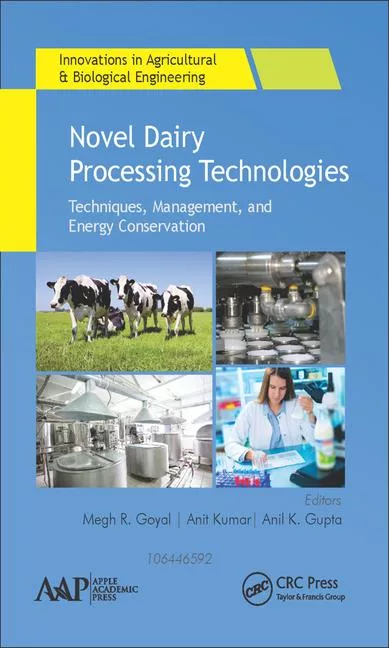
      Novel Dairy Processing Technologies: Techniques, Management, and Energy Conservation

    • dairy processing.jpg

      Dairy Processing and Quality Assurance, 2nd Edition

    See More Products

    Events

    View AllSubmit An Event
    • July 17, 2025

      The Future of Dairy Processing: Exploring the Cost-Effectiveness of Next-Generation Reverse Osmosis Sanitary Membranes

      On-Demand Advances in milk processing and changing customer preferences are driving growth in the dairy market. Today, dairy processors face challenges in achieving energy savings while also improving yields without compromising performance. Membrane filtration offers a versatile solution, and advanced technology may be necessary depending on the desired outcome.
    View AllSubmit An Event

    Related Directories

    • SMI-Dairy Processing Div.

    • Pride of Main Street Dairy LLC

    • Statco-DSI Process Systems

      Statco-DSI brings deep, field-proven expertise to dairy processing, with roots in fluid milk and a growing presence in extended shelf life and aseptic applications. Dairy represents approximately 40% of our business, supported by extensive experience in milk processing systems. Our team covers the full thermal spectrum, from HTST pasteurization through ESL to UHT processing and fully integrated aseptic systems, delivering solutions aligned with product, packaging, and operational goals. We also support the equipment already in your plant, supplying parts for 100+ sanitary processing brands with experienced service technicians and field installation teams to keep operations running.
    ×

    Stay ahead of the curve. Unlock a dose of cutting-edge insights.

    Receive our premium content directly to your inbox.

    SIGN-UP TODAY
    • RESOURCES
      • Advertise
      • Contact Us
      • Directories
      • Store
      • Want More
    • SIGN UP TODAY
      • Create Account
      • eMagazine
      • Newsletter
      • Customer Service
      • Manage Preferences
    • SERVICES
      • Marketing Services
      • Reprints
      • Market Research
      • List Rental
      • Survey/Respondent Access
    • STAY CONNECTED
      • LinkedIn
      • Facebook
      • YouTube
      • X (Twitter)
    • PRIVACY
      • PRIVACY POLICY
      • TERMS & CONDITIONS
      • DO NOT SELL MY INFORMATION
      • PRIVACY REQUEST
      • ACCESSIBILITY

    Copyright ©2026. All Rights Reserved BNP Media, Inc. and BNP Media II, LLC.

    Design, CMS, Hosting & Web Development :: ePublishing