Heat is fundamental to the food and drink industry. From cooking and drying to other treatments such as pasteurization, heat is widely used in all but the most basic food manufacturing and processing situations, in sectors as varied as dairy, fruit and vegetable processing, meat, prepared foods, brewing, and dietary supplements.
Blown gaskets. Misaligned plates. Burn-on. Heat exchangers, which transfer heat between liquids, are crucial to the processing operations of dairy plants, but can also cause a world of headaches if not maintained correctly.
Matt Hale, International Sales & Marketing Director for HRS Heat Exchangers, explains how innovations in heating, pasteurization and concentration technology can help food processors and food waste AD operators to thrive.
Heat exchanger systems enable dairy plants to effectively heat and cool their products without fouling them. Those in the market for a new heat exchanger system need to consider factors such as processing efficiency, ease of maintenance and cleaning, and cost-efficiency, while avoiding heating that ramps up too quickly, damaging heat-sensitive liquids and adding to cleaning frequency.
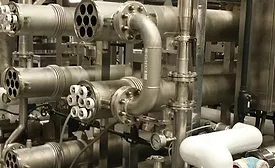
Family-owned Longley Farm improved the production of its dairy products by installing two HRS corrugated tube heat exchangers as part of ongoing factory upgrades.
HRS Heat Exchangers reviews all aspects that go into choosing the right heat exchanger.
March 9, 2018
As a relatively stable Newtonian fluid, liquid milk presents few handling challenges, something which has resulted in the use of simple plate-type heat exchangers in the majority of dairies. However, other dairy products, such as yogurt, butter, curds and cheese can all vary according to temperature and, if handled incorrectly, may have their key textural parameters damaged by routine processing.
Dairy plant managers work to keep their processing equipment running as frequently as possible to optimize plant efficiency and minimize operating costs.
Proper cleaning and sanitizing of heat exchangers keeps contaminants out of fluid milk. Equipment makers talk about best practices in CIP and energy efficiency.