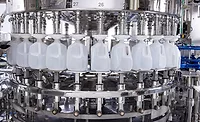
Packaging Technologies
Primary Packaging Performs Well
At 45% of the end-use market, food packaging generates $19B in sales.
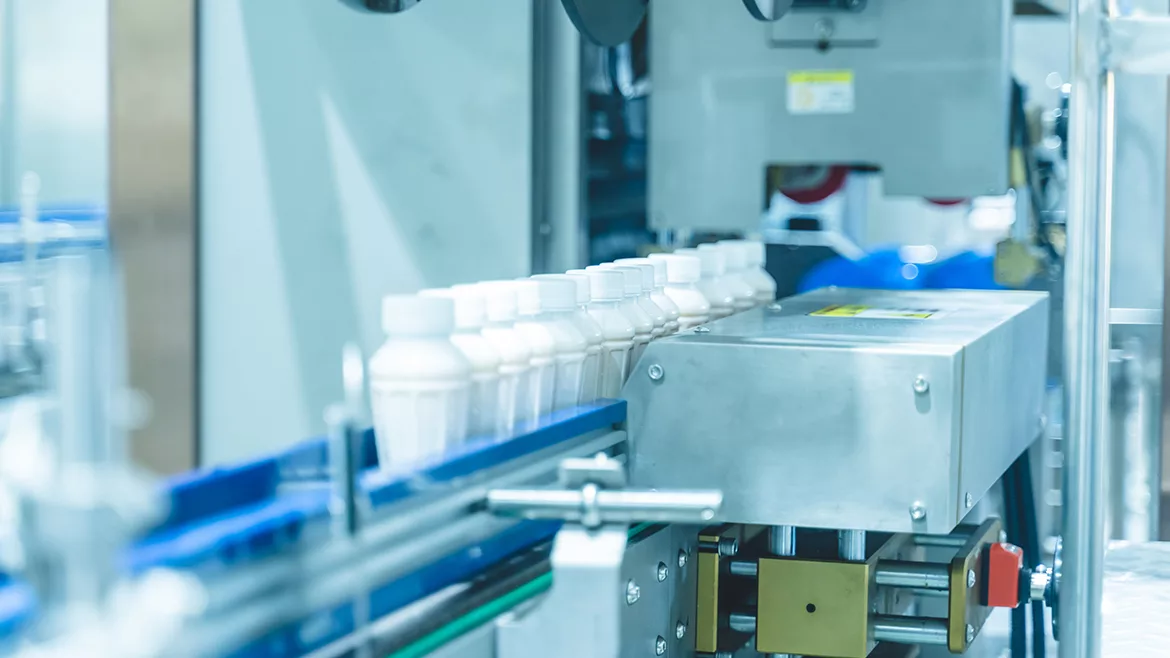
Ice cream containers are packaged in cartons, while yogurt in PET containers or PP (polypropylene) plastic cups and lined with barrier materials like EVOH or PET layers to block oxygen and light, is typical. Milk, on the other hand, is packaged in gallon jugs and cardboard quarts along with cardboard and plastic half-pints.
Primary packaging — the initial layer of material that is in direct contact with the product itself — is what keeps dairy products fresh and safe. Rigid or flexible, primary packaging is available in several types: glass, metal, plastic, pouches, bags and cartons.
In its 2025 State of the U.S. Flexible Packaging Industry Report, the Flexible Packaging Association (FPA) reported 2024 annual sales of $42.6 billion, up from $41.4 billion in 2023, a 2.9% growth rate. In 2025, industry growth of 4.8% is projected, accelerating the market to an estimated $44.6 billion.
The value-added segment, which includes printing, laminating, coating, extrusion, and bag and pouch manufacturing and excludes retail shopping bags, consumer storage bags, and trash bags, generated sales of $34.1 billion in 2024.
Additionally, flexible packaging accounts for roughly 20% of the total U.S. packaging market, making it the second-largest packaging segment behind corrugated.
The FPA report also documents that food remains the largest end-use market, generating $19 billion in annual revenue, about 45% of the total market.
Other key takeaways from FPA’s report include:
- Films, paper, and resins remain the largest converter input costs, representing nearly 75% of material purchases.
- Flexography continues to dominate printing technologies, representing 76% of shipments, followed by unprinted (12%), gravure (11%), and digital (1%).
- The industry recorded 34 domestic mergers and acquisitions transactions in 2024, up from 31 in 2023.
- The U.S. flexible packaging trade deficit grew to $2.6 billion, with $3.9 billion in exports and $6.5 billion in imports, a 24% increase from 2023.
- Converter members again identified the labor pool as their top challenge, while suppliers cited growth and new materials.
Dan Margherio, director of sales for IMA Food North America, notes that demand for primary packaging is going up, particularly in the dairy sector.
"This growth is being driven by several factors, including continued expansion in high-protein and functional dairy products, increased demand for convenience formats such as single-serve and on-the-go packaging, and the rise of both private label and premium brands," Margherio explains.
As brand owners seek to differentiate themselves more on busy store shelves, the "desire for distinction is driving greater complexity and, in turn, more demand for advanced packaging solutions," he adds. "While there are some regional fluctuations, the overall global trend is clearly upward."
The Leominster, Mass.-based packaging equipment company provides a range of integrated filling and packaging solutions tailored to dairy applications. These include form-fill-seal (FFS) systems for cups and portion packs; preformed cup filling and sealing machines for yogurt, desserts, and dairy-based products; multi-lane and high-output systems for high-volume production environments; and customized dosing and filling technologies for complex or multi-layer products.
Product applications include yogurts, spreadable cheeses, puddings, baby foods and other food products packaged in cups.
IMA Food North America recently introduced the Hamba Flexline, a high-performance, fully servo-controlled fill-seal machine with sterilization technology. Rated for high-speed operation and featuring hygienic stainless steel construction, the system stands out for its clean, even filling and peroxide sterilization capabilities, which has been proven to extend product shelf life, the company says.
When asked what distinguishes the Hamba Flexline apart from other packaging machines, Margherio notes that the equipment provides industry-leading aseptic production.
"Following an ionization station that removes potential static loads, the insides of all cups are treated with hydrogen peroxide and subsequently dried with sterile air," he explains. "During this process, the cups are elevated to achieve satisfactory decontamination of slats and cups underneath the cup rim. For applications not requiring hydrogen peroxide, the system can also be designed to utilize UV and pulsed light technology."
Further downstream, the machine also can incorporate lid sterilization elements, including an optional light decontamination system with 90-degree pick and place movement. Between runs, filling nozzles can be cleaned via clean-in-place (CIP) or sterilize-in-place (SIP) options.
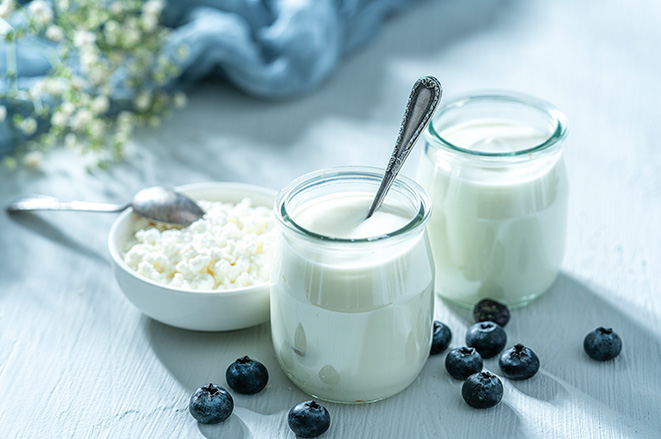
Rigid or flexible, primary packaging is available in several types: glass, metal, plastic, pouches, bags and cartons. Photo courtesy of fcafotodigital / E+ / Getty Images
Beverage packaging to reach $210B
Within the beverage industry, the global beverage packaging market is expected to grow from $132 billion in 2025 to $210 billion by 2032, expanding at a compound annual growth rate (CAGR) of nearly 7%, according to Vyansa Intelligence, New Delhi.
Demand is increasing across a broad spectrum of beverage categories, including bottled water, carbonated soft drinks, alcoholic beverages, dairy beverages, plant-based drinks and functional beverages. As consumption volumes grow, the need for efficient, durable, and scalable packaging solutions becomes increasingly critical.
Beverage packaging plays a vital role in preserving product quality, extending shelf life, and enhancing overall consumer convenience, thereby supporting sustained market expansion.
Bottle and jar packaging accounted for nearly 40% of global market share in 2025, reflecting widespread usage across bottled water, alcoholic beverages, and carbonated drinks due to convenience and product safety.
Driven by its lightweight nature, cost efficiency, and versatility across multiple beverage applications, plastic packaging also comprises 40% of market share.
Along with rising consumption, shifting consumer preferences toward convenience and on-the-go packaging formats are "significantly influencing" packaging innovations.
Vyansa Intelligence states: "Modern consumers increasingly favor portable, lightweight, and easy-to-use packaging formats that align with fast-paced lifestyles. Solutions such as bottles, cans, and pouches offer features like resealability and enhanced portability, making them ideal for on-the-go consumption. This transition is encouraging manufacturers to introduce ergonomic and user-friendly packaging designs that maintain product safety while improving usability, further driving market growth."
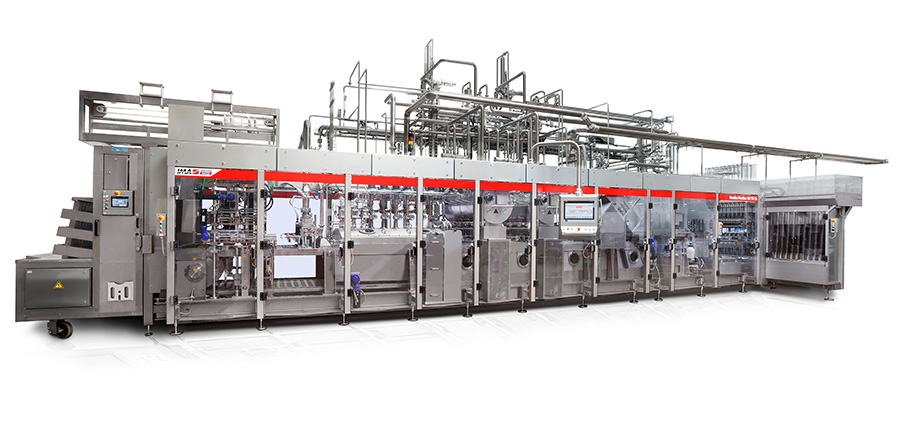
Hamba Flexline, a high-performance, fully servo-controlled fill-seal machine with sterilization technology, provides industry-leading aseptic production. The system stands out for its clean, even filling and peroxide sterilization capabilities, which has been proven to extend product shelf life, the company says. Photo courtesy of IMA Food North America
The report notes that sustainability is a central theme shaping the beverage packaging industry. Governments, regulatory bodies, and environmentally conscious consumers are placing increasing emphasis on reducing plastic waste and minimizing carbon footprints.
"In response, manufacturers are investing heavily in recyclable, biodegradable, and reusable packaging materials, as well as lightweight designs that optimize material usage," the report states. "The adoption of circular economy principles and improvements in recycling infrastructure are further reinforcing this shift, positioning sustainability as a key driver of innovation and long-term market development."
Companies operating in the global packaging market include Crown Holdings, Berry Global, SIG Group, O-I Glass and Tetra Pak.
In the dairy industry, IMA Food North America’s Margherio has witnessed two major shifts in the primary packaging market: design premiumization and heightened acceleration toward sustainability.
"From a design standpoint, brands are moving toward more customized shapes, multi-compartment solutions, and packaging that enhances user experience through functionality or visual differentiation," he relays.
"On the sustainability side, various factors are combining to further this ongoing megatrend," Margherio continues. "These include a decisive shift toward materials lightweighting, waste reduction measures in both the product and packaging processes, and of course transitioning from conventional plastics to recyclable or mono-material substrates."
Superior barrier protection
In addition to bottles and jars, trays, cartons and cans offer superior barrier protection against moisture, oxygen and contamination, making it a preferred choice for food manufacturers aiming to maintain product integrity throughout storage and transportation.
These materials comprise the rigid food packaging market that is predicted to grow at a steady 4.4% CAGR from $231 billion in 2024 to $354 billion by 2034, according to global market research company, Polaris Market Research.
"A key growth driver for the market is the significant expansion of global food trade and consumption patterns. With international food trade reaching nearly $1.7 trillion, the need for reliable packaging formats that ensure product safety and longevity has intensified," the report states.
"Additionally, the surge in ready-to-eat meals, dairy products, bakery goods and frozen foods has amplified the demand for rigid packaging solutions that offer structural strength and tamper-evident features," the report continues. "The increasing penetration of e-commerce in the food sector further accelerates this demand, as packaging must withstand complex logistics and extended supply chains while preserving product quality."
While plastic materials are widely used in bottles, pouches, and flexible packaging solutions due to their durability and ease of transportation, increasing environmental concerns and regulatory pressures regarding plastic waste are influencing industry dynamics, Vyansa Intelligence states.
Therefore, manufacturers are actively exploring sustainable alternatives, including recyclable plastics, bio-based materials, glass, metal, and paper-based packaging. As sustainability initiatives gain momentum, the market is expected to witness a gradual transition toward eco-friendly materials while maintaining performance and cost balance.
The rapid expansion of functional and premium beverage segments also is creating new opportunities for advanced packaging solutions for energy drinks, sports beverages and health-oriented formulations. Premiumization trends across alcoholic beverages, specialty coffee, and artisanal drinks are increasing the need for visually appealing and high-quality packaging. As packaging becomes a critical element of brand differentiation and consumer engagement, demand for innovative and aesthetically refined solutions is expected to rise further.
Like most worthwhile efforts, however, the sustainability push doesn’t come without challenges.
"For one, sustainable materials often behave differently in high-speed filling and sealing operations, placing a premium on thoughtful process development that ensures production efficiency is maintained," Margherio explains. "As a result, equipment suppliers like IMA Food North America are increasingly involved earlier in the development cycle to ensure compatibility between material and machine."
Additionally, the company’s focus on flexibility enables customers to run multiple formats, materials, and product types on the same platform while maintaining high efficiency and low waste.
Regardless of the shape, material or contents, primary and customized dairy packaging — and the equipment necessary to safely and efficiently fill dairy products and protect the contents inside — will be shaped by three main forces: sustainability, flexibility and digitalization.
"Sustainability will continue to drive material innovation, requiring packaging equipment to handle a wider range of substrates without compromising performance," Margherio concludes. "In this evolving landscape, flexibility will be critical, as producers look to respond quickly to changing consumer preferences, shorter product lifecycles, and increased SKU complexity.
"Finally, digitalization will play a bigger role — through smart machines, data-driven performance optimization, and predictive maintenance — to improve overall equipment effectiveness and reduce downtime."
Looking for a reprint of this article?
From high-res PDFs to custom plaques, order your copy today!