GEA technology helps German brewer produce alcohol-free beer
De-alcoholization technology appeals to rising demand for alcohol-free alternatives.
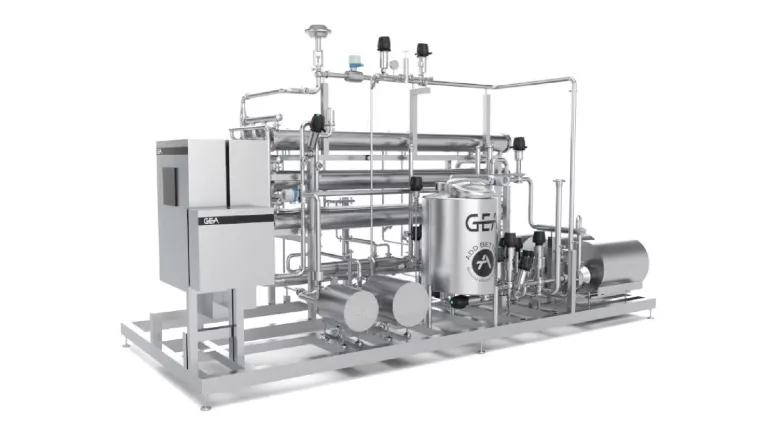
GEA AromaPlus uses a filtration technology with special polymer membranes to separate alcohol and water from the essential beer components responsible for aroma, color and clarity. The cold filtration process works under pressure rather than heat, ensuring that the original flavors remain intact and do not need to be adjusted after alcohol removal. Graphic: GEA
GEA is supporting Edelweißbrauerei Farny, the pioneer of Kristall-Weizen, with de-alcoholization technology. In May 2025, Farny commissioned a GEA AromaPlus system to produce its first alcohol-free Kristall-Weizen directly at its brewery in Kißlegg, Southern Germany. With this move, the traditional brewery is responding to the increasing demand for alcohol-free beers, which now account for around 8 -10% of the market. The new beer was first introduced on Feb. 25, 2025.
Alcohol-free market
Per capita beer consumption in Germany has been declining for decades, while demand for alcohol-free alternatives continues to rise. “Alcohol-free beer is no longer a niche product. Our alcohol-free Hefe-Weizen already accounts for 40% of the bottled volume of our Hefe-Weizen. Expanding into an alcohol-free version of our most well-known beer, Kristall-Weizen, is the logical next step for us,” said Elmar Bentele, managing director of Edelweißbrauerei Farny.
Technology determines quality
The key challenge in alcohol-free beer production is retaining the aroma and characteristic properties of the original product. Farny relies on GEA’s AromaPlus membrane filtration system for this purpose. “Our technology is based on reverse osmosis, enabling a particularly gentle de-alcoholization process without thermal stress,” said Ralf Scheibner, product manager membrane filtration at GEA. “Alcohol is removed at low temperatures, ensuring that the fine aromas of Kristall-Weizen remain intact. Consumers should barely notice the difference from the original.”
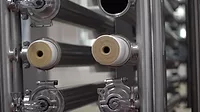
The GEA AromaPlus system uses spiral-wound special membranes that allow water and alcohol to pass through while preserving the essential components responsible for the beer’s aroma, color and clarity. The process takes place in multiple stages: First, the traditionally brewed beer is concentrated; then, de-aerated water is continuously added during the diafiltration phase to wash out more alcohol until the desired residual alcohol content is reached. Finally, the de-alcoholized and concentrated beer is diluted with de-aerated water to achieve the desired extract content. Farny will use this technology to produce an alcohol-free Kristall-Weizen with an alcohol content of just under 0.5%.
Traditional beer takes a new direction
Farny is known as the birthplace of Kristall-Weizen, first brewed in 1924. Today, this beer accounts for about 40% of the brewery’s revenue. “We know that Kristall-Weizen has a clear identity – it’s a crisp, finely sparkling beer with citrus and floral aromas,” said Wolfgang Sigg, technical director and brewmaster. “That’s why it was essential for us to choose a technology that preserves these characteristics unaltered. GEA AromaPlus convinced us.”
Farny is focusing on long-term market development. “The trend is clearly toward alcohol-free beers with high sensory quality. With our new system, we have created the best foundation to future-proof our portfolio,” said managing director Elmar Bentele.
Source: GEA Group
Looking for a reprint of this article?
From high-res PDFs to custom plaques, order your copy today!