Schreiber Foods' cheese operations are built to impress
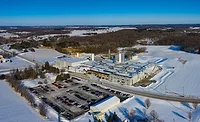
Schreiber Foods’ Fairview cheese-converting plant in Carthage, Mo., is notable not only for its massive size, but also for its high level of automation and dedicated partner-owners.
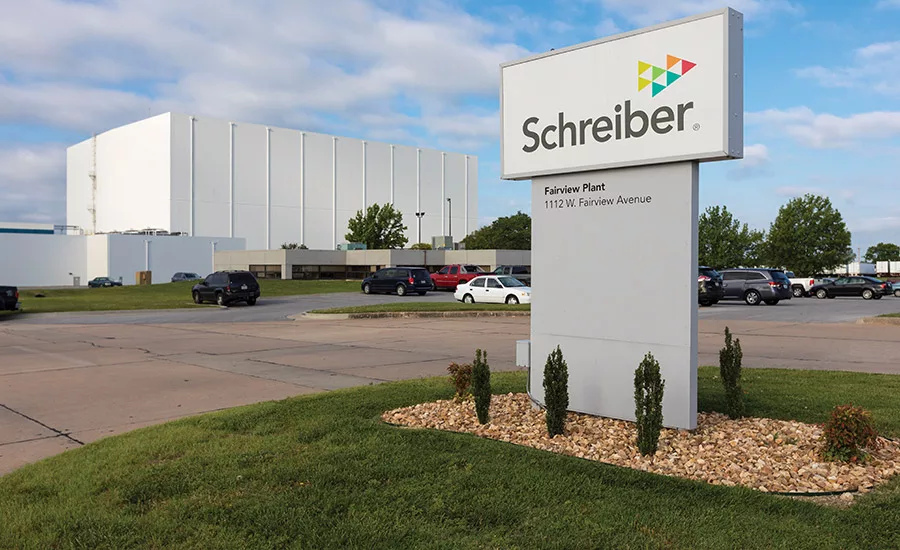
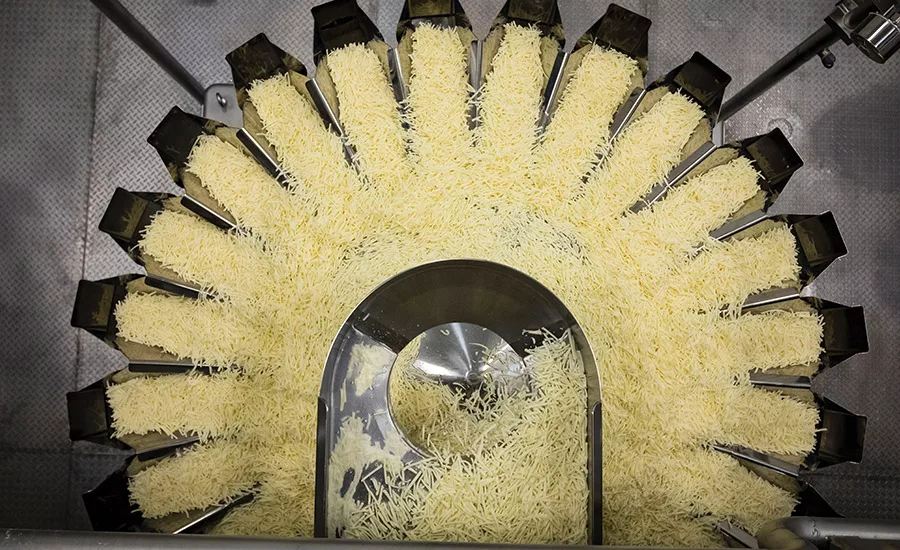
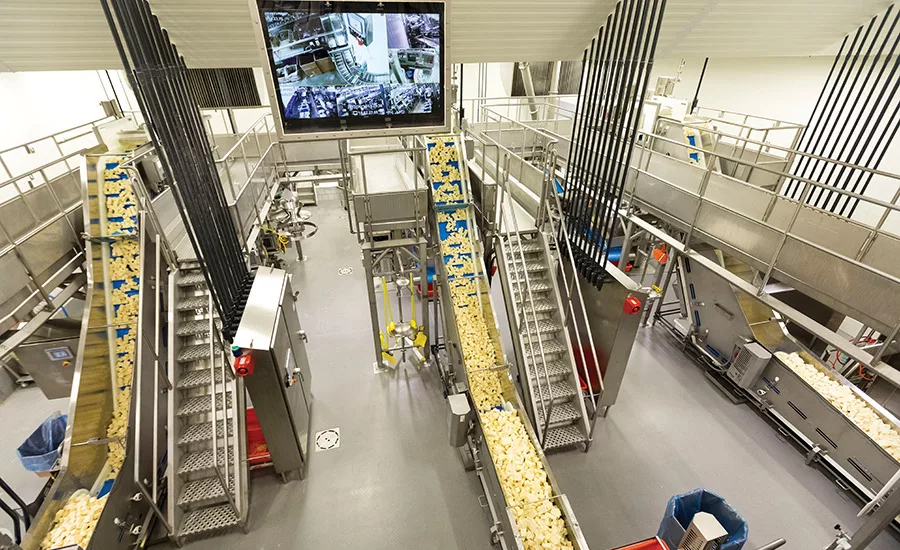
Visitors to Schreiber Foods’ Fairview cheese converting plant in Carthage, Mo., can’t help but be a bit awestruck. The sheer size of the facility — 330,000 square feet largely dedicated to converting operations and another 140,000 housing a distribution center — is certainly impressive. But the high level of automation found within the various departments is perhaps even more remarkable.
As Plant Manager Jeff Pankow explained, the facility now boasts numerous robotic cells.
“We have robotics focusing on everything from packaging to decartoning and case packing to palletizing and cutting and slicing,” he said.
Built in 1972, the facility wasn’t always so high-tech — or as large. It’s been expanded four times to handle new types of products: first in 2007, then again in 2011, 2014 and 2017, Pankow noted. As for the automation, it’s part of a key plantwide initiative Green Bay, Wis.-based Schreiber Foods has undertaken in the past decade or so.
The Fairview facility boasts a dedicated control systems team that works with the plant’s engineering and other technical groups to bring in and execute external technologies, as well as develop new ones internally, he said. The use of robotics will only expand in the years to come as the facility looks to improve ergonomics, reduce variation, eliminate waste and essentially “error-proof” operations.
Divided according to function
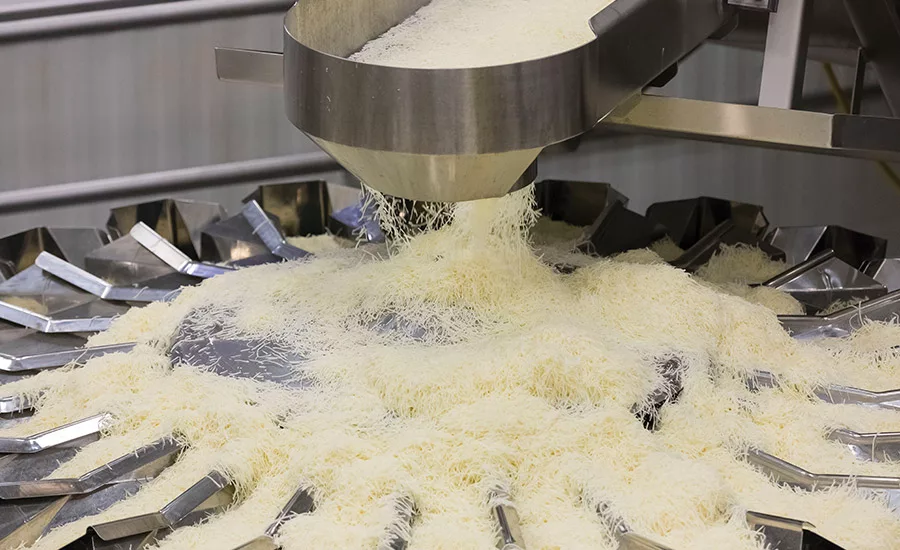
The plant itself is divided into numerous departments specific to the type of cheese being converted and packaged for retail and foodservice private brand customers. Several case-packing areas support these operations. Most cheese comes in as 640-pound blocks, Pankow explained, but the facility also receives preformed natural string cheese sticks and 500-pound barrel cheese for process cheese operations (see sidebar, page 60).
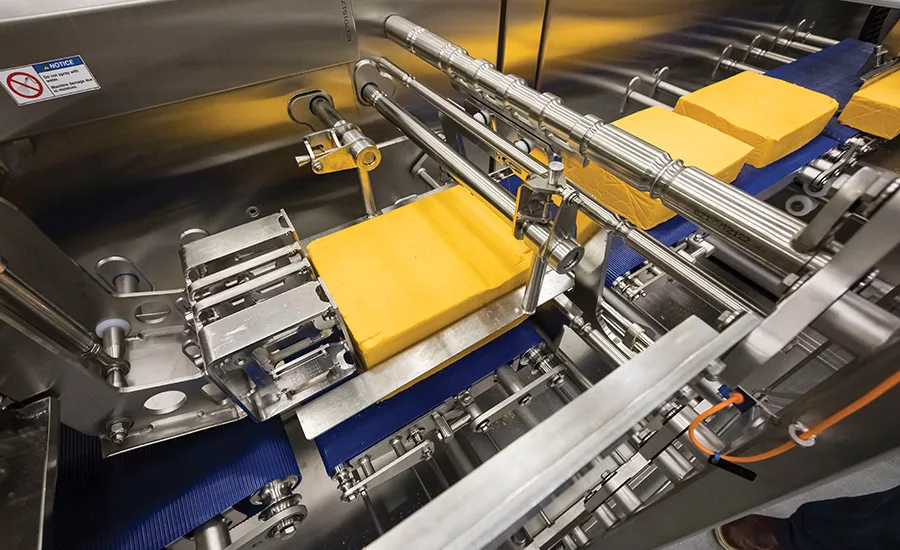
The majority of operations, from cutting to final packaging, are hands-free, he explained. And it’s worth noting that the cheese slice department operates the fastest natural cheese slicer in the world.
“We worked with a vendor to develop the ability to slice an increased number of logs and, at the same time, to achieve speeds that are really unseen in the natural cheese world,” Pankow said.
During the converting and packaging process, there are numerous quality-minded checks and balances. The lines feature multiple checkweighers, metal detectors and even vision systems that inspect for any defects in the package seal. The case-packing side of operations also features checkweighers and cameras for code date validation.
There’s also a lot of testing at the product level, Pankow explained. Although the frequency depends on the specific product being run, samples are pulled hourly, at a minimum. The facility operates two on-site labs — one tests the composition of the facility’s process cheese, and the other tests for indicator organisms. (A third-party lab is used for pathogen testing.)
Outside of the plant, the on-site distribution center (DC) is just as impressive. Highly automated, it is run by just over a dozen partners — despite the fact that it handles many millions of pounds of product annually. Those products are not only from the Fairview plant, but also from other Schreiber locations, noted Sean Crissman, distribution team leader.
Perhaps most notable on the DC side of operations is the 100% automated storage and retrieval system. Here you’ll find 13 stories of racking, automated cranes and more than 27,000 pallet positions.
“Inventory is easy to manage with this level of automation,” Crissman said.
Safety is top of mind
In addition to creating quality food, the plant’s partners — the term Schreiber Foods uses for its employees — are dedicated to the safety of those products, as well as their own safety. On the food safety side, the facility has a dedicated food safety team leader with more than 40 years’ experience in the dairy industry, Pankow noted.
“We use his knowledge for training, development of young leaders and new leaders, and development of programs not only for this plant, but really across the country,” he explained.
To promote both food safety and partner safety, the facility hosts a “day of safety” annually. Additional training related to each is performed bi-weekly, Pankow said. And all new hires go through a full day of onboarding dedicated to food and partner safety.
These safety-related efforts are supported by Schreiber Foods’ home office with many departments, including Enterprise Quality and Food Safety (EQFS), Regulatory, and Partner Safety departments, explained Rob Byrne, vice president, industry and regulatory affairs.
“I would say the two things this company focuses on more than anything are food safety and partner safety,” he stressed. “Those are the ‘nonnegotiable must do correct 100% of the time’ elements.”
The home office sets the requirements, the agenda and curriculum, and the plant makes adjustments and trains according to those, Pankow said.
In addition, the Fairview plant employs a nurse practitioner and an occupational therapist who evaluate ergonomics-related issues and improvements when they aren’t seeing patients. Each area of the plant is assigned an “ergo factor,” he explained, so plant management can identify, based on risk, the locations in which more automation is needed.
The ultimate goal is to go completely hands-free from start to finish of operations, Pankow added.
“That helps not only from a partner safety perspective, but also food safety,” he explained. “The less interaction a human has with the product, the less chance for contamination.”
Beyond FSMA
The plant is SQF Level 3 certified, and its food safety plans for all of its processes are in accordance with the Food Safety Modernization Act (FSMA). But food safety efforts go well beyond FSMA.
“We have HACCP plans; we have our food safety plans in accordance with FSMA, but we go way beyond what those require,” Byrne added. “From the environmental monitoring program to the checks after sanitation to make sure everything is ready for startup, the intense focus on food safety is really unparalleled.”
The Fairview plant undergoes numerous audits, ranging from internal audits and third-party audits to customer-dictated audits and regulatory inspections, Pankow said. On the flip side, the facility has a supplier verification process to ensure the safety of products coming into the facility.
“It’s FSMA-plus,” Byrne stressed. “We tweaked [our existing process] to make sure it meets and exceeds all of the FMSA requirements. We may do our own audits of suppliers; we many ask them about their SQF certification.”
That said, the facility values the relationships it has with its cheese suppliers, which Byrne calls collaborative in nature. As a result, customers have a high level of confidence in the plant’s supply chain.
On the way to zero
On the environmental front, Schreiber Foods recently set a goal of zero waste to landfill, Byrne noted. Currently, approximately 90% of its plants’ waste is diverted from the landfill.
To help meet the company goal, the Fairview plant formed a zero waste team, Pankow said. The plant now actively recycles plastics, cardboard, metals and wood.
“We actively look to minimize different streams for our inedible food waste,” he added.
That means a focus on first-pass quality and elimination of all foreign material. The plant also looks at packaging innovations that reduce corrugate and film, as well as at maximizing the footprint of pallets for transport.
The plant also operates a wastewater treatment facility on-site. Moreover, an ongoing initiative, one that’s companywide, calls for replacing halogen lighting with LED lighting as the halogen lighting fails, Pankow pointed out.
An ownership culture
Despite all the automation, the plant’s partners are the true stars of the facility. And some of those partners have been with the plant since it opened, Pankow noted.
“We’ve got multiple partners with over 40 years here,” he added. “Really, there’s an ownership culture; they understand the importance of what they do.”
Each partner is cross-trained within his or her department to operate various pieces of equipment, Pankow noted.
“A packaging operator will typically operate all of the packaging equipment,” he explained. “A blending operator will operate all of the blending equipment.”
And for partners who want to advance in their careers, the Fairview plant — and Schreiber Foods overall — is there to help. Partners have access to educational assistance, leadership training and additional training, Pankow said.
He noted that the Fairview facility has hourly partners who transferred from six or seven other Schreiber facilities as well.
Keeping up with growth
Despite its hard-working partners and high degree of automation, Schreiber Foods’ Fairview facility is not without its challenges. The most significant of those, Pankow said, is the constant growth it is experiencing.
“Any time you continue to expand with new lines and technology, there’s a learning curve,” he stressed. “And retail customers are changing as far as what they want. For the requests by retailers, it is getting to be a shorter and shorter window to make those changes.”
That’s one reason that the plant values robotics, PLC and electrical experience — in addition to a strong work ethic — when evaluating new partner hires, Pankow added.
As the business of its retailer and foodservice customers continues to grow, the plant also finds that it’s competing for the same equipment vendors to get the quickest turnaround, he noted.
“Then, obviously, there’s continual change from a regulatory perspective,” Pankow said. “And processes have to be way more robust these days.”
Looking for a reprint of this article?
From high-res PDFs to custom plaques, order your copy today!