Dairy Foods logo
search
cart
facebook twitter linkedin youtube
  • Sign In
  • Create Account
  • Sign Out
  • My Account
Dairy Foods logo
  • NEWS
    • DAIRY REGULATIONS
  • PRODUCTS
    • New Products
    • Butter
    • Cheese
    • Cultured Dairy
    • Frozen Desserts
    • Ice Cream/Novelties
    • Milk
    • Non-Dairy Beverages
    • Sales Data
    • Whey, Milk Powder
    • Dairy Alternatives
  • INGREDIENTS
    • Cocoa
    • Colors/Flavors
    • Cultures/Enzymes
    • Fiber
    • Gums, Stabilizers, and Texturants
    • Inclusions
    • Omegas/Lipids
    • Prebiotics
    • Probiotics
    • Sweeteners
    • Other
  • OPERATIONS
    • SUSTAINABILITY
    • Equipment
    • Processing
    • Packaging
    • Food Safety & Sanitation
    • Membrane Technology
  • MEDIA
    • Dairy Foods TV
    • Podcasts
    • Webinars
  • DIRECTORIES
    • Buyers Guide
    • Dairy Plants USA
  • MEMBRANE FORUM
  • MORE
    • Associations
    • Dairy Foods' News & Views Newsletter
    • Blogs
    • Case Studies
    • Classifieds
    • Custom Content & Marketing Services
    • Dairy Foods Store
    • Market Research
    • Supplier Spotlights
    • Tradeshows and Events
    • Strategy Guides
  • AWARDS
    • Dairy Plant of the Year Award
    • Breakthrough Award
    • Dairy Processor of the Year
  • EMAGAZINE
    • eMagazines
    • Archive Issues
    • Contact
    • Advertise
    • SIGN UP!
    • Columnists
    • Dairy 100
    • State of the Industry Report
    Dairy Foods Columnists

    Using ‘rare sugars’ in frozen dairy and nondairy desserts

    In this first of two parts, the authors discuss ‘rare sugars’ and their application in frozen dairy and nondairy desserts.
    By Bruce Tharp, Steven Young
    rare sugars

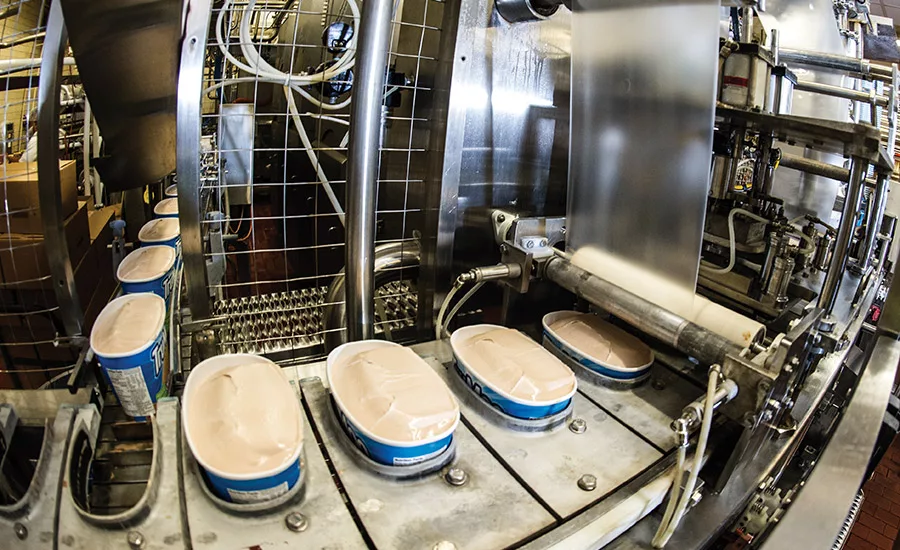
    Modifying a sweetener system while retaining sensory appeal, heat-shock resistance and behavior at draw temperature can be daunting. Not every sweetener or combination of sweeteners is compatible with formulation considerations. Photo by Vito Palmisano

    May 9, 2016

    There is a growing mandate from health authorities to reduce consumption of sugars (i.e., mono- and di-saccharides). For example, the current Dietary Guidelines for Americans call for significant reduction in calories from “added sugars.”  Excluding lactose (which could eventually  be included), current frozen desserts can contribute up to 22 grams of added sugars per serving, representing approximately 80% of total calories.  The numbers will surge as serving sizes are increased to reflect the amounts typically consumed by Americans.

    This has prompted the Food and Drug Administration to include in a proposed modification of nutrition labeling regulations a requirement for the declaration of the level of “added sugars” in the Nutrition Facts panel. That will likely motivate interest in compositional modifications that minimize the amount of added sugars so declared. 

    As with any change in the sweetener system, the challenges in making such modifications while retaining sensory appeal, heat-shock resistance, behavior at draw temperature, etc., are daunting.   Not every sweetener or combination of sweeteners is compatible with formulation considerations.  And, matters are now complicated by looming changes to the regulatory roadmap.  Add to this the growing demand for more “natural” approaches.  Further, the possibility of focusing not only on “sugars” but on caloric contributions from “added sugars” has not been addressed in full. 

    What we mean by rare sugars

    Among the group of sugars are naturally occurring “rare sugars” which provide “sucrose-like” sweetness at ultra-low caloric loads.  Rare sugars are found in ultra-small amounts that are difficult to produce commercially and have a range of chemical, physical or nutritional characteristics that may limit (or enhance) their utility. They are either isomers (compounds with similar chemical compositions) or they are epimers (isomers with differing molecular configurations) of more traditional sugars such as sucrose, glucose, fructose, maltose and lactose. 

    Highly significant is the ability of these rare sugars to interfere with active enzymatic ingestion of themselves and traditional sugars as sources of calories.  Rare sugars can mimic the behavior of sugars from which they are made, and indirectly interfere with caloric contributions of each.  If used together, the true caloric contribution of any frozen dessert might be able to be altered.

    Functional attributes vary

    Added nutritional efficacies of some rare sugars include possible pre-biotic influences and low-glycemic indices.  In some instances, functional attributes of rare sugars can be quite variable (for example, solubility, negative influence on mix freezing performance, compatibility with specific flavors, etc.).   Thus, not all rare sugars are created equal. Some — such as melicitose, allose and turanose — have limited application in food because they are not GRAS (generally recognized as safe).  The best known of those that are suitable for food application may be tagatose, a variant of the galactose moiety of lactose, which is almost as sweet as sucrose (approximately 90%) with about 40% of the calories.  Tagatose has found commercial success as a value-added tabletop sweetener and dietary supplement.

    Another GRAS rare sugar is allulose, which, when properly formulated, has potential for use in frozen desserts. Allulose is an epimer of fructose derived from enzymatic conversion of fructose.   Fructose, in turn, is enzymatically derived from glucose.  Allulose carries only 0.2 calories per gram and is approximately 70% as sweet as sucrose.  Although having leverageable benefits, allulose remains a “sugar” for nutrition labeling purposes, and would be classified as an “added sugar.” However, the ultra- low caloric contribution of allulose makes it worthy of consideration in the “sugaring down” of frozen dairy desserts.

    Factors to manage when formulating with allulose and tagatose are exactly the same as with other traditionally sweetened frozen desserts products: balancing formulation objectives, sweetness, freezing performance, water mobility management, resistance to heat shock, etc. 

    How can this be done?  Stay tuned for the discussion of formulating with alternate sugars in “The sugaring-down of frozen desserts: Part II,” which will appear in the September Dairy Foods.  

    Need more on how to formulate in a changing regulatory environment; update on ingredients and novel approaches, and formulation specifics?   Join Bruce Tharp and Steve Young at Tharp & Young on Ice Cream: Technical Short Course, Workshops and Clinics, Nov. 30 to Dec. 2 in Las Vegas.  For more on course coverage, registration, course and book discounts, go to www.onicecream.com or call 610-975-4424 or 281-782-4536.

    KEYWORDS: frozen dairy desserts frozen dessert processing nondairy desserts rare sugars

    Share This Story

    Looking for a reprint of this article?
    From high-res PDFs to custom plaques, order your copy today!

    Bruce Tharp is principal of Tharp's Food Technology, Wayne, Pa.
    Steven young headshot 200x200
    Steve Young is the principal of Steven Young Worldwide in Houston, Texas.

    Recommended Content

    JOIN TODAY
    to unlock your recommendations.

    Already have an account? Sign In

    • Lifeway Organic Kefir in different flavors inside a refrigerated grocery shelf.

      Dairy Foods names Lifeway Foods 2025 Processor of the Year

      Lifeway Foods donates $10,000 to wildfire victims,...
      Cultured Dairy
      By: Brian Berk
    • Two female farmers are standing in a field, holding a large milk canister, looking at several cows at dairy farm.

      Honoring Women Leaders Shaping the Dairy Industry

      For the fourth consecutive year, Dairy Foods is proud to...
      Innovation
      By: Barbara Harfmann
    • Main feature for State of the Industry with dairy products album cover with a gradient circular--patterned backgorund.

      2025 State of the Dairy Industry

      Welcome to the 2025 State of the Industry report. For...
      Dairy Foods & Beverages
    Manage My Account
    • eMagazine Subscription
    • Dairy Foods News & Views Newsletter
    • Online Registration
    • Manage My Preferences
    • Subscription Customer Service
    • Connect with Dairy Foods

    More Videos

    Popular Stories

    Close up of a whipped frozen dessert with a light green color.

    The keys to high-protein dairy formulations

    A young Asian mother holding her son and a sippy cup, an older woman is in the blurred background.

    Finding the right infant formula is crucial to a baby’s growth and development

    A row of Frios Gourmet Pops with a tie dye pattern as a background.

    How Frios Gourmet Pops delivers happiness

    Outlook Report: Women in Dairy

    Products

    Probiotic Ice Cream: Science and Technology

    Probiotic Ice Cream: Science and Technology

    See More Products
    Let's Talk Dairy podcast promo

    Related Articles

    • Using ‘rare’ sugars in ice cream, frozen dessert formulas affects everything

      See More
    • Sweet times for dairy and nondairy desserts

      Sweet times for dairy and nondairy desserts

      See More
    • Albertsons Signature Select ice cream

      Albertsons adds 13 private label dairy and nondairy frozen desserts

      See More

    Related Products

    See More Products
    • public role.jpg

      The Public Role In The Dairy Economy: Why And How Governments Intervene In The Milk Business

    • tech inv.jpg

      Technological Interventions in Dairy Science: Innovative Approaches in Processing, Preservation, and Analysis of Milk Products

    • GlobalData_Consumer.jpg

      Country Profile: Dairy & Soy Food Sector in the US

    See More Products

    Related Directories

    • GS Gelato & Desserts Inc.

      G.S. Gelato is the leading manufacturer of gelato, sorbet, non-dairy frozen desserts and soft serve for the foodservice and retail/grocery industries with branded and private label products. With innovative flavors and unparalleled customization options, we craft the best ingredients into extraordinary products!
    • Sugar River Dairy

    ×

    Stay ahead of the curve. Unlock a dose of cutting-edge insights.

    Receive our premium content directly to your inbox.

    SIGN-UP TODAY
    • RESOURCES
      • Advertise
      • Contact Us
      • Directories
      • Store
      • Want More
    • SIGN UP TODAY
      • Create Account
      • eMagazine
      • Newsletter
      • Customer Service
      • Manage Preferences
    • SERVICES
      • Marketing Services
      • Reprints
      • Market Research
      • List Rental
      • Survey/Respondent Access
    • STAY CONNECTED
      • LinkedIn
      • Facebook
      • YouTube
      • X (Twitter)
    • PRIVACY
      • PRIVACY POLICY
      • TERMS & CONDITIONS
      • DO NOT SELL MY INFORMATION
      • PRIVACY REQUEST
      • ACCESSIBILITY

    Copyright ©2026. All Rights Reserved BNP Media, Inc. and BNP Media II, LLC.

    Design, CMS, Hosting & Web Development :: ePublishing