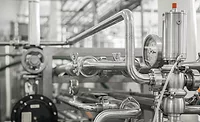
Pumps and valves play an important role in food safety
FSMA finally takes effect in September. Make sure your production team understands the role pumps and valves play in ensuring food safety, and how to clean and maintain them properly.
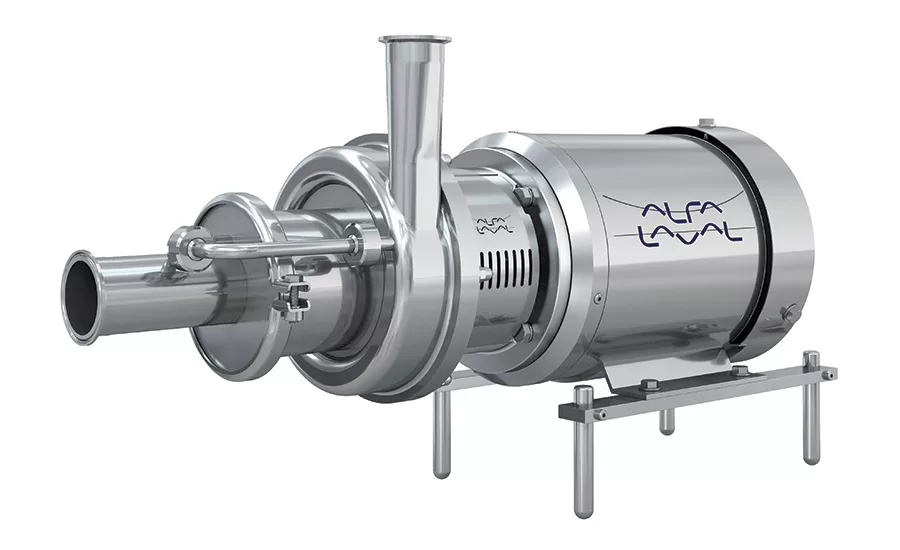
The new Alfa Laval LKH Prime is an efficient, versatile and hygienic self-priming pump. It uses a combination of air-screw technology and advanced design to meet the requirements in dairy, food and beverage plants. It is used primarily for CIP duties containing entrained air, but it can also pump product.
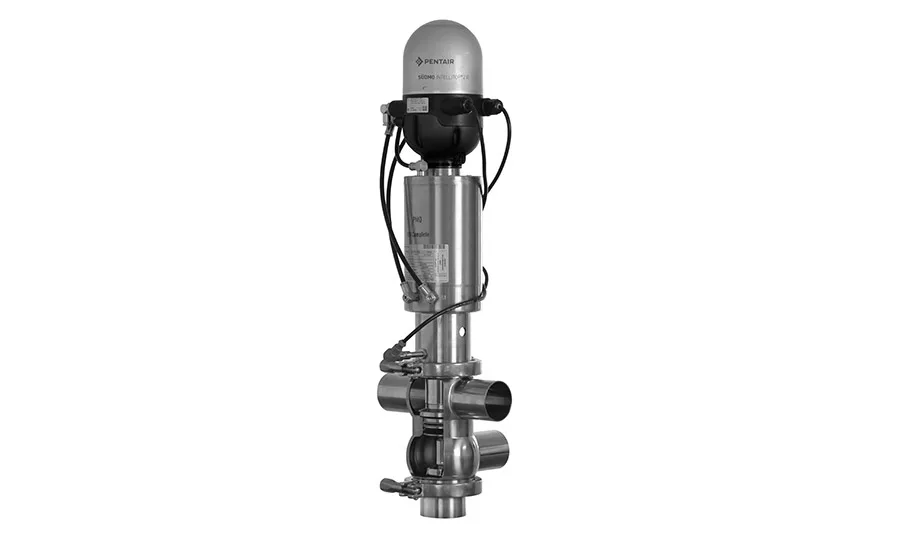
Pentair Sudmo’s 365it Complete PMO valve with an IntelliTop 2.0 control unit allows a plant manager to monitor the valve position (locally and via a PLC), control the valve speed and set up maintenance intervals.
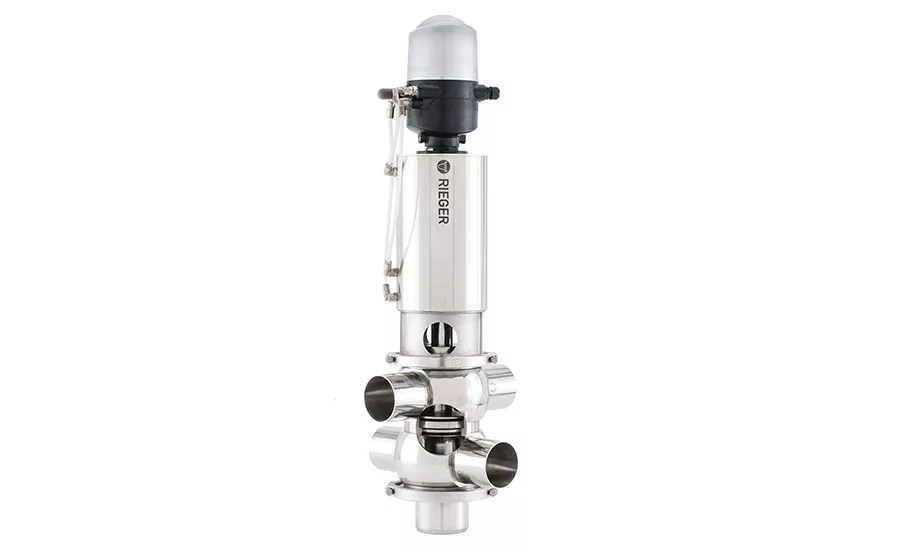
Rieger’s N2 PMO mix-proof valve has only four seals in the product contact area. That guarantees reduced downtimes and minimal spare part costs, the company states. There is said to be no product loss during valve stroking.

The GEA 24/7 PMO valve 2.0 is smaller and lighter than the original. The simple design, with no complex spare parts, allows for lower maintenance costs. It is said to be easy to clean, even for viscous products. There is no CIP impingement on the opposite seat during seat-lift cleaning, thereby allowing full 24/7 nonstop production.
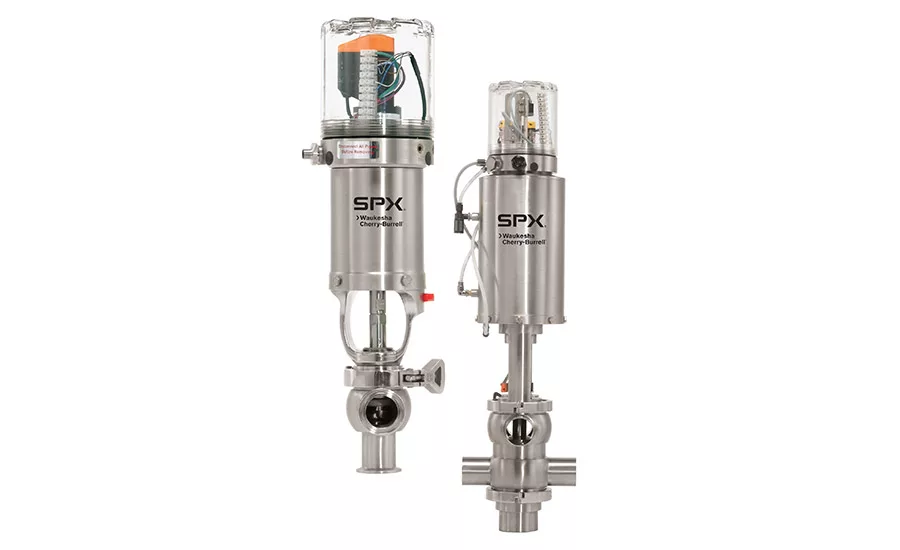
SPX Flow’s Waukesha Cherry-Burrell single- and double-seat valves are used in many food, dairy and beverage applications for flow diversion, shut off or throttling. The hygienic valves are engineered to provide a high degree of installation flexibility and long service life.
In anticipation of the long-discussed Food Safety Modernization Act finally becoming enforceable in September, we asked equipment suppliers about the role pumps and valves play in assuring food safety in dairy processing plants. Here’s what they had to say about this subject in our virtual roundtable.
Dairy Foods: What should a plant manager look for when evaluating pump and valve design?
Chris Sinutko, SPX Flow: The clean-ability of pumps and valves is vital for sanitary design and food safety. Products should be designed and manufactured to the appropriate standard for the region, such as 3-A or EHEDG, and selected to be cleanable for the product they are processing.
Valves are often supplied in a manifold with a mixture of models and automated control tops. The ability to automate processes reduces risk of errors occurring, lowers the amount of manual intervention required and can increase the production efficiency and flexibility.
An automation system also means that electronic records can be kept, reviewed and investigated. The records also provide evidence of safe processing with details of when valves are actuated and exactly what is passing through them at any one time.
Servicing time and energy consumption for any piece of machinery also impacts costs. All of this means that it is not only the upfront cost that plant managers should consider, but the overall cost of ownership for a system through its lifetime.
Another area for consideration in terms of both food safety and plant efficiency is the cleaning cycle for the equipment selected. There is an increasing preference to use clean-in-place (CIP) equipment wherever possible. This can influence the type of valve as, for example, ball and butterfly valves are not considered suitable for CIP.
Brian Romano, GEA North America: Processing dairy products can be a difficult application, especially cultured products or crystalized products.
You want to look for high-quality, low-maintenance, easy-to-clean valves and 24/7 production, because the seat cleaning occurs during production while product is present in the opposite housing of the valve. This efficiency allows for continuous processing and faster, easier cleaning. Lines don’t sit waiting to be cleaned, so the design of the valves allows for the most effective and immediate cleaning and production.
Jeremy Hauser, Pentair Sudmo: A plant manager should look for an established supplier known in the industry for good design and support, and who has supporting 3-A documentation.
Christian Thommen, Alfa Laval: The most important consideration is selecting a hygienic design that is efficient and has a low cost of ownership. This allows the plant to ensure safe handling of their product and quickly capitalizing on their return on investment.
It is advisable to obtain an efficient pump (up to 52% efficiency) which uses less horsepower than typical CIP return pumps. This means less energy consumed, a smaller physical and carbon footprint due to the motor size and an 80% reduction in noise emission. A plant manager also should look for a pump designed for product applications, using the same seal as standard LKH centrifugal pumps, which minimizes spares for the entire plant.
Dairy Foods: What are the best practices for cleaning and sanitizing pumps and valves? Are there special considerations depending upon the product being manufactured?
Sinutko: Machinery should be designed so there are no difficult-to-clean crevices within the equipment that could harbor harmful bacteria. Every food processing application is different and the parameters such as temperature, pressure, velocity and composition of cleaning solution need to be varied until the process is shown to be optimized and produces the necessary cleaning performance. Pumps and valves can be designed for CIP or clean-out-of-place (COP) to suit application needs.
There are no hard-and-fast rules but some best practices to consider for CIP include:
- finding a cleaning solution that properly dissolves the product residue,
- providing a minimum of 5 feet per second velocity through the pipeline, and
- offering adequate pressure.
Also, use a pump that can be energized during cleaning and use pulsing valves that can be actuated multiple times to clean masked seat surfaces and create turbulence in the line.
Initiate CIP as soon after a production run as possible and for long enough to clean the equipment. Use temperatures within the range suggested by the equipment manufacturer. Equipment should be pulled and checked on a regular basis, with adjustments made as needed.
Romano: Best practices include seat cleaning with a reduced leakage chamber while product is present on the other side of the valve, thereby giving benefits of reduced CIP solution and 24/7 production. Such reduced-leakage chamber valves produce high-velocity seat cleaning for dairy products of all kinds.
Special consideration can be taken in commissioning to optimize the CIP seat cleaning performance for the various products on the processing line, to maximize cleaning and reduce CIP volumes.
Hauser: It is up to the manufacturer to ensure their design is capable of being cleaned. However, some products may be sticky or have ingredients that fall out of solution. For those, the supplier can recommend best practices with regards to the valve design. Secondly, it’s important to work with cleaning chemical suppliers to ensure compatibility with gasket materials.
Dairy Foods: Some fluid milk processors also fill tea, juice, water and other nondairy beverages. Are there special considerations for pumps and valves in these plants?
Sinutko: The first consideration for a multiproduct processing line would be to ensure that all materials are compatible with the different fluids passing through the line. The pump or valve should have an external flush to flush the seal and valve stem before a new batch commences, especially if there are sugary products that may crystallize and harden when exposed to the atmosphere.
Multiproduct systems need to be designed to the most stringent sanitary standard for the products they are processing. In the United States, this would be covered by the necessary standards for milk. The cleaning regime also needs to be tested for all fluids that will be in the system to ensure complete clean-ability.
Pay attention to any allergens in particular batches of product. Check that the processing line is not only clean but free of allergens like lactose, nut flavors or other ingredients.
Romano: Dairy processors want to maximize their production and minimize their cleaning time. Multiple products on the same lines create additional cleaning requirements. Processors need equipment that allows for continuous production time, thereby reducing time wasted on cleaning and production downtime. In other words: maximum flexibility with minimum waste between product changeovers.
Hauser: Dairy processors need technology that protects their product from contamination by cleaning chemicals or other products, which in turn ensures protection from food allergen cross-contamination. With automated mix-proof technology, process lines are cleaned in a series flow, which ensures consistent cleaning and sanitizing every time.
Dairy Foods: What accessories are available for valves, and how can a plant manager best make use of them?
Sinutko: Options include actuator types, fully maintainable or maintenance-free models, communication choices and seat options to suit the type of duty required.
Options can have different cost impacts. The plant manager needs to evaluate the best return on investment. For example, when evaluating a cleaning process, can this be achieved with a non-seat lifting mix-proof valve and external flush, or with seat-lifting valves that will automatically lift during the cleaning cycle to clean the areas inside the vent as well as underneath the seat during the cleaning process?
Romano: It is important to design repeatable and safe production processes with valves that are able to accept a variety of accessories such as multiposition actuators and feedback units. Processors also should have control units that provide positive position feedback on dairy processing valves to ensure proper line operation and repeatable CIP cleaning in dairy plants. These control units can also be supplied with solenoids and additional feedback points to maximize a dairy plant’s equipment investment.
Hauser: Control tops are an important means for confirming valve position. It’s ideal for the plant to be able to monitor valve position locally and via the PLC, control valve speed and set up maintenance intervals.
Thommen: A mix-proof valve built on a modular platform can be customized to specifically meet a dairy’s processing needs. Having such versatility allows the plant to save money by focusing where to utilize certain features. For example, in production lines where continuous processing is of importance, you’d want a valve that can be fitted with the lower flush housing to allow cleaning of the complete valve by independently executing the lower and upper seat lifts. This allows the valve to be safely cleaned without opening the valve and disrupting the production schedule.
Dairy Foods: In what situations should a plant manager consider buying rebuilt or reconditioned pumps or valves?
Sinutko: We do not typically recommend reconditioning valves or buying previously used units. Relative to a pump, the cost of a valve is small and so any savings to be gained are less impactful to the overall cost of a system.
For more expensive valve options (such as mix-proof valves), there are many challenges in successfully removing the bodies from existing manifolds and re-welding into a new process line. The necessary work may distort the valves, add to the cost and create unacceptable installation risks.
Using reconditioned or re-built pumps is much more common. These may be selected because a plant is looking to save some costs or because a reconditioned unit is more readily available than a new one. From time to time a reconditioned pump may be used to maintain an installed base that is facing obsolescence issues. When using reconditioned or re-built units, maintenance procedures and staff need to be clear on any difference in parts between new and refurbished units to ensure no problems arise.
Romano: A valve should be as compact as possible, allowing for cost and production efficiencies through reduced footprint. Rebuilt and reconditioned valves can’t offer this type of benefit to dairy processors, so I’m not sure that there are any situations that warrant buying reconditioned PMO mix-proof valves today.
Hauser: Valves are rarely sold by the manufacturer as reconditioned. As such, a third party is not going to know the proper condition, the latest technology, or have the supporting paperwork. As such this would not be recommended unless the plant manager is very familiar with the equipment.
Looking for a reprint of this article?
From high-res PDFs to custom plaques, order your copy today!