Newsline - 2/1/2011
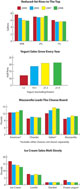
Where’s the Beef? Red Meat, Whole Milk Consumption Drop
Americans are eating less beef, drinking less whole milk and cutting back on ice cream. The drop in per capita consumption of these foods makes one wonder why the nation has an obesity problem.
In 2008, red meat consumption dropped to 108.3 pounds per person, about a 2.5 pound decline from 2007 levels. Americans drank 5.9 gallons of whole milk per person in 2008, down from 6.1 gallons the year before. Plain, reduced-fat milk consumption rose 0.4 gallons to 7.3 gallons per person in 2008. As for dessert, consumption of ice cream in 2008 dipped to 13.9 pounds per person from 14.2 pounds in 2007. The statistics are from the U.S. Department of Agriculture’s economic research services. They were published in January in the 2011 Statistical Abstract of the United States from the U.S. Census Bureau.
The book also shows that more households do not have access to sufficient food. The percentage of so-called “food-insecure” households rose to 14.6% in 2008 from 11.1% in 2007. The percentage of children in food-insecure households increased to 22.5% from 16.9%. Food insecure means having “limited or uncertain ability to acquire acceptable foods in socially acceptable ways,” according to the Abstract. Food-insecure households first worry about having enough food, and then they stretch resources and juggle other necessities. Adults in such households eat less and eat less frequently, and then they decrease the frequency and quantity of food given to their children.
Changes to school lunches
Children might be finding more nutritious foods at school. In January, the U.S. Department of Agriculture proposed changes to the national school lunch and breakfast programs. The changes would add more fruits, vegetables, whole grains, fat-free and low-fat milk to school meals and limit the levels of saturated fat, sodium, calories and trans fats.
Interest in food and health is especially high at the beginning of the year, as individuals make resolutions to lose weight and eat better. In January, Minneapolis-based supermarket chain Supervalu expanded its in-store initiative that shows the nutritional value of fresh and packaged foods. The “nutrition iQ” program (www.nutritioniq.com), which started in January 2009 and now is in 800 stores, is said to help shoppers identify better-for-you foods, including those in the dairy section.
Supervalu developed nutrition iQ in collaboration with dietitians from Joslin Clinic, Boston. Color-coded icons on shelf tags and signs help shoppers identify and find healthy food options. The fresh- foods departments will feature informational signs highlighting key attributes, including fiber or vitamin content, or health messages such as “helps support healthy digestion” and “promotes skin and immune health.”
Supervalu evaluated more than 80,000 products in the center store aisles, and approximately 10% of the items in each center store category have received a nutrition iQ tag, the company states.
The foodflex program from Safeway (https://foodflex.safeway.com/), another national supermarket chain based in Pleasanton, Calif., uses loyalty-card data to compare a household’s purchases against USDA benchmarks, including protein, fiber, total fat, cholesterol and carbohydrates. The program makes recommendations for healthier food choices. The reports are delivered by e-mail and available online. Shoppers can compare their purchases over the last six months and create shopping lists of better-for-you foods.
Dairy Foods will report in a future issue on the new dietary guidelines, which were expected to be released at the end of January, after this issue’s deadlines.
– Jim Carper, chief editor
Good Packaging Makes Good Fences
That plastic film around a slice of cheese could end up as part of a new plastic fence. Kraft Foods’ cheese brands started to promote their participation with Terracycle, a program that collects plastic packaging and turns the material into new products, like fencing, tote bags and waste baskets.
“At Kraft Foods, we try our hardest to listen to the concerns of our consumers. Sustainability and protection of the environment are growing concerns for all Americans. Our partnership with TerraCycle gives us a way to work hand in hand with our consumers to make a genuine difference,” says Chris Mondzelewski, senior director marketing, Kraft Foods, Northfield, Ill.
Kraft brands Capri Sun, Nabisco and Lunchables have been participating with Terracycle since 2008. In October 2010, Kraft announced that Kraft Naturals, Philadelphia Philly, Athenos, Kraft Singles, macaroni and cheese, Easy Mac, Cracker Barrel, Polly-O, Breakstone, Velveeta and Knudsen have joined the program. This year, the cheese brands began using Twitter, Facebook and its other digital assets to promote Terracycle to consumers, associate brand manager Brian Gelb tells Dairy Foods.
Every Kraft cheese brand is taking its own approach to promotion. For instance, Krafts’ Natural cheeses added the Terracycle logo to product packages. Kraft uses PET plastic for some of its cheese packaging.
TerraCycle, Trenton, N.J., uses fundraising initiatives, called Brigades, to encourage individuals and groups to collect and return packaging to earn money for the school or charity of their choosing. TerraCycle also recommends charities. It issues checks twice a year.
Stonyfield Farm, Londonderry, N.H., is the only other dairy products marketer participating with TerraCycle.
Melodie Bolin, a Kraft associate brand manager, tells Dairy Foods that she expects 100,000 to millions of cheese packages to be returned to TerraCycle.
TerraCycle and its partners cover all shipping costs and pay two cents per unit of waste that is returned. TerraCycle accepts more than 30 different types of products or packaging, including drink pouches, chip bags, yogurt cups, tape dispensers, digital cameras and wine corks.
“Kraft Foods was the first multicategory corporation to fund used packaging associated with its products almost three years ago and is now the largest sponsor for four TerraCycle programs,” says Kraft CEO Tom Szaky. “They are great partners - truly dedicated to making products consumers love, while also taking responsibility for preserving the environment.”
Terracycle’s school curriculum presents an opportunity for children to engage their parents in recycling efforts, Gelb says. “Kids learn about sustainability and being green.”
– Jim Carper, chief editor
IDFA Applauds Progress on Finalized U.S.-Korea Free-Trade Agreement
President Barack Obama announced the successful completion of bilateral talks with South Korea that pave the way for U.S. acceptance of the expansive free-trade agreement. Through August 2010, the value of U.S. dairy exports to South Korea was $84 million, up 78% from the same time period last year. The U.S. International Trade Commission estimates that the dairy provisions of the agreement could expand U.S. dairy exports by up to $336 million per year on average.
“IDFA thanks the administration and U.S. Trade Representative Ambassador Ron Kirk for their significant efforts throughout the negotiations. We’re pleased that the full dairy provisions of the agreement were able to remain unaltered in the finalized agreement,” says Connie Tipton, president and CEO of the International Dairy Foods Association, Washington, D.C. “IDFA considers the agreement to be a critical step forward for U.S. dairy processors to take full advantage of growing markets in a vital economic region.”
The agreement is expected to provide a tremendous boost to U.S. dairy through reduced tariffs and expanded market opportunities in a restricted and high-value market, according to IDFA. In 2009, South Korea constituted the United States’ sixth-largest export market for dairy and dairy products. Once implemented, the agreement will allow the U.S. dairy industry to gain immediate open access for whey for feed uses, as well as tariff-free access for approximately 16,000 metric tons of cheese, milk powders, whey for food uses and other dairy products. Tariffs on most dairy products will eventually be phased out over a period of 15 years.
South Korea is one of Asia’s fastest growing economies, and global consumption patterns show that as income grows, the consumption of animal protein increases, including dairy. Per capita consumption of dairy products in South Korea is increasing mainly due to the younger generation and an increasing penchant for Western foods. Along with this growth, expanding wine consumption is expected to increase demand for a variety of high-quality cheeses. According to the U.S. Department of Agriculture, most increased demand will be met by imports because local production of cheese is constrained by the lack of manufacturing facilities. Thus, U.S. dairy exports are uniquely positioned to fill a specific consumer demand that local manufacturers are not able to supply.
Congress must ratify the agreement for it to take effect. IDFA urges legislators to make passage of the agreement a top priority.
Looking for a reprint of this article?
From high-res PDFs to custom plaques, order your copy today!


