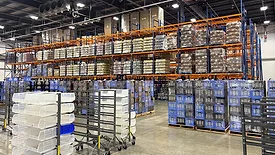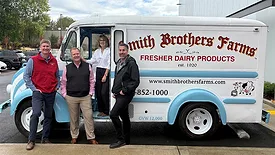
Our trip to Smith Brothers Farms included two stops: one was a visit to the Kent, Wash., plant, where the company processes milk. Following this visit, we traveled 20 minutes to Federal Way, Wash., to check out the company’s distribution center, the origin of all Smith Brothers Farms’ home delivery services, which is the pillar of many communities.
U.S. headline milk production growth was much stronger than expected in September, up 4% compared to the forecast of +3.2%. The only other time that we’ve seen an expansion like this was the mid-1980s, reveals Nate Donnay.
Stringent food safety regulations will inspire innovation in machinery standards while encouraging dairy manufacturers to invest in high-quality processing equipment. However, staffing and skill levels remain industry challenges.
Dairy processors are increasingly turning to advanced membrane technologies to boost product yield while maintaining efficiency and quality. Innovations in ultrafiltration, including optimized temperature control and homogenization, have been shown to enhance protein retention and minimize fouling. This highlights the importance of upstream processing conditions alongside membrane design in achieving higher yields.
Ingredients like gums, emulsifiers, and stabilizers are essential in dairy and non-dairy products, enhancing taste, texture, and stability in items like ice cream, cheese, and yogurt.
From 1905 to the 1990s, home delivery was common for dairy processors, but popularity declined as customers turned to supermarkets. While many manufacturers focused solely on processing, Smith Brothers Farms maintained its delivery service and remains strong today, despite competition from Amazon and Costco nearby.
Milk has been a basis of nutrition for centuries, but the modern fluid milk industry faces challenges in maintaining its heritage while adapting to changing consumer preferences, technological advancements, and sustainability issues. The future of milk presents both opportunities and challenges, as noted by Sonali Raghunath.
The bill allows schools to provide students with a variety of fluid milk options, which can now include flavored and unflavored organic or conventional whole, 2%, 1%, skim and lactose-free milk.